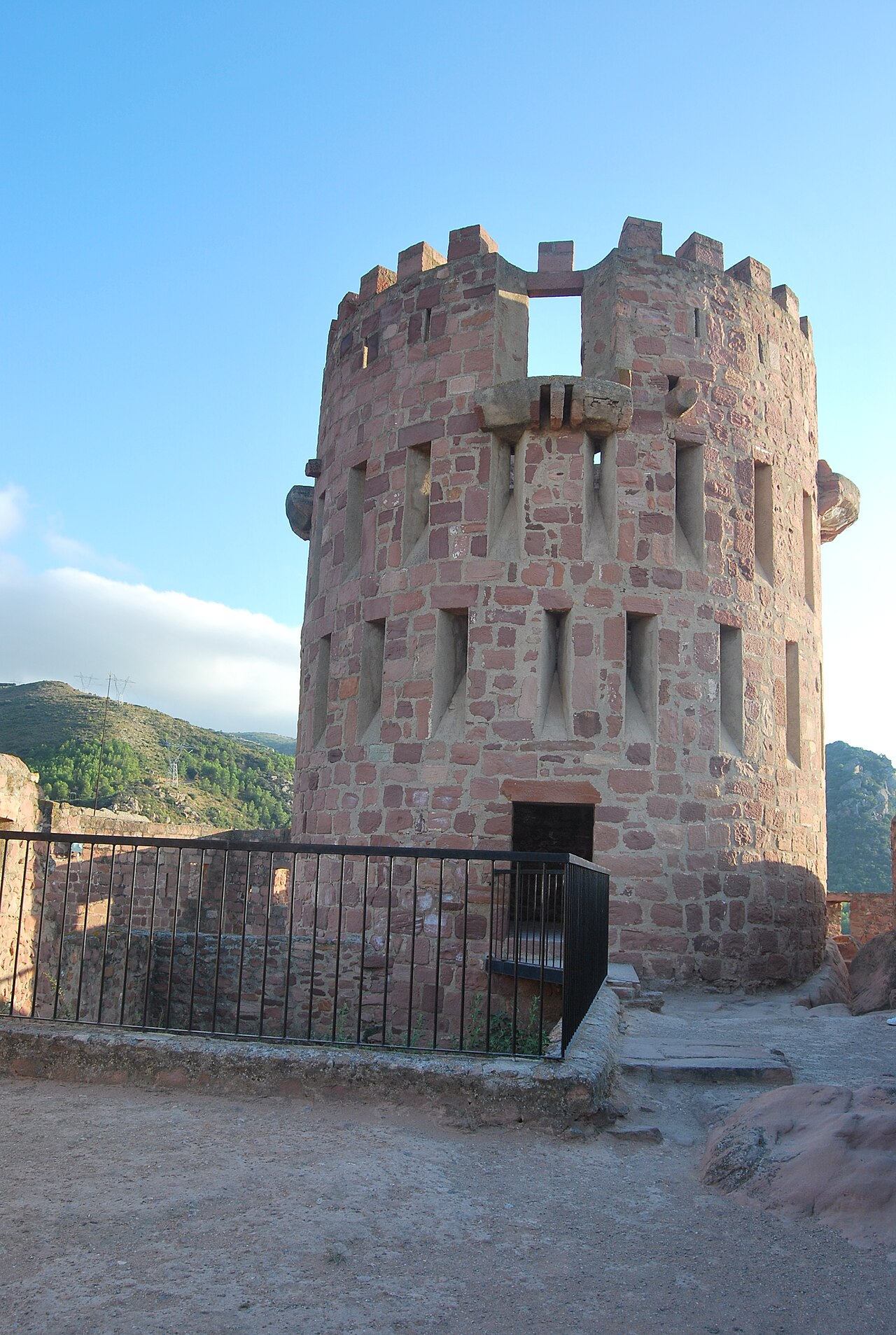
Oropesa Castle
Oropesa Castle stands as a remarkable example of medieval military architecture perched on a commanding hilltop overlooking the town of Oropesa in Spain. This hill castle was originally constructed during the high medieval period, around the 13th century, by Muslim builders who sought a strategic vantage point that offered expansive views of the surrounding landscape and coastline. The castle's location ensured early warning of approaching enemies, a critical advantage in the turbulent history of the Iberian Peninsula.
The castle's initial construction was influenced by Islamic military architecture and was built atop remnants of earlier Roman foundations, highlighting the site's long-standing strategic importance. Over centuries, the fortress changed hands multiple times, reflecting the complex political and military struggles between Muslim and Christian forces during the Reconquista. Notable historical figures such as El Cid and King James I of Aragon played roles in its conquest and control, underscoring its significance in medieval Spanish history.
Architectural features and defensive design
The original fortress featured a rectangular floor plan fortified with six towers arranged in a fan-shaped formation along the outer walls. The centerpiece was an imposing trapezoidal keep or tower of homage, which served as the last line of defense. These towers and walls were constructed primarily using rammed earth (tapia), a traditional technique characteristic of Islamic fortifications in the region, providing both strength and resilience.
Additional defensive elements included a two-nave cistern (aljibe) for water storage, ensuring self-sufficiency during sieges. The castle was complemented by a network of coastal watchtowers, notably the nearby Torre del Rey, which formed part of an early warning system against maritime threats. The castle's walls were later reinforced and adapted in the 14th and 16th centuries to accommodate evolving military technologies, including artillery.
The old castle and the new palace
The complex comprises two main structures: the Old Castle and a New Palace constructed in the early 15th century by the influential Álvarez de Toledo family. The Old Castle retains its rectangular layout with surviving circular towers at the corners, while the New Palace features a more refined architectural style with finely cut stone blocks (sillería) and a spacious central courtyard.
The square keep of the castle rises approximately 25 meters and is crowned with four small turrets (garitones) equipped with narrow cross-shaped arrow slits for defense. The keep's battlements include a machicolation, allowing defenders to target enemies at the base of the walls. Inside, the keep contains four floors connected by wooden staircases, designed with defensive complexity in mind. The terrace is crenellated and includes circular turrets, enhancing its defensive capabilities.
Historical significance and ownership
Throughout its history, Oropesa Castle was a focal point in regional power struggles. Initially built by Muslim rulers, it came under Christian control by the late 11th century, with El Cid and later King James I of Aragon playing pivotal roles in its conquest. The castle was granted to various military orders, including the Order of Malta and the Knights Templar, reflecting its strategic and religious importance.
In 1355, the castle and surrounding lands were granted to García Álvarez de Toledo, a former master of the Order of Santiago, whose family maintained control for nearly four centuries. Under their stewardship, the castle evolved from a purely military fortress into a noble residence and administrative center, particularly with the construction of the New Palace around 1402. The Álvarez de Toledo family played significant roles in regional conflicts, including the Castilian succession wars and the Castilian War of the Communities.
Role in later conflicts and modern use
During the 19th century, the castle's military role was revived during the Carlist Wars and the Spanish War of Independence. It suffered considerable damage during the 1808 French sack led by Marshal Suchet. In subsequent years, the fortress was repurposed for various uses, including as a bullring and as barracks for the Guardia Civil.
Recognizing its cultural and historical value, Oropesa Castle was declared a Historic-Artistic Monument in 1923 and a National Monument in 1926. In 1930, it was transformed into Spain’s first parador hotel, marking a pioneering effort in the adaptive reuse of historic castles. Today, it remains a protected heritage site, with ongoing restoration efforts preserving its medieval character while accommodating modern hospitality functions.
Archaeological remains and preservation challenges
The castle's remains reveal a complex defensive system with a polygonal layout and multiple towers designed for surveillance and protection. The use of rammed earth construction presents unique preservation challenges due to the material's vulnerability to weathering. Restoration requires careful rebuilding rather than simple repairs to maintain structural integrity.
The surrounding town walls, constructed in the 15th century during the repopulation period, exhibit a planned urban layout with geometric streets and integrated religious buildings such as the fortified Chapel of the Virgin of Patience. These features illustrate the close relationship between military defense and civic-religious life in medieval Oropesa.
Visitors to Oropesa Castle today can explore the extensive courtyard (Patio de Armas), the imposing keep with its defensive turrets, and the remnants of the Old Castle walls. The castle’s elevated position continues to offer panoramic views of the town, the Mediterranean coastline, and the surrounding oak forests, evoking the strategic vision of its medieval builders.
Cultural significance and visitor experience
Oropesa Castle embodies centuries of Spanish history, from Islamic rule through Christian reconquest, noble residence, and modern heritage preservation. Its architectural evolution reflects broader trends in medieval military design and the adaptation of fortifications to changing political and technological contexts.
Today, the castle serves not only as a monument to the past but also as a vibrant cultural site, attracting visitors interested in history, architecture, and panoramic Mediterranean landscapes. The castle’s integration into the parador hotel system allows guests to experience the grandeur of medieval nobility firsthand, blending historical authenticity with contemporary comfort.
Overall, Oropesa Castle stands as a testament to the enduring legacy of medieval fortifications in Spain, offering rich insights into the region's complex history and architectural heritage.
Frequently asked questions (FAQ)
- How do I get to Oropesa Castle?
- Oropesa Castle is located in the town of Oropesa, Castile-La Mancha, Spain. It is accessible by car and local buses. The castle is situated on a hilltop overlooking the town, with parking available nearby.
- What is the best time to visit Oropesa Castle?
- The best time to visit Oropesa Castle is during spring and autumn when the weather is mild and the surrounding landscapes are particularly scenic. The castle is open daily from 10:00 to 18:00, allowing ample time for exploration.
- Can I tour the interior of the castle?
- Yes, visitors can explore the castle's interior, including the keep, courtyards, and towers. Guided tours are available, providing detailed historical and architectural insights.
- Is Oropesa Castle wheelchair accessible?
- Due to the castle's medieval structure and hilltop location, full wheelchair accessibility is limited. However, some areas are accessible, and assistance can be arranged upon request.
- Are there any nearby attractions to visit along with Oropesa Castle?
- Nearby attractions include the historic town center of Oropesa, the Chapel of the Virgin of Patience, and the Mediterranean coastline, which offers beautiful beaches and coastal walks.
- What architectural styles are represented in Oropesa Castle?
- Oropesa Castle showcases a mix of architectural styles, including Islamic military architecture from its original construction and later Gothic and Renaissance elements introduced during expansions and renovations.
- How much does it cost to enter Oropesa Castle?
- The entrance fee to Oropesa Castle is €6 for adults and €3 for children, with discounts available for groups and seniors.
Information
Opening hours
10:00-18:00, daily
Ticket prices
€6 adult, €3 child
Current owner
Municipality
Website
Visit websiteSources & official resources
Verify the information above using these authoritative references.
Loading map...
Visitor reviews
No reviews yet. Been here? Write the first review and help other travelers!
Write the first reviewVisited this castle? Share your experience
Your review helps other travelers and adds first-hand knowledge to our encyclopedia.