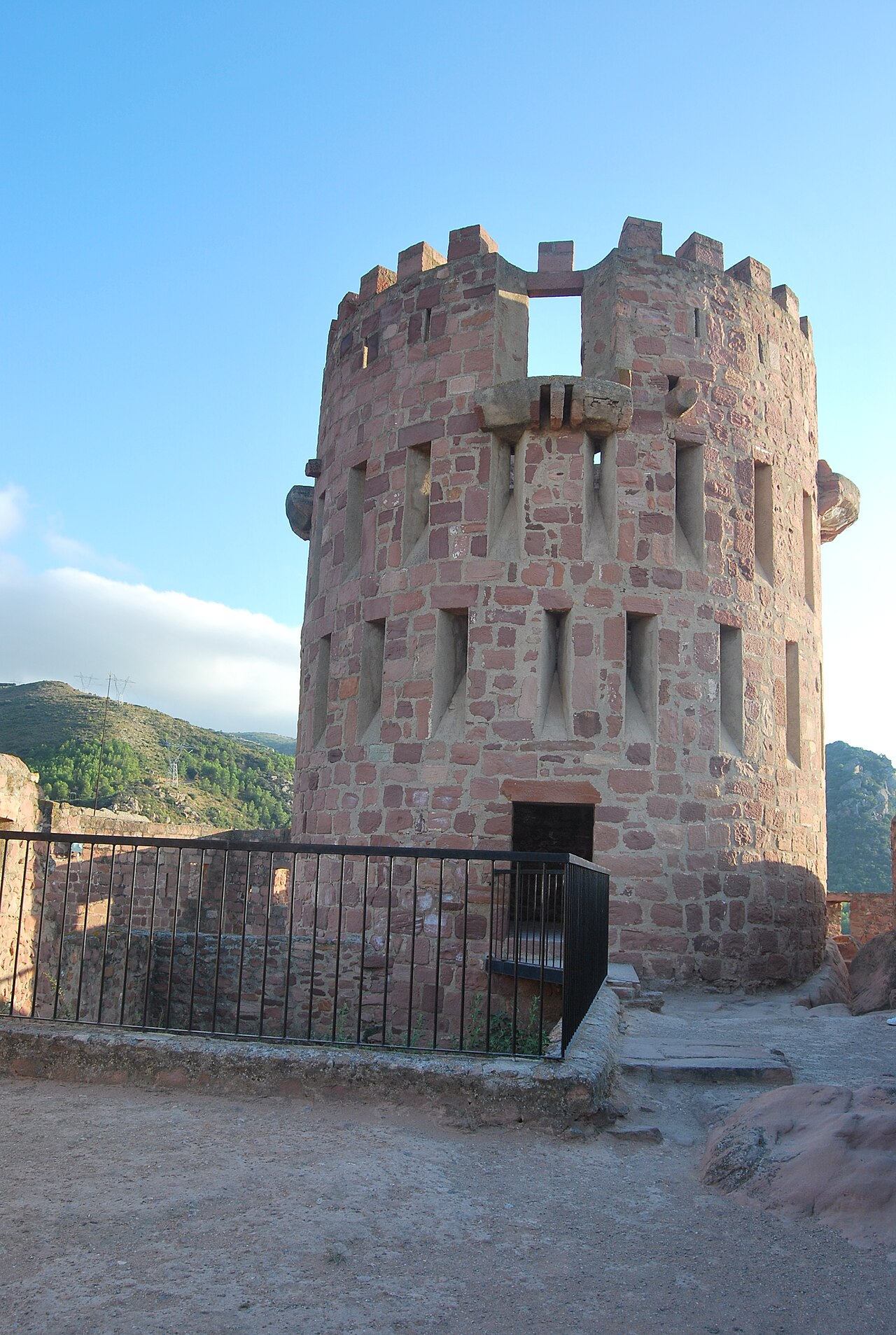
Fadrell Castle
Fadrell Castle, located in Castellón de la Plana, Spain, is a notable example of a Muslim-origin fortress dating back to the 11th century. Constructed during the High medieval period, this castle was built between the 11th and 13th centuries, reflecting the strategic and architectural characteristics of Islamic military architecture in the Iberian Peninsula during that era.
Architectural layout and design
The castle exhibits an irregular stepped layout that adapts to the natural terrain, a common feature in fortifications designed for defensive advantage. It consists of four enclosures, each serving distinct defensive and functional purposes. The uppermost enclosure is the Alcazaba, which served as the central stronghold and final defensive bastion of the castle.
The Alcazaba and its features
The Alcazaba is characterized by its three semicircular towers that provided vantage points for surveillance and defense. Within this enclosure, visitors can find remains of ancient walls and cisterns that were essential for water storage during sieges. The design of the towers and walls reflects the military architecture of the Muslim rulers who occupied the region.
The Albacar enclosure and religious significance
The intermediate enclosure, known as the Albacar, surrounds the Alcazaba and contains additional defensive structures, including three more towers. This area also houses the Hermitage of La Magdalena, indicating the site's continued religious and cultural importance beyond its military use. The presence of the hermitage reflects the castle's adaptation and reuse during later Christian periods.
Historical context and significance
Fadrell Castle was constructed during a period of intense territorial conflicts on the Iberian Peninsula, particularly during the Reconquista when Christian kingdoms sought to reclaim lands from Muslim rule. The castle's strategic position in Castellón de la Plana allowed it to control surrounding territories and protect important routes.
The castle's Muslim origins are evident in its architectural style and layout, which align with other fortifications built by Islamic rulers in the region. Over time, the castle witnessed various modifications and adaptations, reflecting the changing political and military landscape of medieval Spain.
Preservation and current condition
Today, Fadrell Castle remains a significant historical monument, although it is partially preserved. Visitors can explore the ruins of the enclosures, towers, and cisterns, gaining insight into medieval military architecture and the complex history of the region. The castle's location and remnants offer an evocative glimpse into the past defensive strategies and cultural layers of Castellón de la Plana.
Visiting Fadrell Castle
The castle is accessible to the public, allowing visitors to walk through its historic enclosures and experience the layout firsthand. The surrounding landscape enhances the understanding of the castle's strategic importance. Nearby, the Hermitage of La Magdalena adds a cultural dimension to the visit, linking the site’s military and religious heritage.
Architectural highlights for visitors
- Semicircular towers of the Alcazaba offering panoramic views.
- Remains of defensive walls showcasing medieval construction techniques.
- Cisterns used for water storage during sieges.
- Hermitage of La Magdalena reflecting the site's religious transformation.
Fadrell Castle in the broader medieval landscape
The castle is part of a network of fortifications that illustrate the military and political dynamics of the High medieval period in eastern Spain. Its design shares features with other Muslim castles in the region, such as adaptive terrain use and multiple defensive layers. This makes Fadrell Castle an important case study for understanding Islamic military architecture and the cultural interplay during the medieval centuries in the Iberian Peninsula.
Legacy and cultural importance
Fadrell Castle stands as a testament to the region's layered history, from its Islamic origins through Christian reconquest and beyond. Its remains continue to attract historians, architects, and visitors interested in medieval fortifications, offering valuable insights into the period's defensive strategies and architectural innovations.
Frequently asked questions (FAQ)
- What is the historical significance of Fadrell Castle?
- Fadrell Castle, located in Castellón de la Plana, dates back to the 13th century and played a vital role in the defense of the region during the Reconquista. Its strategic position allowed it to oversee important trade routes, making it a key military stronghold in medieval times.
- When was Fadrell Castle built?
- Fadrell Castle was constructed in the 13th century, specifically around the year 1239, shortly after the Christian conquest of the region. It reflects the architectural styles and defensive needs of its time, showcasing both Romanesque and Gothic influences.
- Can I visit Fadrell Castle?
- Yes, Fadrell Castle is open to the public for visits. Guests can explore its historical grounds and enjoy panoramic views of Castellón de la Plana from its elevated position.
- What are the opening hours for Fadrell Castle?
- Fadrell Castle is typically open to visitors from 10 AM to 6 PM, but it's advisable to check the official website for any seasonal changes or special closures. Guided tours may also be available at specific times throughout the day.
- Is it possible to access Fadrell Castle with a wheelchair?
- Fadrell Castle has limited accessibility for wheelchair users due to its historical structure and terrain. Visitors are encouraged to contact the castle administration in advance to inquire about specific accommodations and assistance.
- What is the best time to visit Fadrell Castle?
- The best time to visit Fadrell Castle is during the spring and fall months when the weather is mild and pleasant. This allows for a comfortable exploration of the castle and its surroundings without the heat of the summer sun.
- Are there any nearby attractions to visit after Fadrell Castle?
- Yes, after visiting Fadrell Castle, you can explore other nearby attractions such as the beautiful beaches of Castellón de la Plana and the historic city center, which features stunning architecture and local cuisine. The nearby Mediterranean gardens also offer a lovely spot for relaxation.
- What are the ticket prices for Fadrell Castle?
- Tickets for Fadrell Castle are generally affordable, with discounts available for students and seniors. It's best to check the official website for the most current pricing and any special offers for group visits.
Information
Loading map...
Visitor reviews
No reviews yet. Been here? Write the first review and help other travelers!
Write the first reviewVisited this castle? Share your experience
Your review helps other travelers and adds first-hand knowledge to our encyclopedia.