Örö — Finland castle

Örö

Örö bastioned fortress in Finland's Archipelago Sea
Kimitoön, Finland
Post-Renaissance (17th–18th c.)
Well Preserved

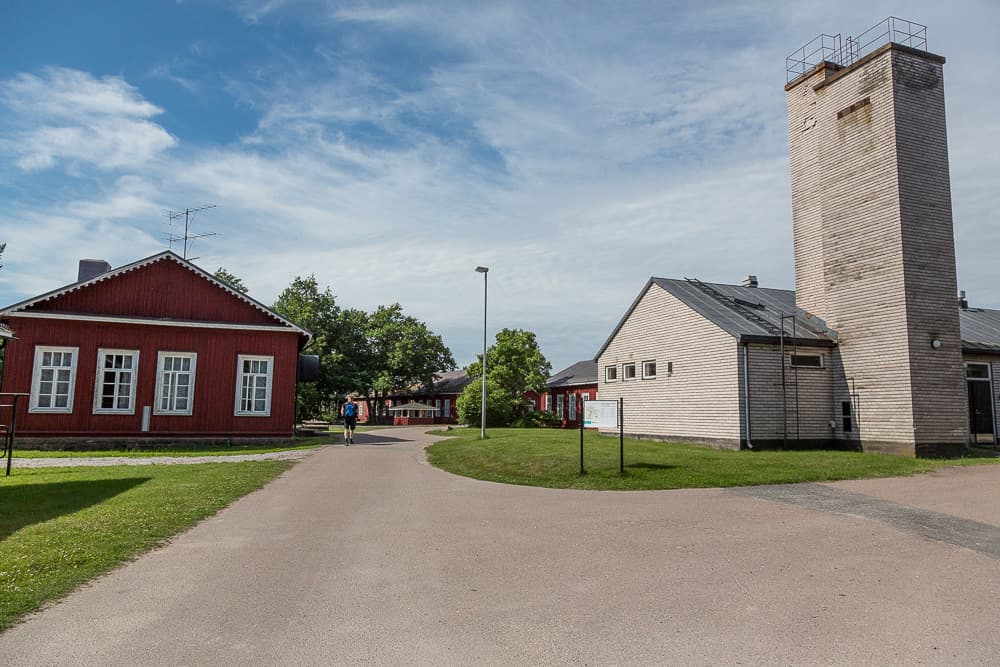
Örö is a significant bastioned fortress located on a large island in the Archipelago Sea, part of the municipality of Kimitoön in Finland. This fortress island played a crucial role in coastal defense for over a century, reflecting the strategic importance of the archipelago region. Örö was a restricted military area until 2015, when it was incorporated into the Archipelago National Park, opening its historic fortifications and natural landscapes to public visitors.

Historical background and military significance

The construction of Örö fortress began in the late 19th century as part of the Russian Empire's efforts to strengthen its western maritime defenses. Situated in a key position in the Archipelago Sea, the fortress was designed to protect the vital sea routes leading to the Finnish coast and the city of Turku. Its strategic location allowed control over naval traffic and defense against potential invasions from the Baltic Sea.

During its military use, Örö served as a coastal artillery fortress, equipped with heavy guns placed in bastions designed to cover overlapping fields of fire. The fortress was modernized several times through the early to mid-20th century, including upgrades during the Finnish independence period and World War II, when coastal defenses were of paramount importance.

Architectural features and fortress design

Örö fortress exemplifies the bastioned fortress typology, characterized by angular bastions projecting from the main walls to provide defensive coverage and reduce blind spots. The fortress layout includes multiple bastions connected by curtain walls, forming a star-shaped defensive perimeter optimized for artillery defense.

The construction utilized robust stone and concrete materials, designed to withstand artillery bombardment. The fortress complex includes gun emplacements, ammunition magazines, barracks, and observation posts. Many of these structures remain well preserved, offering insight into late 19th and early 20th-century military engineering.

Defensive structures

The bastions are equipped with platforms for heavy coastal artillery, including disappearing guns and fixed cannons. The design allowed defenders to cover all approaches to the island with overlapping fields of fire, making the fortress a formidable obstacle to enemy vessels.

Support facilities

Within the fortress, there are living quarters for soldiers, command centers, and storage facilities. These were built to support extended military operations, reflecting the fortress's role as a self-sustaining defensive installation.

Transition to national park and tourism

After the military decommissioning in 2015, Örö island was integrated into the Archipelago National Park, managed by the Finnish government. This transition transformed the former fortress into a cultural heritage and nature tourism destination.

Visitors can explore the extensive network of fortress walls, bastions, and military buildings, which have been preserved as historical monuments. The island also offers hiking trails, birdwatching opportunities, and access to the unique archipelago ecosystem.

Visitor experience

Örö is accessible by ferry from the mainland, and the site provides guided tours explaining the fortress's military history and architectural significance. The combination of natural beauty and historical structures makes Örö a distinctive destination for those interested in military history and coastal landscapes.

Conservation and cultural importance

The preservation of Örö fortress is a testament to Finland's commitment to maintaining its military heritage within the context of environmental conservation. The fortress stands as a well-preserved example of bastioned coastal fortifications from the late 19th and early 20th centuries, offering valuable insights into the evolution of military architecture in the Baltic region.

As part of the Archipelago National Park, Örö contributes to both cultural tourism and nature preservation, balancing historic site management with ecological protection.

Frequently asked questions (FAQ)

What is the historical significance of Örö Castle?
Örö Castle, located on the island of Örö in Kimitoön, Finland, has a rich history dating back to the late 19th century. Originally built as a coastal fortress, it played a significant role in the defense strategies of the Finnish archipelago during various conflicts. Today, it stands as a symbol of the region's military history and architectural heritage.
When was Örö Castle constructed?
Örö Castle was constructed between 1880 and 1885, primarily as a part of the Russian Empire's naval defenses. Its strategic location allows for monitoring maritime activities in the surrounding waters, making it a vital military site during its operational years.
Can I visit Örö Castle?
Yes, visitors are welcome to explore Örö Castle and its surrounding natural beauty. Guided tours are available during the summer months, allowing guests to learn about its history and architecture. Be sure to check the local schedule for specific tour times.
What are the opening hours for Örö Castle?
Örö Castle typically opens for visitors from late May until the end of September. Opening hours may vary, so it's advisable to check the official website or local tourism information for the most current schedule before planning your visit.
Is it possible to access Örö Castle by public transportation?
Accessing Örö Castle typically involves a combination of public transportation and a short boat ride. Regular ferry services operate from Kimitoön to the island, making it an accessible destination for those traveling by public transport. It's recommended to check the ferry schedules in advance to ensure a smooth journey.
What is the best time to visit Örö Castle?
The best time to visit Örö Castle is during the summer months, particularly from June to August, when the weather is warm and conducive for outdoor activities. This is also when guided tours are most frequently available, offering the best opportunity to learn about the castle's history.
Are there any nearby attractions to Örö Castle?
Yes, the surrounding area of Örö offers several attractions, including beautiful hiking trails and stunning coastal scenery. Visitors can also explore other historical sites and enjoy various water activities, making it a perfect spot for a day trip. Don't miss the chance to experience the natural beauty of Kimitoön while visiting the castle.
What are the ticket prices for visiting Örö Castle?
Ticket prices for guided tours of Örö Castle are generally affordable, catering to both adults and children. Discounts may be available for families, seniors, or groups, so be sure to inquire when purchasing tickets. It's a good idea to check the official website for the most current pricing information before your visit.

Photo gallery

Örö
Click to view

Photo by Kiisla Oy (kiisla.fi)•CC BY-SA 4.0

1 photo • Click any image to view in full screen

Information

Bastioned Fortress

Loading map...

Visitor reviews

No reviews yet. Been here? Write the first review and help other travelers!

Write the first review

Visited this castle? Share your experience

Your review helps other travelers and adds first-hand knowledge to our encyclopedia.
Write a review

(5/5)

0/2000 characters

Your review will be visible after admin approval

Nearby castles

66.8 km
Kuusisto Castle — Finland castle

Kuusisto Castle

Kaarina, Finland

Kuusisto Castle stands as a significant relic of Finland's medieval history, embodying the architectural and cultural heritage of the late medieval period. Constructed in the early 14th century, this hill castle served as the primary residence for the Catholic bishops of Finland until the early 16th century. Its ruins, located in Kaarina, provide a vivid glimpse into the ecclesiastical power and defensive strategies of the era. Early history and episcopal significance The origins of Kuusisto Castle trace back to the late 13th or early 14th century, with the earliest documented bishop in the region, Bishop Maunu I, mentioned in 1295. While it remains uncertain whether the initial episcopal presence coincided exactly with the castle site, historical chronicles attribute the commencement of stone construction to Bishop Ragvald II (1308–1321). This phase likely replaced an earlier wooden fortification, marking a transition towards more durable and imposing structures befitting the growing influence of the Catholic Church in Finland. Throughout the 14th century, successive bishops such as Pentti Gregoriuksenpoika and Hemming expanded the castle's footprint, though the buildings remained relatively modest in height and scale. These developments reflected the dual role of the castle as both a residence and a regional stronghold. Major fortifications and peak in the 15th century The castle reached its zenith during the 15th century under the leadership of Bishop Maunu Tawast, who invested considerable resources into transforming the site from a manor-like residence into a formidable fortress. This period saw the addition of robust defensive walls, living quarters, and other essential structures, enabling the castle to support both regional trade and military defense. A significant event during this era was a large fire around 1485, after which extensive repairs and upgrades were undertaken. Following Bishop Tawast, Bishop Maunu Särkilahti continued fortification efforts between 1489 and 1500, despite concerns about the financial burden. Their combined efforts established Kuusisto as a key episcopal seat with enhanced defensive capabilities. Decline and destruction during the reformation The early 16th century marked a turbulent period for Kuusisto Castle. Bishop Arvid Kurki, the last Catholic bishop residing there, fled in 1522 during a Danish military assault but tragically drowned in the process. The castle briefly fell under Danish control before being reclaimed by forces loyal to King Gustav I of Sweden in 1523. In the wake of the Protestant Reformation, King Gustav I ordered the demolition of Kuusisto Castle in 1528 to prevent the Catholic Church from regaining its power in the region. The dismantling, overseen by Maunu Sveninpoika, commander of nearby Turku Castle, involved repurposing the castle's stones for renovations at Turku Castle and other local structures. Archaeological significance and preservation efforts Following centuries of neglect, archaeological excavations and restoration work began in 1891, spearheaded by the institution that later became the Finnish Heritage Agency. Renewed conservation efforts from 1985 onwards have applied modern multidisciplinary techniques to preserve the site. The ruins reveal a complex layout centered around an irregular courtyard, with the earliest stone building comprising three rooms and a cellar in the northeastern corner. The castle's curtain walls formed a fortified perimeter, while the southern wing, completed in the later stages, included the main entrance relocated from the original sea-facing gate. One of the castle's unique defensive features was an extensive underwater barrier made of over 3,000 wooden stakes submerged in the bay's mud and reeds. This early 15th-century construction was discovered during low sea levels in 1992, highlighting the castle's strategic use of natural and artificial defenses. Material culture and daily life insights Archaeological finds include a sunken barge laden with castle stones, indicating the transport and reuse of building materials. Botanical remains from the site provide valuable information about medieval agricultural and craft practices. The presence of Finnish cereal crops such as barley, rye, oats, and wheat, along with hemp used for textiles and ropes, illustrates the castle's self-sufficiency and economic activities. Additional plant remains, including parsnip, henbane, bog myrtle, comfrey, and various wild berries and nuts, suggest a diverse diet and medicinal knowledge among the castle's inhabitants. Records also mention beer production flavored with hops, reflecting local brewing traditions. Current condition and cultural heritage status Today, Kuusisto Castle's ruins stand as a testament to its historical importance. The visible stone walls and foundations outline the former fortress layout, offering visitors and scholars a tangible connection to Finland's medieval episcopal past. The site, together with the adjacent Kuusisto Manor, is protected as a nationally important cultural heritage site, ensuring ongoing preservation and study. Despite the challenges posed by unstable ground and fluctuating water levels, conservation efforts continue to maintain the integrity of the ruins. Kuusisto Castle remains a focal point for archaeological research and a popular destination for those interested in medieval history and architecture in Finland.

Late Medieval (14th–15th c.)
Details
69.5 km
Turku Castle — Finland castle

Turku Castle

Turku, Finland

Turku Castle (in Swedish, Åbo slott, in Finnish, Turun linna) stands as one of the most significant historical monuments in Finland. Situated in the city of Turku, this castle dates back to approximately 1280 and has evolved from a modest military fortress into one of the largest and most remarkable medieval castles in Scandinavia. Its imposing gray stone walls have witnessed centuries of Nordic history, reflecting both military and political developments in the region. Originally constructed by Swedish conquerors as a fortified military camp at the mouth of the Aura River, Turku Castle was strategically positioned to guard the eastern borders of the Swedish realm and control vital river traffic. Over the centuries, it transformed into a multifunctional stronghold, serving as a bastion, administrative center, royal residence, and prison. Its historical importance is underscored by its role as the center of the historic province of Genuine Finland and the administrative heart of all Finland for many years. The early history and medieval fortifications The castle's earliest phase, beginning in the late 13th century, focused primarily on defense and governance. The initial structure was a compact keep built from gray granite and brick, surrounded by a moat linked to the Aura River, effectively isolating the fortress. This moat and the thick base walls, approximately five meters thick, provided formidable protection against sieges. Throughout the 14th and 15th centuries, Turku Castle underwent significant expansion and fortification. Additional towers and higher walls were constructed to enhance its defensive capabilities. The castle endured several sieges during this period, notably the prolonged siege of 1364–1365 by German lord Albrecht von Mecklenburg, which lasted over eight months before relief came from Swedish forces. Architectural features of the medieval keep The main keep is a massive rectangular structure measuring roughly 65 meters in length and 30 meters in width. It features two prominent square gateway towers at the west and east ends. The western tower, known as the "heart tower," is a five-story stronghold with a firing gallery accessible through a single door, enhancing its defensibility. The interior courtyard is divided into upper and lower sections by a transverse partition, with residential wings on the northern and southern sides housing over 40 rooms, including the Nunn Chapel, which remains accessible to visitors today. Defensive elements include narrow gunports and few large windows facing outward, while larger windows overlooking the courtyard allow more light inside. Decorative limestone from Gotland was used to accentuate some architectural details on the granite and brick construction, blending functionality with aesthetic touches. Renaissance transformation under King John III The castle's heyday occurred in the mid-16th century during the reign of King John III of Sweden, who was also Duke of Finland. Between 1556 and 1563, Turku Castle was transformed from a medieval fortress into a Renaissance-style palace and administrative center. This period saw the addition of the Renaissance Floor, the King and Queen Halls, and other enhancements that reflected the cultural richness of John III's court. King John III married Polish princess Catherine Jagellon, who lived briefly at the castle, further emphasizing its international connections. The interior spaces were remodeled with vaulted ceilings and Renaissance-style decorations, marking a significant departure from the castle's earlier medieval austerity. The castle’s role in Swedish-Finnish politics During the 14th and 15th centuries, Turku Castle was a focal point in the power struggles within Sweden, enduring multiple sieges and changing hands. It served as a royal residence when Swedish kings visited Finland and functioned as a prison for notable captives, including Queen Karin Månsdotter and King Eric XIV and his family in the late 16th century. Decline, fire, and later uses In 1614, a devastating fire during King Gustav II Adolf's visit destroyed much of the wooden structures of the main castle, leading to its abandonment as a royal residence. Subsequently, the castle was repurposed primarily for storage, including use as a granary, and parts of it stood empty. During the 18th and 19th centuries, Turku Castle served various military functions, including as a prison, armory, and barracks. The prison cells in the outer bailey became notoriously overcrowded, with up to 20 inmates crammed into small cells. The last prisoners were removed in 1891, and by that time, the castle had begun its transition into a museum, with public access starting as early as 1881. Damage and restoration in the 20th century World War II brought significant damage to Turku Castle when Soviet air raids in 1941 destroyed roofs, floors, and the castle church, which dated to the 18th century. The restoration process began shortly after the war, led by architect Erik Bryggman and archaeologist Carl Jacob Gardberg. This extensive work aimed to restore both medieval and Renaissance elements while integrating modern facilities. Restoration efforts included the installation of an elevator, construction of a lecture hall seating 120, and updated kitchen facilities. The castle courtyard now hosts a café and medieval-themed events, enhancing its role as a cultural venue. The surrounding public park frames the castle's silhouette within Turku's urban landscape, making it a prominent historical and tourist landmark. Architectural layout and features Turku Castle’s layout centers on the massive rectangular keep with thick granite and brick walls and two main gateway towers. The inner courtyard is divided into upper and lower sections, surrounded by residential wings and functional rooms such as the chapel, granaries, armory, brewery, smithy, shoemaker’s workshop, sauna, and prison cells. The outer bailey, known as the Renaissance bailey or esilinna, was constructed between the late 15th and late 16th centuries. This fortified square complex includes several towers of varied shapes: a pentagonal tower in the north corner, a hexagonal tower in the southern wing, a quadrangular tower along the eastern wall, and a round artillery tower in the eastern corner. These additions reflect the castle's evolution to meet changing military technologies and administrative needs. The castle church and interior spaces The castle church, rebuilt in the great hall of the main keep in 1705–1706, was furnished with royal thrones dating from King Gustav III’s visit in 1775. It served the spiritual needs of the castle inhabitants until its destruction in 1941. Interior halls such as the King’s and Queen’s halls showcase Renaissance vaulted ceilings and decorative details, highlighting the castle’s dual military and residential functions. Turku castle today Today, Turku Castle is Finland's most visited museum, attracting up to 200,000 visitors annually. It serves not only as a historical monument but also as a venue for municipal functions and cultural events. Visitors can explore its extensive exhibition spaces, medieval architecture, and the surrounding park, gaining insight into Finland's medieval past and Renaissance heritage. The castle’s preservation and adaptive reuse demonstrate a successful balance between historical authenticity and modern accessibility, making it a key destination for those interested in Nordic history, medieval architecture, and Renaissance culture.

High Medieval (11th–13th c.)
Details
75.1 km

Lieto Old Castle

Lieto, Finland

Lieto Old Castle stands as a significant historical site in Lieto, Finland, representing a fortified hill with a long history dating back to prehistoric times. The site, also known as "Liedon Vanhalinna," has been used intermittently from the Late Bronze Age (1500-500 BC) through the Middle Iron Age (circa 500-700 AD) and into the High Medieval period until the end of the 14th century. This hillfort is a rare example of a multi-period defensive site in Finland, illustrating the evolution of fortification techniques and regional power dynamics over more than a millennium. Early history and prehistoric use Archaeological excavations have revealed that the hill was fortified and inhabited during the Late Bronze Age, indicating its strategic importance in prehistoric times. The evidence suggests that the site may have served both as a defensive stronghold and a settlement area. While some findings point to use during the Middle Iron Age, this period remains somewhat contested among scholars, but it indicates continuity or reoccupation of the site across centuries. Medieval significance and fortifications During the High Medieval period, Lieto Old Castle gained prominence as a fortified hill used in the context of regional conflicts. Around the time of the First Swedish Crusade (circa 1155), the hill was the scene of intense battles between the invading Swedish forces and the indigenous pagan Finnish population. The Swedish victory led to the fortification of the hill with stone and brick walls to defend the emerging city of Turku and to establish Christian influence in the region. The fortifications included several buildings within the hilltop enclosure, robust outer walls, and a watchtower that provided surveillance over the surrounding landscape. These defensive structures reflected the military architecture of the period and the strategic importance of controlling the area against Finnish and Novgorodian forces. Decline and transition to Turku Castle With the completion of the Turku Castle near the harbor, Lieto Old Castle lost its military significance. The new castle offered a more modern and strategically advantageous fortification, leading to Lieto's gradual abandonment and decay. The last known historical record mentioning Lieto Old Castle dates to 1438, after which it fell into ruin. Modern archaeological and cultural importance In 1956, the private landowners of Lieto hill donated the site to the University of Turku. Since then, it has been used primarily for archaeological training and research, contributing valuable insights into Finland's medieval and prehistoric past. Today, only a few ruins of the original castle walls and buildings remain visible, offering a glimpse into the site's former defensive role. The site is considered an important cultural heritage landmark, illustrating the transition from pagan to Christian Finland and the early medieval military architecture in the region. Its location on a hilltop fortification aligns with the typical hill castle classification common in medieval Northern Europe. Architectural features and layout The castle's remains show evidence of stone and brick masonry used in the construction of defensive walls, which was relatively advanced for the region during the medieval period. The presence of a watchtower indicates a focus on surveillance and early warning against attacks. The fortifications were designed to protect the hilltop settlement and control access routes, with outer walls forming a perimeter defense. Although much of the structure has not survived, the archaeological record helps reconstruct the layout, suggesting a compact fortified area with multiple buildings serving administrative, residential, and military functions. Historical context within Finnish and Scandinavian history Lieto Old Castle played a role in the broader historical context of the Swedish crusades into Finland, which were part of the Christianization and territorial expansion efforts in the 12th century. The castle's fortifications symbolized the assertion of Swedish authority and the defense of newly established Christian settlements against local pagan groups and external threats such as the Novgorodians. The castle's decline coincided with the rise of Turku as a major political and economic center, shifting the focus of regional power to the harbor area and its more modern fortifications.

High Medieval (11th–13th c.)
Details