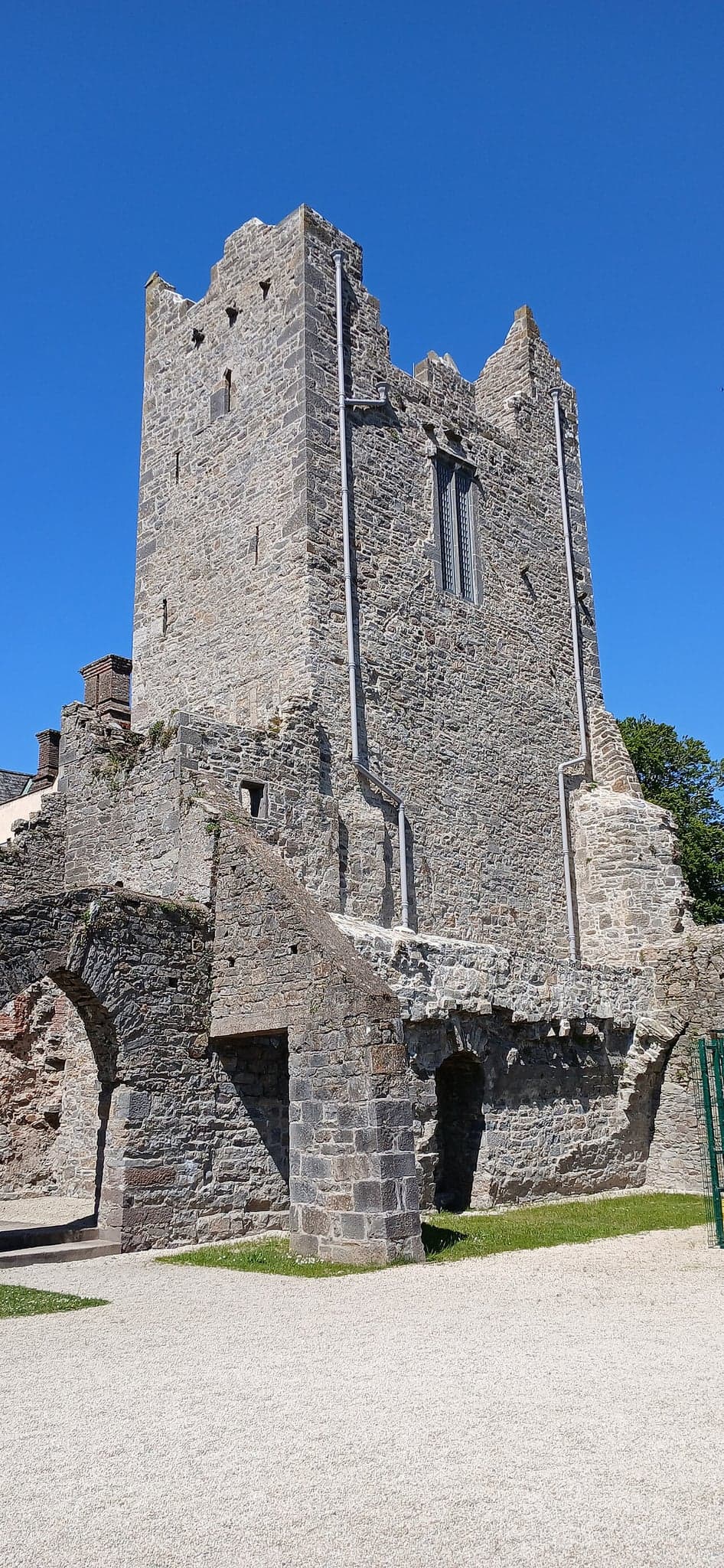
Ormonde Castle, also known by its Irish name Caisleán Urmhumhan, is a significant late-medieval hill castle situated on the east bank of the River Suir in Carrick-on-Suir, County Tipperary, Ireland. This castle exemplifies the fortified residences typical of the 15th century in Ireland, serving both defensive and residential purposes. Its strategic location overlooking the river allowed control over river traffic and local trade routes, which was crucial during the turbulent medieval period.
Historical background and significance
The origins of Ormonde Castle date back to the mid-15th century, during a time when Ireland was characterized by frequent clan conflicts and shifting allegiances. The castle was built by the powerful Butler family, Earls of Ormond, who were prominent Anglo-Irish nobles. The Butlers played an influential role in Irish politics and military affairs throughout the medieval era. The castle served as a stronghold and administrative center for their extensive lands in the region.
Throughout its history, Ormonde Castle witnessed numerous historical events, including local skirmishes and power struggles typical of the period. Its robust fortifications reflect the need for protection against rival clans and English forces alike. The castle remained in Butler family ownership for several centuries, symbolizing their enduring influence in southeastern Ireland.
Architectural features and layout
The oldest surviving element of the castle is a walled bawn dating from the mid-15th century. This defensive enclosure is characterized by thick stone walls designed to resist attacks and protect the inner courtyard. The bawn is fortified by towers positioned at the northeast and northwest corners, providing vantage points for lookouts and archers.
The castle's design reflects typical characteristics of late-medieval Irish castles, combining military functionality with residential comfort. The towers likely contained living quarters, storage rooms, and defensive positions such as arrow slits and battlements. The bawn walls would have enclosed a courtyard used for daily activities, livestock, and gatherings.
Additional structures within the castle complex may have included a great hall, chapel, kitchens, and ancillary buildings, although many of these features have not survived intact. The castle’s hilltop position enhances its defensive capabilities by providing natural elevation and clear sightlines over the surrounding landscape.
Construction techniques and materials
The castle was primarily constructed using locally quarried stone, typical of the period. The masonry exhibits the robust and practical style of late-medieval fortifications in Ireland, with thick walls designed to withstand sieges and artillery attacks. The towers feature narrow windows and arrow slits that balance defense with the need for light and ventilation.
The bawn walls are substantial, often several feet thick, and built with rubble core masonry faced with cut stone. The use of lime mortar would have bonded the stones, providing stability and durability. Defensive features such as crenellations and machicolations might have been present, although their current condition varies due to centuries of weathering and partial ruin.
Preservation and current condition
Today, Ormonde Castle stands as a partially preserved example of a late-medieval hill castle in Ireland. The surviving bawn walls and towers offer valuable insight into the defensive architecture of the period. While some sections have deteriorated, the castle remains an important cultural and historical landmark in County Tipperary.
Conservation efforts have focused on stabilizing the existing structures to prevent further decay. The castle is accessible to visitors who wish to explore its historical fabric and appreciate its commanding position overlooking the River Suir. Interpretive signage and guided tours may be available to provide context about the castle's history and architectural significance.
Visitor information and cultural importance
Ormonde Castle is a notable attraction for those interested in medieval Irish history and castle architecture. Its location in Carrick-on-Suir makes it accessible for day trips from larger cities such as Waterford and Kilkenny. The castle's blend of military and residential architecture offers a tangible connection to the turbulent history of the region.
Visitors can explore the remains of the bawn and towers, gaining an understanding of the defensive strategies employed during the late medieval period. The castle also contributes to the cultural heritage of County Tipperary, reflecting the legacy of the Butler family and their role in shaping local history.
Frequently asked questions (FAQ)
- How do I get to Ormonde Castle?
- Ormonde Castle is located in Kilkenny, Ireland, easily accessible by car or public transport. If you're driving, there are parking facilities nearby, and the castle is within walking distance from the town center.
- What is the historical significance of Ormonde Castle?
- Ormonde Castle is a notable example of medieval architecture and has a rich history dating back to the 12th century. It was once the residence of the powerful Butler family, showcasing their influence in Irish history.
- When was Ormonde Castle built?
- Construction of Ormonde Castle began in the 12th century, with significant expansions and renovations occurring over the centuries. The castle reflects various architectural styles that evolved during its long history.
- Can I take guided tours of Ormonde Castle?
- Yes, guided tours are available for visitors at Ormonde Castle, providing in-depth insights into its history and architecture. These tours are led by knowledgeable guides who share fascinating stories about the castle and its former inhabitants.
- Why is Ormonde Castle a popular tourist attraction?
- Ormonde Castle is popular due to its stunning architecture, rich history, and picturesque setting. Visitors are drawn to its impressive stone walls and the surrounding beautiful gardens, making it a perfect spot for history enthusiasts and photographers alike.
- Is it possible to host events at Ormonde Castle?
- Yes, Ormonde Castle can be rented for private events, including weddings and corporate gatherings. The unique setting and historical ambiance make it a memorable venue for special occasions.
- What are the opening hours for Ormonde Castle?
- Ormonde Castle is generally open to visitors from 10 AM to 5 PM daily, with extended hours during the summer months. It’s advisable to check the official website for any seasonal changes or special closures.
- What are the ticket prices for Ormonde Castle?
- Ticket prices for Ormonde Castle are typically affordable, with discounts available for children and seniors. Visitors are encouraged to check the official website for the most current pricing and any special deals.
- When is the best time to visit Ormonde Castle?
- The best time to visit Ormonde Castle is during the late spring and early summer months when the weather is pleasant, and gardens are in full bloom. This time also sees fewer crowds, allowing for a more enjoyable experience.
- Are there any nearby attractions to visit after Ormonde Castle?
- Yes, there are several nearby attractions, including Kilkenny Castle and St. Canice's Cathedral, both of which are within walking distance. Exploring the charming streets of Kilkenny will also reveal numerous shops, cafes, and restaurants to enjoy.
Photo gallery

Information
Loading map...
Visitor reviews
No reviews yet. Been here? Write the first review and help other travelers!
Write the first reviewVisited this castle? Share your experience
Your review helps other travelers and adds first-hand knowledge to our encyclopedia.



