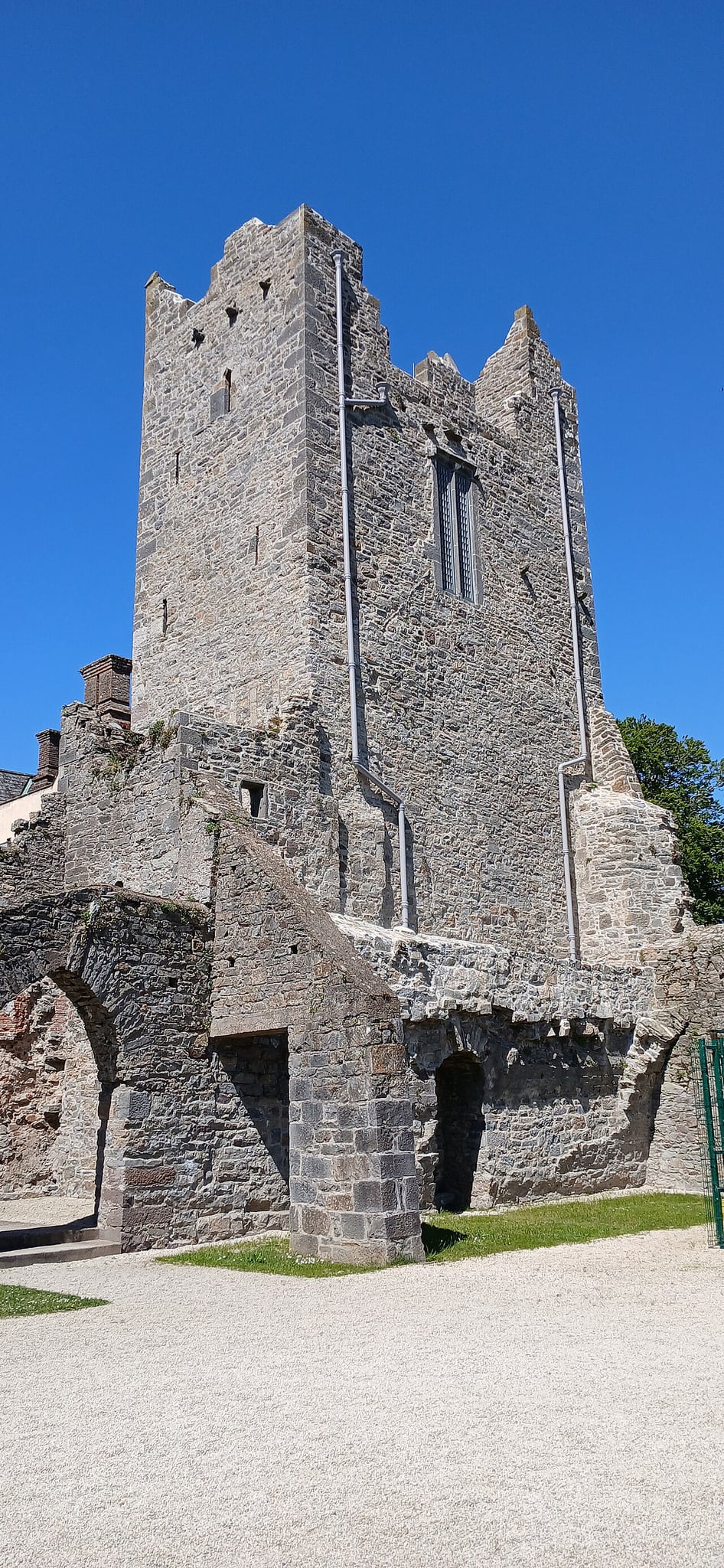
Ormond Castle
Ormond Castle, also known as Ormonde or Carrick Castle, is a remarkable historic site located in Carrick-on-Suir, County Tipperary, Ireland. This castle uniquely combines a medieval defensive structure with the earliest Tudor manor house in Ireland, reflecting centuries of Irish history and architectural evolution. The castle's story begins in the early 14th century, with its initial construction attributed possibly to the Wall family, before becoming a key seat for the influential Butler family.
Early history and medieval origins
The first mention of a castle at Carrick dates back to 1315, when the site was granted to Edmund Butler, newly created Earl of Carrick, by King Edward II of England. At that time, the castle was already in ruins, indicating a prior construction likely in the early 1300s. By 1366, the castle was recorded as inhabited again, marking the start of its significance as a fortified residence.
The original medieval castle consisted of a D-shaped bawn, a fortified enclosure typical of Irish castles, situated on the left bank of a bend in the River Suir. This bawn was built just outside the town walls of Carrick, serving both defensive and administrative functions. In the 15th century, two large towers were added at the north corners of the bawn, enhancing its fortifications and providing lookout points for surveillance and defense.
The tudor manor house and elizabethan connections
During the 1560s, Thomas Butler, the 10th Earl of Ormond and a prominent courtier of Queen Elizabeth I, commissioned the construction of a Tudor manor house attached to the north wall of the medieval castle. This manor was the first of its kind in Ireland, designed to showcase the latest architectural style and to honor Elizabeth I, with whom Thomas Butler had a close familial connection and childhood relationship.
The manor house features a distinctive U-shaped plan enclosing a small courtyard, with two stories and a gabled attic. The facade is marked by mullioned windows on both floors and a central porch with projecting oriel windows, which allow additional light and add to the building's elegance. Inside, the first-floor gallery is richly decorated with Elizabethan plasterwork, including a frieze and two intricately carved stone fireplaces. One fireplace bears a large limestone hearth dated to 1565, adorned with stucco reliefs depicting Queen Elizabeth I flanked by allegorical figures representing Equity and Justice.
Elizabeth I planned to visit Ormond Castle twice, though she never made the journey. The Earl's admiration for the queen was so profound it reportedly caused personal strife, leading to his wife Elizabeth Berkeley leaving him. The castle also holds religious historical significance, as Archbishop Dermot O’Hurley, an Irish Catholic martyr, stayed there in 1583 before his arrest, a poignant episode reflecting the religious tensions of the Elizabethan era.
17th-century turmoil and later history
In the mid-17th century, Ormond Castle was embroiled in the conflicts of the Cromwellian conquest of Ireland. The castle surrendered to Cromwell's forces in 1649 after a brief resistance. Subsequently, James Butler, Marquess of Ormond, attempted to retake the castle but was unsuccessful. Ownership was granted to Sir John Reynolds during this period but was restored to James Butler in the 1660s.
Following James Butler's death in 1688, the Butler family abandoned Ormond Castle as a residence, though they retained ownership for centuries afterward. The castle was maintained by caretakers but ceased to be a family home.
In the 20th century, stewardship of Ormond Castle passed to the Irish State in 1947. Since then, restoration efforts have preserved both the medieval bawn and the Tudor manor house, allowing the castle to serve as a museum and cultural heritage site.
Architectural features and preservation
The surviving medieval elements of Ormond Castle include the stone bawn with its north corner towers, exemplifying typical late medieval defensive architecture. The bawn's position on the east bank of the River Suir provided natural defense and strategic control over the surrounding area.
The attached Tudor manor house is particularly notable for its early introduction of English Renaissance architectural elements into Ireland. The manor's interior boasts a long gallery with elaborate plasterwork ceilings and finely carved fireplaces, which are rare survivals of Elizabethan decorative arts in an Irish context.
State-led restoration has carefully preserved these features, ensuring the castle remains a vital link to Ireland's medieval and Tudor past. Visitors today can explore the castle and manor house, gaining insight into the lifestyle of the Anglo-Irish aristocracy and the turbulent history of the region.
Visiting ormond castle
Ormond Castle is open to the public as a museum from April to November, offering guided tours that highlight its architectural and historical significance. The site provides a unique opportunity to witness the fusion of medieval fortification with Tudor domestic architecture, set against the scenic backdrop of the River Suir.
The castle's blend of history, architecture, and cultural heritage makes it a recommended destination for visitors interested in Ireland's rich past and the evolution of castle design.
Frequently asked questions (FAQ)
- How do I get to Ormond Castle in Carrick-on-Suir?
- Ormond Castle is located in Castle Park, Carrick-on-Suir, County Tipperary. It is accessible by car and local public transport, with parking available nearby.
- What is the historical significance of Ormond Castle?
- Ormond Castle is significant for its combination of medieval fortifications and the earliest Tudor manor house in Ireland, reflecting the Butler family's influence and Elizabethan connections.
- When can I visit Ormond Castle?
- The castle is open to visitors from April to November, offering guided tours that showcase its architecture and history.
- Is Ormond Castle wheelchair accessible?
- While the castle grounds are accessible, some interior areas may have limited access due to the historic nature of the buildings. Visitors are advised to contact the site for specific accessibility information.
- Are there any special events held at Ormond Castle?
- Ormond Castle occasionally hosts cultural and historical events, especially during the summer months. Check the official website or local listings for current event schedules.
Information
Opening hours
April to November, daily
Ticket prices
Admission fee applies
Current owner
Irish State
Address
Castle Park, Carrick-on-Suir, County Tipperary, Ireland
Loading map...
Visitor reviews
No reviews yet. Been here? Write the first review and help other travelers!
Write the first reviewVisited this castle? Share your experience
Your review helps other travelers and adds first-hand knowledge to our encyclopedia.