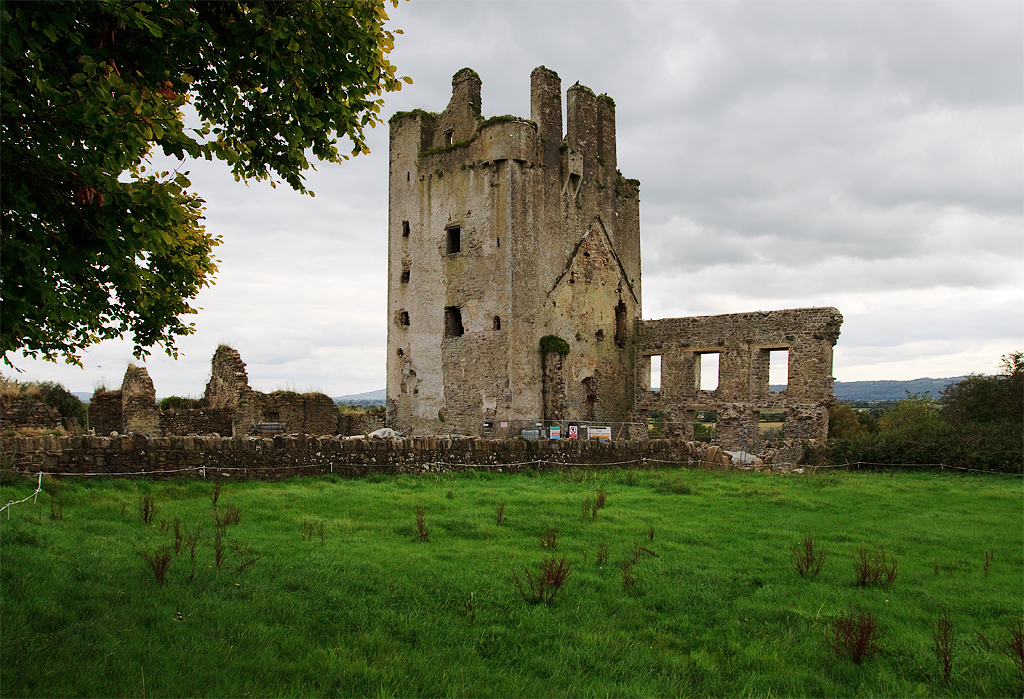
Ballynoran Castle
Ballynoran Castle, also known by its alternate names Ardcollum, Dove Hill, and Duffhill Castle, is a historic tower house located in the townland of Ballynoran in County Tipperary, Ireland. This castle is part of a series of similar structures built along the northern banks of the River Suir during the 15th and 16th centuries, a period marked by the construction of many fortified residences known as tower houses. These castles served both defensive and residential purposes during a time of frequent local conflicts and shifting power dynamics.
Historical background and ownership
Ballynoran Castle is believed to have been constructed by the Mandeville family, who held lands in the region that were previously controlled by the O’More family. There is some historical ambiguity regarding its original ownership, as another source suggests the possibility that the Wall family may have originally held the property. The castle's strategic importance is underscored by its military use; in 1542, it was garrisoned by Sir Thomas Butler of Cahir Castle, a prominent figure of the time. Subsequently, the castle was reclaimed by the Earl of Ormond, a powerful noble family influential in Irish affairs.
By the mid-17th century, Ballynoran Castle was recorded in the Civil Survey as "a small castle wanting repaire," indicating that it had fallen into a state of disrepair by that time. This reflects the broader decline of many tower houses as military and residential needs evolved.
Architectural features and structure
The castle is a typical example of an Irish tower house with a square plan and rises to four stories in height. Tower houses were a common form of fortified dwelling in Ireland during the late medieval period, designed to provide both defense and domestic accommodation. The vertical emphasis of the structure allowed for a small footprint with multiple floors for living quarters, storage, and defense.
Although the castle retains its basic form, it is currently almost entirely covered in ivy, which obscures many of its architectural details. The tower's walls would originally have included narrow windows or arrow slits for defense, thick stone masonry, and possibly features such as battlements or machicolations, typical of the period's military architecture.
Location and current condition
Ballynoran Castle is situated on private farmland in the Ballynoran townland, making direct public access restricted. However, the castle can be viewed from a nearby public road located just to the north of the site. Its location along the River Suir places it within a historically strategic landscape where control of river crossings and fertile lands was crucial.
The castle's current condition is that of a partially preserved tower house, with significant ivy growth contributing to its weathering. While the structure remains standing, it lacks restoration and is not open for interior visits, reflecting the challenges of preserving many such privately owned medieval structures in Ireland.
Context within Irish tower houses
Ballynoran Castle is one of several tower houses in the region, including Poulakerry Castle, which similarly line the northern banks of the River Suir. These castles collectively represent the typical defensive and residential architecture of the late medieval period in Ireland. Tower houses were often built by local lords and gentry to assert control over their lands and provide protection during times of unrest.
The construction of these castles in the 15th and 16th centuries corresponds with a period of increasing fortification in Ireland, as families sought to defend their holdings against rival clans and external threats. Ballynoran Castle's association with notable families such as the Mandevilles, Butlers, and the Earl of Ormond links it to the broader political and social history of the region.
Visiting information and accessibility
Although Ballynoran Castle is not open to the public due to its location on private farmland, visitors can appreciate its exterior and setting from the adjacent public road. The castle's ivy-covered walls and historic silhouette make it a point of interest for those exploring County Tipperary's medieval heritage.
Visitors interested in Irish tower houses and medieval architecture may also explore nearby castles along the River Suir to gain a fuller understanding of the region's fortified landscape. Ballynoran Castle remains a visible reminder of Ireland's turbulent past and the architectural responses to it during the late medieval era.
Frequently asked questions (FAQ)
- Can I visit Ballynoran Castle?
- Ballynoran Castle is located on private farmland and is not open for interior visits, but it can be viewed from a nearby public road.
- What is the historical significance of Ballynoran Castle?
- Ballynoran Castle is a 15th-16th century tower house linked to the Mandeville family and notable Irish figures like Sir Thomas Butler and the Earl of Ormond.
- What architectural features does Ballynoran Castle have?
- The castle has a square plan and four stories, typical of Irish tower houses, with thick stone walls and defensive features, though much is obscured by ivy.
- Where is Ballynoran Castle located?
- It is situated in the Ballynoran townland in County Tipperary, Ireland, along the northern banks of the River Suir.
- Are there other similar castles near Ballynoran Castle?
- Yes, Ballynoran Castle is part of a series of tower houses along the River Suir, including Poulakerry Castle, built during the same period.
Information
Current owner
Private owner
Loading map...
Visitor reviews
No reviews yet. Been here? Write the first review and help other travelers!
Write the first reviewVisited this castle? Share your experience
Your review helps other travelers and adds first-hand knowledge to our encyclopedia.