Orchardton Tower
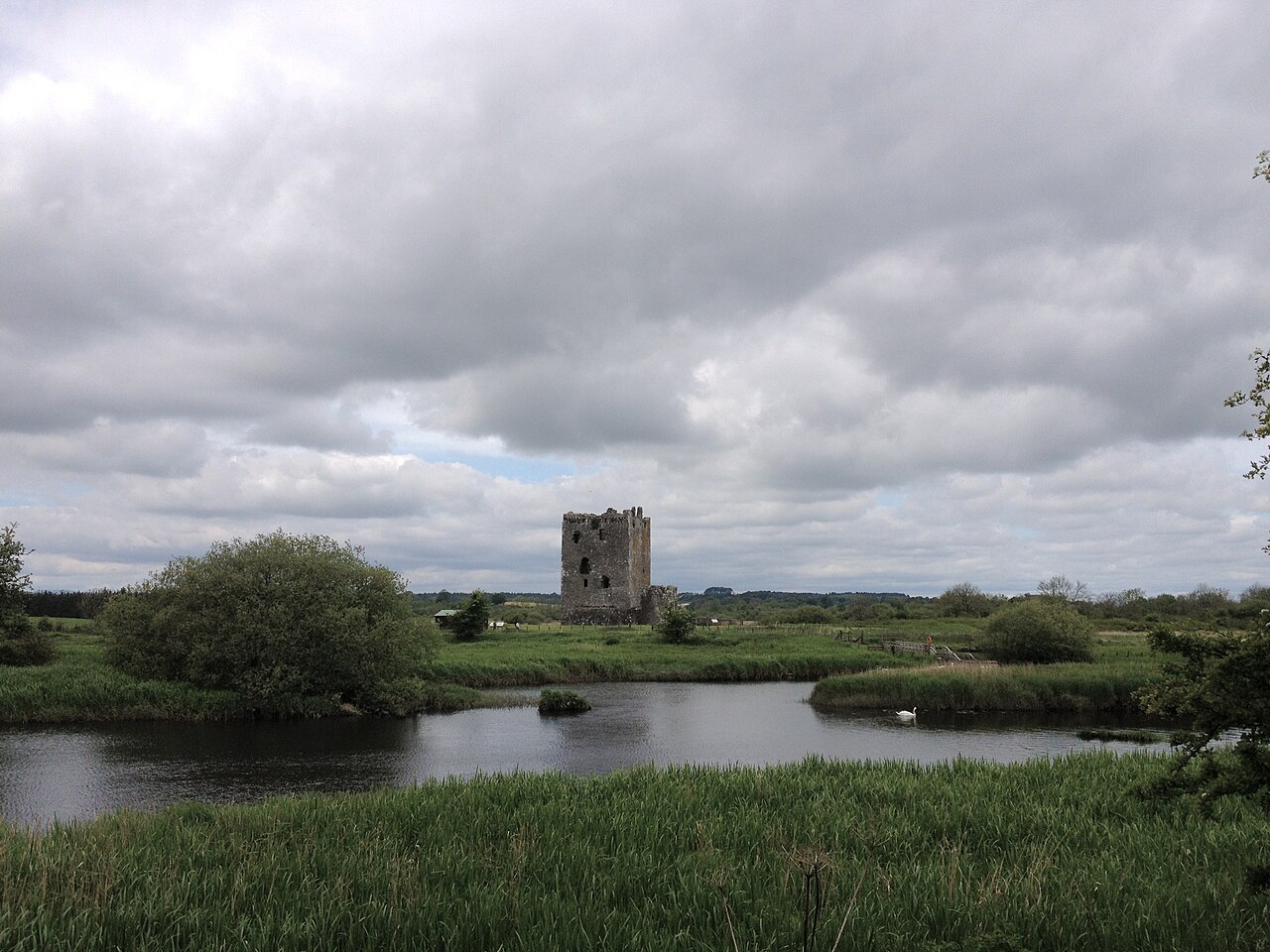
Orchardton Tower stands as a remarkable example of medieval Scottish architecture, distinguished by its unique cylindrical form. Located near Castle Douglas in Scotland, this tower house was constructed in the mid-15th century, shortly after 1456, when John Cairns was granted the lands of Orchardton. This transfer of land from the Douglas family, known historically as the Black Earls, likely rewarded Cairns for his loyalty to King James II during turbulent conflicts with the powerful Douglas clan. The Cairns family had established roots in the region from the early 1400s, with notable figures such as Alexander Cairns, Provost of Lincluden Collegiate Church until 1422, and John Cairns, a military engineer who contributed to royal projects including King David’s Tower at Edinburgh Castle.
The tower’s cylindrical design is an architectural anomaly in Scotland, as round towers had largely fallen out of favor by the 13th century. Orchardton Tower, built approximately two centuries later, remains the only recorded cylindrical tower house in Scotland. While some suggest possible influence from Irish round towers, no direct historical link has been established, making Orchardton Tower a unique study in medieval Scottish fortification.
Historical significance and ownership lineage
The Cairns family maintained control of Orchardton Tower through the 15th and 16th centuries. John Cairns’s grandson, William Cairns, was involved in regional disputes, notably supporting family members implicated in the 1527 killing of Thomas McLellan of Bombie in Edinburgh. After William’s death in 1558, the estate was divided among his three daughters. The portion containing Orchardton Tower was sold in 1616 to Robert Maxwell, who was later created a baronet in 1663, marking a significant shift in the estate’s stewardship.
The Maxwell family's tenure coincided with the Scottish Reformation and subsequent religious and political upheavals. A prominent Maxwell descendant, also named Robert Maxwell, born in the early 18th century and raised in France, served as an officer in the French army. He participated in the Jacobite rising of 1745 and was wounded at the Battle of Culloden. His status as a foreign officer spared him from execution, allowing his return to Scotland where he converted from Catholicism to Protestantism. After a lengthy legal battle, he reclaimed the Orchardton estate in 1771.
Following his restoration of ownership, Robert Maxwell built a new manor house, Orchardton Castle, near the original tower. Stones from a now-ruined adjacent castle were repurposed for this manor, reflecting evolving architectural tastes and domestic needs. Financial difficulties forced the Maxwells to sell the estate to the Douglas family in 1785, after which Orchardton Tower was abandoned as a residence.
Architectural features and layout
Orchardton Tower is a rare surviving example of a fully cylindrical Scottish tower house, standing approximately 11 meters tall and measuring about 9 meters in diameter. The tower tapers gently toward the top and is positioned at the northeastern corner of a fortified enclosure known as a barmkin. This defensive courtyard once contained various outbuildings such as livestock shelters, storage cellars, a bakehouse, and likely an upper-floor hall, indicating a self-sufficient domestic and defensive complex.
The tower’s walls are impressively thick, approximately 1.8 meters, designed for robust defense. At the summit, a corbelled parapet projects outward, supporting battlements and defensive features. A distinctive gabled caphouse crowns the tower, housing a spiral staircase embedded within the wall thickness that connects the floors internally.
Originally, access to the living quarters was through a first-floor doorway reached by a stair from the barmkin below. This stair was possibly removable to secure the entrance. In the 17th or 18th century, this entrance was modified: a window on the tower’s northern face was converted into a permanent ground-level door with a stone stair, improving accessibility.
Interior spaces and defensive design
The tower’s lowest floor is a vaulted cellar with an arched ceiling, used primarily for storage. Above this lies the main hall, the primary living and gathering space, featuring a fireplace for heating, deep window recesses with built-in seating, and a carved lavabo or piscina for ritual or practical washing. The two upper floors each contain a single room, constrained by the tower’s narrow circular footprint. These floors originally had timber floors and ceilings, which have since collapsed.
The spiral staircase within the wall allowed discreet and efficient movement between floors without compromising interior space. This design reflects a balance between domestic comfort and defensive necessity, typical of Scottish tower houses but uniquely expressed here in a cylindrical form.
Later history and preservation
Adjacent to the tower once stood a separate castle, now lost, whose stones were reclaimed for the construction of the nearby Orchardton Castle manor. This reuse of materials illustrates the transition from medieval fortification to more modern residential architecture. After the Maxwells sold the estate to the Douglas family, Orchardton Tower was abandoned and fell into ruin.
Today, Orchardton Tower is recognized as a Scheduled Ancient Monument and is under the care of Historic Environment Scotland. Its well-preserved ruins offer valuable insights into medieval Scottish defensive architecture and social history. The tower remains an important cultural landmark, attracting historians and visitors interested in Scotland’s unique architectural heritage.
Significance in Scottish castle architecture
Orchardton Tower’s cylindrical design sets it apart from the more common rectangular or L-plan tower houses of Scotland. This architectural choice, unusual for its time, provides a rare glimpse into alternative medieval fortification styles. The tower’s robust construction, defensive features, and domestic accommodations exemplify the dual purpose of Scottish tower houses as both residences and strongholds.
Its survival as the only known cylindrical tower house in Scotland makes Orchardton Tower a subject of ongoing study and preservation efforts. The tower’s combination of historical significance, architectural uniqueness, and cultural legacy ensures its place as a notable monument in Scotland’s medieval landscape.
Frequently asked questions (FAQ)
- How do I get to Orchardton Tower?
- Orchardton Tower is located near Castle Douglas, easily accessible by car or public transport. If you are driving, there is parking available nearby. For public transport, check local bus routes that connect to Castle Douglas and inquire about local taxi services for the final leg of your journey.
- What is the historical significance of Orchardton Tower?
- Orchardton Tower dates back to the 19th century and is an example of the Gothic Revival architectural style. It was built as a private residence and has strong historical ties to the local area, showcasing the lifestyle of the gentry during that period. The tower stands as a testament to the region's rich history and cultural heritage.
- When was Orchardton Tower built?
- The construction of Orchardton Tower began in the early 1860s and was completed in 1864. Designed by the architect John McLellan, the tower was originally intended to serve as a hunting lodge. Its unique architectural features and historical context make it an interesting site for visitors.
- Can I enter Orchardton Tower?
- Access to the interior of Orchardton Tower is generally limited, but it may be available for special events or guided tours at certain times of the year. Always check the official website or contact local tourism information for up-to-date details on visiting opportunities. The surrounding grounds, however, are open for exploration.
- Why is Orchardton Tower a popular attraction?
- Orchardton Tower attracts visitors due to its stunning architecture, picturesque setting, and its place in local history. The scenic views from the tower and its tranquil surroundings provide a perfect backdrop for photography and relaxation. It is also an excellent spot for those interested in Scottish heritage and architecture.
- Is it possible to hold events at Orchardton Tower?
- Yes, Orchardton Tower can host various events, including weddings and private gatherings, depending on availability and permissions. Interested parties should reach out to local event coordinators or the management for more information on booking and arrangements. This unique venue offers an unforgettable experience for special occasions.
- What are the opening hours for Orchardton Tower?
- Orchardton Tower's opening hours can vary seasonally, so it's best to check the official website for current information. Typically, it is open to visitors during daylight hours, especially in the summer months. Always consider checking ahead for any special events that might affect accessibility.
- What nearby attractions should I visit while at Orchardton Tower?
- While visiting Orchardton Tower, you can explore the beautiful countryside of Dumfries and Galloway, including nearby Castle Douglas, known for its local shops and eateries. Additionally, the Galloway Forest Park and the Solway Coast are within a short drive, offering stunning natural landscapes and outdoor activities. These attractions complement your visit to the tower for a full day of exploration.
- What are the ticket prices for visiting Orchardton Tower?
- Orchardton Tower may not have a standard entry fee due to limited access to the interior; however, donations are often welcomed to help maintain the site. For events or guided tours, pricing may vary, so it's advisable to check their official website for details. Always confirm in advance to ensure a smooth visit.
Information
Website
Visit websiteSources & official resources
Verify the information above using these authoritative references.
Loading map...
Visitor reviews
No reviews yet. Been here? Write the first review and help other travelers!
Write the first reviewVisited this castle? Share your experience
Your review helps other travelers and adds first-hand knowledge to our encyclopedia.