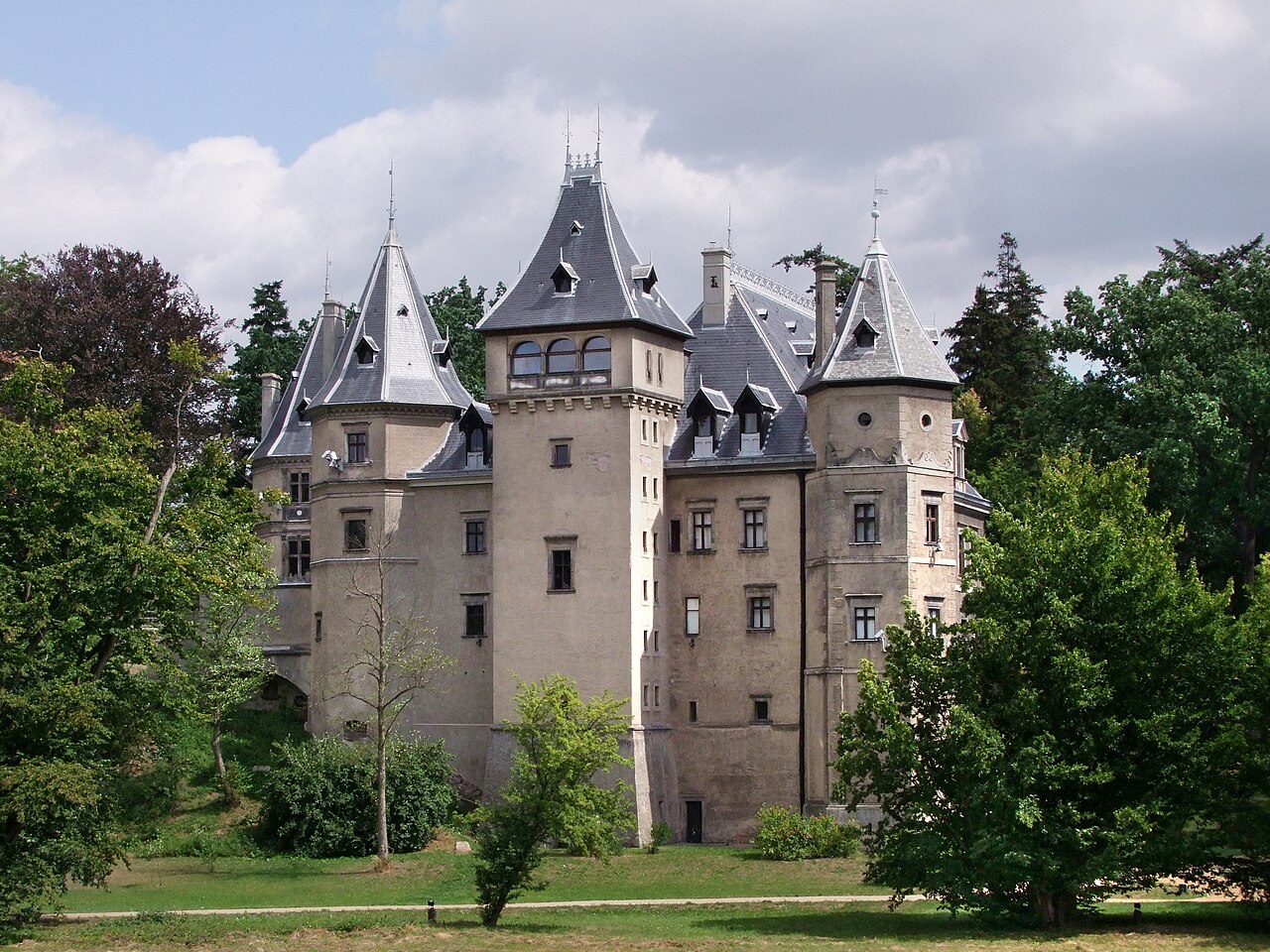
Opatówek
Opatówek Castle, once located in the western part of the village of Opatówek on the left bank of the Cienia River, holds a significant place in Polish medieval history as the former residence of the archbishops of Gniezno. This 14th-century castle was originally constructed in the mid-1300s by Archbishop Jarosław Bogoria Skotnicki, a prominent ecclesiastical figure of the time. Strategically positioned on a small elevation and surrounded by a water-filled moat, the castle served more as a fortified residence than a military stronghold.
Medieval origins and architectural layout
The castle's original design likely consisted of two parallel buildings built from brick atop a stone foundation. The entrance was probably located on the eastern side, facing the town, and may have been fortified by a gate tower, a common defensive feature in medieval architecture. The entire complex was enclosed by an irregularly shaped perimeter wall, which would have provided basic defense and delineated the castle grounds.
Despite its fortifications, the castle did not play a significant military role and gradually lost its defensive characteristics over time. By the early 16th century, under the direction of Archbishop Jan Łaski, the castle underwent expansion, reflecting a shift towards more residential and administrative functions rather than military use. Historical inventories from the late medieval period describe the castle as comprising two three-story buildings, one two-story building, and a tower, indicating a sizable and complex structure.
Transition to modern era and palace construction
By the late 18th century, the castle was still in use but had diminished in strategic importance. In 1807, the estate of Opatówek was acquired by General Józef Zajączek, a notable military leader and statesman. He ordered the demolition of the old archiepiscopal castle to make way for a new palace, marking a significant transformation of the site from a medieval fortress to a modern residence.
The palace constructed by Zajączek reflected the architectural tastes of the early 19th century and represented a departure from the medieval defensive style to a more comfortable and stately home. Later in the 19th century, the palace was remodeled in an eclectic style under the ownership of the industrial Schlosser family, which added stylistic variety and modernized the building to contemporary standards.
Demise and current state of the site
Unfortunately, the palace did not survive into the present day, having been dismantled and demolished in the 20th century. The grounds were leveled, and today no visible remains of the castle or palace structures exist. The only physical evidence of the medieval stronghold that once stood here are traces of the moat that once encircled the original castle, serving as a subtle reminder of the site's historical significance.
While the physical structures are lost, the history of Opatówek Castle remains an important chapter in the region's cultural heritage. The site reflects the evolution of Polish noble and ecclesiastical residences from fortified medieval castles to modern palatial estates, illustrating broader architectural and social changes over several centuries.
Historical significance and cultural heritage
The castle's association with the archbishops of Gniezno, the highest-ranking ecclesiastical authorities in Poland, underscores its importance as a center of religious and political power in the region. The castle's construction during the high medieval period and its subsequent modifications provide valuable insights into the architectural trends and defensive needs of the time.
Moreover, the transformation of the site in the 19th century under General Zajączek and later the Schlosser family reflects the changing social landscape of Poland, where noble estates were adapted to new functions and styles, blending historical legacy with modern living.
Archaeological potential and preservation
Although the castle and palace no longer stand, the site holds archaeological potential that could reveal further details about the layout, construction techniques, and daily life within the medieval fortress. The preserved traces of the moat and any subsurface remains could contribute to a better understanding of the castle's original form and its evolution over time.
Preservation efforts focus on protecting the site from further degradation and promoting awareness of its historical value. Interpretive signage and local heritage initiatives help keep the memory of Opatówek Castle alive for residents and visitors interested in Poland's medieval past.
Frequently asked questions (FAQ)
- What is the historical significance of Opatówek Castle?
- Opatówek Castle was a residence of the archbishops of Gniezno, reflecting its role as a religious and political center in medieval Poland. It illustrates the transition from medieval fortifications to modern palatial estates.
- Can I visit any remains of the castle today?
- No visible structures of the castle or palace remain today, but visitors can see traces of the original moat that surrounded the medieval castle, marking its historical location.
- When was the original castle built and by whom?
- The original castle was built in the mid-14th century by Archbishop Jarosław Bogoria Skotnicki, serving as an episcopal stronghold.
- Why was the castle demolished?
- In 1807, General Józef Zajączek ordered the demolition of the medieval castle to build a new palace, reflecting changing architectural and residential needs.
- What architectural styles influenced the palace built on the site?
- The palace initially reflected early 19th-century styles and was later remodeled in the eclectic style by the industrial Schlosser family in the late 19th century.
Information
Loading map...
Visitor reviews
No reviews yet. Been here? Write the first review and help other travelers!
Write the first reviewVisited this castle? Share your experience
Your review helps other travelers and adds first-hand knowledge to our encyclopedia.