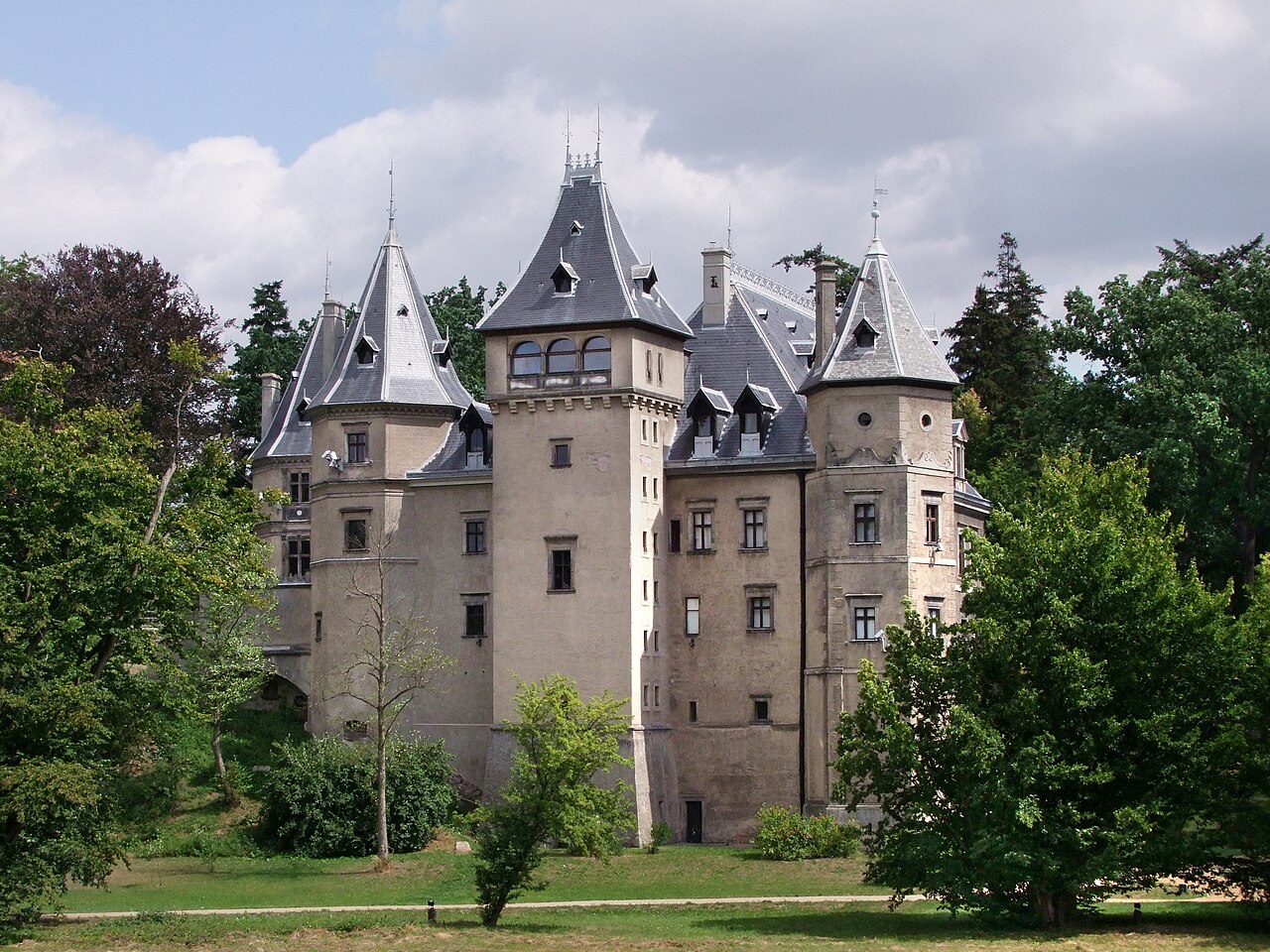
Kalisz
The royal castle in Kalisz stands as a significant historical monument in the city of Kalisz, Poland. Its origins trace back to the medieval period, with the earliest fortifications established in the mid-13th century. Over the centuries, the castle evolved into a Renaissance bastioned fortress, reflecting the architectural and defensive advancements of its time. Although today only ruins remain, the castle's foundations reveal a complex and strategically important structure that played a pivotal role in the region’s political and military history.
Early origins and medieval significance
The site of Kalisz has been known since antiquity, with the Roman geographer Ptolemy mentioning a settlement named Kalisia in the 2nd century AD. However, it was during the early Polish state under the Piast dynasty that the area gained prominence. A fortified stronghold existed in the district of Zawodzie, serving as one of the key centers of the emerging Polish state. This early fortification was integral to the administration and defense of the region.
During the period of Poland's fragmentation into duchies, the castle became the seat of Duke Mieszko III the Old. Due to frequent conflicts and natural disasters such as floods, a new town was established in the mid-13th century about 1.5 kilometers upstream on a sandy elevation by the Prosna River. It was here that the foundations for the later stone castle were laid.
Construction and architectural features
The castle constructed under the reign of King Casimir III the Great in the 14th century was a formidable stone fortress built near the then Toruń Gate. It formed part of a comprehensive defensive system designed to protect the city and its surroundings. The castle's layout was a near-square plan with sides measuring approximately 46 meters, surrounded by a moat nearly 15 meters wide and 3 meters deep.
The structure comprised four wings enclosing an inner courtyard. The northern wing was the main residential building, rising four stories and integrated with the city walls. The castle's main entrance was located in the southern wing, featuring a drawbridge over the moat—a classic defensive element of the period. The eastern and western wings served economic and administrative functions.
Unlike many medieval castles, the Kalisz castle did not have a prominent tower or keep, emphasizing its role as a residential and administrative center rather than a purely military fortress. In the 15th century, a secondary gate was added in the western wing, leading to an adjacent bailey separated by a moat and fortified with a stone wall and a tower.
Historical events and royal connections
The castle was an important seat for various officials including the general starost of Greater Poland, the voivode of Kalisz, and the burgrave. It also hosted several Polish kings, most notably King Władysław II Jagiełło, who stayed there multiple times between 1402 and 1423. This highlights the castle's significance as a royal residence and administrative hub.
Despite its importance, the castle endured numerous hardships. A devastating fire in 1537 severely damaged the western wing, which was never fully rebuilt, with a stable constructed in its place instead. Later, during the Swedish Deluge in the mid-17th century, the castle suffered further damage, particularly to the southern wing and gatehouse.
In the early 18th century, restoration efforts were undertaken, and the castle briefly served as a courthouse and archive. However, by the late 18th century, it was abandoned and fell into ruin. A final destructive fire in 1792 left the castle in a dilapidated state.
Decline and archaeological rediscovery
In the 19th century, the castle's remains were dismantled, and the site was repurposed for educational use. The Adam Asnyk High School was constructed on the castle grounds, erasing most above-ground traces of the medieval fortress. However, archaeological excavations in recent decades have uncovered the castle's foundations, providing valuable insights into its original structure and significance.
These excavations revealed the castle's moat, walls, and layout, confirming historical descriptions and enhancing understanding of its defensive and residential functions. The site is now recognized as an important cultural heritage landmark, with efforts to preserve and interpret the ruins for visitors and scholars alike.
Architectural style and legacy
The castle's architectural style is primarily Renaissance, reflecting the reconstruction and enhancements made in the 16th century. Its bastioned design incorporated elements typical of the period's military architecture, adapted to the local context and administrative needs.
Although the castle no longer stands above ground, its legacy endures through historical records, archaeological findings, and its influence on the urban development of Kalisz. The castle's strategic location and design exemplify the evolution of Polish fortifications from medieval to early modern times.
Visiting the site today
Today, visitors to Kalisz can explore the site where the royal castle once stood, primarily through the preserved foundations beneath the Adam Asnyk High School grounds. Informational panels and models help illustrate the castle's historical layout and significance. While no towering walls remain, the site offers a unique opportunity to connect with the region's medieval past and appreciate the architectural and historical heritage of Greater Poland.
The castle's story is a testament to the dynamic history of Kalisz, from its early medieval origins through Renaissance transformation to modern rediscovery and preservation efforts.
Frequently asked questions (FAQ)
- How do I get to the royal castle site in Kalisz?
- The castle site is located in central Kalisz near the Adam Asnyk High School at the intersection of Grodzka and Zamkowa streets. It is accessible by local public transport and on foot from the city center.
- What remains of the castle can I see today?
- Today, only the castle's foundations and moat remains are visible, preserved beneath the grounds of the Adam Asnyk High School. Informational panels and models help visitors understand the original layout.
- When was the castle originally built?
- The castle's earliest stone construction dates back to the mid-13th century, with significant Renaissance rebuilding occurring after a fire in 1537.
- Is there an entrance fee to visit the castle site?
- Visiting the castle ruins and archaeological site is free of charge, making it accessible to all visitors interested in history and architecture.
- What architectural style characterizes the castle?
- The castle is primarily Renaissance in style, reflecting the 16th-century reconstruction and bastioned design typical of that period.
Information
Opening hours
9:00-17:00, daily
Ticket prices
Free
Current owner
Municipality
Loading map...
Visitor reviews
No reviews yet. Been here? Write the first review and help other travelers!
Write the first reviewVisited this castle? Share your experience
Your review helps other travelers and adds first-hand knowledge to our encyclopedia.