Ōno Castle — Japan castle

Ōno Castle

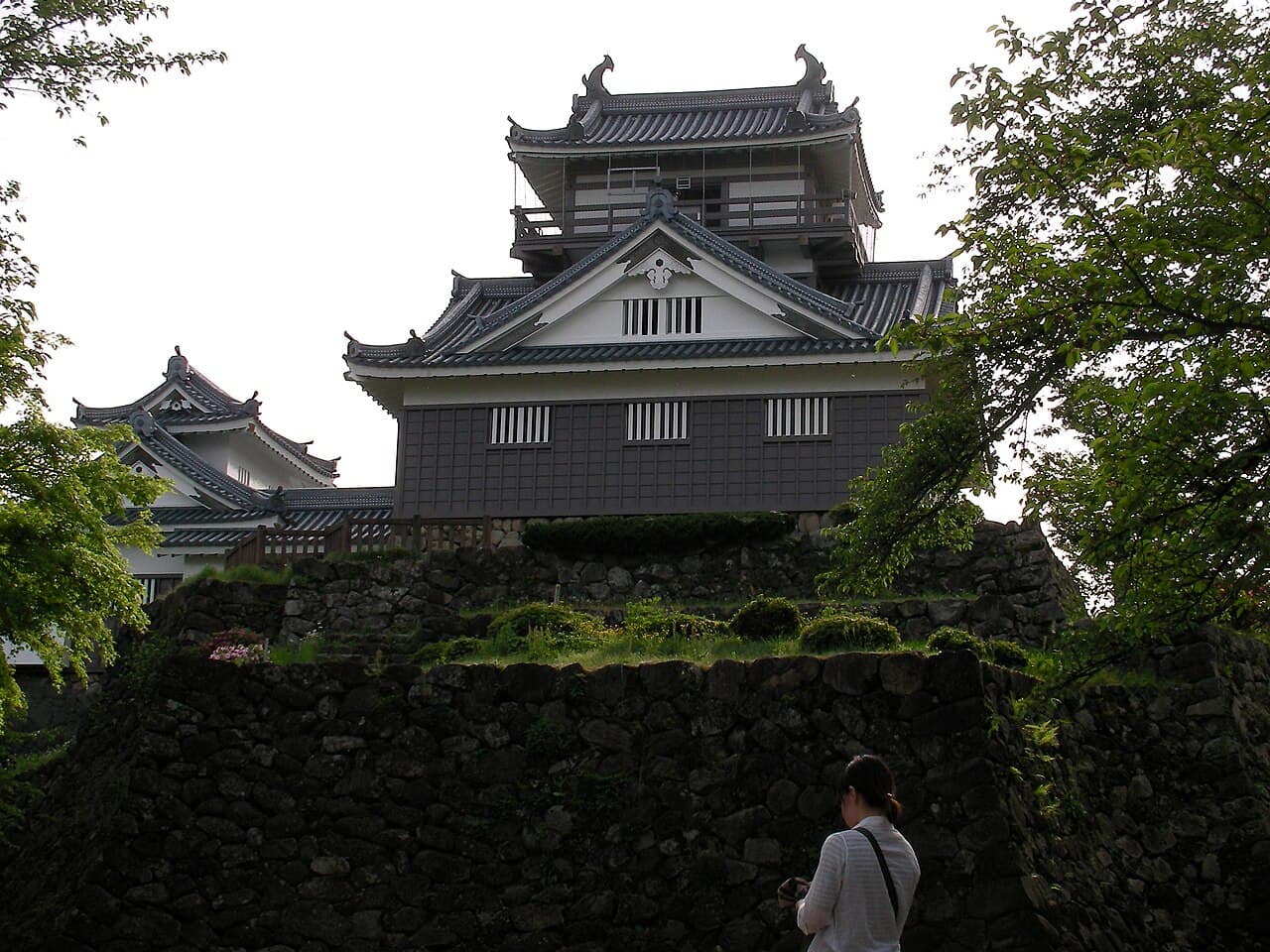
Ōno Castle in Fukui Prefecture, Japan
Ōno, Japan
Renaissance (15th–17th c.)
Ruins

Ōno Castle (大野城, Ōno-jō) is a historically significant hill castle located in the city of Ōno, within Fukui Prefecture in the Hokuriku region of Japan. Constructed during the turbulent Sengoku period in the 16th century, the castle played a crucial role in regional defense and governance. It later became the administrative center for the daimyō of the Ōno Domain under the Edo period Tokugawa shogunate.

Historical background and strategic importance

The construction of Ōno Castle occurred during the Warring States era, a time marked by frequent military conflicts among competing feudal lords. Its position on a hill provided a natural defensive advantage, allowing control over the surrounding territory and key travel routes in the Hokuriku region. The castle was initially built by the Kanamori clan, who were influential retainers serving powerful regional warlords. Over time, the castle changed hands as political power shifted, eventually coming under the control of the Okudaira clan and later the Doi clan during the Edo period.

Architectural features and layout

Ōno Castle exemplifies the typical characteristics of Japanese hill castles (yamajiro), integrating the natural topography into its defensive design. The castle complex included multiple baileys (kuruwa) arranged on terraces along the hillside, connected by winding paths and fortified gates. The main enclosure (honmaru) housed the tenshu or main keep, which was a multi-storied structure serving both as a residence and a last line of defense.

The castle's fortifications featured stone walls (ishigaki), which were skillfully constructed to follow the contours of the hill, enhancing both strength and aesthetic appeal. Wooden structures such as guard towers (yagura) and gates were strategically placed to monitor and repel attackers. Defensive elements like moats and earthen ramparts further strengthened the castle's resilience against siege warfare.

Main keep and defensive structures

The tenshu of Ōno Castle was notable for its robust construction, combining timber framing with plastered walls designed to resist fire and projectiles. Although the original keep no longer stands, historical records and archaeological findings provide insight into its size and architectural style, which reflected both practical military needs and the aesthetic sensibilities of the period.

Role during the Edo period

Under the Tokugawa shogunate, Ōno Castle served as the seat of the Ōno Domain, governed by a succession of daimyō families loyal to the shogunate. The castle functioned as a political and administrative center, overseeing the domain's affairs, tax collection, and local justice. During this relatively peaceful era, the castle's military importance diminished, but it remained a symbol of feudal authority and regional identity.

Architectural modifications during the Edo period included the addition of residential quarters, gardens, and storehouses, reflecting the castle's transition from a purely military fortress to a domainal palace. The castle town developed around the base of the hill, with samurai residences and merchant districts supporting the domain's economy.

Decline and current status

Following the Meiji Restoration in the late 19th century, the feudal system was abolished, and many castles across Japan were dismantled or fell into ruin. Ōno Castle was largely demolished, with only remnants of its stone walls and earthworks surviving today. Archaeological excavations have helped to uncover the castle's original layout and construction techniques, contributing to historical understanding and cultural preservation.

Today, the site of Ōno Castle is recognized for its cultural heritage value and is accessible to visitors interested in Japanese history and castle architecture. The surrounding area offers scenic views of the Hokuriku region, and local efforts aim to maintain and promote the castle ruins as a historical landmark.

Visiting Ōno Castle

Visitors to the Ōno Castle site can explore the remains of the stone walls, earthen embankments, and the castle's strategic hilltop position. Informational signage and guided tours provide context about the castle's history and significance. The best time to visit is during spring and autumn when the natural scenery enhances the experience.

Though no original buildings remain, the site offers a tangible connection to Japan's feudal past and the architectural ingenuity of Sengoku-period fortifications. Nearby attractions include traditional samurai residences and local museums that further illuminate the region's history.

Frequently asked questions (FAQ)

What is the historical significance of Ōno Castle?
Ōno Castle, built in the early 16th century, played an important role during the Sengoku period in Japan. It served as a strategic military stronghold and is known for its association with prominent samurai clans, particularly the Kanamori clan.
When was Ōno Castle constructed?
Ōno Castle was constructed in 1530 by the Kanamori clan. Over the years, it underwent several renovations and expansions, especially during the Edo period, which enhanced its architectural features.
How do I get to Ōno Castle?
Ōno Castle is accessible by public transportation from major cities like Kyoto and Osaka, with local trains and buses available. Once in Ōno, the castle is within walking distance from the train station, making it easy for visitors to explore.
Can I enter the main keep of Ōno Castle?
Yes, visitors can access the main keep of Ōno Castle, which houses a museum displaying historical artifacts and exhibits related to the castle's history. The interior offers a glimpse into the past, showcasing the castle's significance in Japanese history.
What are the opening hours for Ōno Castle?
Ōno Castle is typically open to visitors from 9 AM to 5 PM, with last entry at 4:30 PM. It is recommended to check the official website for any seasonal changes or special holiday hours before planning your visit.
Is it possible to visit Ōno Castle year-round?
Yes, Ōno Castle is open to visitors throughout the year, although the best time to visit is during the cherry blossom season in spring or the autumn foliage season. These times provide stunning views and a vibrant atmosphere around the castle.
What are the ticket prices for Ōno Castle?
The admission fee for Ōno Castle is quite reasonable, with tickets typically costing around 300 yen for adults and 150 yen for children. Discounts may be available for groups or special events, so it's advisable to inquire at the ticket booth.
Are there nearby attractions to visit after exploring Ōno Castle?
Yes, after visiting Ōno Castle, you can explore several nearby attractions, including the beautiful gardens of the city and local temples. The area also offers scenic walking trails that provide a great view of the castle and surrounding landscapes.

Photo gallery

Ōno Castle
Click to view

Photo by User:Ajax•CC BY-SA 3.0

1 photo • Click any image to view in full screen

Information

Hill Castle

Loading map...

Visitor reviews

No reviews yet. Been here? Write the first review and help other travelers!

Write the first review

Visited this castle? Share your experience

Your review helps other travelers and adds first-hand knowledge to our encyclopedia.

Write a review

(5/5)

0/2000 characters

Your review will be visible after admin approval

Nearby castles

16.6 km

Ichijodani Castle

Fukui, Japan

Ichijodani Castle stands as a remarkable example of a late medieval hill castle in Fukui, Japan. Established in 1471 by Asakura Takakage, it served as the family home and military stronghold of the powerful Asakura clan. The castle's strategic location in a long, narrow valley between two mountains allowed it to leverage the natural terrain for defense, with fortified gates guarding the narrow valley entrances. This unique topography contributed to the castle's effective fortifications and its ability to sustain a flourishing castle town within its bounds. During the turbulent Sengoku period, Ichijodani Castle and its surrounding town became a significant cultural and political center. The Onin War (1467–1477) drove many elite and educated individuals to seek refuge here, transforming Ichijodani into the cultural heart of the Echizen Province. This influx of talent and culture elevated the castle town's status beyond mere military importance, fostering an environment rich in arts, scholarship, and governance. The Asakura clan and Ichijodani's historical prominence The Asakura clan, under the leadership of Asakura Takakage and later his descendants, established Ichijodani as their principal base. The fifth lord, Asakura Yoshikage, played a pivotal role during the chaotic final years of the Sengoku period. Aligning himself with the Ashikaga shogunate, Yoshikage opposed the rising power of Oda Nobunaga. This political stance ultimately led to conflict, culminating in Nobunaga's attack and destruction of Ichijodani in 1573. The castle and town were burned, marking the end of Asakura dominance and a significant shift in regional power dynamics. Architectural and defensive features of Ichijodani Castle Ichijodani Castle is notable for its integration with the natural landscape. The castle occupies a narrow valley flanked by mountains, using the terrain as a natural defense barrier. At each end of the valley, narrow openings were secured with strong gates, creating choke points that could be heavily defended against attackers. Surrounding the castle town was a series of watchtowers and smaller forts, providing layered defenses and early warning capabilities. Castle town layout and fortifications The castle town itself was a vibrant and well-organized settlement, protected by a ring of watchtowers and fortified gates. The town's design reflected both military and civil planning, balancing defense with the needs of its inhabitants. Residences of high-ranking vassals and family members were located near the Asakura Yakata palace, which was itself a fortified structure acting as the clan's administrative and residential center. Sub castles and satellite fortifications Ichijodani's defensive network included several satellite castles and forts. Among these were Ichijodaniyama Castle, a large mountaintop fortress designed to withstand major sieges, though its distance from the town limited its role in everyday defense. Closer to the base of the mountain were Komihanachi Castle and Kojo Castle, which guarded critical routes leading to the mountaintop castle and the main town, respectively. This layered defense system exemplifies Sengoku period military architecture and strategic planning. Preservation and modern access Today, Ichijodani Castle is partially preserved, with archaeological efforts uncovering extensive ruins of the castle town, fortifications, and residential areas. The site offers visitors a glimpse into the Sengoku period's complex social and military structures. The nearby Asakura Museum provides additional context and exhibits related to the castle's history and the Asakura clan. Access to Ichijodani is facilitated by limited train and bus services from Fukui Station, with additional tourist buses and bicycle rentals available during peak seasons. Visitors can explore the approximately 2-kilometer-long valley on foot, enjoying the restored sections and ruins that reveal the castle's historical layout and significance. Challenges in preservation Preserving the ruins of Ichijodani Castle presents ongoing challenges. Natural factors such as tree root growth threaten the integrity of stone walls and foundations, while erosion must be carefully managed to protect the site. Recent efforts have focused on balancing ecological preservation with maintaining the structural remains, ensuring that this cultural heritage site endures for future generations. Ichijodani Castle in cultural memory Ichijodani Castle remains an important symbol of the Sengoku period's cultural and military history. Its story reflects the rise and fall of the Asakura clan and the broader conflicts that shaped Japan's path toward unification. The castle and its town continue to attract historians, archaeologists, and tourists, drawn by its rich history and evocative ruins. Visitors interested in Japanese castle architecture and Sengoku period history will find Ichijodani Castle a compelling destination. Its combination of natural defenses, strategic design, and historical significance offers valuable insights into the era's complex feudal dynamics and cultural developments.

Late Medieval (14th–15th c.)
Details
16.9 km
Ichijōdani Asakura Family Historic Ruins — Japan castle

Ichijōdani Asakura Family Historic Ruins

Fukui, Japan

The Ichijōdani Asakura Family Historic Ruins (一乗谷朝倉氏遺跡, Ichijōdani Asakura-shi Iseki) represent a significant archaeological site located in the Kidonouchi area of Fukui city, within Fukui Prefecture in Japan's Hokuriku region. These ruins mark the former residence and castle town of the powerful Asakura clan, who controlled the region for over a century during the Sengoku period of Japanese history, specifically from the mid-15th century until their downfall in the late 16th century. The historical context of Ichijōdani and the Asakura clan Established in the 15th century, Ichijōdani served as the political and cultural center for the Asakura family, who were notable daimyo (feudal lords) during the chaotic Sengoku era. This period was marked by social upheaval, military conflict, and shifting alliances across Japan as regional warlords vied for power. The Asakura clan fortified Ichijōdani as a castle town, blending residential, administrative, and military functions. The Asakura clan's rule lasted approximately 103 years, during which Ichijōdani flourished as a hub of governance, culture, and commerce. The clan was known for fostering the arts and embracing cultural refinement, distinguishing their domain from purely militaristic strongholds. However, their reign ended in 1573 when Oda Nobunaga, a prominent warlord aiming to unify Japan, defeated the Asakura forces, leading to the destruction of Ichijōdani. Architectural and archaeological significance Today, the site is classified as archaeological ruins, revealing the layout and remnants of a late-medieval castle town rather than a single fortress. Excavations have uncovered foundations of residences, temples, gardens, streets, and defensive structures, providing a rare glimpse into the urban planning and lifestyle of a Sengoku period castle town. The ruins include traces of moats, earthen walls, and stone foundations that once formed the defensive perimeter of the town. The arrangement of buildings reflects a sophisticated design balancing defense with residential comfort and aesthetic considerations. The site also contains the remains of Buddhist temples and other cultural facilities, underscoring the clan's patronage of religion and the arts. In June 2007, a collection of 2,343 artifacts excavated from Ichijōdani was designated as Important Cultural Properties by the Japanese government. These artifacts include everyday items, ceramics, tools, and weapons that enrich understanding of the period's material culture. Preservation and cultural heritage status Ichijōdani was designated a Special Historic Site in 1971, reflecting its importance as a cultural and historical treasure. The site is managed to preserve its archaeological integrity while allowing public access to explore the ruins and learn about the Sengoku period's social and military history. The preservation efforts focus on maintaining the visible remains and protecting the site from natural and human-induced damage. Interpretive signage, walking paths, and a museum nearby provide visitors with context and detailed information about the Asakura clan and the castle town's historical significance. Visiting Ichijōdani today Visitors to Ichijōdani can walk through the extensive ruins, which cover a large area of the valley. The site offers a unique opportunity to experience the scale and complexity of a 15th-century Japanese castle town and to observe the integration of military and residential urban design. The nearby museum exhibits many of the recovered artifacts and provides educational resources about the Sengoku period and the Asakura clan's role in Japanese history. Seasonal events and guided tours enhance the visitor experience, making Ichijōdani a valuable destination for those interested in Japanese medieval history and archaeology. Geographical setting and strategic importance Ichijōdani is situated in a valley surrounded by mountains, which offered natural defense advantages. The location allowed the Asakura clan to control key routes and maintain a stronghold in the Hokuriku region. The terrain influenced the town's layout, with defensive features adapted to the natural landscape. Urban planning and castle town features The castle town was carefully planned with a grid-like street system, residential districts for samurai and commoners, commercial areas, and religious sites. This organization reflects the dual military and civil functions of the site, combining protection with daily life and economic activity. Legacy of the Asakura clan Though ultimately defeated, the Asakura clan left a lasting imprint on Japanese history through their cultural patronage and the archaeological legacy of Ichijōdani. The site remains a key resource for understanding the Sengoku period's complex social and political dynamics.

Late Medieval (14th–15th c.)
Details
25.1 km
Kitanosho Castle — Japan castle

Kitanosho Castle

Fukui, Japan

Kitanosho Castle (北ノ庄城, Kitanoshō-jō) was a significant Japanese castle constructed in the late 16th century by the powerful warlord Shibata Katsuie. Located in what is now Fukui city in Fukui Prefecture, this castle is notable for its ambitious architectural design, particularly its towering nine-story tenshu (keep), which was among the largest of its time. Built in 1575, the castle was a symbol of Katsuie's power during the turbulent Sengoku period. Historical context and construction Kitanosho Castle was constructed during a period of intense military conflict and political upheaval in Japan known as the Sengoku era. Shibata Katsuie, a prominent general under Oda Nobunaga, commissioned the castle as a strategic stronghold. Unlike many Japanese castles built on hills or mountains, Kitanosho was a hirashiro, meaning it was built on flatland, which was less common and required extensive fortification to compensate for the lack of natural elevation. The castle's design reflected the evolving nature of Japanese castle architecture in the late 16th century, incorporating robust stone foundations and an imposing tenshu that rose nine stories high. This made it one of the tallest keeps of the period, showcasing both military strength and architectural innovation. The height of the keep was a statement of dominance and prestige, intended to impress both allies and enemies. Architectural features The nine-story tenshu of Kitanosho Castle was an exceptional feature, as most Japanese castles of the time had keeps of fewer stories. The tenshu served as the central tower and last line of defense, as well as the residence of the lord. The castle complex included multiple baileys surrounded by stone walls and moats, typical of the period's defensive design. While detailed records of the castle's full layout are scarce due to its brief existence, archaeological excavations have revealed substantial stone foundations and remnants of defensive structures. These findings provide insight into the castle's scale and the advanced construction techniques used. The castle's flatland location necessitated strong fortifications, including thick walls and wide moats, to protect against siege warfare. The battle of shizugatake and destruction Kitanosho Castle's history was cut short following the Battle of Shizugatake in 1583. This battle was a critical conflict between Shibata Katsuie and Toyotomi Hideyoshi, who sought to consolidate power after the death of Oda Nobunaga. Katsuie's forces were defeated decisively, leading to the castle's downfall. After the defeat, Katsuie committed the ritual suicide known as seppuku within the castle grounds. It is recorded that he tragically killed his wife, Oichi, before taking his own life. Following these events, Kitanosho Castle was set ablaze and destroyed, marking the end of its brief but notable existence. Archaeological significance and present-day remains Despite its destruction, the site of Kitanosho Castle remains an important cultural and historical landmark. Archaeological excavations have uncovered stone foundations and other structural remnants that offer valuable insights into late 16th-century Japanese castle construction. These ruins are accessible to the public and serve as a tangible connection to the Sengoku period's turbulent history. The castle grounds are now a place of historical interest, with markers and displays that explain the castle's significance and the story of Shibata Katsuie. Visitors can explore the remains and imagine the grandeur of the towering nine-story tenshu that once dominated the landscape. Legacy and cultural importance Kitanosho Castle represents a unique chapter in Japanese castle architecture due to its ambitious height and flatland location. Although it stood for only eight years, the castle's design influenced later constructions and remains a subject of study for historians and architects. The story of Shibata Katsuie and the castle's dramatic end highlight the intense rivalries of the Sengoku period and the fragility of power during this era. Today, Kitanosho Castle is remembered both for its architectural ambition and its historical drama, embodying the spirit of a transformative period in Japan's past.

Renaissance (15th–17th c.)
Details