Ichijōdani Asakura Family Historic Ruins
The Ichijōdani Asakura Family Historic Ruins (一乗谷朝倉氏遺跡, Ichijōdani Asakura-shi Iseki) represent a significant archaeological site located in the Kidonouchi area of Fukui city, within Fukui Prefecture in Japan's Hokuriku region. These ruins mark the former residence and castle town of the powerful Asakura clan, who controlled the region for over a century during the Sengoku period of Japanese history, specifically from the mid-15th century until their downfall in the late 16th century.
The historical context of Ichijōdani and the Asakura clan
Established in the 15th century, Ichijōdani served as the political and cultural center for the Asakura family, who were notable daimyo (feudal lords) during the chaotic Sengoku era. This period was marked by social upheaval, military conflict, and shifting alliances across Japan as regional warlords vied for power. The Asakura clan fortified Ichijōdani as a castle town, blending residential, administrative, and military functions.
The Asakura clan's rule lasted approximately 103 years, during which Ichijōdani flourished as a hub of governance, culture, and commerce. The clan was known for fostering the arts and embracing cultural refinement, distinguishing their domain from purely militaristic strongholds. However, their reign ended in 1573 when Oda Nobunaga, a prominent warlord aiming to unify Japan, defeated the Asakura forces, leading to the destruction of Ichijōdani.
Architectural and archaeological significance
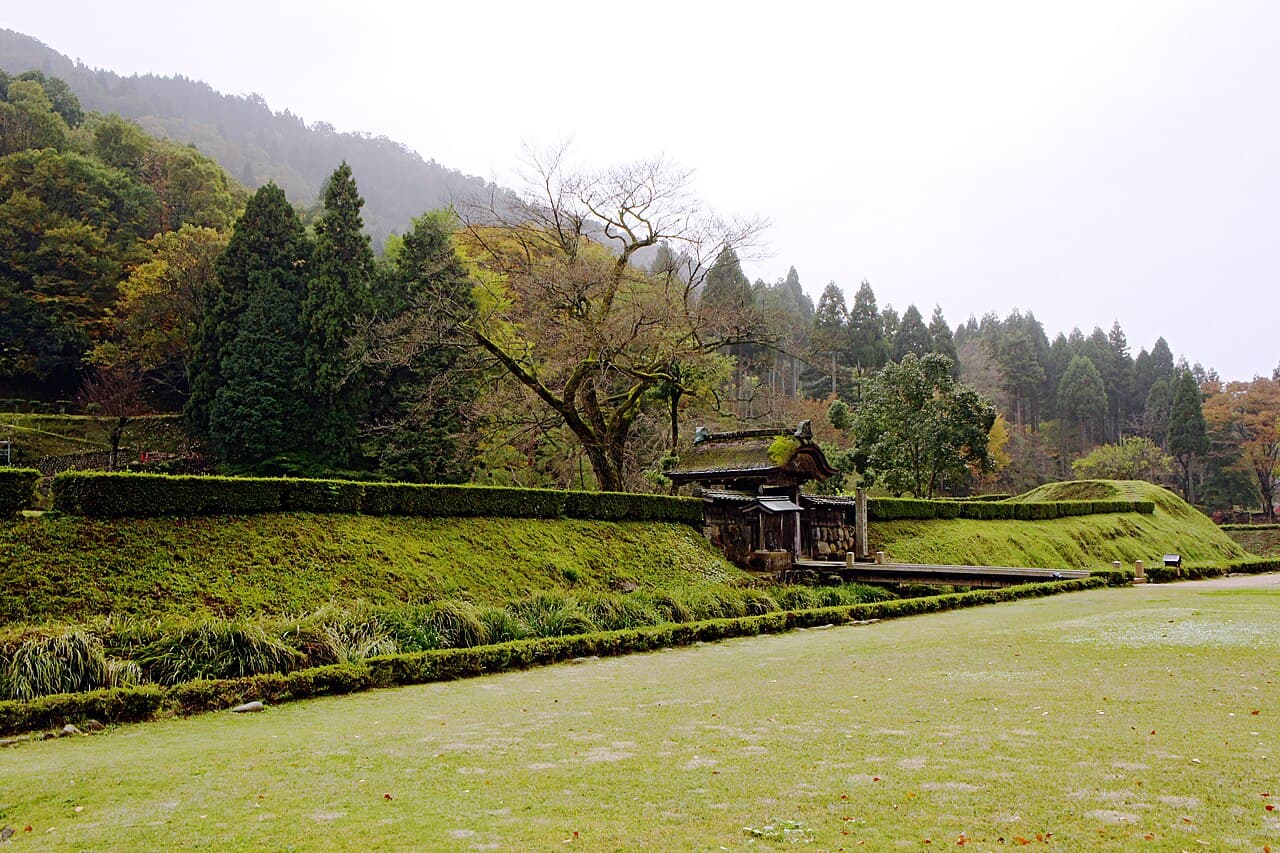
Today, the site is classified as archaeological ruins, revealing the layout and remnants of a late-medieval castle town rather than a single fortress. Excavations have uncovered foundations of residences, temples, gardens, streets, and defensive structures, providing a rare glimpse into the urban planning and lifestyle of a Sengoku period castle town.
The ruins include traces of moats, earthen walls, and stone foundations that once formed the defensive perimeter of the town. The arrangement of buildings reflects a sophisticated design balancing defense with residential comfort and aesthetic considerations. The site also contains the remains of Buddhist temples and other cultural facilities, underscoring the clan's patronage of religion and the arts.
In June 2007, a collection of 2,343 artifacts excavated from Ichijōdani was designated as Important Cultural Properties by the Japanese government. These artifacts include everyday items, ceramics, tools, and weapons that enrich understanding of the period's material culture.
Preservation and cultural heritage status
Ichijōdani was designated a Special Historic Site in 1971, reflecting its importance as a cultural and historical treasure. The site is managed to preserve its archaeological integrity while allowing public access to explore the ruins and learn about the Sengoku period's social and military history.
The preservation efforts focus on maintaining the visible remains and protecting the site from natural and human-induced damage. Interpretive signage, walking paths, and a museum nearby provide visitors with context and detailed information about the Asakura clan and the castle town's historical significance.
Visiting Ichijōdani today
Visitors to Ichijōdani can walk through the extensive ruins, which cover a large area of the valley. The site offers a unique opportunity to experience the scale and complexity of a 15th-century Japanese castle town and to observe the integration of military and residential urban design.
The nearby museum exhibits many of the recovered artifacts and provides educational resources about the Sengoku period and the Asakura clan's role in Japanese history. Seasonal events and guided tours enhance the visitor experience, making Ichijōdani a valuable destination for those interested in Japanese medieval history and archaeology.
Geographical setting and strategic importance
Ichijōdani is situated in a valley surrounded by mountains, which offered natural defense advantages. The location allowed the Asakura clan to control key routes and maintain a stronghold in the Hokuriku region. The terrain influenced the town's layout, with defensive features adapted to the natural landscape.
Urban planning and castle town features
The castle town was carefully planned with a grid-like street system, residential districts for samurai and commoners, commercial areas, and religious sites. This organization reflects the dual military and civil functions of the site, combining protection with daily life and economic activity.
Legacy of the Asakura clan
Though ultimately defeated, the Asakura clan left a lasting imprint on Japanese history through their cultural patronage and the archaeological legacy of Ichijōdani. The site remains a key resource for understanding the Sengoku period's complex social and political dynamics.
Frequently asked questions (FAQ)
- How do I get to Ichijōdani Asakura Family Historic Ruins?
- Ichijōdani Asakura Family Historic Ruins is located in Fukui, Japan, and is accessible via public transportation. The nearest train station is Fukui Station, from where you can take a bus or taxi to the ruins. It’s advisable to check local bus schedules for the most convenient route.
- What is the historical significance of Ichijōdani Asakura Family Historic Ruins?
- Ichijōdani was the residence of the Asakura clan during the 15th and 16th centuries and played a crucial role in the history of the region. The site showcases the remnants of the clan's castle, homes, and gardens, reflecting the feudal era's architectural styles and cultural practices. It provides insight into the life and times of the Asakura family and their influence in Japanese history.
- When was Ichijōdani Asakura Family Historic Ruins established?
- The Ichijōdani Asakura Family Historic Ruins were established in the 15th century, during the height of the Asakura clan's power. The castle complex was constructed to serve as the clan's headquarters and was active until the clan's downfall in the late 16th century. Today, it stands as a testament to this historical period.
- Can I take guided tours of the ruins?
- Yes, guided tours are available at Ichijōdani Asakura Family Historic Ruins, offering visitors a deeper understanding of its history and architecture. Tours are usually conducted by knowledgeable guides who can provide insights into the significance of the various structures within the site. It's recommended to check in advance for tour availability and schedules.
- Why is Ichijōdani Asakura Family Historic Ruins a popular tourist destination?
- Ichijōdani Asakura Family Historic Ruins is popular due to its rich historical background and well-preserved archaeological sites. Visitors are drawn to the scenic beauty of the area, coupled with the opportunity to learn about a pivotal family in Japanese history. The ruins also provide a unique glimpse into the architectural styles of the time.
- Is it possible to explore the ruins freely?
- Yes, visitors can explore Ichijōdani Asakura Family Historic Ruins at their own pace. There are designated walking paths and informative signboards throughout the site to enhance your experience. However, guided tours are recommended for those seeking more in-depth knowledge.
- What are the opening hours for Ichijōdani Asakura Family Historic Ruins?
- Ichijōdani Asakura Family Historic Ruins typically opens from 9 AM to 5 PM, but hours may vary by season or special events. It’s best to check the official website or local information prior to your visit to ensure you have the most accurate hours. Arriving early can also help you avoid crowds.
- What are the ticket prices to enter the ruins?
- The entrance fee for Ichijōdani Asakura Family Historic Ruins is generally quite affordable, with discounts available for students and groups. Children under a certain age may enter for free. Always check the latest pricing information on the official website before your visit to confirm any changes.
- When is the best time to visit Ichijōdani Asakura Family Historic Ruins?
- The best time to visit Ichijōdani Asakura Family Historic Ruins is during the spring (March to May) and autumn (September to November) when the weather is mild and the foliage is particularly beautiful. These seasons offer a picturesque backdrop for exploring the ruins, enhancing your overall experience. Additionally, local festivals may also take place during these times, adding to the cultural experience.
- Are there any nearby attractions to visit after exploring the ruins?
- Yes, there are several nearby attractions worth visiting, including the Fukui Prefectural Dinosaur Museum and Eiheiji Temple. Both locations offer unique experiences that complement your visit to Ichijōdani. Exploring the surrounding area can enhance your understanding of the region's history and culture.
Photo gallery

Information
Current owner
Municipality of Fukui
Loading map...
Visitor reviews
No reviews yet. Been here? Write the first review and help other travelers!
Write the first reviewVisited this castle? Share your experience
Your review helps other travelers and adds first-hand knowledge to our encyclopedia.