Olyka Castle
Olyka Castle stands as a remarkable example of 16th-century bastion fortifications in Ukraine, deeply intertwined with the history of the Polish–Lithuanian Commonwealth and the influential Radziwiłł family. Established in the town of Olyka in the Volhynia region, this fortress-palace hybrid reflects centuries of architectural evolution, military significance, and cultural heritage. Its enduring presence offers a window into the shifting roles of castles from defensive strongholds to noble residences and later institutional uses.
Founded around 1564 by Prince Mikołaj Radziwiłł “the Black”, Olyka Castle was conceived during a period of intense military innovation. The design incorporates one of the earliest examples of bastion-type fortifications in the area, featuring a nearly perfect rectangular layout with four corner bastions and a surrounding moat. This configuration not only enhanced its defensive capabilities but also influenced the construction of smaller forts in the region. The castle's strategic location on a hill provided natural advantages, further bolstered by brick walls and earthen embankments.
Architectural design and fortifications
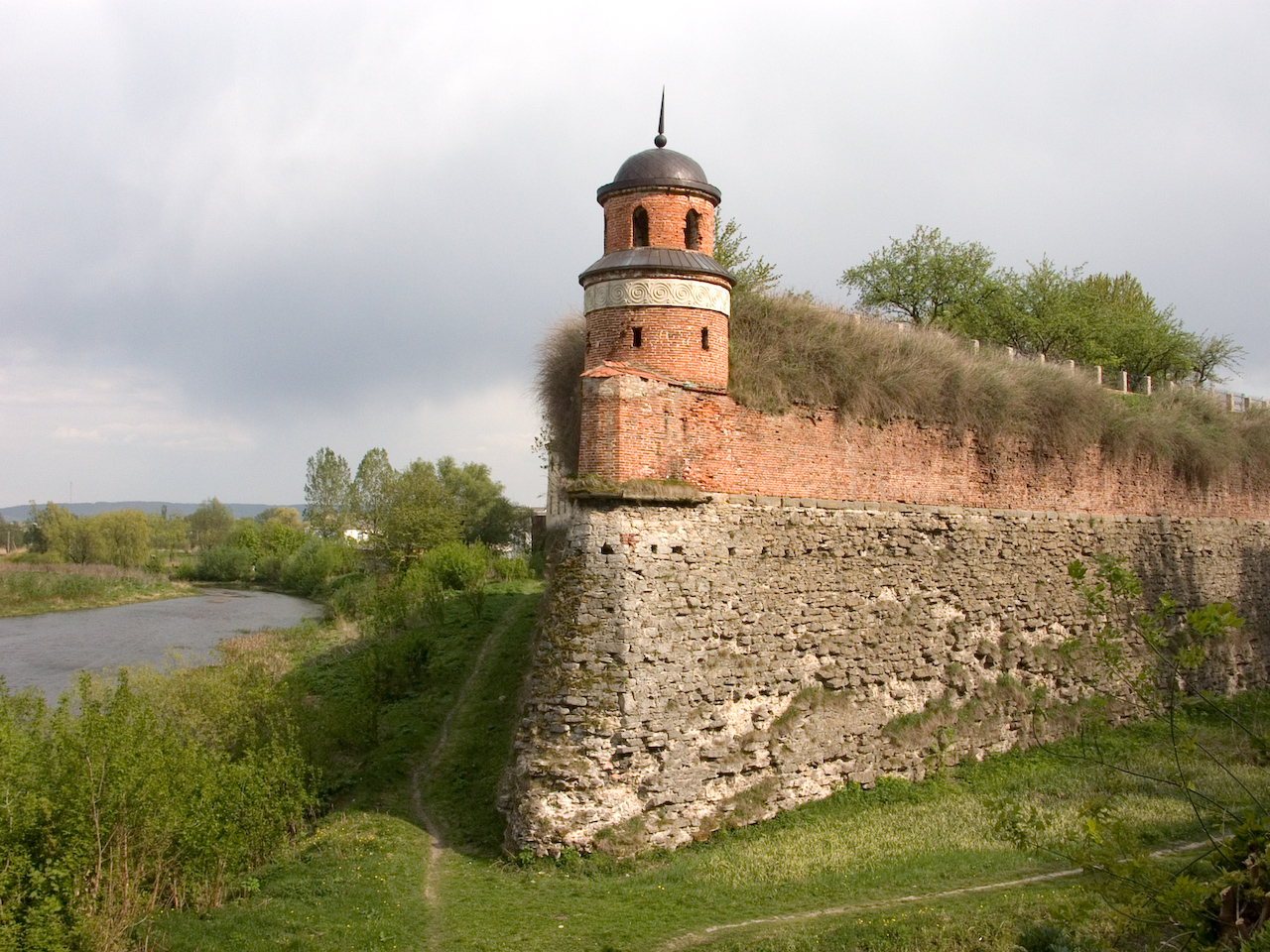
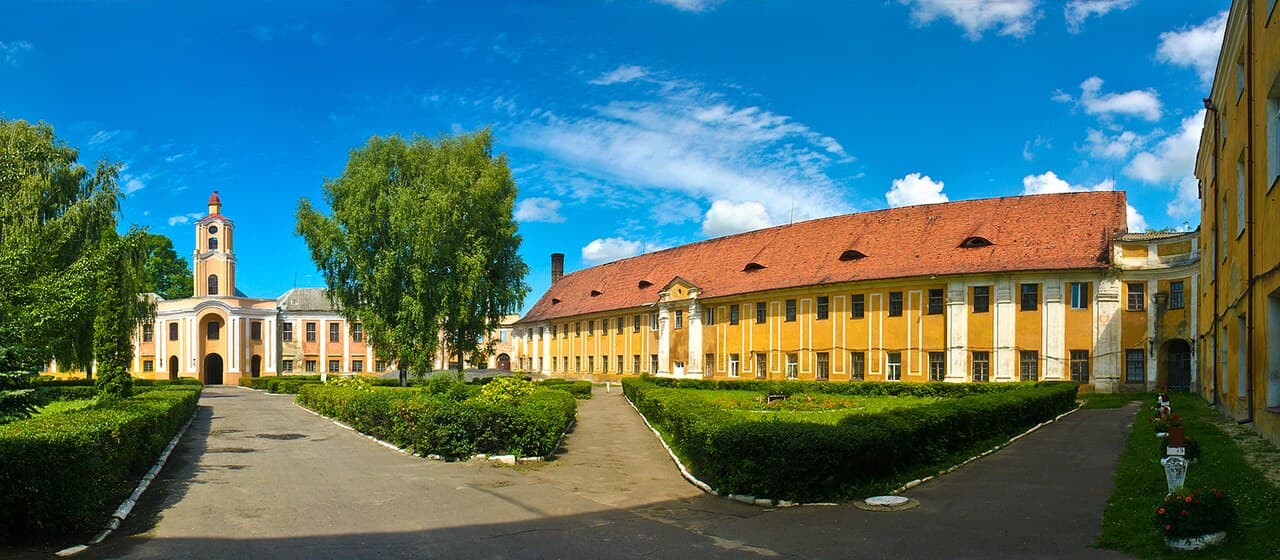
The castle's defensive system is characterized by its brick bastions at each corner, originally topped with watchtowers, and a moat lined with brick on three sides. The nearly rectangular fortress measures approximately 100 by 120 meters, enclosing a courtyard with a complex of brick buildings on all four sides. These buildings include three two-story wings and a southeastern main palace rising to three stories. The palace's evolution from a single-story structure to a three-story residence reflects the changing needs and tastes of its owners over time.
Entrances and notable features
Access to the castle is through two main gates: the northwestern and southeastern entrances. The northwestern gate is distinguished by a baroque-style clock tower spanning two levels, a later addition that enhances the castle's aesthetic and functional aspects. The southeastern gate was historically approached via a stone arched bridge over the moat, replacing the original wooden bridge in the mid-17th century under the direction of Prince Albrycht Stanisław Radziwiłł.
Palatial elements and interior layout
The main palace building features a rectangular plan with two prominent portals and an Italian-inspired balcony on the second floor, supported by an arcade gallery with cross vaults opening onto the courtyard. Inside, the palace was arranged with a corridor along one side, connecting rooms in an enfilade sequence that allowed for grand passage through aligned doorways. The interiors once boasted richly decorated halls, including a two-story chamber illuminated by six large windows, adorned with alabaster coats of arms, battle murals, and marble fireplaces.
Two chapels were part of the castle complex: one within the palace, featuring stucco work, precious tiles, and porcelain decorations, and another chapel above the city gate, underscoring the castle's spiritual as well as defensive functions.
Historical significance and ownership
Olyka Castle served as the principal residence of the Radziwiłł family in Volhynia for nearly four centuries, from its founding in the mid-16th century until the mid-20th century. Its military importance was highlighted during the late 16th and early 17th centuries, when it withstood several sieges between 1591 and 1648 despite sustaining damage. The castle's fortifications were notably reinforced by Prince Albrycht Stanisław Radziwiłł in 1640, who replaced the wooden bridge with a stone arch and enhanced the defensive works.
By the 17th and 18th centuries, the castle's role transitioned from a fortress to a noble residence. Under Prince Michał Kazimierz Radziwiłł, the palace was expanded with a third floor and embellished with Baroque architectural details, reflecting the broader European trends and the reduced military threats of the era. Despite regional conflicts like the Great Northern War, which saw the surrounding village destroyed by Swedish forces in 1702, the castle itself survived intact but ceased to function primarily as a military stronghold.
19th and 20th century transformations
During Napoleon's 1812 campaign, the castle was repurposed as a Russian military hospital until 1837. After a period of abandonment starting in 1840, restoration efforts recommenced in 1883 under Ferdynand Radziwiłł and architect Zygmunt Gorgolewski. Despite these efforts, the castle suffered damage during World War I.
The World War II era brought tragedy, as German forces used the castle for military purposes and perpetrated atrocities against the local Jewish community within its walls. Post-war Soviet administration led to neglect, partial destruction by fire, and repurposing of the site as a state horse stud farm and later as the Volyn Psychiatric Hospital from the mid-1950s until 2021.
Current status and restoration efforts
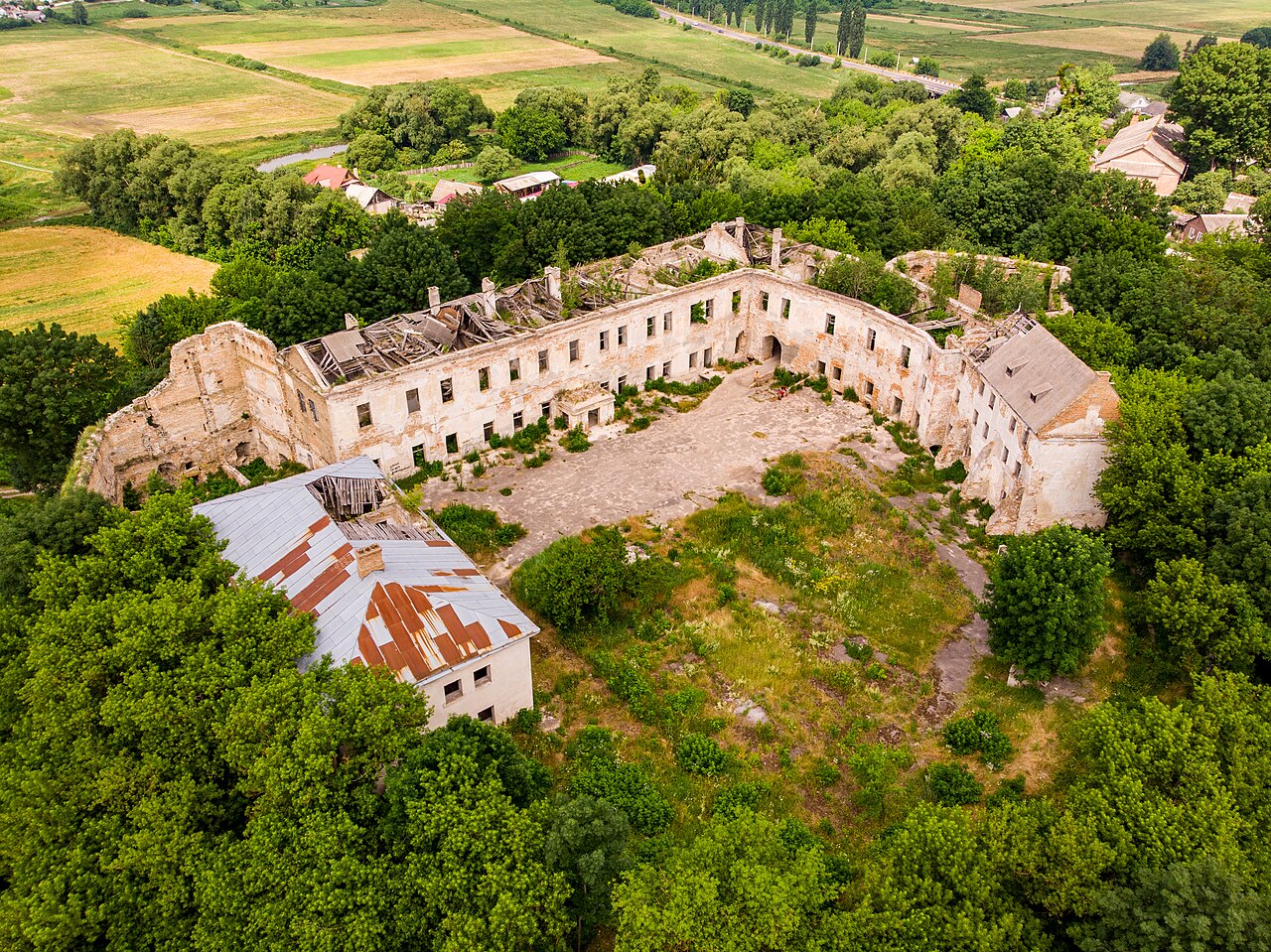
In July 2021, stewardship of the castle was transferred to the Volyn Regional Museum, with initial state funding allocated for restoration beginning in October 2021. Today, the castle remains a partially preserved historical monument, with surviving external walls, vaulted sections above the ground floor, and brick bastions. The collapse of roofs and ceilings has left the interior vulnerable, but ongoing restoration aims to revive this key cultural landmark.
Cultural heritage and collections
Historically, Olyka Castle housed an extensive collection of art and historical artifacts, including up to 152 paintings and portraits of the Radziwiłł family and allied nobility. Venetian mosaics adorned corridors, and valuable furnishings such as a 1574 inlaid buffet and a 16th-century Kraków school triptych were preserved. The castle grounds cover approximately 2.7 hectares, with the larger Radziwiłł estate encompassing 5.6 hectares around the castle, an 11.3-hectare park, and an 18.9-hectare lake, underscoring its status as a significant noble estate.
Restoration efforts rely heavily on historical photographic and illustrated records from the late 19th and early 20th centuries, including works by artist Napoleon Orda, which document the castle's appearance and interior details before wartime damage.
Olyka Castle remains a vital monument reflecting the complex history of Volhynia, the military and residential architecture of the Polish–Lithuanian nobility, and the cultural transformations of Eastern Europe over several centuries.
Frequently asked questions (FAQ)
- When was Olyka Castle built and by whom?
- Olyka Castle was built beginning around 1564 by Prince Mikołaj Radziwiłł “the Black,” a prominent noble of the Polish–Lithuanian Commonwealth.
- What architectural style characterizes Olyka Castle?
- The castle features Baroque architectural details, especially from 17th and 18th-century renovations, combined with its original bastion fortress design.
- Is Olyka Castle open to visitors today?
- Since July 2021, the castle is managed by the Volyn Regional Museum, with restoration efforts underway. Visitor access may be limited during restoration phases.
- What was the castle's role during military conflicts?
- Olyka Castle served as a defensive fortress during several sieges from the late 16th to mid-17th centuries and was later used as a military hospital during Napoleon's 1812 campaign.
- What remains of the castle can be seen today?
- Visitors can see the castle's brick walls, vaulted sections above the ground floor, and four corner bastions, though roofs and ceilings have largely collapsed.

Information
Sources & official resources
Verify the information above using these authoritative references.
Loading map...
Visitor reviews
No reviews yet. Been here? Write the first review and help other travelers!
Write the first reviewVisited this castle? Share your experience
Your review helps other travelers and adds first-hand knowledge to our encyclopedia.