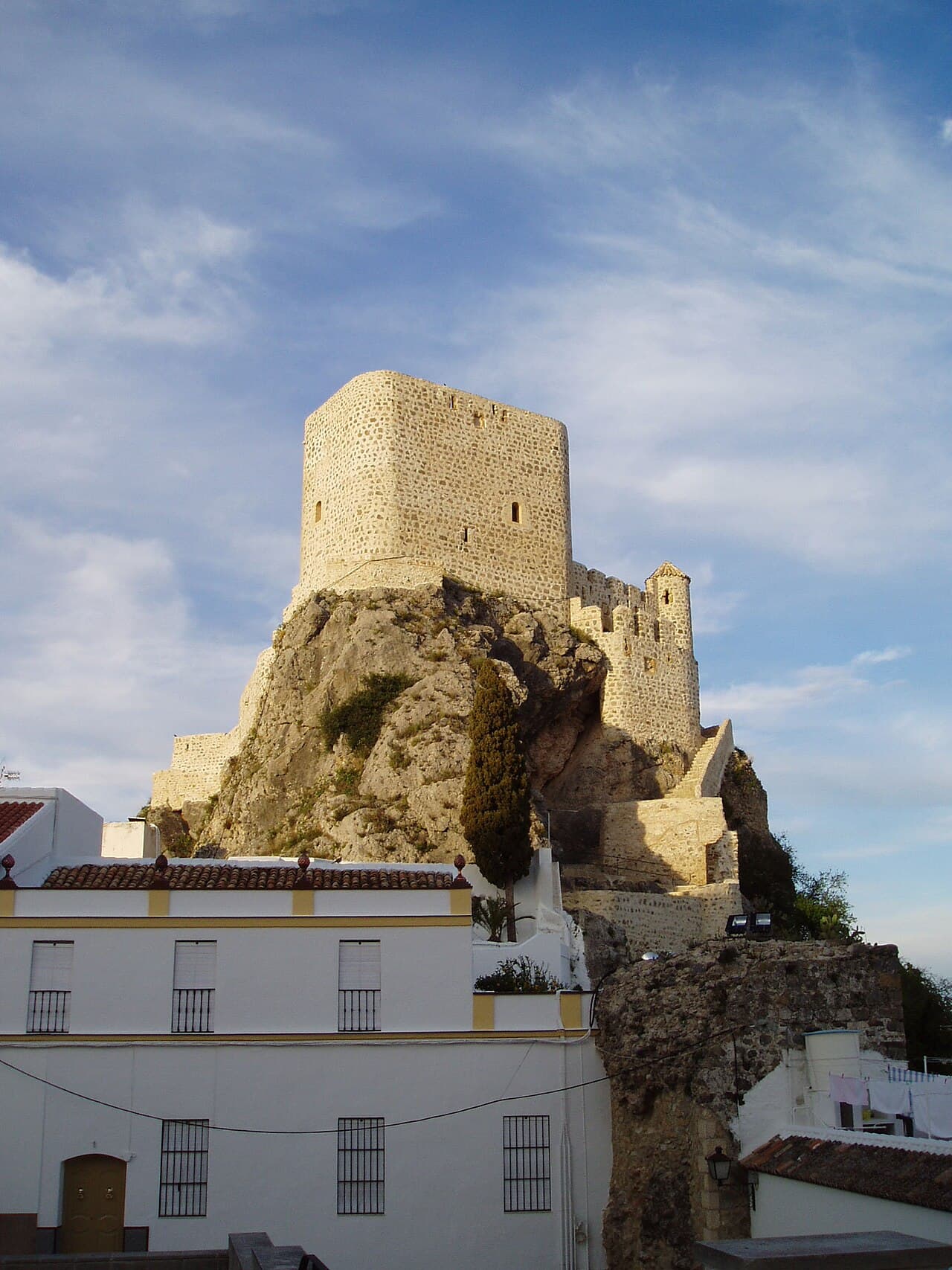
Olvera Castle
Olvera Castle, known locally as Castillo de Olvera, is a striking example of a high medieval hill castle perched on a rocky cliff at the highest point in the town of Olvera, in the province of Cádiz, Andalucia, Spain. Its commanding position at 623 meters above sea level offers expansive views of the surrounding landscape, a strategic advantage that was critical during its military use.
The castle's origins date back to the late 12th century, when it was constructed by the Moors as part of the defensive network of the Nasrid Emirate of Granada. This fortress was integral to protecting the frontier of the Emirate against the advancing forces of the Kingdom of Castile. The site was chosen for its natural defensibility, with the castle's irregular elongated triangular plan closely following the contours of the rocky promontory it crowns.
Surrounding the fortress, the medieval town of Olvera developed, growing in tandem with the castle's strategic importance. The castle functioned not only as a military stronghold but also as a signal station within a broader system of lookout points. These stations communicated using flashes of light, relaying messages across the region to warn of approaching threats.
Christian conquest and architectural transformation
In 1327, the castle was captured by King Alfonso XI of Castile, marking a significant turning point in its history. Following the conquest, the Christians undertook extensive rebuilding and expansion, transforming the original Moorish fortress into the structure visible today. This remodeling reflected both practical military needs and the stylistic preferences of the Christian rulers.
The castle's layout is characterized by its adaptation to the natural rock formation, with an elongated triangular shape that maximizes defensive potential. The rectangular keep tower, positioned at the southern end of the castle, features two stories with barrel-vaulted ceilings. Access to the keep was deliberately difficult; the original main entrance is elevated more than five meters above ground level, reachable via a later-added cylindrical platform. This design enhanced the keep's defensibility against attackers.
The castle is fortified by curtain walls equipped with a parapet walkway and multiple turrets, allowing defenders to patrol and defend the perimeter effectively. A barbican protects the main gateway, adding an extra layer of defense. Within the enclosure lies a subterranean area and two cisterns, essential for water storage during sieges, with one cistern supplying water directly to the keep.
Historical significance and later use
Following the conclusion of the War of Granada in 1492, which ended in victory for the Kingdom of Castile and the fall of the Nasrid Emirate, Olvera Castle's military importance diminished. The castle ceased to be a frontline fortress but remained a prominent symbol of the region's turbulent history and the cultural transition from Islamic to Christian rule.
Despite losing its military function, the castle remained integrated into the fabric of the town. Portions of the defensive walls that once enclosed the village, known as the cerca de murallas, still survive. Until recent times, visitors accessed the castle through rooms of a house built adjoining the castle walls, illustrating the close relationship between the fortress and the evolving town.
Architectural features and preservation
The castle's construction utilizes masonry typical of medieval fortifications in southern Spain, with irregular stones laid in courses and bonded with mortar. The keep tower's barrel vaults demonstrate advanced medieval engineering, providing both strength and fire resistance. The elevated entrance to the keep and the surrounding defensive structures highlight the castle's primary function as a military stronghold designed to withstand sieges.
The barbican guarding the entrance is a distinctive feature, serving as a fortified outwork that protected the main gate from direct assault. The curtain walls with their parapet walkways and turrets allowed defenders to maintain a continuous watch and repel attackers effectively.
Below ground, the castle's subterranean enclosure and cisterns ensured a reliable water supply during prolonged sieges, a critical factor in medieval fortress design. These cisterns collected rainwater and stored it safely, demonstrating the strategic foresight of the castle's builders.
Modern status and visitor information
Recognized for its cultural and historical importance, Olvera Castle was declared a Cultural Interest Asset (Bien de Interés Cultural) in 1985. It lies within a protected Historic-Artistic Ensemble, with municipal regulations enacted in 1999 to ensure its preservation and protection.
Today, the castle is partially restored and accessible to visitors for a small fee. Its commanding views and well-preserved defensive features make it a popular destination for those interested in medieval military architecture and Andalusian history. Visitors can appreciate the castle's blend of Moorish and Christian architectural elements and its role in the region's complex history.
From the castle's vantage point, it is possible to see other regional landmarks, such as Hierro Castle to the north, underscoring Olvera Castle's historical role within a network of fortifications.
Exploring the castle and surrounding town
The climb up to Olvera Castle is rewarded not only by the fortress itself but also by the panoramic views of the picturesque whitewashed town below and the surrounding Andalusian countryside. The castle's integration with the town's historic streets and buildings offers visitors a tangible connection to the past.
Exploring the castle's keep tower, curtain walls, and barbican provides insight into medieval defensive strategies. The presence of cisterns and subterranean chambers reveals the practical considerations of sustaining a fortress under siege.
Olvera Castle stands as a testament to the region's layered history, reflecting centuries of conflict, cultural exchange, and architectural evolution. Its preservation allows modern visitors to engage directly with the medieval heritage of Andalucia.
Frequently asked questions (FAQ)
- What is the historical significance of Olvera Castle?
- Olvera Castle dates back to the 12th century and reflects the region's Moorish heritage. It was strategically built to control the surrounding territory and played a key role during the Reconquista, showcasing the rich history of Olvera and Andalusia.
- When was Olvera Castle built?
- Olvera Castle was constructed in the early 12th century, during the period of Moorish rule in Spain. Its architecture and structure have been preserved over the centuries, allowing visitors to glimpse the past.
- How do I get to Olvera Castle?
- Olvera Castle is located in the town of Olvera, easily accessible by car or public transport from nearby cities like Ronda or Sevilla. Upon arrival in Olvera, you can follow the signs leading to the castle, which sits prominently on a hilltop.
- What are the opening hours for Olvera Castle?
- Olvera Castle is typically open to visitors from 10 AM to 8 PM, though these hours may vary depending on the season. It is advisable to check the official website or local tourist information for the most up-to-date hours before your visit.
- Can I enter Olvera Castle for free?
- There is a small entrance fee to access Olvera Castle, which helps maintain the site. The ticket prices are quite reasonable, making it an affordable destination for history enthusiasts and tourists alike.
- Is it possible to take guided tours of Olvera Castle?
- Yes, guided tours are available for visitors who wish to learn more about the castle's history and architecture. These tours often provide in-depth insights that enhance the overall experience of exploring the site.
- What is the best time to visit Olvera Castle?
- The best time to visit Olvera Castle is during the spring and fall when the weather is mild and pleasant. These seasons also allow visitors to enjoy the beautiful surrounding landscapes without the extreme heat of summer.
- Are there any nearby attractions to visit after Olvera Castle?
- Yes, after visiting Olvera Castle, you can explore the charming town of Olvera itself, including its quaint streets and local shops. Additionally, the nearby Natural Park of Sierra de Grazalema offers stunning hiking opportunities and breathtaking views.
- How accessible is Olvera Castle for visitors with mobility issues?
- Olvera Castle is situated on a hill, which may pose challenges for visitors with mobility issues. However, there are pathways and some efforts have been made to improve accessibility, so it's best to contact local tourism services for the most accurate information before your visit.
Photo gallery

Information
Sources & official resources
Verify the information above using these authoritative references.
Loading map...
Visitor reviews
No reviews yet. Been here? Write the first review and help other travelers!
Write the first reviewVisited this castle? Share your experience
Your review helps other travelers and adds first-hand knowledge to our encyclopedia.



