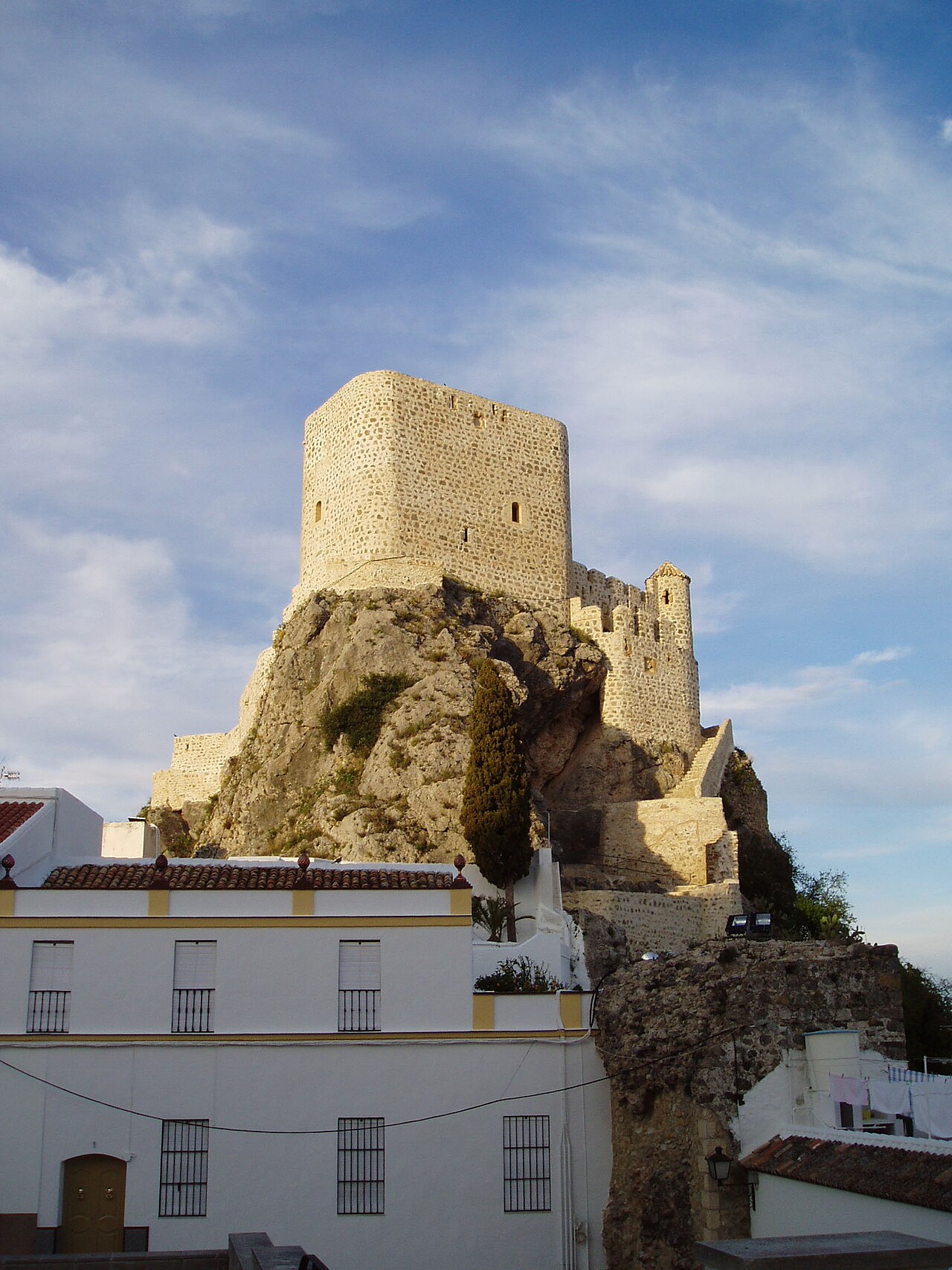
Hierro Castle
Hierro Castle, also known locally as Castillo de Hierro or Castillo de Pruna, stands prominently on a rocky, arid mountain peak near the village of Pruna in the province of Sevilla, Spain. This 12th-century bastioned fortress occupies a strategic vantage point in the northern Cádiz mountains, offering commanding views over the surrounding countryside. Its isolated location and rugged terrain contributed to its historical role as a defensive stronghold, famously known as one of the last Moorish bastions in the region, hence its evocative name, "The Iron Castle."
Early history and strategic significance
The site of Hierro Castle has a long history of occupation, beginning with the Celtiberian Turduli tribe, who established a small settlement called Callet here. This early community was later succeeded by a Roman military encampment, reflecting the site's ongoing strategic importance during the turbulent centuries of Roman conquest and control over Hispania.
In the 12th century or possibly the early 13th century, the Moors constructed a watchtower atop the mountain to monitor the surrounding lands. This initial fortification was later expanded into a small castle with the addition of a defensive parapet, designed to resist attacks from the advancing Castilian forces. The castle's location placed it within the contested border zone known as the Moorish Strip, a volatile frontier between the Emirate of Granada and the Kingdom of Castile.
Medieval conflict and ownership changes
Throughout the Reconquista, Hierro Castle was a focal point of military struggle. It changed hands multiple times between the Moors and the Castilians, reflecting the shifting tides of power in southern Spain. The castle was first captured by Castilian forces in 1248, but continued to be contested until it was definitively seized in 1407.
Following its capture, the castle was granted to the military Order of Calatrava by King Alfonso X of Castile in 1256. This order played a crucial role in the defense and administration of frontier territories during the late medieval period, underscoring the castle's importance in the broader geopolitical landscape of the time.
Architectural features and fortifications
Hierro Castle exemplifies the characteristics of a bastioned fortress, a style that evolved to improve defense against artillery and siege warfare. The castle's core originally consisted of a Moorish watchtower, which was fortified with a parapet wall to provide protection for defenders. The surrounding terrain is rugged and steep, enhancing the natural defenses of the site.
The castle's design reflects adaptations made during the transition from Moorish to Christian control, with modifications aimed at strengthening its fortifications against evolving military threats. Although much of the original structure is now in ruins, the remaining walls and towers offer insight into medieval military architecture in Andalusia.
Modern condition and visitor experience
Today, Hierro Castle is classified as a partially restored ruin. Unfortunately, some restoration efforts have involved the use of modern concrete to rebuild sections of the walls, a practice that has been criticized for detracting from the site's historical authenticity and aesthetic character. Despite this, the castle remains freely accessible to visitors.
Reaching the castle requires a strenuous 25-minute uphill hike from the nearby village of Pruna, rewarding visitors with spectacular panoramic views of the surrounding countryside. On clear days, it is possible to see other historic fortifications, such as Olvera Castle to the south.
The approach to the castle includes a century-old natural spring-fed fountain and a picnic area, adding to the visitor experience. The stairway leading to the summit was restored some years ago, though the ascent can still feel precarious. The presence of circling griffon vultures contributes to the site's evocative and somewhat eerie atmosphere, reminiscent of its turbulent past.
Cultural and historical significance
Hierro Castle holds a significant place in the history of Andalusia as a symbol of the region's complex medieval past. Its role as one of the last Moorish strongholds before the final Christian conquest highlights the enduring cultural and military contest between Muslim and Christian forces in southern Spain.
Its isolated location and rugged fortifications offer a tangible connection to the strategic challenges faced by medieval defenders. Today, the castle serves both as a historical monument and a destination for those interested in medieval architecture, military history, and the dramatic landscapes of Andalusia.
Frequently asked questions (FAQ)
- How do I get to Hierro Castle?
- Hierro Castle is conveniently located near A-363 in Spain, making it accessible by car. If you are using public transport, check local bus schedules that may connect you to nearby towns.
- What is the historical significance of Hierro Castle?
- Hierro Castle dates back to the 14th century and served as a defensive stronghold during various conflicts in the region. Its historical importance lies in its role in safeguarding the area and its architectural features that reflect the era's military design.
- When was Hierro Castle built?
- Hierro Castle was constructed in the late 14th century, around 1380. It has undergone several renovations over the centuries, allowing visitors to appreciate its historical evolution.
- Can I visit Hierro Castle year-round?
- Yes, Hierro Castle is open to visitors year-round, although it is advisable to check for any seasonal hours or special closures. Planning your visit ahead of time can help ensure you make the most of your experience.
- Why is Hierro Castle a popular attraction?
- Hierro Castle attracts visitors due to its rich history, stunning architecture, and picturesque location. The castle offers a glimpse into the past, making it a favorite spot for history enthusiasts and photographers alike.
- Is it possible to access all areas of the castle?
- While some areas of Hierro Castle are accessible to the public, certain sections may be restricted for safety reasons. Visitors are encouraged to follow posted signs and guidelines to ensure a safe and enjoyable visit.
- What are the opening hours for Hierro Castle?
- Hierro Castle typically opens at 10 AM and closes at 6 PM, although hours may vary by season. It’s recommended to check the official website or local visitor centers for the most current information.
- What are the ticket prices for visiting Hierro Castle?
- Entrance to Hierro Castle is generally affordable, with tickets priced around €5 for adults and reduced rates for children and seniors. Special family packages may also be available, so inquire upon arrival.
- When is the best time to visit Hierro Castle?
- The best time to visit Hierro Castle is during the spring and fall when the weather is mild and comfortable for exploring. Additionally, these seasons often see fewer crowds, allowing for a more enjoyable experience.
- Are there any nearby attractions to Hierro Castle?
- Yes, there are several attractions close to Hierro Castle, including scenic hiking trails and charming villages. Visitors can also explore local museums that highlight the region's cultural heritage.
Information
Website
Visit websiteSources & official resources
Verify the information above using these authoritative references.
Loading map...
Visitor reviews
No reviews yet. Been here? Write the first review and help other travelers!
Write the first reviewVisited this castle? Share your experience
Your review helps other travelers and adds first-hand knowledge to our encyclopedia.