Old Wardour Castle
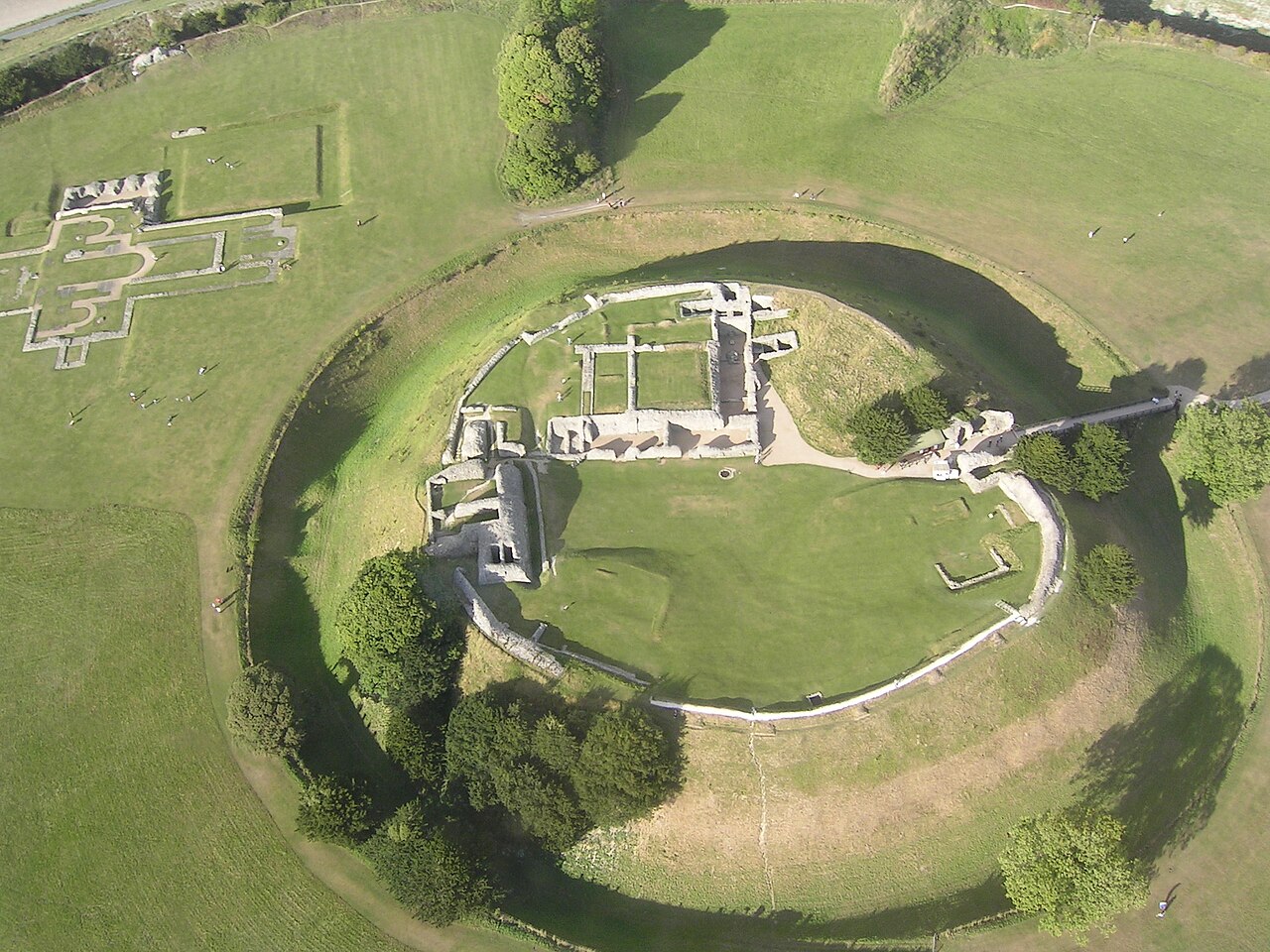
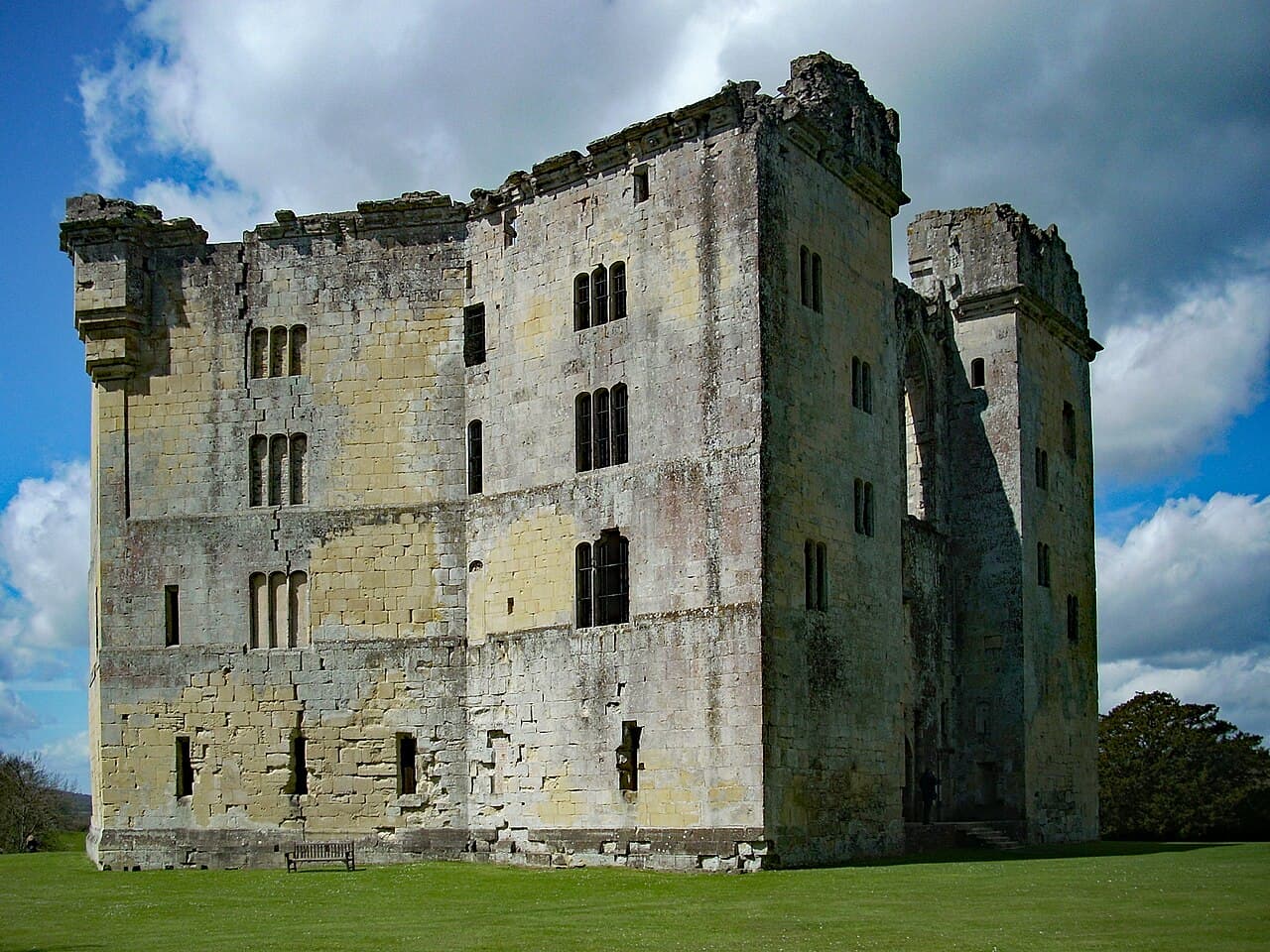
Old Wardour Castle stands as a remarkable example of medieval military architecture in Tisbury, Wiltshire, England. Constructed in the early 1390s, this fortress is notable for its unique hexagonal design, inspired by continental European castles, particularly those in France. Its six-sided layout and multi-storey buildings arranged around a central courtyard distinguish it from typical English castles of the period.
The castle was originally built by John, 5th Baron Lovell, who acquired the land after it was previously held by the St Martin family until 1385. With royal permission granted by King Richard II around 1392-1393, construction began on this innovative fortress. The use of Tisbury greensand stone sourced locally gave the castle its distinctive appearance and durability.
Architectural design and defensive features
Old Wardour Castle is a hill castle strategically positioned on a small ridge with steep slopes, enhancing its natural defenses. The castle's hexagonal plan is surrounded by a deep defensive ditch, which was originally crossed by a drawbridge. The main entrance was fortified with a portcullis, a heavy grilled gate that could be dropped to prevent enemy access.
A notable defensive feature is the projecting barbican or gallery located between the castle's towers at battlement level. This allowed defenders to effectively guard the entrance and provided a vantage point for observation and attack. Above the main gate, the Arundell family coat of arms is prominently displayed, accompanied by a Latin inscription commemorating the castle's recovery in 1578 and a carved head of Christ, symbolizing protection and faith.
Courtyard and internal structures
The castle's interior is arranged around the hexagonal courtyard, which was originally enclosed by four to five storey buildings. At the courtyard's center stood a well, once covered by an elaborately carved and painted wooden roof adorned with the heraldic emblems of the Lovell and Arundell families. The devastating explosion during the English Civil War in 1644 destroyed the southwest side of the castle, opening up the courtyard and transforming it into a brighter, more open space.
The great hall was the main social and ceremonial space within the castle. Renovations in the late 16th century introduced tall windows, wooden panelling replacing wall hangings, and a reshaped fireplace. A musicians' gallery was also added, reflecting the castle's transition from purely military use to a noble residence.
Adjacent to the great hall was the lobby, a narrow room used for receiving guests after meals. Here, sweet treats were served before the space was cleared for dancing. Modifications in the 1570s included new fireplaces and improved private access to upper chambers via the north tower stairs.
Upper floors and living quarters
The upper floors featured high ceilings with intricate timber roofing. Chambers were designed with multiple tall windows overlooking both the surrounding landscape and the courtyard, providing ample natural light. By the early 17th century, these rooms had been converted into a long gallery, a fashionable Elizabethan architectural feature used for display and social gatherings.
Historical significance and events
Old Wardour Castle played a notable role during the tumultuous Wars of the Roses and the English Civil War. Initially owned by the Lovell family, staunch Lancastrian supporters, the castle was seized by the Crown in 1461 after their defeat. In 1544, it was purchased by Sir Thomas Arundell, a prominent Catholic landowner, whose execution for treason in 1552 led to the castle's confiscation. His son, Sir Matthew Arundell, reacquired and renovated the castle by 1578, incorporating Renaissance elements such as enlarged windows and classical doorways.
During the English Civil War, the castle became a royalist stronghold under Lady Blanche Arundell. In 1643, a Parliamentarian force led by Sir Edward Hungerford besieged the castle. After five days, Lady Blanche surrendered to avoid severe damage. However, in 1644, Henry Arundell, 3rd Baron, recaptured the castle by tunneling beneath its walls and detonating explosives, causing significant destruction and forcing the Parliamentary garrison to surrender.
Later developments and preservation
Following the civil war, the Arundell family retained ownership and influence in the region. The 8th Baron Henry Arundell commissioned the construction of New Wardour Castle, a neoclassical country house designed by James Paine, located northwest of the original fortress. Old Wardour Castle was preserved as a romantic ruin within the landscaped park, reflecting the 18th-century taste for picturesque decay.
In the late 18th century, the family added the Banqueting House near the ruins as a dedicated entertainment venue. This building features a colorful marble fireplace and stained glass windows likely salvaged from New Wardour Castle's chapel renovations. Additionally, a decorative grotto was constructed in 1792 by Josiah Lane, incorporating stones from the castle ruins and three standing stones from a vanished local stone circle, linking the site to ancient prehistoric traditions.
Visitor experience and cultural heritage
Today, Old Wardour Castle is a well-preserved hill castle ruin that offers visitors a glimpse into medieval fortification design and English history. Its unique hexagonal plan, surviving defensive features like the barbican and portcullis, and the evocative ruins of the great hall and courtyard provide a rich historical atmosphere.
The surrounding parkland, including the Banqueting House and grotto, enhances the visitor experience by showcasing 18th-century landscape design and the romantic fascination with ruins. The castle is managed to preserve its structural integrity while allowing public access to explore its storied past.
Old Wardour Castle remains a significant cultural landmark, reflecting the architectural innovation of the late medieval period, the impact of civil strife on noble estates, and the evolving tastes in country house aesthetics and garden design through the centuries.
Frequently asked questions (FAQ)
- How do I get to Old Wardour Castle?
- Old Wardour Castle is located near Tisbury in Wiltshire, England. It is accessible by car and public transport, with nearby parking and walking paths leading to the site.
- What is the best time to visit Old Wardour Castle?
- The castle is best visited in spring and summer when the surrounding parkland is in full bloom, and the weather is favorable for exploring the ruins and gardens.
- Can I explore the interior of Old Wardour Castle?
- Visitors can explore the castle ruins, including the courtyard, great hall remains, and defensive structures. However, some areas may be restricted for safety reasons due to the castle's partial preservation.
- Is Old Wardour Castle suitable for families?
- Yes, Old Wardour Castle is family-friendly, offering spacious grounds and historical features that can engage visitors of all ages. Educational materials and guided tours may be available seasonally.
- Are there any events held at Old Wardour Castle?
- The castle occasionally hosts historical reenactments, guided tours, and cultural events that highlight its rich history and architectural significance. Check local listings for current schedules.
Photo gallery

Information
Sources & official resources
Verify the information above using these authoritative references.
Loading map...
Visitor reviews
No reviews yet. Been here? Write the first review and help other travelers!
Write the first reviewVisited this castle? Share your experience
Your review helps other travelers and adds first-hand knowledge to our encyclopedia.