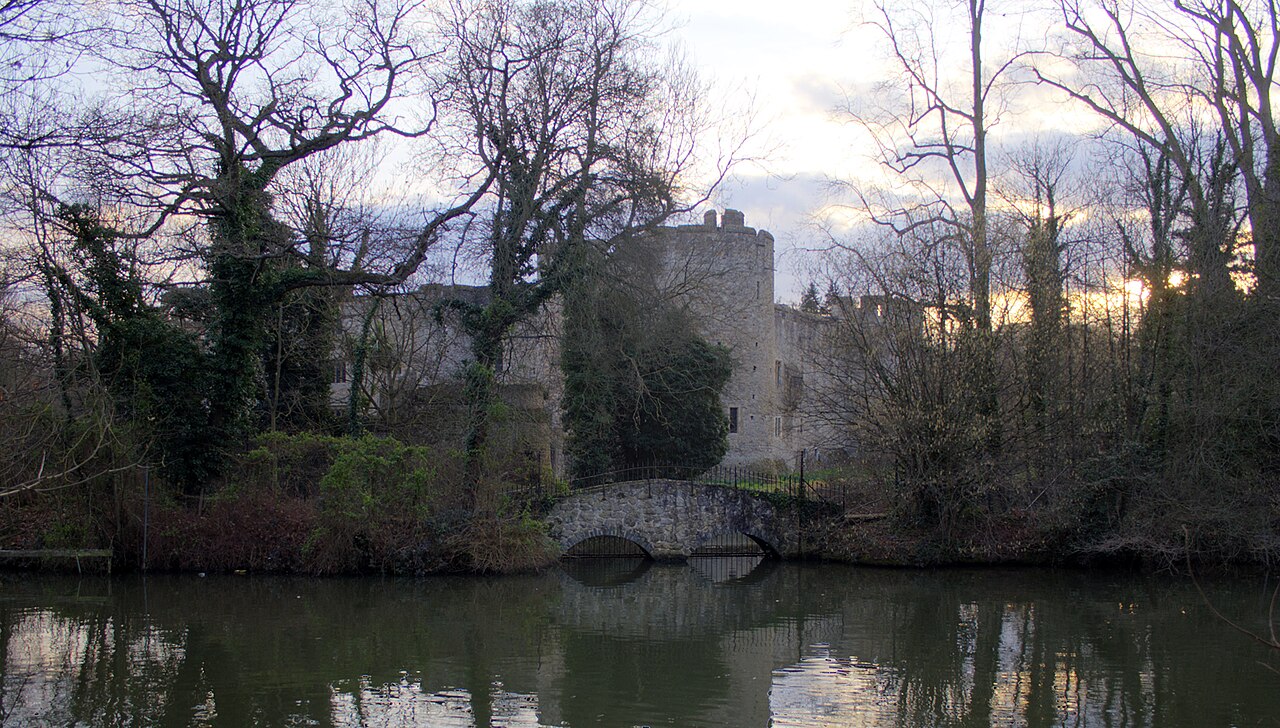
Old Sarum Castle
Old Sarum Castle stands as a remarkable testament to the layered history of England, located just north of the city of Salisbury in Wiltshire, England. This site encapsulates over two millennia of continuous human occupation, from its earliest days as an Iron Age hillfort named Sorviodunum around 400 BC, through its transformation into a Norman motte-and-bailey castle in the 11th century, and later development as a significant medieval royal and ecclesiastical center. Its commanding position on a hilltop, rising approximately 109 meters above sea level, provided a strategic vantage point overseeing the surrounding landscape, including vital trade routes and the nearby Hampshire Avon river.
The castle and its surrounding settlement played a crucial role in England's early history, with archaeological evidence revealing occupation dating back to 3000 BC. The proximity to iconic prehistoric monuments such as Stonehenge and Avebury situates Old Sarum within a rich cultural and historic context. Throughout the Roman period, the site was associated with the Atrebates tribe, a Gaulish group that governed parts of southern Britain. Later, under Saxon rule, King Alfred the Great fortified Old Sarum to defend against Viking incursions, underscoring its enduring military importance.
Early history and iron age origins
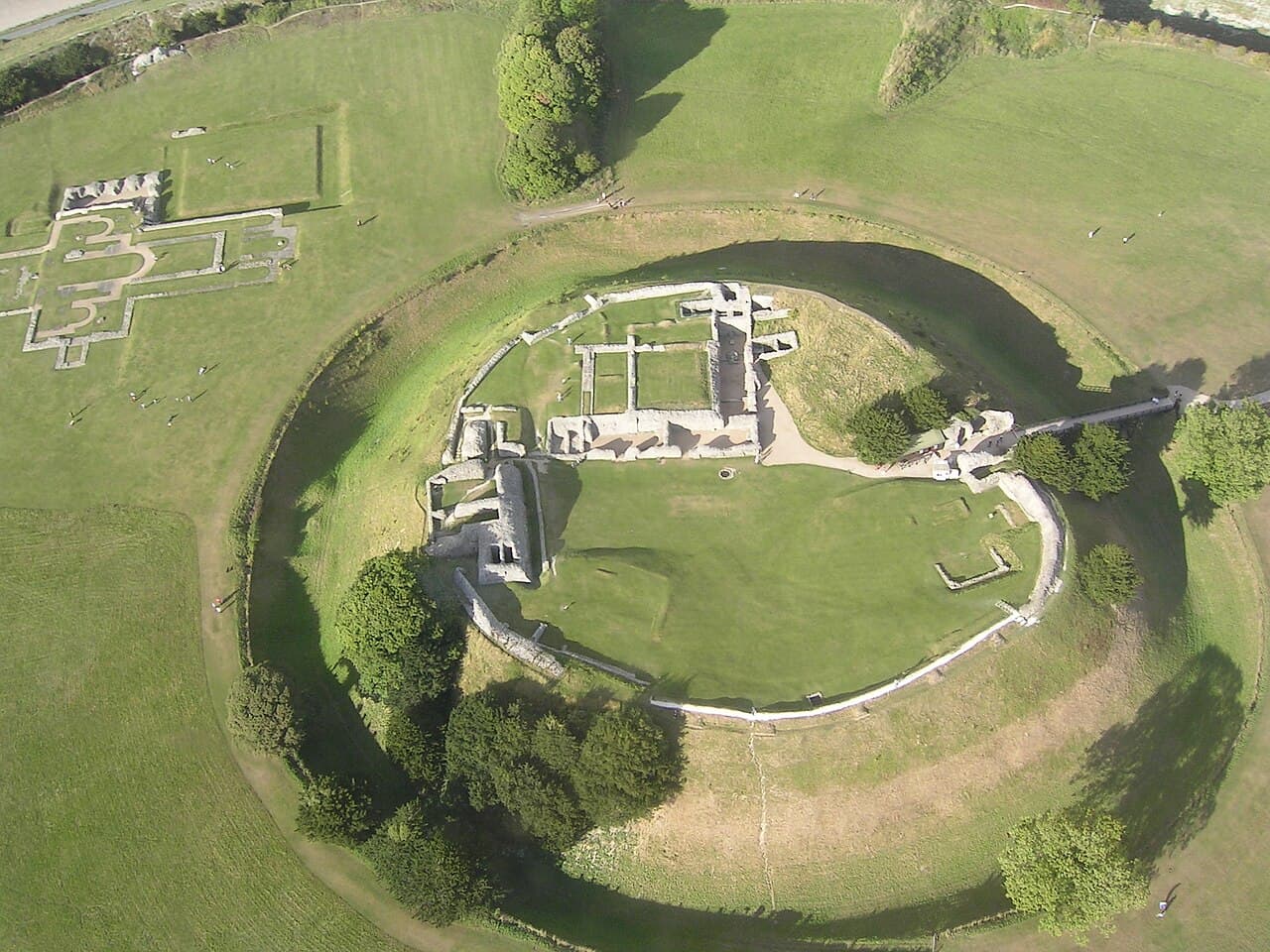
The earliest phase of Old Sarum's history is marked by its establishment as an Iron Age hillfort around 400 BC. Known historically as Sorviodunum, this oval-shaped enclosure measured roughly 400 meters by 360 meters and was protected by a formidable double set of earth banks and ditches. The eastern entrance, heavily fortified, served as the main access point, reflecting the site's defensive priorities. This hillfort was likely a center for local tribal power, controlling trade routes and river access, and it remained occupied through the Roman era.
Roman and saxon periods
During the Roman occupation of Britain, Old Sarum continued to be an important settlement within the territory of the Atrebates tribe. Although no large-scale Roman military fortifications were constructed, the site's strategic location ensured its continued relevance. Following the Roman withdrawal, the Saxons seized the hill in 552 AD and adapted it as a defensive stronghold. It became a royal residence for rulers such as King Egbert of Wessex and was the venue for significant councils, including a 960 AD assembly aimed at organizing defenses against Danish Viking raids.
Norman conquest and castle construction
After the Norman Conquest of 1066, Old Sarum underwent a dramatic transformation. By 1069, William the Conqueror had established a wooden motte-and-bailey castle on the site, marking the beginning of its medieval military significance. This fortification was constructed atop the existing hillfort, utilizing the natural elevation and earthworks for defense. The castle was placed under direct royal control, highlighting its strategic and political importance in consolidating Norman authority in southern England.
Medieval development and royal palace
Between 1075 and 1092, the first cathedral at Old Sarum was built under the leadership of Bishops Herman and Osmund. This religious structure was modest initially but was expanded in the early 12th century by Bishop Roger, who also initiated the construction of a grand royal palace within the castle's outer bailey. This palace complex, measuring approximately 170 meters by 65 meters, featured massive stone walls up to three meters thick, a great hall about 60 meters long, and a substantial tower. These features underscored Old Sarum's dual role as a military fortress and an administrative center for both royal and ecclesiastical authority.
During the reign of King Henry II (1171-1189), the castle saw significant enhancements, including the addition of a new gatehouse, drawbridge, strengthened inner bailey walls, and a treasury within the keep. Notably, the castle also served as the place of house arrest for Eleanor of Aquitaine, with improvements made to her quarters during this period.
Decline and relocation to new salisbury
Despite its early prominence, Old Sarum's hilltop location posed practical challenges, including a limited water supply and restricted space for expansion. These issues, combined with political conflicts between the local sheriff and bishop, led to the decision in the early 13th century to relocate the cathedral and the settlement to the nearby plain, founding what is now the city of Salisbury. This move resulted in the gradual abandonment of Old Sarum as a residential and religious center.
By 1322, King Edward II ordered the castle's abandonment, and it fell into ruin. The site was sold by Henry VIII in 1514, after which it ceased to be inhabited. Despite this, Old Sarum retained parliamentary representation until the Reform Act of 1832, becoming infamous as a "rotten borough" due to its lack of residents but continued political influence.
Archaeological significance and preservation
Interest in Old Sarum was revived in the 20th century through archaeological excavations conducted between 1909 and 1915 and later in the 1950s. A geophysical survey in 2014 further illuminated the layout of the medieval streets and the remains of the royal palace. Today, the site is a scheduled ancient monument and a Grade I listed site, protected for its exceptional historical and archaeological value.
The visible remains include the earthworks of the Iron Age hillfort and the Norman motte, alongside the stone foundations of the cathedral, royal palace, and other medieval buildings. These features provide invaluable insight into the site's evolution from prehistoric fortification to Norman stronghold and medieval administrative center.
Castle remains and layout
The castle's layout reveals a complex structure with distinct outer and inner baileys. The motte remains a prominent raised earth mound surrounded by a bailey enclosed by a stone curtain wall. The royal palace occupies the southeast quadrant of the outer bailey, with walls up to three meters thick enclosing a large courtyard. The great hall and tower within the palace complex emphasize its importance as a center of royal power and governance.
Additional features include the foundations of the cathedral at the western end of the site, which was expanded in the early 12th century to occupy much of the northwest quarter of Old Sarum. Archaeological findings also reveal areas used for industrial activities such as pottery and metalwork production, as well as residential clusters near the defensive ditches.
Visitor experience and modern management
Today, visitors to Old Sarum can explore the extensive earthworks and foundations that tell the story of its long history. The site is managed to preserve its archaeological integrity, with minimal modern intrusions limited to parking areas within the outer bailey. Interpretive signage and guided tours help contextualize the site’s significance, making it a compelling destination for those interested in England's ancient and medieval past.
Old Sarum Castle exemplifies the evolution of English fortifications from prehistoric hillforts through Norman military architecture to medieval royal palaces, offering a unique window into the region's strategic, political, and religious history over more than two thousand years.
Frequently asked questions (FAQ)
- What is the historical significance of Old Sarum Castle?
- Old Sarum Castle is a site of great historical importance, as it was the original site of Salisbury and has been occupied since prehistoric times. It served as a royal castle, a military stronghold, and a center of administration, reflecting the changing power dynamics of England through the ages.
- When was Old Sarum Castle built?
- Old Sarum Castle was initially constructed in the 11th century, following the Norman Conquest of England. The stone castle we see today was built around the 12th century, showcasing remarkable medieval architecture.
- Can I visit Old Sarum Castle year-round?
- Yes, Old Sarum Castle is open to visitors throughout the year, although opening hours may vary seasonally. It is advisable to check the official website for the most current visiting hours and any potential closures.
- Is Old Sarum Castle accessible for visitors with disabilities?
- Old Sarum Castle has made efforts to improve accessibility for all visitors; however, due to its historical nature and terrain, some areas may be challenging to navigate. It is recommended to contact the site in advance for detailed accessibility information.
- What are the ticket prices for Old Sarum Castle?
- Ticket prices for Old Sarum Castle vary depending on age and concession status. Generally, adult tickets are priced around £7, with discounts available for children, seniors, and families, making it an affordable destination for a day out.
- When is the best time to visit Old Sarum Castle?
- The best time to visit Old Sarum Castle is during the spring and summer months when the weather is pleasant and the grounds are lush. Visiting during these seasons also allows you to enjoy various events and activities that may be hosted on-site.
- What nearby attractions can I explore while visiting Old Sarum Castle?
- While visiting Old Sarum Castle, you can also explore the historic city of Salisbury, including its famous cathedral, and the charming surrounding countryside. Other attractions such as Stonehenge and the New Forest are also within a short drive, making it easy to enhance your visit.
- What architectural features can I expect to see at Old Sarum Castle?
- Old Sarum Castle features remarkable medieval architecture, including its imposing earthworks, stone walls, and remnants of the inner and outer bailey. Visitors can admire the impressive keep and the layout of the castle, which reflects its strategic importance in medieval times.
Photo gallery

Information
Website
Visit websiteSources & official resources
Verify the information above using these authoritative references.
Loading map...
Visitor reviews
No reviews yet. Been here? Write the first review and help other travelers!
Write the first reviewVisited this castle? Share your experience
Your review helps other travelers and adds first-hand knowledge to our encyclopedia.