Old Venetian Fortress of Corfu
The Old Venetian fortress of Corfu stands as a monumental testament to the island's strategic importance in the Ionian Sea. Located on a rocky peninsula on the eastern side of Corfu city, the fortress dominates the skyline and is the first landmark visible to visitors arriving by ferry. This imposing structure, often simply called the Old Fortress to distinguish it from the New Fortress of San Marco, was originally constructed by the Venetians in the 15th century on the foundations of an earlier Byzantine castle.
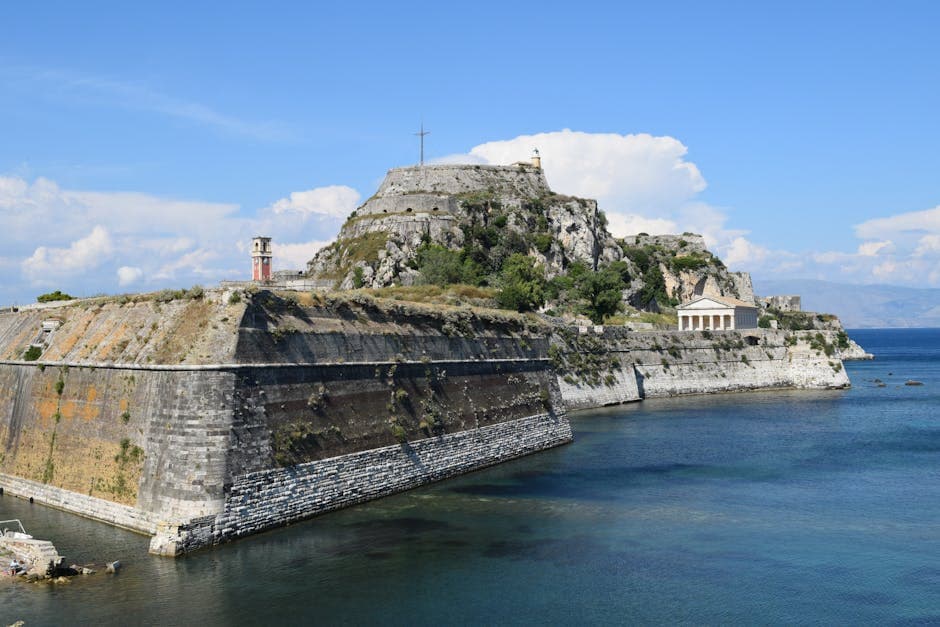
The fortress is classified as a hill castle, strategically positioned to oversee the surrounding waters and protect the city from maritime threats such as Ottoman invasions and pirate raids. The Venetians, recognizing the defensive potential of the site, enhanced its natural defenses by creating the Contrafossa, an artificial moat that separated the fortress from the mainland. This moat is a sea channel linking the Gulf of Kerkyra to the north with Garitsa Bay to the south, effectively transforming the fortress into an island.
Historical significance and military role
The Old Venetian fortress played a critical role in the defense of Corfu throughout its history, successfully repelling three major Ottoman sieges in 1537, 1571, and 1716. Its robust fortifications and strategic location made it a formidable obstacle to Ottoman expansion in the region. The fortress was not only a military installation but also a small community; historical records from 1499 indicate that approximately 1,800 people lived within the Citadella, the fortress's highest point.
Sieges and explosions
The fortress's military history is marked by resilience but also tragedy. In 1718, a lightning strike ignited the powder magazine at Castel da Mare, triggering a catastrophic explosion that destroyed much of the fortress's interior, including the palace of the Captain General and numerous city buildings. This disaster claimed the lives of the fortress commander and hundreds of others, significantly impacting the structure and the local population.
Architectural features and layout
The fortress exhibits a blend of Venetian military architecture and adaptations to the local geography. Its entrance is accessible from the Spianada, one of the largest squares in Europe, which serves as a grand approach to the fortress. The arched gateway bears a Venetian marble emblem, symbolizing the island's long Venetian heritage.
Inside the entrance, visitors encounter two rooms flanking the passage that now serve as the Byzantine Collection of Corfu and a gift shop. Nearby lies a dry ditch approximately 22 meters wide, originally constructed as an additional defensive barrier. Adjacent to the entrance is the small chapel of the Madonna del Carmine, historically used to hold prisoners condemned to death.
British influence and adaptations
During British rule in the 19th century, significant modifications were made to the fortress. The wooden bridge that originally connected the fortress to the mainland was replaced in 1819 by a more durable stone bridge, spanning 60 meters and elevated 15 meters above the moat. The British also constructed a large barracks building within the fortress, which today houses the Public Library of Corfu, home to rare manuscripts and historical editions.
Citadella and key structures
The Citadella, the fortress's highest point, features a polygonal well dating from 1732 and a tall clock tower that visitors can climb for panoramic views of Corfu city and the Ionian Sea. Archaeological and historical evidence suggests this area was once densely inhabited, containing houses, churches, water reservoirs, and gunpowder stores. The 1718 explosion destroyed much of the Citadella, including the church of Agioi Apostoli.
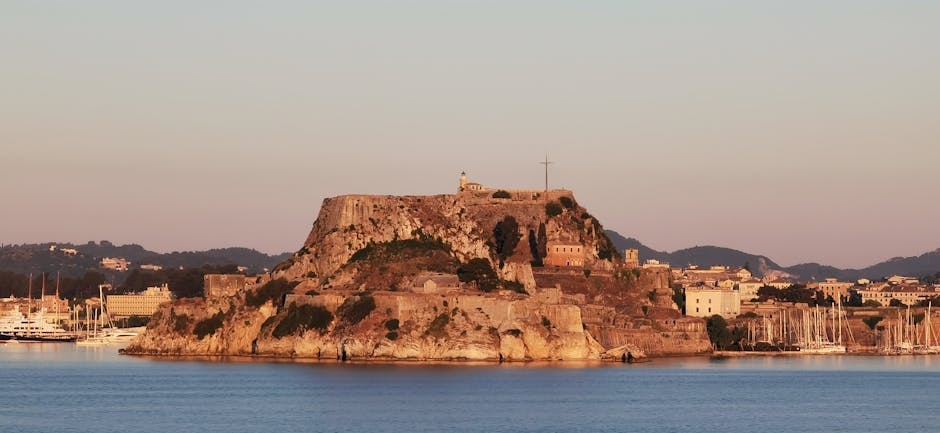
Photo by Glenn Langhorst
Cultural and modern use
Today, the Old Venetian fortress is not only a historical monument but also a vibrant cultural hub. The flat eastern side of the fortress serves as a venue for summer cultural events and festivals. Within this space stands the church of San Giorgio, notable for being the only Doric-style church in Greece, originally built by the Venetians on the site of an ancient temple.
The fortress grounds also accommodate the Hellenic Music Research Lab of the Ionian University, reflecting the site's ongoing role in education and cultural preservation. The fortress's blend of military history, architectural grandeur, and cultural significance makes it one of the most impressive and visited landmarks in Corfu.
Visitor experience
Visitors to the fortress can explore its extensive fortifications, museums, and cultural spaces while enjoying breathtaking views of the Ionian Sea. The public library housed in the former British barracks offers a unique glimpse into Corfu's literary heritage. The fortress's accessibility from the Spianada square makes it an integral part of the city's urban fabric and a must-see destination for those interested in history, architecture, and Mediterranean culture.
Overall, the Old Venetian fortress of Corfu stands as a symbol of the island's resilience and strategic importance through centuries of conflict and change. Its well-preserved structures and rich history provide invaluable insight into Venetian military architecture and the complex history of the Ionian Islands.
Frequently asked questions (FAQ)
- How do I get to the Old Venetian Fortress of Corfu?
- The Old Venetian Fortress is located in the heart of Corfu Town, easily accessible by foot from most central locations. You can also reach it by local buses or taxis, which are readily available throughout the island.
- What is the historical significance of the Old Venetian Fortress?
- The Old Venetian Fortress, built by the Venetians in the 16th century, played a crucial role in defending Corfu against invasions. Its strategic location and impressive architecture make it a symbol of the island's rich historical heritage.
- When was the Old Venetian Fortress built?
- Construction of the Old Venetian Fortress began in 1576 and was completed over several decades. It has since undergone various modifications, reflecting the architectural styles and military needs of different periods.
- Can I explore the Old Venetian Fortress on my own?
- Yes, visitors can explore the Old Venetian Fortress independently, walking through its impressive ramparts and discovering the numerous historical buildings within. Guided tours are also available if you prefer a more in-depth experience.
- Why is the architecture of the Old Venetian Fortress notable?
- The fortress showcases a blend of Venetian, Byzantine, and Ottoman architectural influences, with its impressive stone walls, bastions, and the iconic lighthouse. This eclectic architectural style highlights the diverse history of Corfu as a strategic naval base.
- Is it possible to visit the Old Venetian Fortress year-round?
- Yes, the Old Venetian Fortress is open to visitors throughout the year, although hours may vary seasonally. It is advisable to check the official website for the most current information on opening hours and any potential closures.
- What are the ticket prices for the Old Venetian Fortress?
- As of the latest information, the entrance fee for the Old Venetian Fortress is typically around 6 euros for adults, with discounted rates for students and free entry for children under a certain age. It's a good idea to check for any special events or exhibitions that may have different pricing.
- What is the best time to visit the Old Venetian Fortress?
- The best time to visit the Old Venetian Fortress is during the spring and fall when the weather is milder and crowds are smaller. Visiting early in the morning or late in the afternoon can also provide a more peaceful experience and stunning views of the sunset.
- Are there any nearby attractions to the Old Venetian Fortress?
- Yes, the fortress is close to several attractions, including the Liston Promenade, the Museum of Asian Art, and the Old Town of Corfu, which is a UNESCO World Heritage site. These sites can easily be explored on foot after your visit to the fortress.
Photo gallery

Photo by IOANNIS SAKKOS


Information
Loading map...
Visitor reviews
No reviews yet. Been here? Write the first review and help other travelers!
Write the first reviewVisited this castle? Share your experience
Your review helps other travelers and adds first-hand knowledge to our encyclopedia.