Old Ottoman Castle near Abha
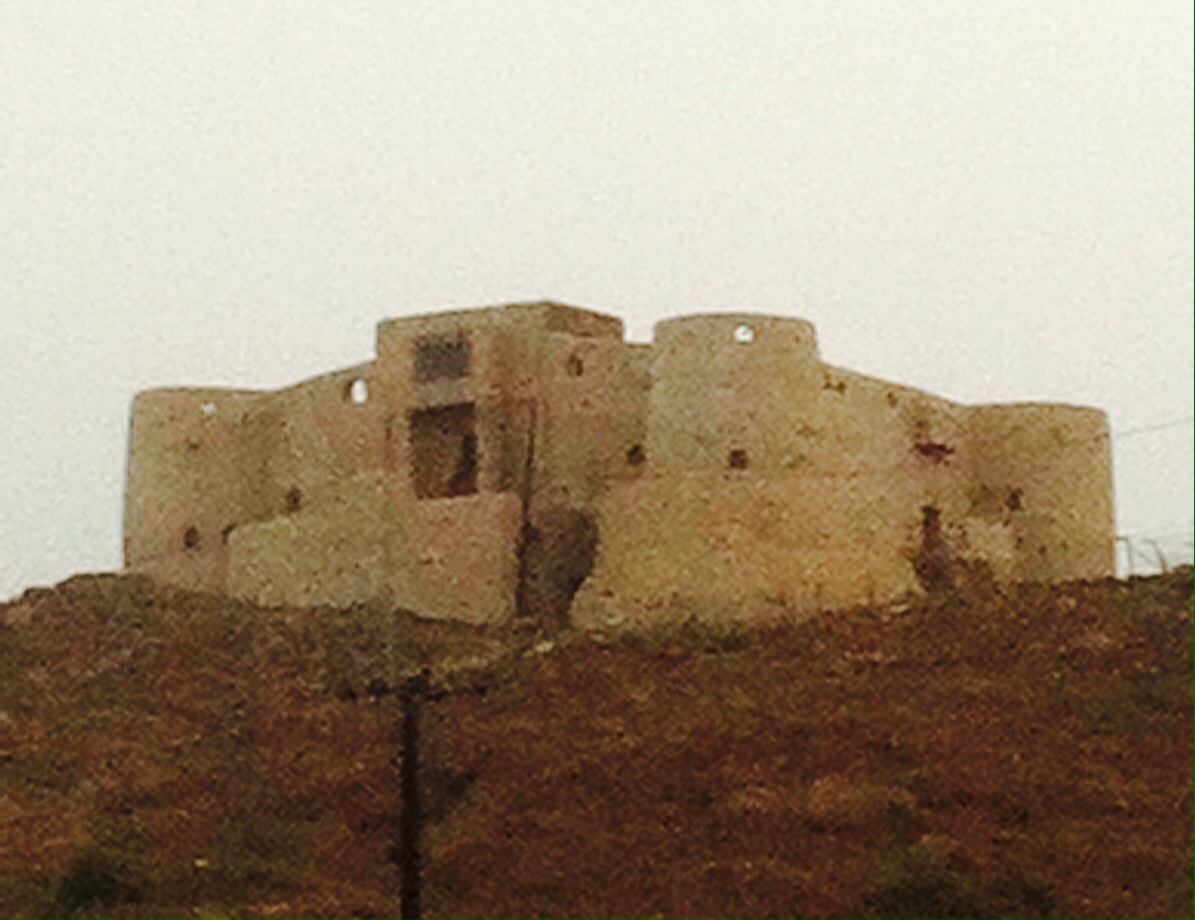
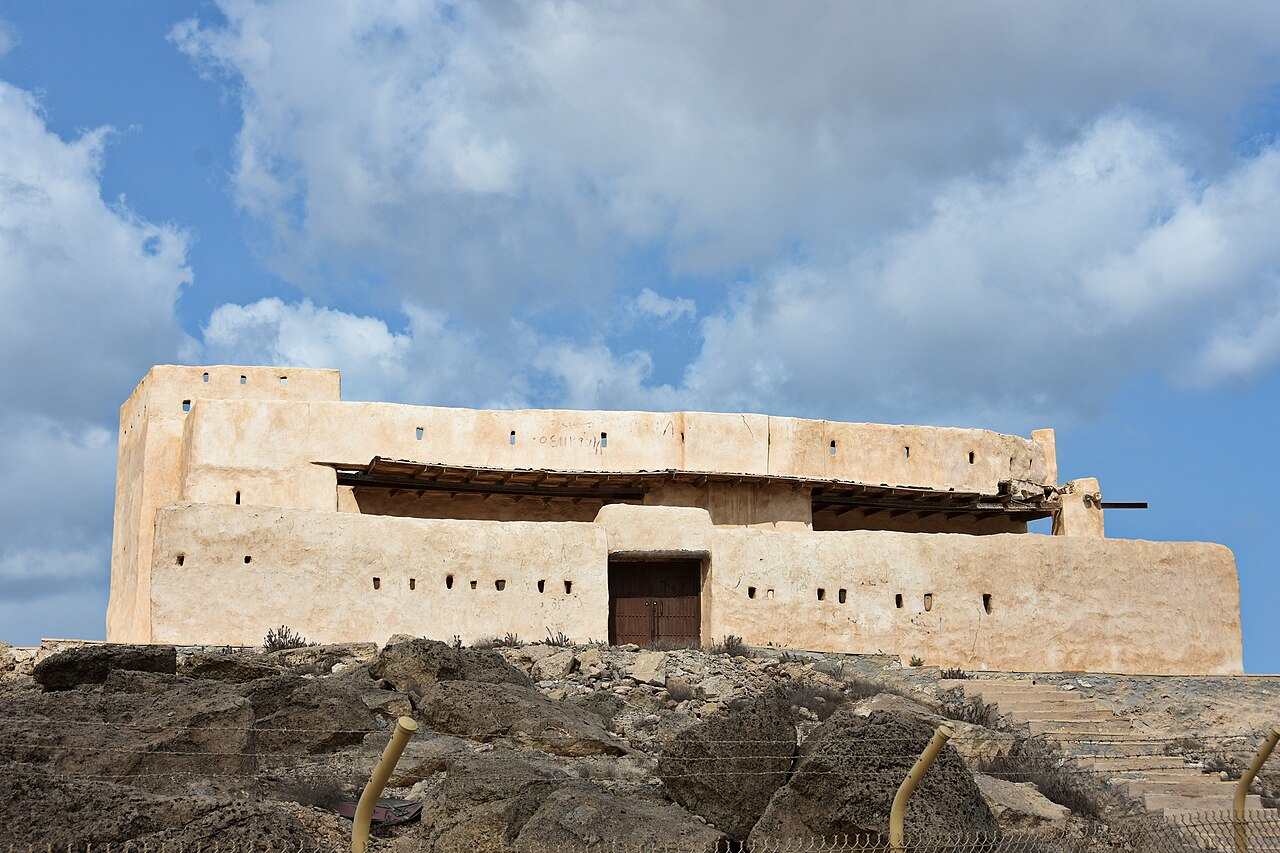
The Old Ottoman castle near Abha stands as a significant historical fortress located in the municipality of Abha within the Asir region of Saudi Arabia. Constructed during the late 19th century under the Ottoman Empire, this castle served as a strategic military installation designed to control key routes and assert imperial presence in the Arabian Peninsula's southwestern frontier. Its position on a hilltop overlooking the surrounding terrain highlights its role as a defensive stronghold and a territorial landmark.
Historical context and strategic importance
The castle's origins trace back to shortly after the Ottoman forces annexed the Asir region in 1871 CE (1288 AH). Construction commenced in 1872 CE (1289 AH), reflecting the empire's intent to consolidate control over this newly acquired territory. The fortress was strategically placed to oversee the vital route descending from the Shaar Pass toward Wadi Tih in the Tihama coastal lowlands. This route was crucial for movement between the highlands and the Red Sea coastal plain, making the castle a key point for monitoring and defense.
The name of the castle, derived from the Arabic term for "boundary" or "landmark," emphasizes its function as a frontier marker between the elevated Asir highlands and the Tihama plain. This role was noted by the medieval traveler Al-Hamdani, underscoring the long-standing significance of this geographic boundary.
The castle remained actively garrisoned by Ottoman troops between 1909 and 1912 CE (1327–1331 AH). During this period, it served as a military post to maintain Ottoman authority in the region, supported by local water sources that ensured the garrison's sustainability. This timeframe marks the last documented phase of the fortress's active military use before the empire's decline in the Arabian Peninsula.
Architectural features and layout
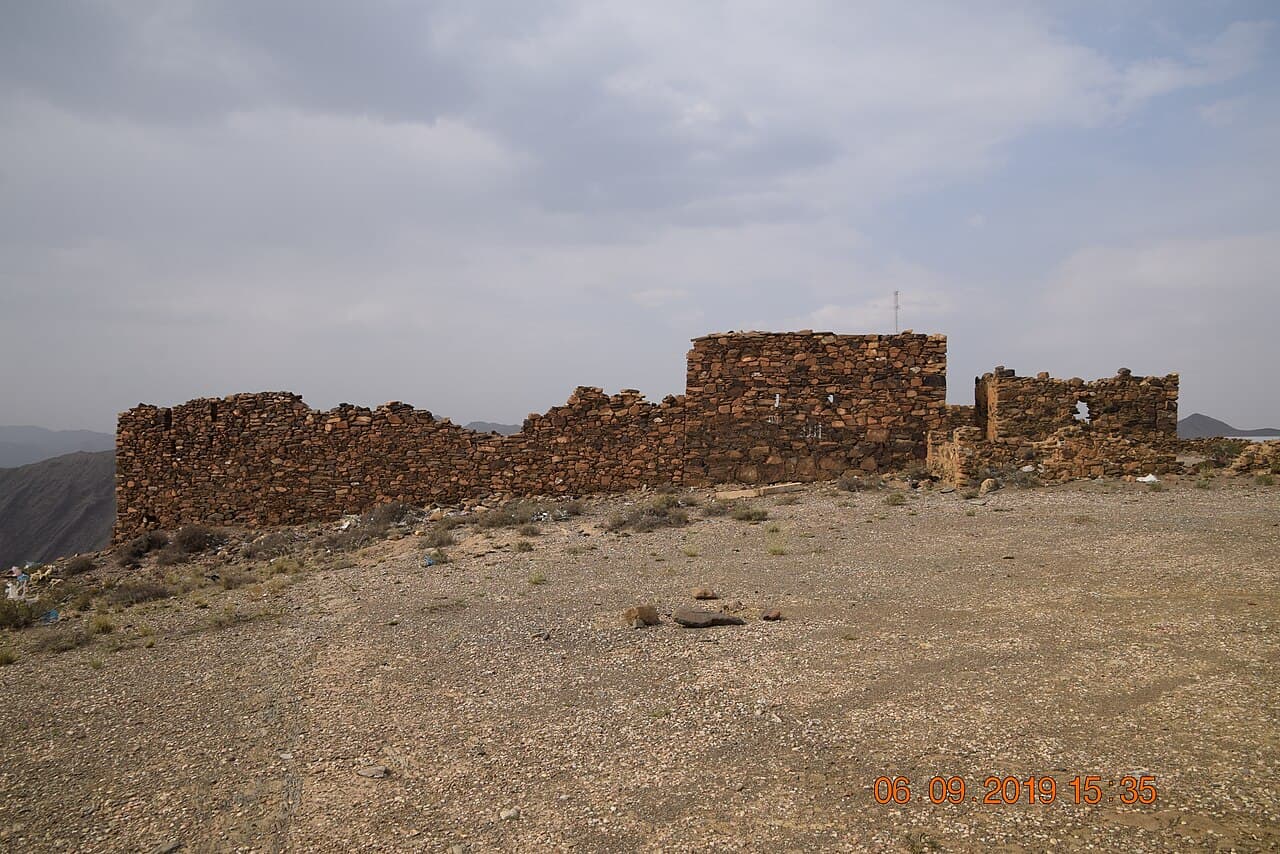
The fortress exhibits a roughly rectangular plan enclosing a complex of living quarters, service rooms, and open courtyards. The fortification walls are built primarily from locally sourced granite stones, with thicknesses ranging between 70 and 90 centimeters. These walls incorporate numerous loopholes—small openings of varied sizes designed for defensive purposes and surveillance of the surrounding area.
Defensive structures
On the northern and eastern sides, the castle features semi-circular towers that project outward, enhancing its defensive capabilities by providing vantage points for observation and archery. The main entrance is located on the eastern wall, measuring 2.4 meters wide. It is reinforced by an 80-centimeter-thick buttress on the west side, which supports the gate's structural integrity.
The gate itself consists of two wooden leaves mounted on jambs anchored into the buttress and adjacent stone wall. A wooden lintel above the gate reduces stress on the masonry, demonstrating practical construction techniques. This entrance design reflects typical Ottoman military architecture adapted to local materials and conditions.
Interior construction and finishing
Inside the walls, the surfaces are coated with a traditional mixture of clay and straw. This plastering technique smooths the interior surfaces and provides insulation against the region's temperature extremes. The roofs of chambers and annexes are supported by wooden beams topped with layers of reed stalks, a construction method suited to the local environment.
Some inner facades feature plaster finishing, indicating attention to the comfort and durability of the living spaces within the fortress. These details reveal the dual military and residential functions of the castle, accommodating the needs of the garrison during prolonged occupation.
Water supply and sustainability features
Water management was a critical aspect of the castle's design, given the arid climate of the Asir region. An external well located approximately two kilometers from the fortress provided a primary water source. More importantly, the castle contained an internal well about 15 meters deep within its southern courtyard, ensuring a reliable water supply during sieges or dry periods.
Adjacent to the castle is a large rectangular cistern measuring 5.9 by 23.9 meters with an internal height of 2.25 meters. This cistern was constructed to collect rainwater runoff from a nearby valley, supplementing the water needs of the garrison. Such hydraulic infrastructure demonstrates the foresight in adapting military architecture to the environmental challenges of the region.
Preservation and cultural significance
Today, many of the castle's stone structures remain intact, offering a well-preserved example of Ottoman-era frontier fortifications in the Arabian Peninsula. The combination of defensive architecture, residential accommodations, and water management systems provides valuable insight into the military strategies and daily life of Ottoman forces stationed in the Asir highlands.
The castle stands as a cultural landmark reflecting the historical interactions between the Ottoman Empire and the Arabian Peninsula's diverse regions. Its preservation contributes to understanding the empire's military reach and the architectural adaptations necessary for frontier defense in challenging environments.
Frequently asked questions (FAQ)
- When was the Old Ottoman castle near Abha built?
- The castle was constructed beginning in 1872 CE (1289 AH) shortly after the Ottoman annexation of the Asir region in 1871 CE (1288 AH).
- What was the strategic purpose of the castle?
- The fortress was built to control the important route from Shaar Pass to Wadi Tih, marking the frontier between the Asir highlands and the Tihama coastal plain.
- What are the key architectural features of the castle?
- Key features include thick granite stone walls with loopholes, semi-circular defensive towers, a reinforced main gate, and traditional clay and straw interior plastering.
- How was water supplied to the castle?
- Water was supplied by an internal well within the southern courtyard, an external well about two kilometers away, and a large cistern collecting rainwater runoff from a nearby valley.
- Is the castle accessible to visitors today?
- While specific visiting hours and ticket information are not documented, the castle remains well-preserved and can be viewed as a significant historical site near Abha.
Photo gallery

Information
Loading map...
Visitor reviews
No reviews yet. Been here? Write the first review and help other travelers!
Write the first reviewVisited this castle? Share your experience
Your review helps other travelers and adds first-hand knowledge to our encyclopedia.