Old Navarino Castle
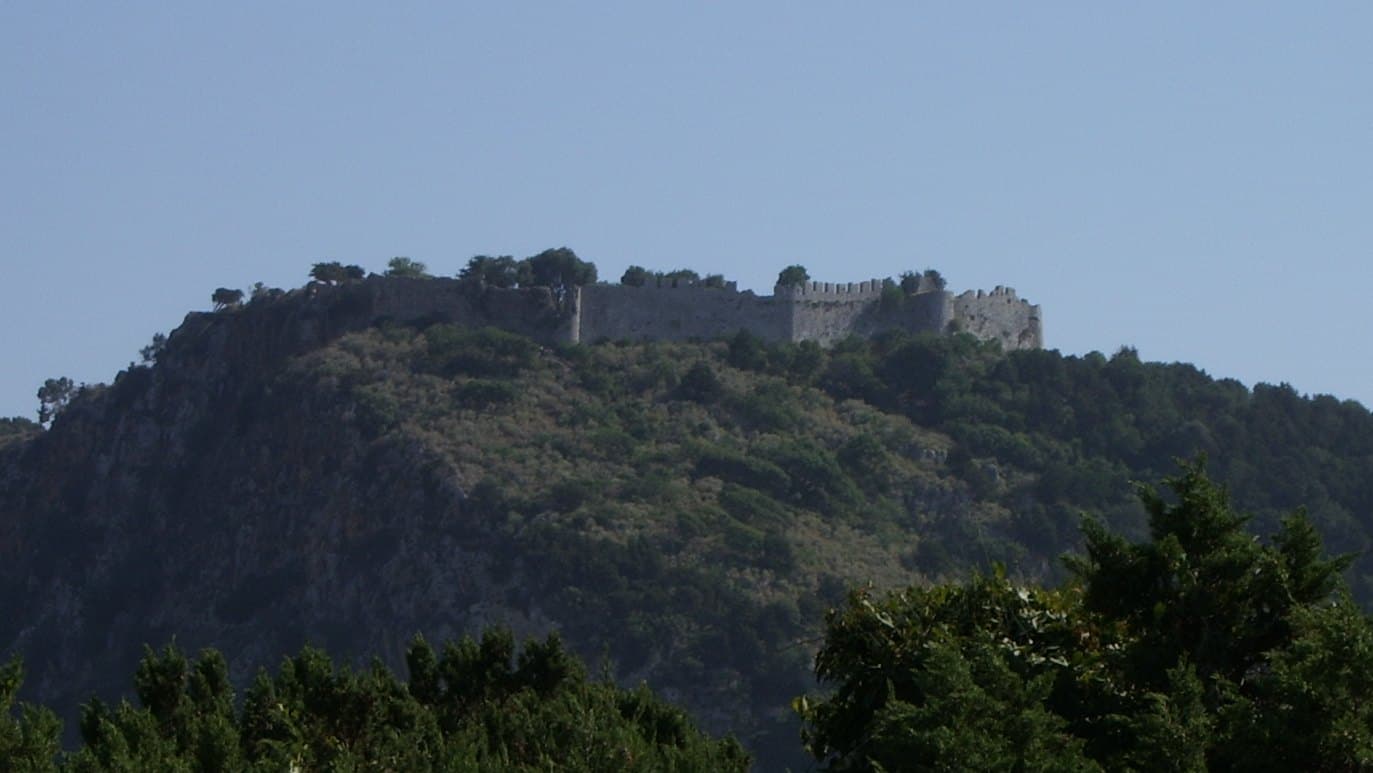
Old Navarino Castle is a significant 13th-century bastioned fortress located in Messinia, Greece, perched atop a commanding 200-metre rock formation on the northern edge of Navarino Bay. Built around 1281 by the Frankish noble Nicholas II of Saint-Omer, the castle was strategically designed to oversee and protect the vital maritime approaches to the bay. Its position on the Koryfasio peninsula, flanked by sheer cliffs and natural defenses, made it a formidable stronghold throughout the High Medieval period and beyond.
The castle's origins are deeply rooted in the aftermath of the Fourth Crusade (1204), when the Peloponnese was divided into the Principality of Achaea, a Frankish Crusader state. The site itself had been of military importance since classical antiquity, serving as the acropolis of ancient Pylos and witnessing various conflicts during the Peloponnesian War. The Frankish construction incorporated and expanded upon these earlier fortifications, blending medieval military architectural techniques with the natural landscape.
Architectural features and layout
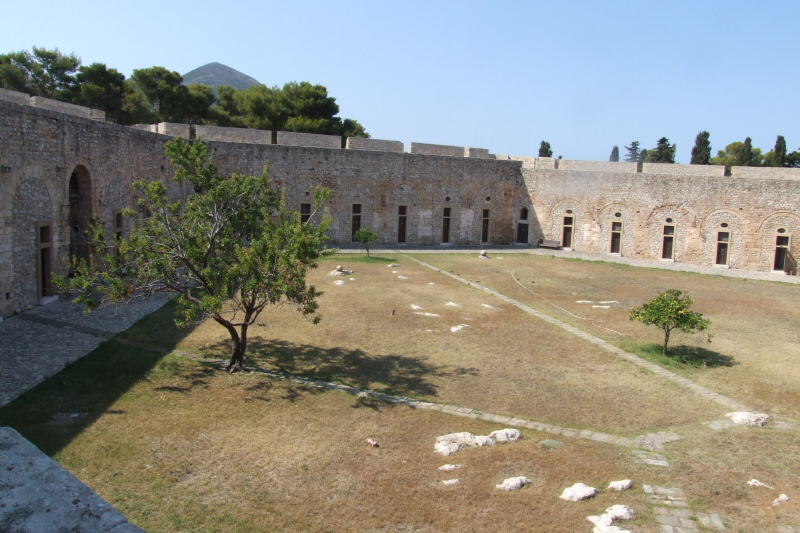
The fortress covers approximately 50,000 square meters and follows an irregular trapezoidal plan, divided by a transverse wall into two main sectors: a larger southern section and a smaller northern citadel known as the acropolis. The main entrance was situated on the southern side, accessible via a steep path from the channel of Sykea. Although much of the gate has collapsed, its original location remains identifiable.
The castle's defensive structures include extensive perimeter walls, with some parts exhibiting three distinct layers of brickwork, particularly along the southern side. Foundations of two circular towers on the northeastern flank survive, which would have served as lookout points and defensive bastions. Additionally, a small rectangular tower on the western outer wall, constructed using Byzantine brickwork techniques, predates the Frankish castle and hints at earlier fortifications on the site.
Within the walls lie ruins of various buildings, including public and private structures, as well as a Catholic church reflecting the Frankish and Venetian phases of occupation. The presence of underground cisterns highlights the castle's capacity to endure prolonged sieges by storing essential water supplies. The eastern side of the castle was naturally protected by steep terrain and therefore left largely unfortified, though some tall walls topped with distinctive swallowtail battlements remain visible.
Historical significance and ownership changes
Old Navarino Castle's history is marked by frequent changes in control, reflecting the turbulent geopolitics of the eastern Mediterranean. Initially built by the Frankish rulers of the Principality of Achaea, the castle later came under the control of the Navarrese Company, a mercenary group from Navarre and Gascony, in the late 14th century. The Venetians captured the fortress in the early 15th century, around 1417 to 1423, aiming to secure maritime routes and prevent Genoese expansion.
The castle endured several Ottoman raids beginning in 1423 and was a contested site during the Ottoman–Venetian Wars. Despite a Venetian garrison well provisioned for defense, the fortress fell to Ottoman forces after the Battle of Modon in 1500. The Venetians briefly recaptured it later that year, but Ottoman commanders Kemal Reis and Hadım Ali Pasha launched a successful joint land and sea assault in 1501, securing permanent Ottoman control.
In 1572/3, the Ottomans recognized the strategic limitations of the aging Frankish fortress and constructed the nearby New Navarino Castle, a modern bastioned fortress better suited to contemporary warfare. This development led to the gradual decline of Old Navarino's military importance. By the late 16th century, it was maintained only by a token garrison and increasingly fell into disrepair.
Role during later conflicts
During the Morean War (1684–1699), the old castle was lightly garrisoned and surrendered without a fight to Venetian forces under Francesco Morosini in 1686. It remained under Venetian control until 1715, when the Ottomans recaptured the Peloponnese. The fortress saw little improvement under Ottoman rule and was garrisoned only minimally.
The castle briefly came under Russian control during the Russo-Turkish War (1768–1774) and the Orlov Revolt in 1770. In the 19th century, during the Greek War of Independence (1821–1829), Greek revolutionaries initially captured the fortress, but it was retaken by Ottoman-Egyptian forces led by Ibrahim Pasha in 1825. The region was finally liberated following the decisive Battle of Navarino (1827), after which the old castle was abandoned as a military stronghold.

Photo by Pavlos1988 • CC BY-SA 4.0
Archaeological importance and preservation
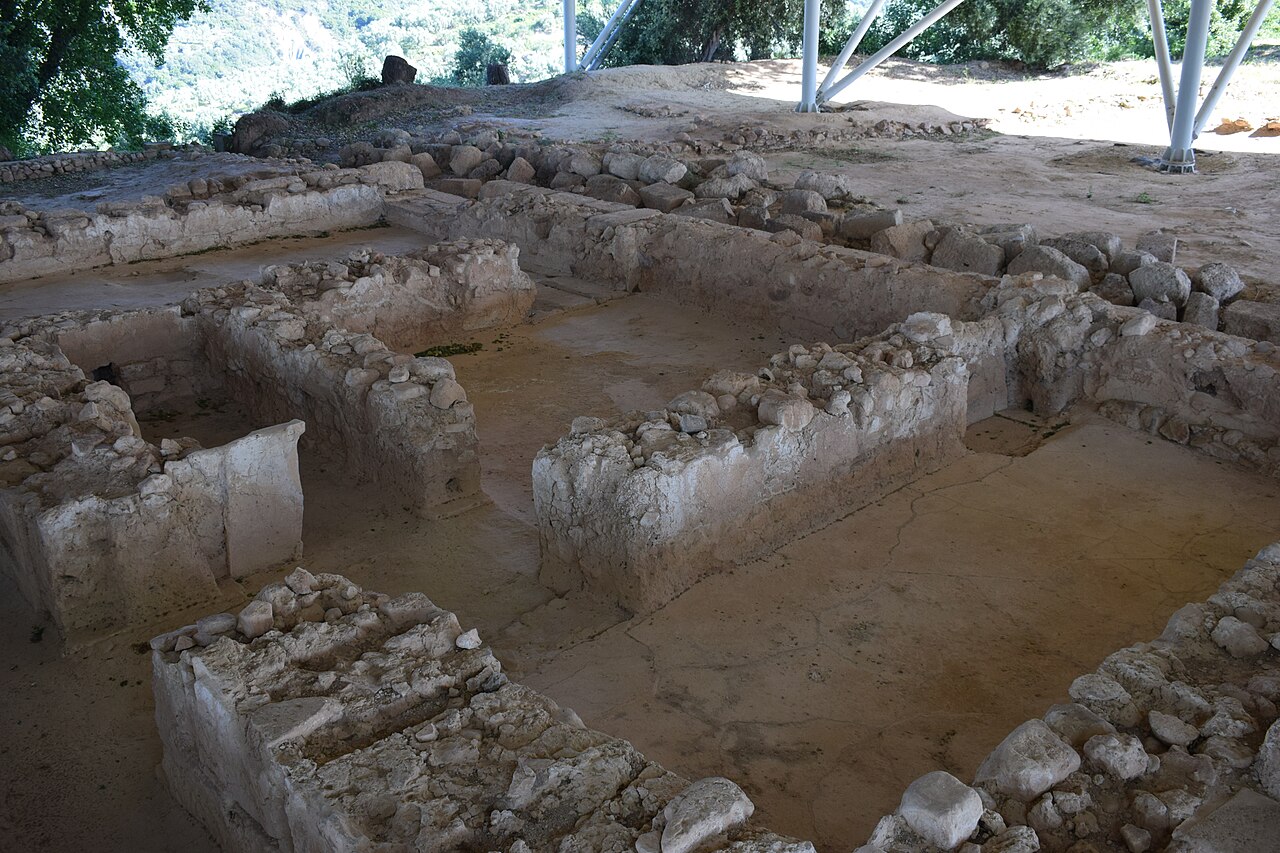
Beyond its medieval and early modern military history, Old Navarino Castle is situated near one of Greece's most important archaeological sites—the Palace of Nestor, a major Mycenaean center. Excavations by renowned archaeologists such as Heinrich Schliemann, Carl Blegen, Konstantinos Kourouniotis, and Spyros Marinatos have uncovered significant remains of Bronze Age civilization in the vicinity.
Since 1932, the castle and surrounding area have been legally protected as a historical monument. Preservation efforts are currently overseen by the Ephorate of Antiquities of Messenia. While much of the fortress remains in ruins, the surviving walls, towers, and cisterns provide valuable insights into medieval fortification techniques and the region's complex history of conquest and cultural exchange.
Current condition and visitor experience
Today, Old Navarino Castle stands as a partially preserved ruin, with large sections of its outer walls and towers still visible amid rugged, overgrown terrain. The site offers commanding views over the Ionian Sea, the bay of Voidokilia, and the nearby islands, underscoring its historic role in maritime defense.
Access to the castle is limited due to safety concerns and the challenging landscape. Visitors can explore the remains of the fortress, including the foundations of towers, defensive walls, and the layout of the internal structures. Interpretive signage and guided tours help contextualize the castle's significance within the broader history of the Peloponnese and the eastern Mediterranean.
Old Navarino Castle remains a poignant symbol of the region's layered history, from ancient Greek times through Frankish Crusader rule, Venetian and Ottoman conflicts, to the modern Greek state. Its enduring presence invites reflection on the strategic importance of Navarino Bay and the cultural interactions shaped by centuries of warfare and diplomacy.
Frequently asked questions (FAQ)
- What is the historical significance of Old Navarino Castle?
- Old Navarino Castle, built in the 13th century, played a crucial role in the defense of the region during the Byzantine and Ottoman periods. It is renowned for its strategic location overlooking the Bay of Navarino, making it a vital stronghold in numerous historical conflicts, including the naval Battle of Navarino in 1827.
- When was Old Navarino Castle built?
- Old Navarino Castle was constructed in 1278 by the Frankish Prince William II of Villehardouin. The castle has undergone various modifications and restorations throughout its history, reflecting the architectural styles and military needs of different eras.
- Can I visit Old Navarino Castle?
- Yes, visitors are welcome to explore Old Navarino Castle and its picturesque surroundings. The site is open to the public, allowing guests to enjoy the stunning views and learn about its rich history.
- What are the opening hours for Old Navarino Castle?
- Old Navarino Castle is generally open to visitors daily from 8:00 AM to 8:00 PM during the summer months. In the winter, the hours may vary, so it's best to check local listings before your visit.
- Is it possible to access Old Navarino Castle by public transport?
- Yes, Old Navarino Castle can be reached by public transport, with local bus services connecting it to nearby towns and cities. Additionally, taxis and rideshare services are available for those who prefer a more direct route.
- What is the best time to visit Old Navarino Castle?
- The best time to visit Old Navarino Castle is during the spring and fall when the weather is mild and comfortable for exploring. Summer can be quite hot, so early mornings or late afternoons are ideal for a more pleasant experience.
- Are there any nearby attractions to Old Navarino Castle?
- Yes, nearby attractions include the beautiful beaches of Navarino Bay and the charming town of Pylos. Visitors can also explore the historical sites such as the Palace of Nestor and the picturesque village of Methoni.
- What are the ticket prices for visiting Old Navarino Castle?
- Admission to Old Navarino Castle is typically free, making it an accessible destination for all visitors. However, guided tours may have associated fees, so it's advisable to check in advance if you're interested in a more in-depth experience.
Photo gallery


Information
Website
Visit websiteSources & official resources
Verify the information above using these authoritative references.
Loading map...
Visitor reviews
No reviews yet. Been here? Write the first review and help other travelers!
Write the first reviewVisited this castle? Share your experience
Your review helps other travelers and adds first-hand knowledge to our encyclopedia.