Methoni Castle
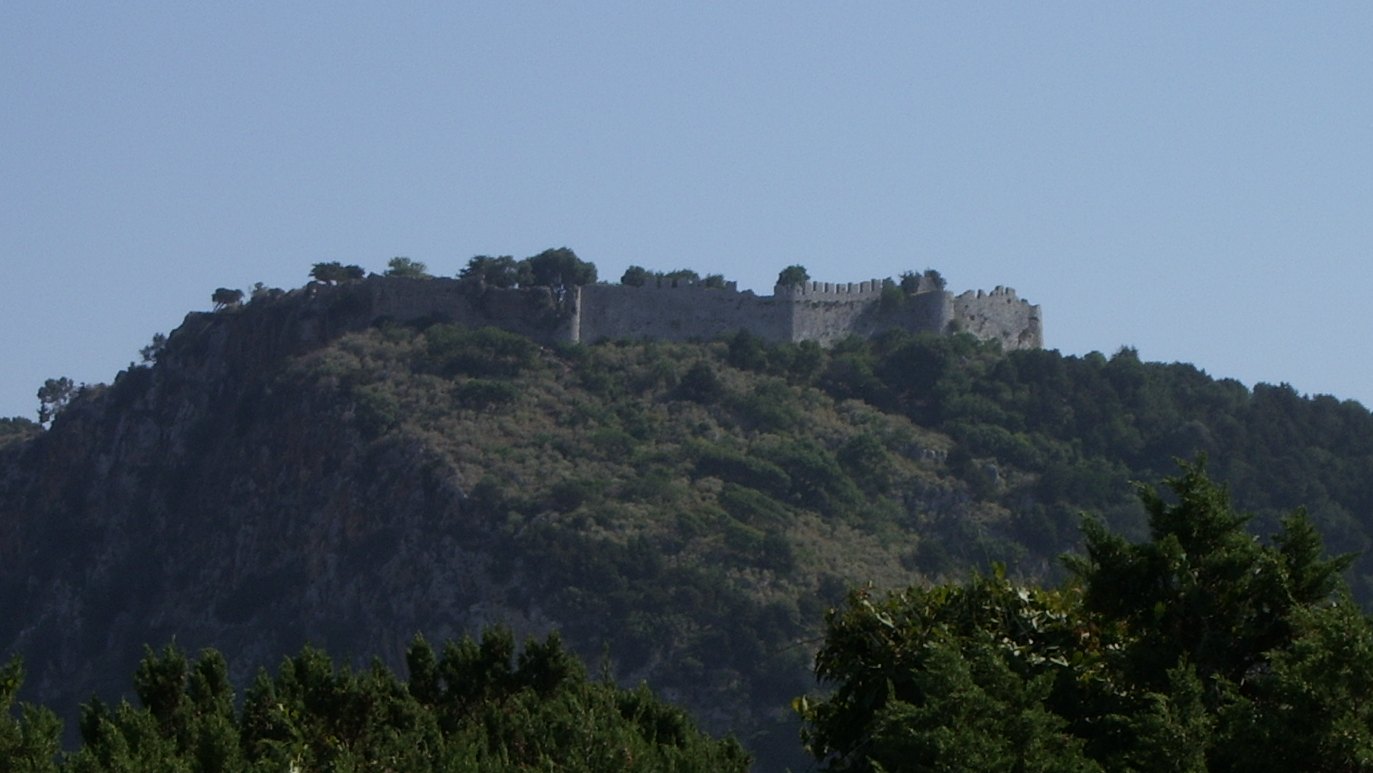
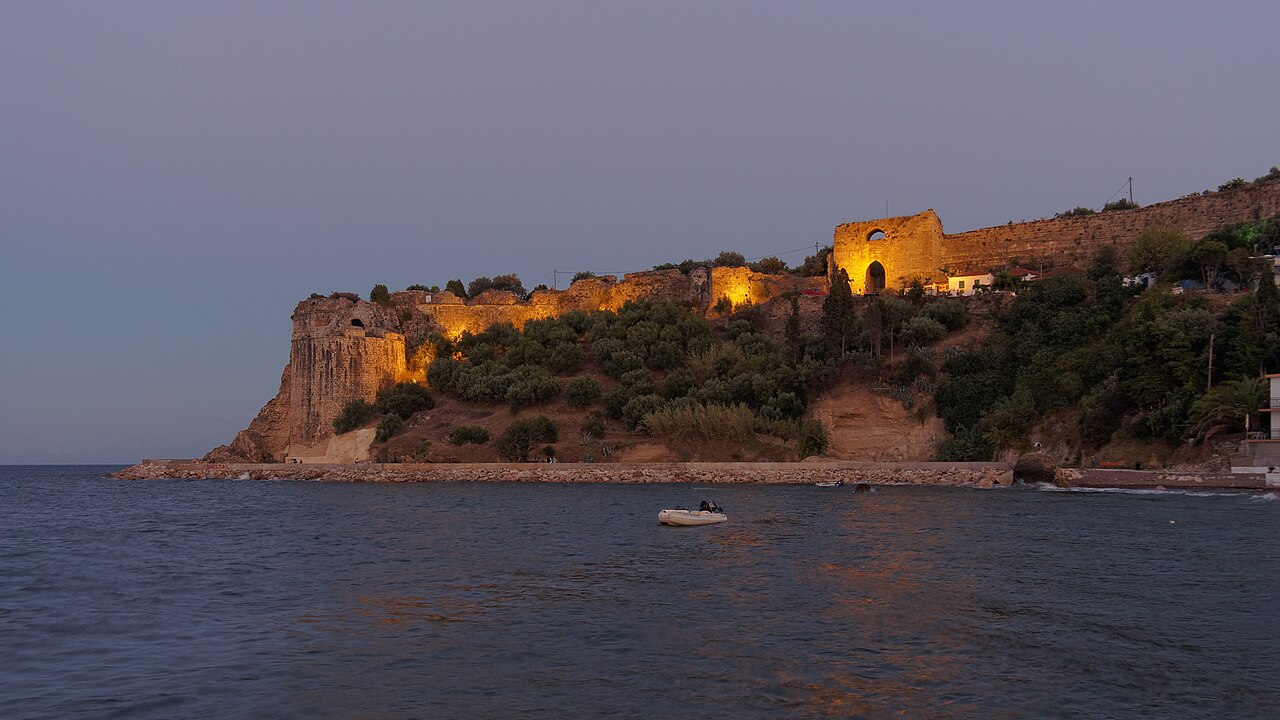
Methoni Castle stands as a monumental testament to the strategic and architectural prowess of the Venetian Republic during the High Medieval period. Located on a rocky promontory in Methoni, Peloponnisos, Greece, this imposing fortress is among the largest and most impressive coastal fortifications in the Mediterranean. Its commanding position overlooking the sea allowed it to control vital maritime routes between the Western and Eastern Mediterranean, making it a crucial naval base and trading hub for centuries.
The castle’s origins trace back to the early 13th century when the Venetians seized the site following the Fourth Crusade and the establishment of the Principality of Achaea. They demolished the existing Byzantine fortifications and constructed a new, massive coastal fortress designed to protect Venetian interests and combat piracy. The castle's architecture reflects a blend of medieval military design with later adaptations to withstand the evolving threats of artillery warfare, including the addition of bastions and reinforced walls.
Historical context and strategic importance
The site of Methoni Castle has a long history of fortification, beginning with an ancient acropolis established in the 7th century BCE. Roman walls dating to Emperor Trajan’s reign in the early 2nd century CE further attest to the location’s enduring military significance. However, it was under Venetian control from 1206 onwards that Methoni, known as Modon, rose to prominence as a major naval base.
Throughout the 14th and 15th centuries, the castle played a pivotal role in regional conflicts, including the Venetian-Genoese wars and the rising threat from Ottoman forces. Venetian engineers undertook significant reconstruction efforts to modernize the fortress for artillery defense, replacing tall medieval towers with lower, thicker bastions and adding moats and ditches. Despite these efforts, the castle fell to the Ottomans in 1500, who inflicted considerable damage but also contributed to its fortifications.
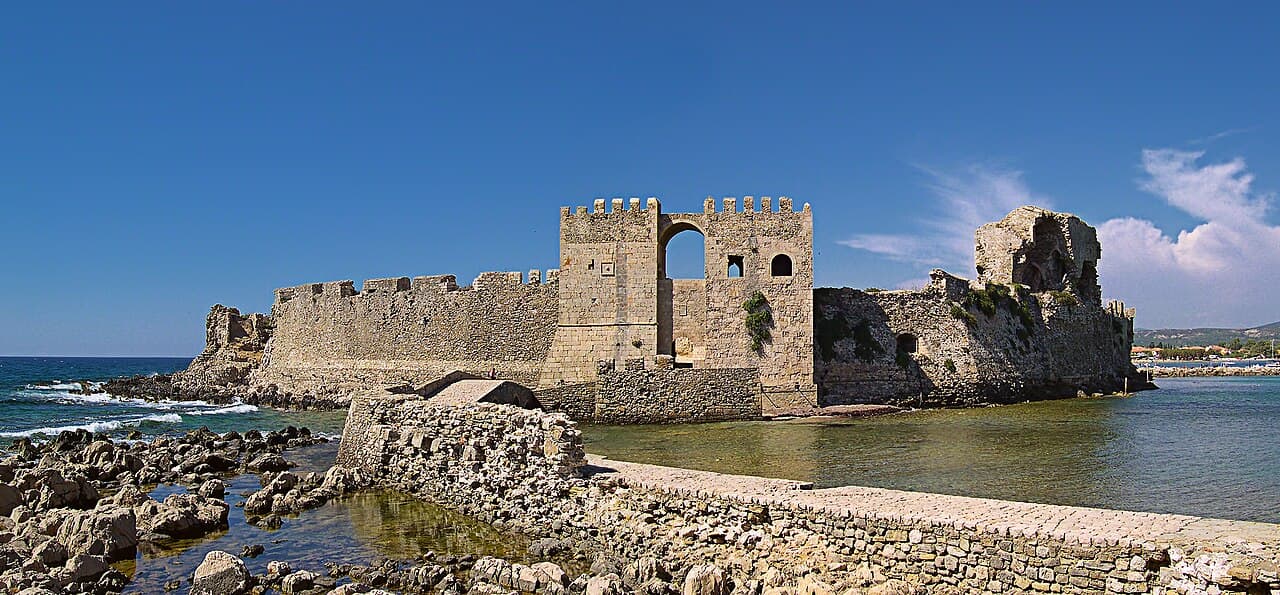
The Ottomans built the distinctive Bourtzi tower on a fortified islet south of the castle between 1500 and 1573. This octagonal structure served as a prison and place of execution, connected to the castle by a small paved road. The castle briefly returned to Venetian hands in the late 17th century before falling again to the Ottomans in 1715. During the 18th century, the fortress endured sieges by Russian and Greek forces and later played a role in the Greek War of Independence.
Architectural features and layout
Fortress structure and defenses
Methoni Castle occupies an elliptical area of approximately 93,000 square meters on a narrow peninsula. It is connected to a small fortified islet by a remarkable stone bridge featuring 14 arches. This bridge, built around 1828 by French forces under General Maison, replaced an earlier wooden drawbridge and stands about four meters high, 45 meters long, and three meters wide.
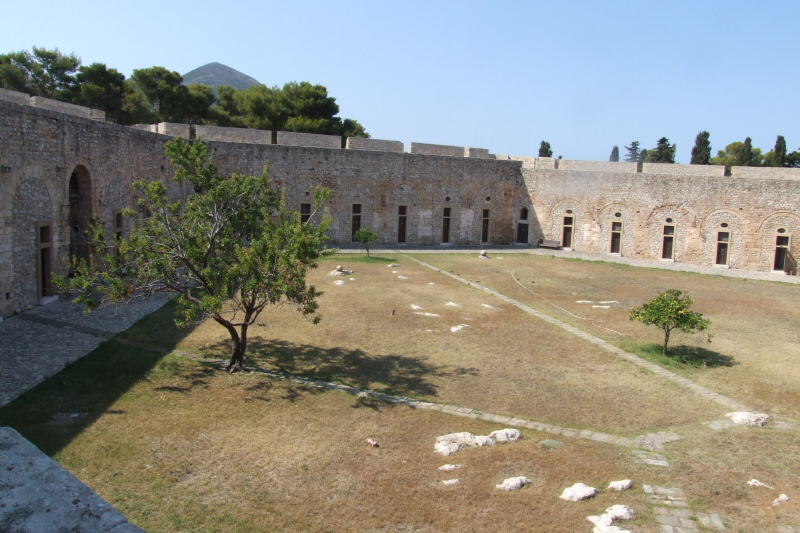
The fortress is divided into two main sections: the southern urban area and the northern citadel. The southern section contains the remains of Venetian houses, paved streets, and public buildings enclosed within defensive walls punctuated by regularly spaced towers. The northern citadel served as the military command center, separated from the southern part by a lower wall with five towers—four square and one octagonal—and protected by a broad dry moat and strong curtain walls reinforced with bastions.
Gates, walls, and battlements
The castle features six gates, three of which face the harbor. The main entrance, located centrally on the northern wall, is constructed of rectangular limestone blocks and adorned with pilasters topped by Corinthian capitals, reflecting post-1700 Ottoman-era modifications. The fortress walls consist of roughly hewn stones set in mortar and are crowned with battlements that provided defenders with vantage points to repel attackers.
Embedded in the northern walls are numerous Venetian coats of arms displaying the winged Lion of Saint Mark, the emblem of Venice, alongside inscriptions commemorating construction phases under commanders such as Antonio Loredan and members of the Bembo family. The western walls, built more modestly, incorporate fragments of ancient Methoni’s city walls uncovered after World War II bombings. The eastern walls originally extended into the sea but now terminate at the beach, adjacent to a small fortified harbor called a mandrachio.
Notable internal structures
Within the castle, visitors can find the ruins of a Byzantine church of Hagia Sophia, remnants of Venetian residential buildings, and the ruins of two Ottoman bathhouses. Fragments of ancient Doric columns scattered on site attest to the long sequence of occupation and architectural layering from classical antiquity through medieval times.
A striking monolithic red granite column known as the “Morosini stele” stands near the entrance. Erected in 1483 and restored in 1686, it features Byzantine-style capitals and once bore an inscription now lost. The granite’s exotic origin highlights the extensive trade and cultural connections of the castle’s builders.
The fortress also contains several cisterns that historically collected and stored water for inhabitants. Additionally, remnants of a British prisoner of war cemetery from World War II lie within the grounds, linking the site’s military significance into modern history.
Bourtzi tower and maritime defenses
The Bourtzi tower, an octagonal two-story structure on a rocky islet south of the main castle, exemplifies early Ottoman military architecture. Built between 1500 and 1573, it features a semi-circular dome and a cistern on the lower floor. Small defensive openings allowed for surveillance and defense of the harbor entrance. Though its wooden floors have not survived, the tower remains a prominent symbol of the castle’s maritime fortifications.
Connected to the castle’s Sea Gate by a narrow paved road, Bourtzi served as a prison and execution site during Ottoman rule, underscoring the fortress’s multifaceted role in regional control and security.
Methoni castle’s legacy and preservation
Today, Methoni Castle stands in ruins but remains a vital cultural and historical landmark in Greece. Its extensive fortifications, architectural features, and layered history reflect the complex geopolitical struggles of the Mediterranean over centuries. The castle attracts visitors interested in medieval military architecture, Venetian history, and Ottoman heritage.
Recent restoration efforts have focused on preserving the castle’s sea gates and stabilizing its walls to prevent further deterioration. The site’s accessibility and evocative ruins provide a tangible connection to the past, making Methoni a significant destination for cultural tourism and historical study.
The castle’s combination of Venetian, Byzantine, Ottoman, and modern European influences offers a unique window into the evolution of fortress design and maritime defense strategies from antiquity through the early modern period.
Frequently asked questions (FAQ)
- How do I get to Methoni Castle?
- Methoni Castle is located in the picturesque town of Methoni in Greece, easily accessible by car or public transport. If you're driving, the castle is well signposted and has parking available nearby. For those using public transport, local buses connect Methoni with major cities like Kalamata.
- What is the historical significance of Methoni Castle?
- Methoni Castle, built in the 13th century, played a crucial role in the defense of the Peloponnese region against invasions. It served as a strategic port for the Venetians and was pivotal during various historical conflicts, including the Ottoman occupation. Today, it stands as a testament to the rich history of the area.
- When was Methoni Castle constructed?
- The construction of Methoni Castle began in 1206, under the rule of the Venetians. It underwent several modifications and expansions over the centuries, reflecting different architectural styles. The castle has preserved many of its original features, making it a fascinating site for history enthusiasts.
- Can I enter Methoni Castle?
- Yes, visitors can explore Methoni Castle and its impressive fortifications. The site offers a unique opportunity to walk through its ancient walls and enjoy stunning views of the Ionian Sea. Be sure to wear comfortable shoes, as the terrain can be uneven.
- Why is Methoni Castle a popular tourist destination?
- Methoni Castle is popular for its historical significance, stunning architecture, and breathtaking coastal views. The castle's well-preserved structures and rich history attract both tourists and scholars alike. Its picturesque setting also makes it a perfect spot for photography and leisurely walks.
- Is it possible to visit nearby attractions from Methoni Castle?
- Absolutely! Methoni Castle is conveniently located near several other attractions, including the charming village of Methoni and the picturesque beach. You can also explore other historical sites in the area, such as Pylos and the ancient site of Messene, making it an ideal base for a day of exploration.
- What are the opening hours for Methoni Castle?
- Methoni Castle is typically open to visitors throughout the week, with varying hours depending on the season. During the summer months, the castle generally opens from 8:00 AM to 8:00 PM, while winter hours may be shorter. It’s advisable to check the local tourism website for the most accurate and up-to-date information.
- What are the ticket prices for Methoni Castle?
- The entrance to Methoni Castle is usually very affordable, with tickets priced at a few euros. Discounts may be available for students, seniors, and groups, making it accessible for everyone. Children under a certain age often enter for free, so be sure to check for any applicable discounts when planning your visit.
- When is the best time to visit Methoni Castle?
- The best time to visit Methoni Castle is during the spring and early autumn months when the weather is mild and pleasant. These seasons provide ideal conditions for exploring the castle and surrounding areas without the heat of the summer sun. Additionally, visiting during these times allows you to enjoy fewer crowds and a more relaxed experience.
Photo gallery

Information
Website
Visit websiteSources & official resources
Verify the information above using these authoritative references.
Loading map...
Visitor reviews
No reviews yet. Been here? Write the first review and help other travelers!
Write the first reviewVisited this castle? Share your experience
Your review helps other travelers and adds first-hand knowledge to our encyclopedia.