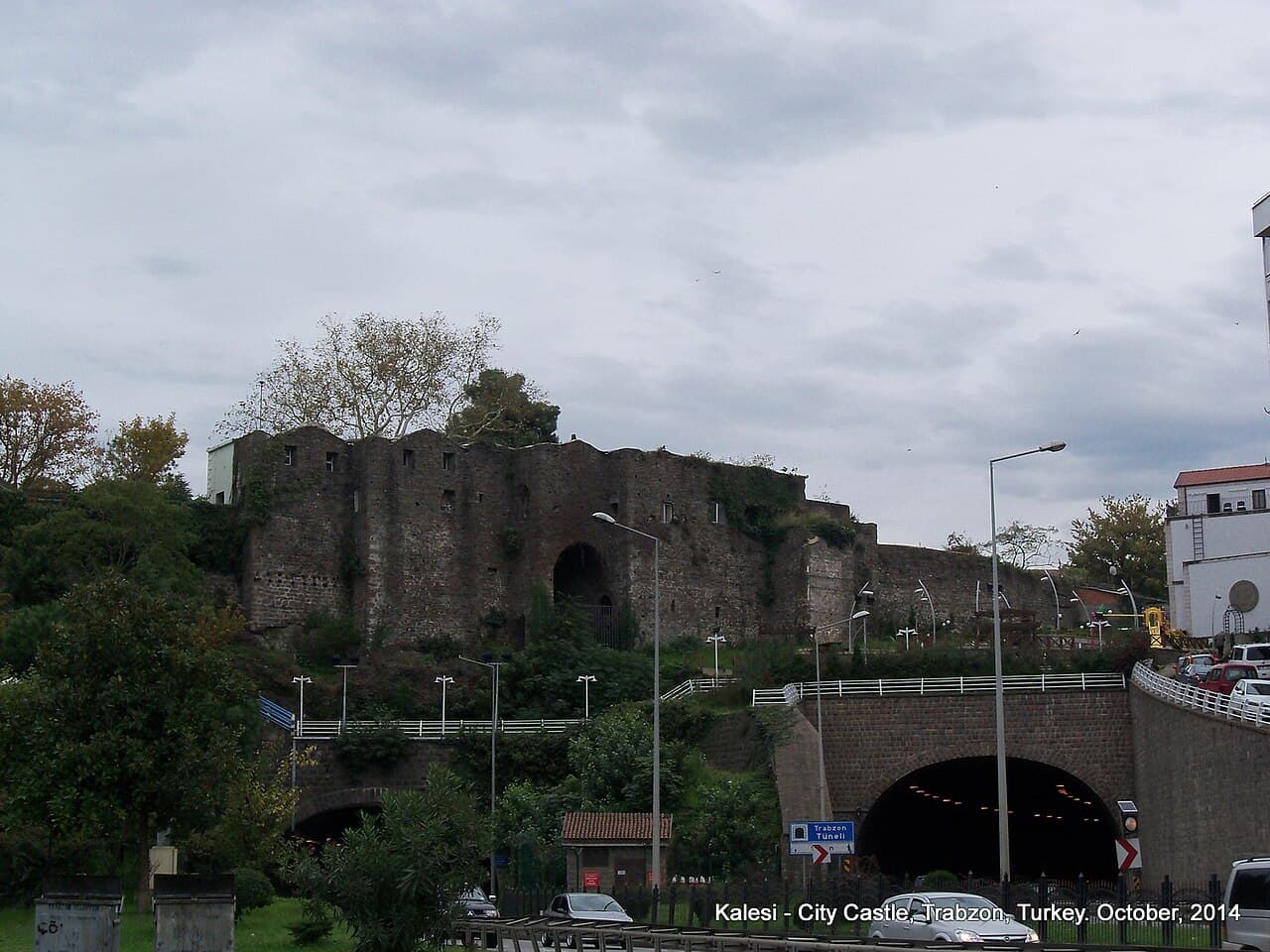
Kalepark
Kalepark castle, originally known as Leonkastron and later called Güzelhisar (meaning "Beautiful Castle" in Turkish), is a historic fortress located on the eastern side of Trabzon, Turkey. This medieval fortress, constructed and fortified by Genoese merchants, was strategically positioned on a rocky outcrop commanding views over both of Trabzon's significant harbors: the summer harbor to the west and the winter harbor just to the east. This location made Kalepark a key defensive and commercial stronghold in the Black Sea region during the Middle Ages.
Medieval origins and strategic importance
The fortress was initially established by the Genoese, who were prominent maritime traders and sought to secure their trading routes and interests in the Black Sea. The construction of Kalepark as a fortified trading outpost reflects the Genoese strategy of building strongholds to protect their commercial activities and exert influence in foreign territories. Its position on a rocky promontory provided natural defensive advantages, enhancing the fortress's ability to oversee and control maritime traffic entering Trabzon's harbors.
Just a few hundred meters to the west of Kalepark lay another fortification known as the Venetian Castle. This neighboring fortress was established by the Venetian Republic as a competing trading post, highlighting the intense rivalry between Genoese and Venetian merchants during this period. The proximity of these two fortresses created a dynamic European quarter within Trabzon, where traders from various parts of Europe, including merchants from Lviv in Ukraine, settled and conducted business.
Evolution under ottoman rule and later history
In the 18th century, the site of Kalepark underwent significant changes under Ottoman administration. In the 1740s, a palace was constructed on the fortress grounds for the Ottoman Governor Ahmet Paşa. This palace symbolized the integration of the fortress into the Ottoman administrative and military framework. Unfortunately, the palace was destroyed by a fire in 1790, and no substantial remains of this structure survive today.
Despite the palace's destruction, the fortress area remained strategically important through the centuries. During World War I, Kalepark was subjected to frequent shelling by Russian naval forces due to its accessible location near the Black Sea coast. This military action underscores the continuing strategic value of the site well into the 20th century.
Architectural features and current condition
Kalepark is classified as archaeological ruins today, with much of its original structure lost or heavily damaged over time. The fortress's remains include portions of its defensive walls and foundations that reveal its medieval construction techniques and layout. The rocky outcrop on which it stands still provides commanding views of the surrounding area, reflecting its historical role as a lookout and defensive position.
The fortress's architecture reflects typical medieval fortification elements adapted to the local terrain, such as thick stone walls designed to withstand sieges and naval attacks. While the structure is now in ruins, it remains an important cultural and historical landmark that offers insight into the Genoese presence in the Black Sea and the complex interactions between European and Ottoman powers in Trabzon.
Cultural significance and european quarter legacy
Kalepark's history is intertwined with the broader narrative of European trade and settlement in the Black Sea region. The area around the fortress became known as the European quarter due to the diverse communities of traders and settlers who lived there, including Genoese, Venetians, and merchants from Eastern Europe. This multicultural environment fostered economic exchange and cultural interaction that shaped Trabzon's development as a vibrant port city.
Today, the ruins of Kalepark serve as a tangible reminder of this period of intense commercial rivalry and cultural exchange. The site attracts historians, archaeologists, and visitors interested in the medieval history of the Black Sea and the legacy of Genoese and Ottoman influence in Turkey.
Frequently asked questions (FAQ)
- How do I get to Kalepark castle in Trabzon?
- Kalepark castle is located on the eastern side of Trabzon, Turkey. Visitors can reach the site by local transportation or taxi from the city center, which is a short distance away.
- What is the historical significance of Kalepark castle?
- Kalepark castle was a medieval Genoese fortress that controlled access to Trabzon's harbors. It played a key role in Black Sea trade and later became part of the Ottoman administrative system.
- Can I visit the ruins of Kalepark castle today?
- Yes, the ruins of Kalepark castle are accessible to visitors. While much of the fortress is in ruins, the site offers views of the harbors and insight into medieval fortification architecture.
- When was the palace at Kalepark built and what happened to it?
- The Ottoman palace at Kalepark was built in the 1740s for Governor Ahmet Paşa but was destroyed by fire in 1790, leaving no substantial remains.
- Why was Kalepark castle shelled during World War I?
- Due to its strategic location near the Black Sea coast, Kalepark castle was shelled by Russian naval forces during World War I, reflecting its ongoing military importance.
Photo gallery

Information
Loading map...
Visitor reviews
No reviews yet. Been here? Write the first review and help other travelers!
Write the first reviewVisited this castle? Share your experience
Your review helps other travelers and adds first-hand knowledge to our encyclopedia.



