
Odawara Castle
Odawara Castle stands as a remarkable example of Japanese castle architecture and history, located in the city of Odawara, Kanagawa Prefecture. Originally established in the 15th century by the Omori Clan, it gained prominence under the Hojo clan after Hojo Soun seized control in 1495. The castle evolved into a formidable hill castle that served as the political and military center for the Hojo's rule over much of the Kanto region.
The castle's strategic location near the coast and surrounded by mountains made it an ideal defensive stronghold. The Hojo clan expanded the castle extensively, constructing multiple baileys, moats, and impressive earthworks. Their influence extended through a network of supporting castles across modern-day Chiba, Ibaraki, Saitama, and Kanagawa prefectures. This network helped maintain control over the region during the turbulent late medieval period.
The Hojo clan and the castle's military significance
Odawara Castle is best known for its role during the Sengoku period, especially for enduring three major sieges. The first was by Uesugi Kenshin in 1561, followed by Takeda Shingen in 1569, and finally by Toyotomi Hideyoshi in 1590. These sieges illustrate the castle's strategic importance and the military prowess of the Hojo clan.
The siege of 1590 and the fall of the Hojo
The most famous siege was that of Toyotomi Hideyoshi, who mobilized an enormous force of approximately 200,000 troops. Hideyoshi's campaign was notable not only for its scale but also for the psychological tactics employed. He created a festival-like atmosphere around the castle, including cultural events such as tea ceremonies featuring the famed tea master Sen no Rikyu and the presence of his concubine, Yodo-dono. Despite the overwhelming odds, the siege ended with the Hojo surrendering the castle, marking the end of their dominance in the region.
Architectural features and defensive innovations
One of the most remarkable aspects of Odawara Castle under the Hojo was the construction of the Sogamae, an extensive defensive perimeter. This system included over 9 kilometers of trenches and embankments, forming a horseshoe-shaped ring extending from the ocean into the surrounding mountains. The trenches were often deep and incorporated shojibori-style defensive structures, which enhanced protection and surveillance capabilities.
The design of the Sogamae was so effective and innovative that it influenced later castle designs, including Hideyoshi's O-doi in Kyoto. The defensive earthworks allowed the Hojo to monitor enemy movements and provided a formidable barrier against attackers.
Later modifications and the Edo period castle
After the fall of the Hojo, Tokugawa Ieyasu took control of Odawara Castle and appointed Okubo Tadayo as the castle lord. The Okubo family governed the castle throughout most of the Edo period, except for a brief interval in the 18th century. Under Tokugawa rule, the castle was partially downsized to reduce its military threat and redesigned with Edo period architectural elements.
The current main keep and central compound structures mostly date from the Edo period rather than the original Hojo era. These include impressive reconstructions of gates and baileys, such as the Umadashi Bailey, which exemplify the elaborate defensive design of the time.
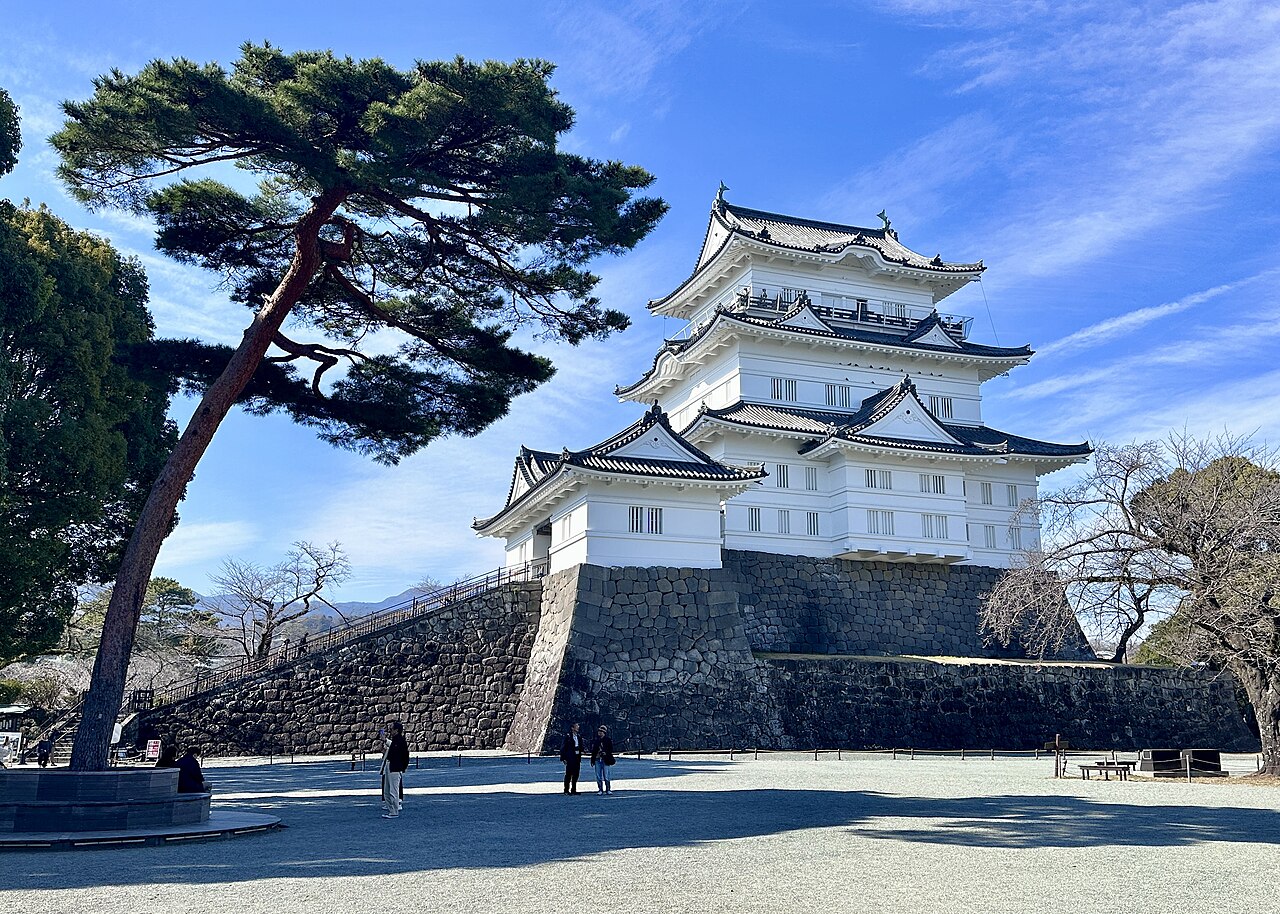
Photo by Akonnchiroll • CC BY 4.0
Preservation, restoration, and visitor experience
Odawara Castle was dismantled in 1870 following the Meiji Restoration but has since undergone partial restoration. The castle grounds now feature well-preserved moats, reconstructed gates, and a museum that has been recently renovated to enhance visitor engagement. The museum offers comprehensive exhibits on the castle's history, including a unique book that catalogs not only artifacts but also detailed information panels and displays.
Visitors to Odawara Castle can explore both the main castle area and the remnants of the extensive Sogamae earthworks in the surrounding mountains. These outer defenses remain well-preserved and accessible via walking courses, some of which are supported by mobile apps providing guided tours and historical context.
Recent archaeological studies and site improvements
Ongoing research and excavation efforts focus on areas such as the Goyomai Bailey, where gardens, stone paths, and shojibori moats have been uncovered. These discoveries contribute to a deeper understanding of the castle's layout and defensive strategies. Development plans aim to enhance these areas for educational and recreational purposes, enriching the experience for castle enthusiasts and tourists alike.
Odawara Castle's proximity to Tokyo makes it an accessible destination for those interested in Japanese history and castle architecture. It is often praised for its balance of historical authenticity, engaging exhibits, and scenic surroundings. The combination of late medieval fortifications and Edo period reconstructions offers a unique opportunity to explore multiple layers of Japan's feudal past in one location.
Frequently asked questions (FAQ)
- How do I get to Odawara Castle?
- Odawara Castle is conveniently located in Odawara City, just a short walk from Odawara Station. You can take the JR Tōkai Line or the Odakyu Line from Tokyo, which takes about 1.5 hours. Once you arrive at the station, follow the signs leading to the castle, which is approximately 15 minutes on foot.
- What is the historical significance of Odawara Castle?
- Odawara Castle is a famous historic site that played a crucial role during the Sengoku period in Japan. It was the stronghold of the Hojo clan and served as a strategic military base due to its location near the Hakone Pass. The castle has witnessed many important battles and events, contributing to its rich cultural heritage.
- When was Odawara Castle built?
- Odawara Castle was originally constructed in the late 15th century, around 1447, and has undergone several renovations throughout its history. The castle was expanded and fortified by the Hojo clan, reaching its peak during the late 16th century. Today, visitors can explore the reconstructed structures that reflect the architectural style of the era.
- Can I enter the castle grounds for free?
- Yes, the castle grounds are open to the public free of charge. However, there is an admission fee to access the main keep and the museum inside, which is quite affordable. This allows visitors to enjoy the beautiful gardens and historical structures without any cost.
- Why is the best time to visit Odawara Castle?
- The best time to visit Odawara Castle is during the cherry blossom season in spring (March to April) when the surrounding sakura trees are in full bloom. Additionally, autumn (October to November) offers stunning fall foliage, making the views from the castle particularly picturesque. Visiting during these seasons enhances your experience with the natural beauty of the castle's landscape.
- Is it possible to access Odawara Castle with a wheelchair?
- Yes, Odawara Castle is accessible for visitors with mobility challenges. There are ramps available at the castle entrance and throughout the grounds, although some areas may have uneven surfaces. The main keep also provides facilities to accommodate wheelchair users, ensuring everyone can enjoy the historical site.
- What are the opening hours for Odawara Castle?
- Odawara Castle is open daily from 9:00 AM to 5:00 PM, with last entry at 4:30 PM. During the peak tourist season, the hours may be extended, so it’s advisable to check the official website before your visit. The castle is closed on certain holidays, so planning ahead is recommended.
- What are the ticket prices for Odawara Castle?
- The admission fee for Odawara Castle's main keep is typically around 500 yen for adults, while children under 15 can enter for free. Discounts may be available for groups or special events, so it's worth checking for any promotions. The ticket price grants access to the museum and various exhibits within the castle.
- Are there any nearby attractions to visit?
- Yes, there are several attractions near Odawara Castle, including the Odawara Castle Park, which features beautiful gardens and seasonal flowers. Additionally, the Hakone area is just a short distance away, offering hot springs, art museums, and scenic views of Mount Fuji. Visitors can easily spend a full day exploring both the castle and its surrounding attractions.
Photo gallery

Information
Sources & official resources
Verify the information above using these authoritative references.
Loading map...
Visitor reviews
No reviews yet. Been here? Write the first review and help other travelers!
Write the first reviewVisited this castle? Share your experience
Your review helps other travelers and adds first-hand knowledge to our encyclopedia.