Ishigakiyama Castle — Japan castle

Ishigakiyama Castle

Ishigakiyama Ichiya Castle: Sengoku period stone castle ruins in Kanagawa
Odawara, Japan
Renaissance (15th–17th c.)
Ruins

Ishigakiyama Ichiya Castle (石垣山一夜城, Ishigakiyama Ichiya-jō) stands as a significant historical site from the late Sengoku period of Japan, located in Odawara, Kanagawa Prefecture. Constructed in the 16th century under the strategic direction of the renowned daimyo Toyotomi Hideyoshi, this castle played a pivotal role during the unification campaigns of Japan. Its name, which translates to "Stone Wall Mountain One-Night Castle," refers to the remarkable feat of rapidly building the castle's stone walls and fortifications overnight, a testament to Hideyoshi's military ingenuity and the skilled labor force he commanded.

Strategic construction and military significance

The castle was erected in 1590 during Hideyoshi's campaign against the Hojo clan, specifically as a forward base to lay siege to Odawara Castle, the Hojo stronghold. Ishigakiyama Ichiya Castle's location on a mountain provided a commanding view of the surrounding terrain, allowing Hideyoshi to monitor enemy movements and coordinate his forces effectively. The rapid construction was intended to surprise the Hojo defenders and demonstrate Hideyoshi's overwhelming power.

The castle's design was primarily utilitarian, focusing on strategic advantage rather than elaborate residential features. Its stone walls, built with large, precisely cut stones, were a significant departure from the primarily wooden fortifications common in earlier Japanese castles. This use of stone masonry marked an evolution in Japanese castle architecture during the late Sengoku period.

Architectural features and layout

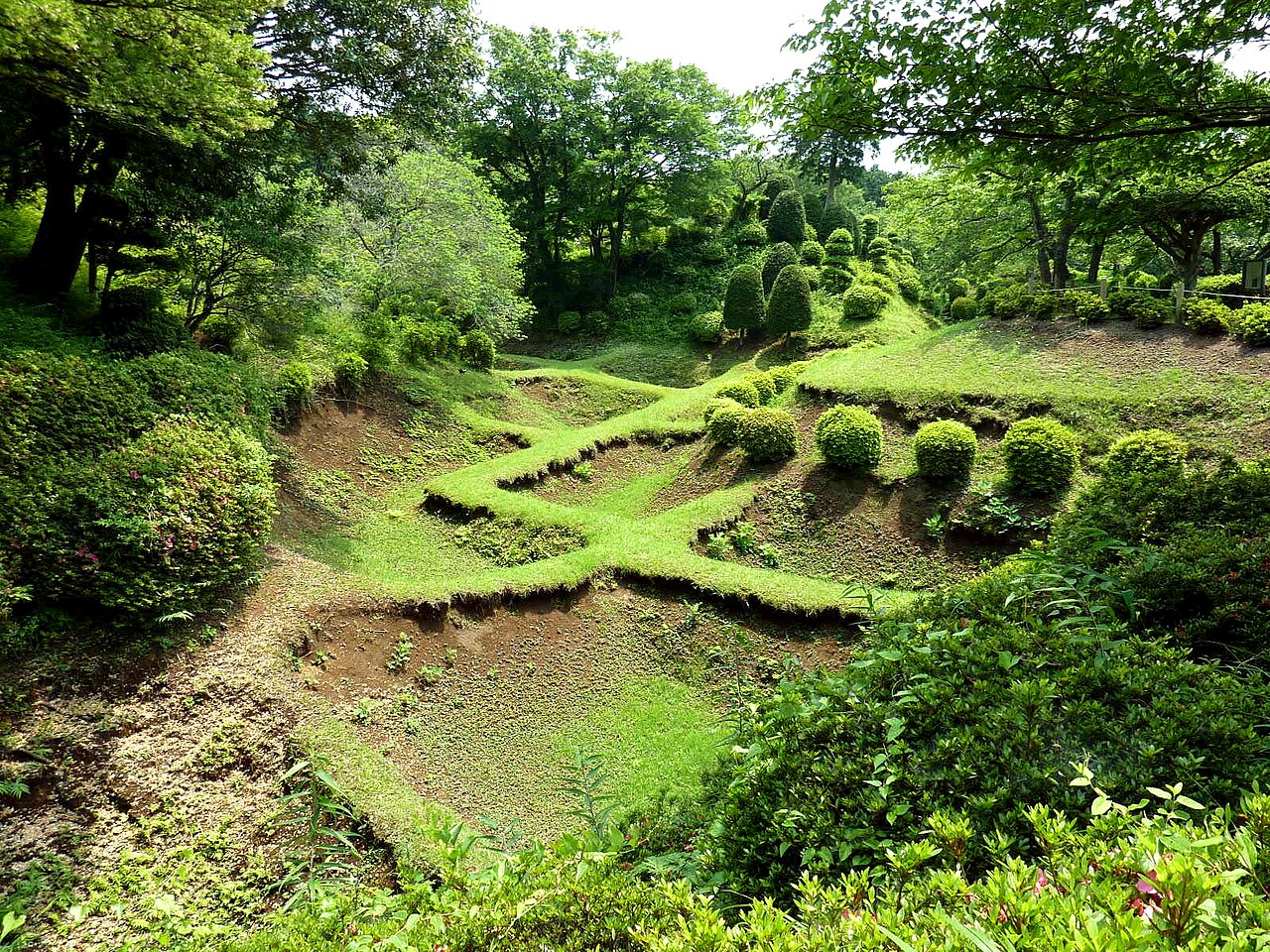
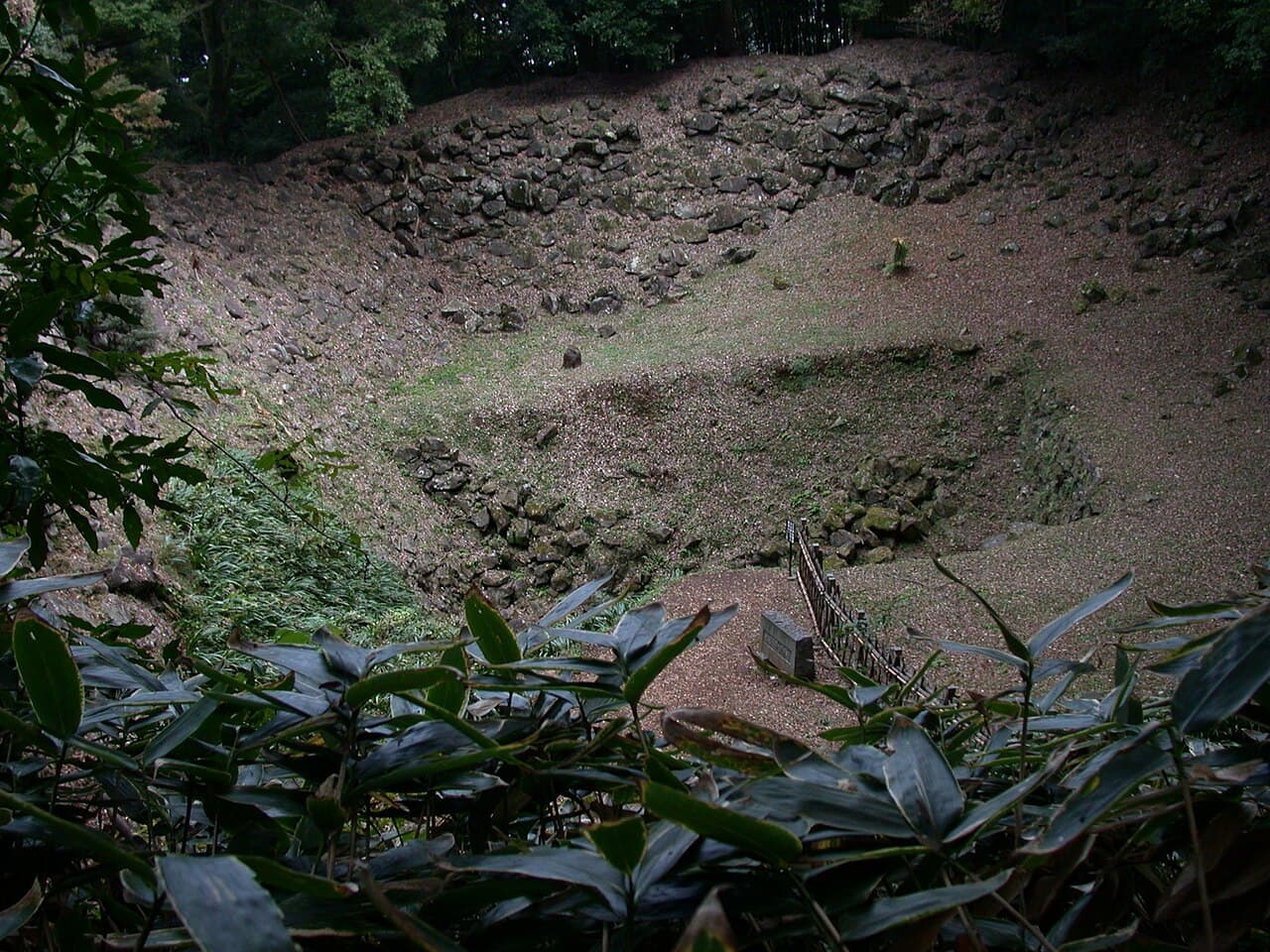
Though now in ruins, archaeological studies reveal that Ishigakiyama Ichiya Castle featured extensive stone walls and defensive terraces adapted to the steep mountainous terrain. The castle's layout took advantage of natural topography, with multiple baileys (courtyards) connected by narrow paths and fortified gates. The stone walls were constructed using the nozurazumi technique, where stones were carefully stacked without mortar, relying on precise fitting and gravity for stability.

Unlike many castles of the period, Ishigakiyama Ichiya Castle lacked a tall central keep or donjon. Instead, its strength lay in its natural defensive position and the robust stone fortifications. The castle's facilities would have included temporary barracks and command posts to support Hideyoshi's forces during the siege operations.

Historical context and legacy

Built at a critical moment in Japanese history, Ishigakiyama Ichiya Castle was part of Hideyoshi's campaign to consolidate power and end the fractious Sengoku era. The castle was the site of Hideyoshi's first meeting with the powerful northern daimyo Date Masamune, marking an important political alliance. Following the successful siege of Odawara Castle, the Hojo clan was defeated, and Hideyoshi's authority was solidified across Japan.

After the campaign, the castle was abandoned and fell into ruin. Its remains were designated a National Historic Site in 1959, recognizing its importance in Japanese history and castle architecture. Today, visitors to the site can explore the ruins, including the stone walls and terraces, which offer insight into the military strategies and construction techniques of the late Sengoku period.

Visiting ishigakiyama ichiya castle

The castle ruins are accessible to the public and provide a scenic hiking experience with views over the surrounding Kanagawa landscape. Interpretive signs at the site help visitors understand the historical significance and architectural features of the castle. The site is particularly popular during the spring cherry blossom season when the natural beauty complements the historical ambiance.

While the castle no longer stands as a complete structure, its ruins remain a valuable cultural heritage site, reflecting the transitional period of Japanese castle construction and the military prowess of Toyotomi Hideyoshi.

Frequently asked questions (FAQ)

What is Ishigakiyama Castle known for?
Ishigakiyama Castle is known for its historical significance as a strategic fortification during the Sengoku period in Japan. It played a crucial role in the conflicts between local clans and offers a glimpse into the military architecture of the time.
When was Ishigakiyama Castle built?
Ishigakiyama Castle was constructed in the late 15th century, around the year 1460. The castle served as the stronghold for the Hojo clan until it fell to Toyotomi Hideyoshi in the late 16th century.
How do I get to Ishigakiyama Castle?
To reach Ishigakiyama Castle, you can take a train to Odawara Station and then use local transportation or a taxi to the castle site. The castle is located on a hill, so be prepared for a short hike to reach the main ruins.
Is it possible to visit Ishigakiyama Castle year-round?
Yes, Ishigakiyama Castle is open to visitors year-round, although specific facilities may have seasonal hours. It’s advisable to check local information before your visit for any updates on opening times.
What are the opening hours for Ishigakiyama Castle?
Ishigakiyama Castle is generally open from 9:00 AM to 5:00 PM, but these hours can vary based on the season. Visitors should check the official website or local tourist information for the most current hours before planning their visit.
Can I enter the castle grounds for free?
Yes, access to the grounds of Ishigakiyama Castle is free, allowing visitors to explore the historical ruins and enjoy the surrounding scenery. However, there may be a fee for guided tours or special events.
What is the best time to visit Ishigakiyama Castle?
The best time to visit Ishigakiyama Castle is during the spring and autumn months when the weather is mild and the surrounding nature is particularly beautiful. Cherry blossoms in spring and vibrant fall foliage provide stunning views from the castle.
Are there any nearby attractions to explore?
Yes, nearby attractions include Odawara Castle, which is a short distance away, and the scenic Hakone area known for its hot springs and views of Mount Fuji. These sites can enrich your visit to Ishigakiyama Castle and offer a full day of exploration.
What architectural features does Ishigakiyama Castle have?
Ishigakiyama Castle features traditional Japanese castle architecture with stone walls, moats, and strategic lookout points. The design reflects the military needs of the time, providing defense while also utilizing the natural landscape for protection.

Photo gallery

Ishigakiyama Castle
Click to view

Photo by by monado•CC BY-SA 2.5

1 photo • Click any image to view in full screen

Information

Archaeological Site / Ruins

Loading map...

Visitor reviews

No reviews yet. Been here? Write the first review and help other travelers!

Write the first review

Visited this castle? Share your experience

Your review helps other travelers and adds first-hand knowledge to our encyclopedia.
Write a review

(5/5)

0/2000 characters

Your review will be visible after admin approval

Nearby castles

3 km
Odawara Castle — Japan castle

Odawara Castle

Odawara, Japan

Odawara Castle stands as a remarkable example of Japanese castle architecture and history, located in the city of Odawara, Kanagawa Prefecture. Originally established in the 15th century by the Omori Clan, it gained prominence under the Hojo clan after Hojo Soun seized control in 1495. The castle evolved into a formidable hill castle that served as the political and military center for the Hojo's rule over much of the Kanto region. The castle's strategic location near the coast and surrounded by mountains made it an ideal defensive stronghold. The Hojo clan expanded the castle extensively, constructing multiple baileys, moats, and impressive earthworks. Their influence extended through a network of supporting castles across modern-day Chiba, Ibaraki, Saitama, and Kanagawa prefectures. This network helped maintain control over the region during the turbulent late medieval period. The Hojo clan and the castle's military significance Odawara Castle is best known for its role during the Sengoku period, especially for enduring three major sieges. The first was by Uesugi Kenshin in 1561, followed by Takeda Shingen in 1569, and finally by Toyotomi Hideyoshi in 1590. These sieges illustrate the castle's strategic importance and the military prowess of the Hojo clan. The siege of 1590 and the fall of the Hojo The most famous siege was that of Toyotomi Hideyoshi, who mobilized an enormous force of approximately 200,000 troops. Hideyoshi's campaign was notable not only for its scale but also for the psychological tactics employed. He created a festival-like atmosphere around the castle, including cultural events such as tea ceremonies featuring the famed tea master Sen no Rikyu and the presence of his concubine, Yodo-dono. Despite the overwhelming odds, the siege ended with the Hojo surrendering the castle, marking the end of their dominance in the region. Architectural features and defensive innovations One of the most remarkable aspects of Odawara Castle under the Hojo was the construction of the Sogamae, an extensive defensive perimeter. This system included over 9 kilometers of trenches and embankments, forming a horseshoe-shaped ring extending from the ocean into the surrounding mountains. The trenches were often deep and incorporated shojibori-style defensive structures, which enhanced protection and surveillance capabilities. The design of the Sogamae was so effective and innovative that it influenced later castle designs, including Hideyoshi's O-doi in Kyoto. The defensive earthworks allowed the Hojo to monitor enemy movements and provided a formidable barrier against attackers. Later modifications and the Edo period castle After the fall of the Hojo, Tokugawa Ieyasu took control of Odawara Castle and appointed Okubo Tadayo as the castle lord. The Okubo family governed the castle throughout most of the Edo period, except for a brief interval in the 18th century. Under Tokugawa rule, the castle was partially downsized to reduce its military threat and redesigned with Edo period architectural elements. The current main keep and central compound structures mostly date from the Edo period rather than the original Hojo era. These include impressive reconstructions of gates and baileys, such as the Umadashi Bailey, which exemplify the elaborate defensive design of the time. Preservation, restoration, and visitor experience Odawara Castle was dismantled in 1870 following the Meiji Restoration but has since undergone partial restoration. The castle grounds now feature well-preserved moats, reconstructed gates, and a museum that has been recently renovated to enhance visitor engagement. The museum offers comprehensive exhibits on the castle's history, including a unique book that catalogs not only artifacts but also detailed information panels and displays. Visitors to Odawara Castle can explore both the main castle area and the remnants of the extensive Sogamae earthworks in the surrounding mountains. These outer defenses remain well-preserved and accessible via walking courses, some of which are supported by mobile apps providing guided tours and historical context. Recent archaeological studies and site improvements Ongoing research and excavation efforts focus on areas such as the Goyomai Bailey, where gardens, stone paths, and shojibori moats have been uncovered. These discoveries contribute to a deeper understanding of the castle's layout and defensive strategies. Development plans aim to enhance these areas for educational and recreational purposes, enriching the experience for castle enthusiasts and tourists alike. Odawara Castle's proximity to Tokyo makes it an accessible destination for those interested in Japanese history and castle architecture. It is often praised for its balance of historical authenticity, engaging exhibits, and scenic surroundings. The combination of late medieval fortifications and Edo period reconstructions offers a unique opportunity to explore multiple layers of Japan's feudal past in one location.

Late Medieval (14th–15th c.)
Details
15 km
Yamanaka Castle — Japan castle

Yamanaka Castle

Mishima, Japan

Yamanaka Castle stands as a significant example of a Sengoku period hilltop castle located in Mishima, Japan. Founded in the 1560s by the powerful Hojo Ujiyasu, it was strategically built to protect the main Hojo stronghold at Odawara. This castle was part of a vital network of fortifications that included Nirayama Castle and Ashigara Castle, designed to guard the Hojo clan's territories in the Kantō region during a time of intense military conflict and political upheaval. The castle's location on a hill provided a commanding view of the surrounding landscape and the key roads leading to Odawara, making it a crucial defensive position. The Hojo clan invested heavily in the construction and fortification of Yamanaka Castle, incorporating advanced castle construction techniques and defensive features characteristic of the period. Among these were the uniquely designed moat structures and the Daisaki Demaru Bailey, a fortified enclosure built around 1587 under the direction of Hojo Ujimasa to strengthen defenses as tensions with Toyotomi Hideyoshi escalated. Historical significance and military role Yamanaka Castle played a pivotal role during the late Sengoku period, especially in the events leading to the 1590 Siege of Odawara. This siege was a decisive campaign by Toyotomi Hideyoshi to unify Japan under his rule by overthrowing the Hojo clan. Despite the castle's formidable defenses, it was garrisoned by only about 4,000 defenders when Hideyoshi launched a massive assault with nearly 70,000 troops. The castle fell rapidly, reportedly in less than half a day and by some accounts in just two hours. This swift defeat was a significant blow to the Hojo clan's defensive network and marked the beginning of the end for their control over the region. The fall of Yamanaka Castle opened the path for Hideyoshi's forces to advance on Odawara Castle, leading to the eventual surrender of the Hojo clan and the consolidation of power under Hideyoshi. Architectural features and layout Although no original buildings or structures remain today, the ruins of Yamanaka Castle provide valuable insights into the layout and design principles of a Sengoku period mountaintop fortress. The castle's design reflects the Hojo clan's expertise in military architecture, with a complex arrangement of baileys, moats, and defensive walls adapted to the natural terrain. Daisaki demaru bailey The Daisaki Demaru Bailey is a notable feature constructed to oversee the main road leading to Odawara. This bailey served as a forward defensive position, allowing defenders to monitor and control movement along this critical route. The bailey's position and fortifications exemplify the strategic use of terrain and man-made defenses to maximize the castle's defensive capabilities. Moats and defensive works Yamanaka Castle is particularly renowned for its rare and unique moat structures, which are superbly preserved despite the absence of standing buildings. These moats were carefully engineered to enhance the castle's defense by creating multiple layers of obstacles for attackers. The preservation of these moats offers a rare opportunity to study Sengoku period defensive engineering in situ. Present condition and visitor experience Today, Yamanaka Castle exists as ruins that allow visitors to explore the earthworks, moats, and layout of a Sengoku period hilltop castle. The site is highly valued by castle enthusiasts and historians for its well-preserved defensive features and the clear understanding it provides of Hojo clan military architecture. At the entrance to the Daisaki Demaru Bailey, near the roadside and parking area, there is a small shop offering maps and the Top 100 castle stamp, enhancing the visitor experience. The site is a must-see for those interested in Japanese castle history, providing a tangible connection to the turbulent era of the Sengoku period and the legacy of the Hojo clan. Yamanaka castle in the context of hojo clan fortifications Yamanaka Castle was an integral part of the Hojo clan's defensive strategy, complementing other key fortresses such as Nirayama and Ashigara. Together, these castles formed a defensive network that secured the Hojo territories against rival warlords and the expanding power of Toyotomi Hideyoshi. The castle's construction and subsequent fortifications under Hojo Ujimasa demonstrate the clan's response to increasing threats during the late 16th century. The enhancements made in the 1580s and 1590s reflect the evolution of military architecture in Japan, incorporating more robust defensive elements in anticipation of large-scale sieges. Historical legacy and cultural importance While Yamanaka Castle no longer stands in its original form, its ruins serve as a significant cultural and historical landmark. The site offers invaluable insights into the military strategies and architectural innovations of the Sengoku period. It also symbolizes the dramatic conflicts that shaped Japan's path toward unification under the Tokugawa shogunate. For historians and visitors alike, Yamanaka Castle represents the resilience and ingenuity of the Hojo clan during one of Japan's most turbulent eras. Its preservation as ruins allows for ongoing study and appreciation of Japan's feudal heritage and castle-building traditions.

Late Medieval (14th–15th c.)
Details
25.5 km
Nirayama Castle — Japan castle

Nirayama Castle

Izunokuni, Japan

Nirayama Castle (韮山城, Nirayama-jō) was a hilltop Japanese castle located in the Nirayama neighborhood of what is now the city of Izunokuni in Shizuoka Prefecture, within the Tōkai region of Japan. Built in the 15th century during the late Muromachi period, the castle played a strategic role through the transition into the Azuchi-Momoyama period, a time of significant political upheaval and military conflict in Japan. Historical context and significance The late medieval period in Japan was marked by the rise of regional warlords and the proliferation of castles built to secure territories and assert dominance. Nirayama Castle was constructed as a hill castle, strategically positioned to oversee the surrounding plains and control important routes in the region. Its location in Shizuoka Prefecture placed it within a key area of influence during the turbulent era of samurai warfare. The castle was associated with the Hōjō clan, a powerful samurai family that controlled much of the Kantō region during the Sengoku period. The Hōjō used Nirayama Castle as a defensive stronghold to protect their southern borders and to monitor the movements of rival clans. The castle's role diminished following the unification efforts under Oda Nobunaga and Toyotomi Hideyoshi, leading to its eventual abandonment. Architectural features and layout As a typical hilltop castle (yamajiro), Nirayama Castle utilized the natural terrain to enhance its defenses. The castle was built on a steep hill, allowing for commanding views of the surrounding landscape and making direct assaults difficult for attackers. The layout likely included multiple baileys (courtyards) arranged along the hill's slopes, connected by narrow paths and fortified gates. The castle's defenses would have included earthen walls, moats carved into the hillside, and wooden palisades. Stonework was used selectively, mainly for gate foundations and retaining walls. The main enclosure (honmaru) was situated at the highest point, where the lord's residence and key defensive structures stood. While no large stone keep (tenshu) remains, the castle's design reflects the transitional architecture of the late medieval period, blending traditional wooden fortifications with emerging stone defensive techniques. Decline and current status Following the unification of Japan under the Tokugawa shogunate in the early 17th century, many regional castles lost their military importance. Nirayama Castle was gradually abandoned and fell into ruin. Today, only traces of its earthworks, moats, and foundation stones remain. The site has been designated a National Historic Site since 2025, recognizing its cultural and historical importance. Archaeological efforts have helped to preserve the ruins and provide insight into the castle's original structure and role in Japanese history. Visiting nirayama castle ruins Visitors to the Nirayama Castle ruins can explore the hillside terrain where the castle once stood. Walking trails lead through the remains of defensive earthworks and offer panoramic views of the surrounding region. Informational signage provides historical context, making it a valuable destination for those interested in Japanese castle architecture and medieval history. The site is accessible year-round, with the best times to visit in spring and autumn when the weather is mild and the natural scenery is particularly attractive. Cultural impact and legacy Though now in ruins, Nirayama Castle remains an important symbol of the late medieval period in Japan. Its remnants offer a tangible connection to the era of samurai warfare and regional power struggles. The castle's preservation as an archaeological site allows historians and visitors alike to study the evolution of Japanese fortifications and appreciate the strategic ingenuity of its builders. The castle's association with the Hōjō clan further enhances its historical significance, linking it to one of Japan's most influential samurai families during the Sengoku period.

Late Medieval (14th–15th c.)
Details