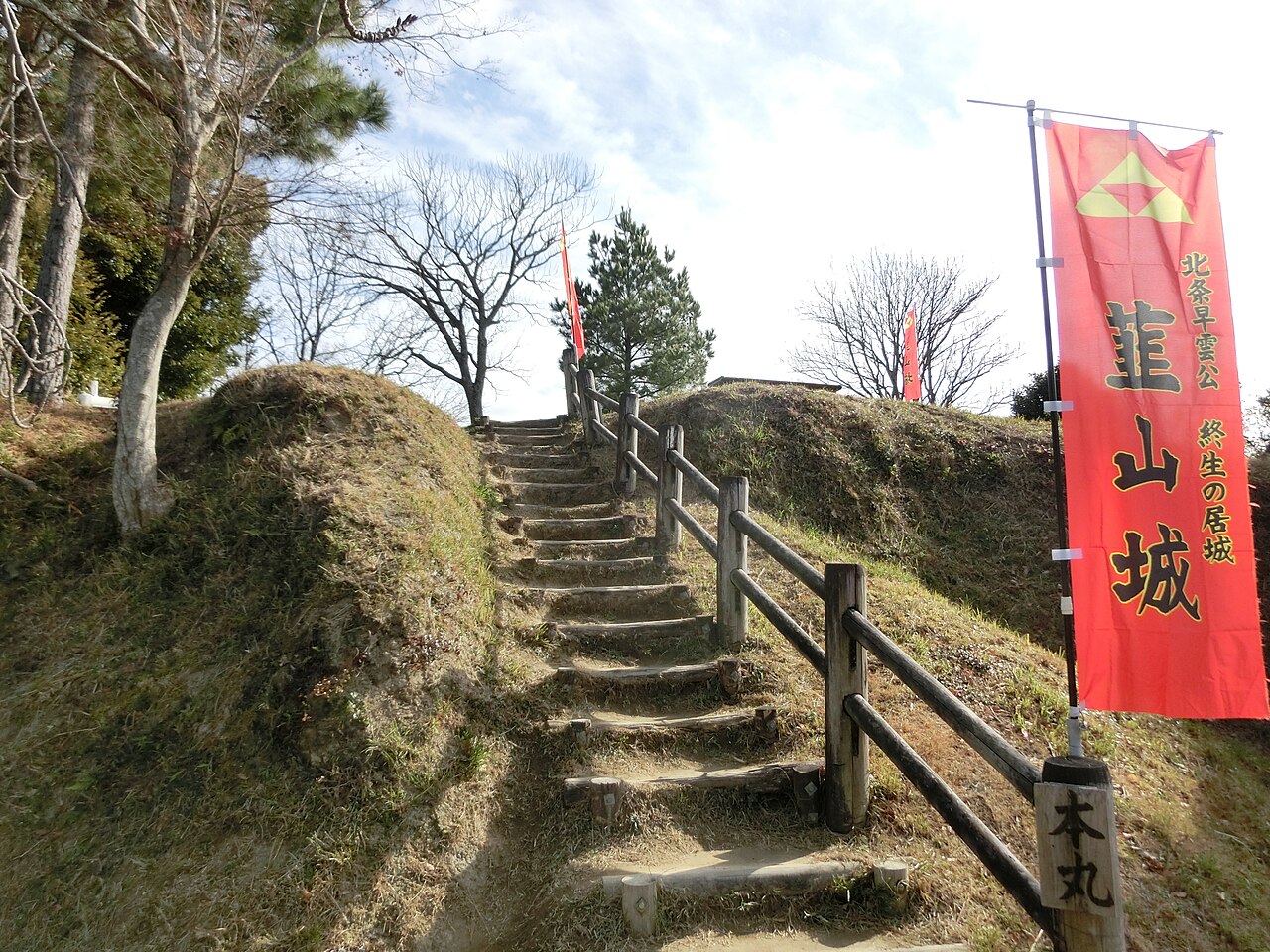
Yamanaka Castle
Yamanaka Castle stands as a significant example of a Sengoku period hilltop castle located in Mishima, Japan. Founded in the 1560s by the powerful Hojo Ujiyasu, it was strategically built to protect the main Hojo stronghold at Odawara. This castle was part of a vital network of fortifications that included Nirayama Castle and Ashigara Castle, designed to guard the Hojo clan's territories in the Kantō region during a time of intense military conflict and political upheaval.
The castle's location on a hill provided a commanding view of the surrounding landscape and the key roads leading to Odawara, making it a crucial defensive position. The Hojo clan invested heavily in the construction and fortification of Yamanaka Castle, incorporating advanced castle construction techniques and defensive features characteristic of the period. Among these were the uniquely designed moat structures and the Daisaki Demaru Bailey, a fortified enclosure built around 1587 under the direction of Hojo Ujimasa to strengthen defenses as tensions with Toyotomi Hideyoshi escalated.
Historical significance and military role
Yamanaka Castle played a pivotal role during the late Sengoku period, especially in the events leading to the 1590 Siege of Odawara. This siege was a decisive campaign by Toyotomi Hideyoshi to unify Japan under his rule by overthrowing the Hojo clan. Despite the castle's formidable defenses, it was garrisoned by only about 4,000 defenders when Hideyoshi launched a massive assault with nearly 70,000 troops.
The castle fell rapidly, reportedly in less than half a day and by some accounts in just two hours. This swift defeat was a significant blow to the Hojo clan's defensive network and marked the beginning of the end for their control over the region. The fall of Yamanaka Castle opened the path for Hideyoshi's forces to advance on Odawara Castle, leading to the eventual surrender of the Hojo clan and the consolidation of power under Hideyoshi.
Architectural features and layout
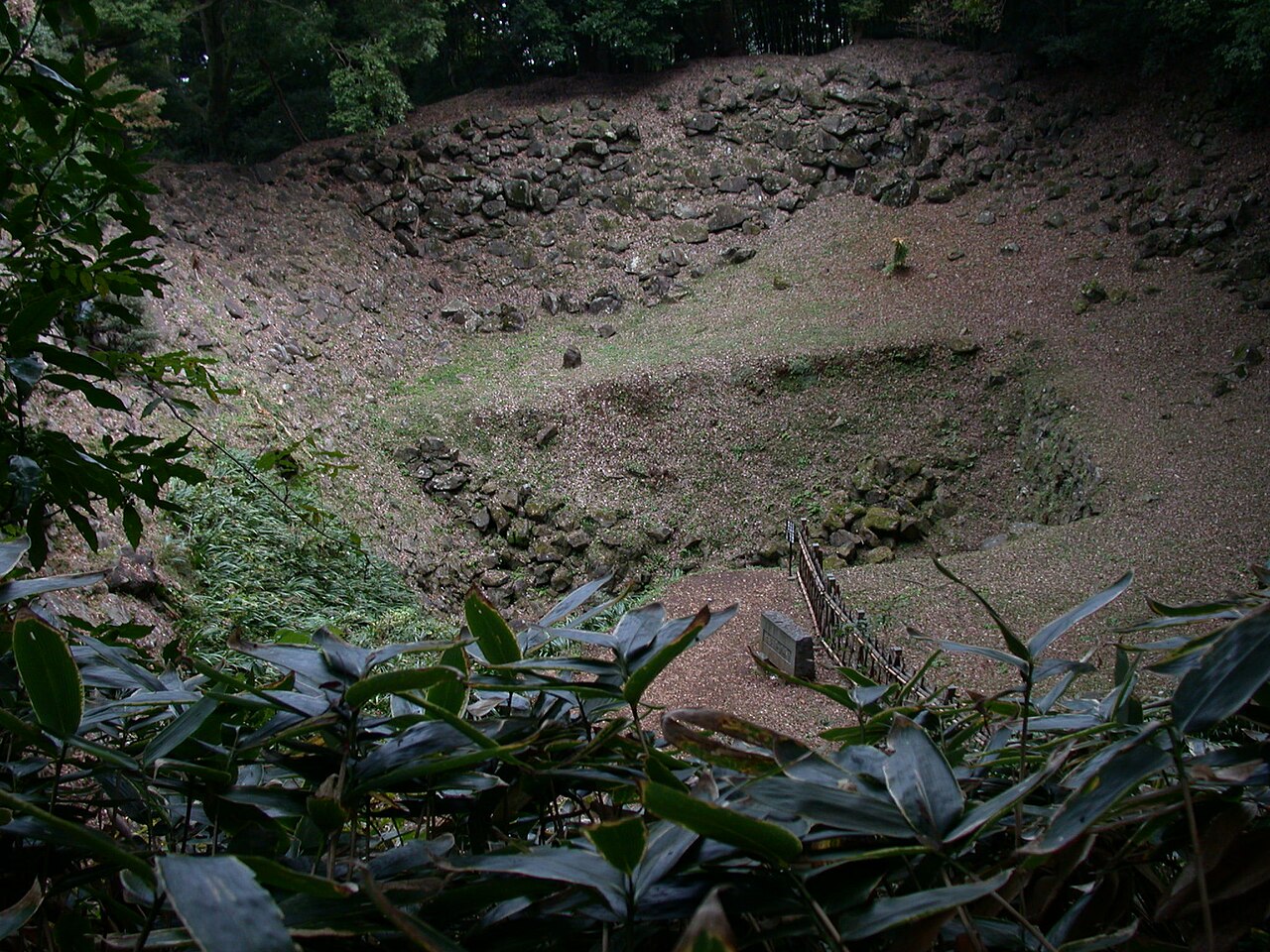
Although no original buildings or structures remain today, the ruins of Yamanaka Castle provide valuable insights into the layout and design principles of a Sengoku period mountaintop fortress. The castle's design reflects the Hojo clan's expertise in military architecture, with a complex arrangement of baileys, moats, and defensive walls adapted to the natural terrain.
Daisaki demaru bailey
The Daisaki Demaru Bailey is a notable feature constructed to oversee the main road leading to Odawara. This bailey served as a forward defensive position, allowing defenders to monitor and control movement along this critical route. The bailey's position and fortifications exemplify the strategic use of terrain and man-made defenses to maximize the castle's defensive capabilities.
Moats and defensive works
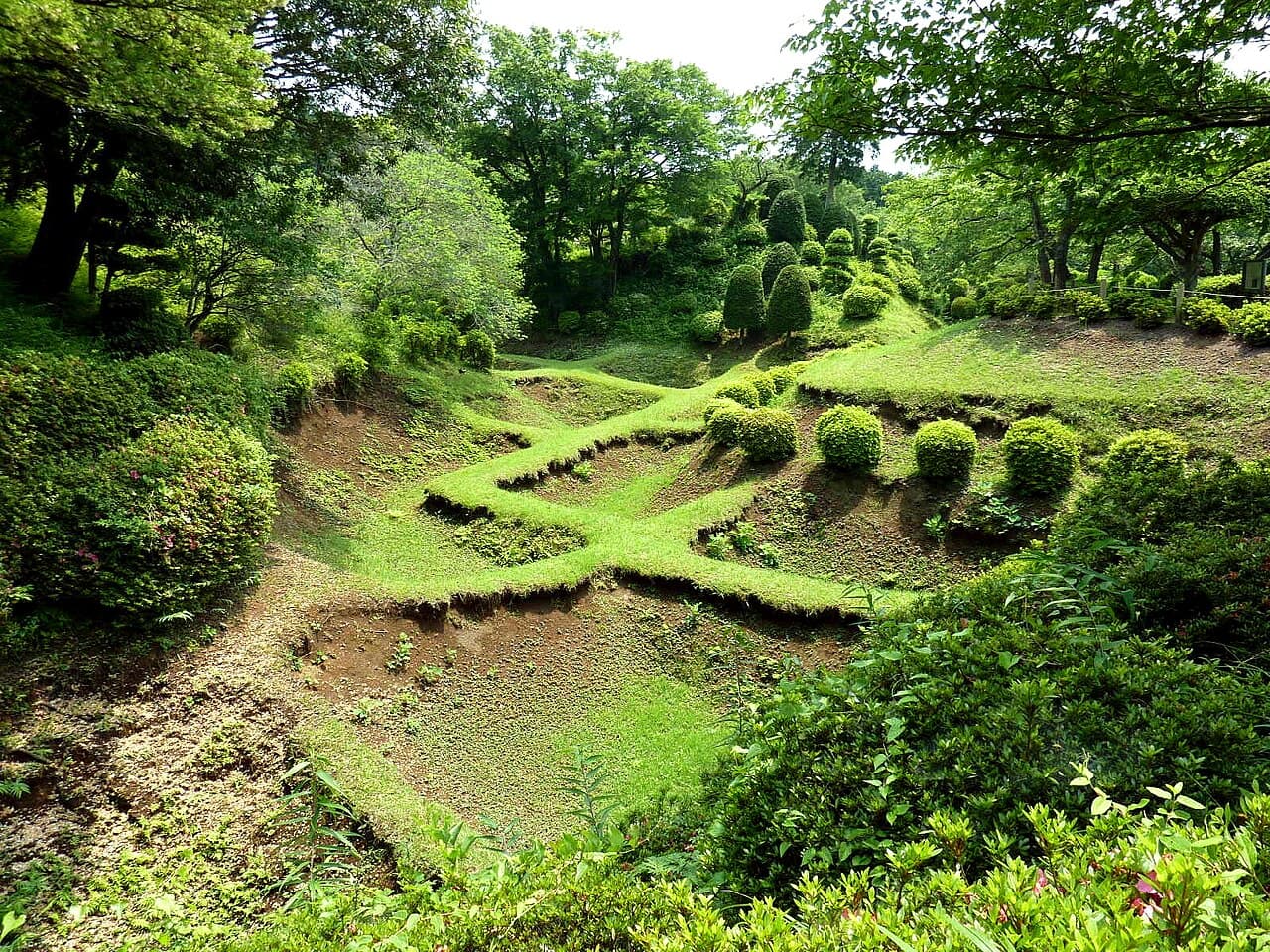
Yamanaka Castle is particularly renowned for its rare and unique moat structures, which are superbly preserved despite the absence of standing buildings. These moats were carefully engineered to enhance the castle's defense by creating multiple layers of obstacles for attackers. The preservation of these moats offers a rare opportunity to study Sengoku period defensive engineering in situ.
Present condition and visitor experience
Today, Yamanaka Castle exists as ruins that allow visitors to explore the earthworks, moats, and layout of a Sengoku period hilltop castle. The site is highly valued by castle enthusiasts and historians for its well-preserved defensive features and the clear understanding it provides of Hojo clan military architecture.
At the entrance to the Daisaki Demaru Bailey, near the roadside and parking area, there is a small shop offering maps and the Top 100 castle stamp, enhancing the visitor experience. The site is a must-see for those interested in Japanese castle history, providing a tangible connection to the turbulent era of the Sengoku period and the legacy of the Hojo clan.
Yamanaka castle in the context of hojo clan fortifications
Yamanaka Castle was an integral part of the Hojo clan's defensive strategy, complementing other key fortresses such as Nirayama and Ashigara. Together, these castles formed a defensive network that secured the Hojo territories against rival warlords and the expanding power of Toyotomi Hideyoshi.
The castle's construction and subsequent fortifications under Hojo Ujimasa demonstrate the clan's response to increasing threats during the late 16th century. The enhancements made in the 1580s and 1590s reflect the evolution of military architecture in Japan, incorporating more robust defensive elements in anticipation of large-scale sieges.
Historical legacy and cultural importance
While Yamanaka Castle no longer stands in its original form, its ruins serve as a significant cultural and historical landmark. The site offers invaluable insights into the military strategies and architectural innovations of the Sengoku period. It also symbolizes the dramatic conflicts that shaped Japan's path toward unification under the Tokugawa shogunate.
For historians and visitors alike, Yamanaka Castle represents the resilience and ingenuity of the Hojo clan during one of Japan's most turbulent eras. Its preservation as ruins allows for ongoing study and appreciation of Japan's feudal heritage and castle-building traditions.
Frequently asked questions (FAQ)
- How do I get to Yamanaka Castle in Mishima?
- Yamanaka Castle is accessible by local bus or taxi from Mishima Station, which is served by the Tokaido Shinkansen and JR lines. The castle ruins are located on a hill and involve a moderate uphill walk from the parking area.
- What can I expect to see when visiting Yamanaka Castle?
- Visitors can explore the well-preserved earthworks, moats, and the layout of this Sengoku period hilltop castle. Although no buildings remain, the site offers a clear understanding of Hojo clan defensive architecture and unique moat structures.
- When was Yamanaka Castle built and by whom?
- Yamanaka Castle was founded in the 1560s by Hojo Ujiyasu as part of a network of fortifications to protect Odawara, the main Hojo stronghold.
- Is there an entrance fee to visit Yamanaka Castle?
- There is no entrance fee to visit the ruins of Yamanaka Castle. Visitors can also purchase maps and the Top 100 castle stamp at a small shop near the Daisaki Demaru Bailey entrance.
- Why is Yamanaka Castle historically important?
- Yamanaka Castle played a crucial role in the late Sengoku period as a key defensive position for the Hojo clan. Its rapid fall during Toyotomi Hideyoshi's 1590 campaign marked the beginning of the end for the Hojo's dominance in the region.
Photo gallery

Photo by Mocchy at Japanese Wikipedia•Public domain
Information
Sources & official resources
Verify the information above using these authoritative references.
Loading map...
Visitor reviews
No reviews yet. Been here? Write the first review and help other travelers!
Write the first reviewVisited this castle? Share your experience
Your review helps other travelers and adds first-hand knowledge to our encyclopedia.