
Odani Castle
Odani Castle stands as a significant hill castle in Nagahama, Japan, renowned for its strategic location and pivotal role during the Sengoku period. Constructed beginning in 1524 by Azai Sukemasa, the castle exemplifies the military architecture of the era and reflects the complex political alliances and conflicts of 16th-century Japan. It is celebrated as one of Japan's Five Greatest Mountain Castles, alongside Kasugayama Castle, Nanao Castle, Kannonji Castle, and Gassan Toda Castle.
Construction and architectural features
Odani Castle was built over several years, from 1521 to 1528, on a steep mountain ridge, utilizing the natural terrain for defense. The castle complex was composed of multiple baileys (kuruwa) arranged along the ridge, connected by narrow paths and fortified gates. Its design incorporated extensive stone walls, wooden structures, and watchtowers, optimized for both defense and control of the surrounding region.
The castle's layout took advantage of the mountainous topography, with terraced enclosures and steep slopes making direct assault difficult. Defensive features included dry moats carved into the rock and strategically placed gates that forced attackers into narrow, exposed approaches. The main enclosure housed the lord's residence and key administrative buildings.
Historical significance and the azai clan
Azai Nagamasa, the third-generation lord of Odani Castle, is a central figure in its history. In 1567, he solidified a political alliance by marrying O'Ichi-no-kata, the younger sister of the powerful warlord Oda Nobunaga. This marriage was intended to strengthen ties between the Azai and Oda clans during a turbulent period marked by shifting allegiances.
Despite this alliance, Nagamasa later opposed Nobunaga during the campaign against the Asakura clan in 1570. The resulting conflict culminated in the Battle of Anegawa in 1570, where Nobunaga's forces defeated the combined armies of the Azai and Asakura clans. However, Nobunaga was unable to capture Odani Castle immediately, which resisted until 1573 when it finally fell, marking a decisive moment in Nobunaga's consolidation of power.
Family ties and legacy
O'Ichi-no-kata bore three daughters who forged significant alliances through marriage, influencing Japan's political landscape. Their daughters included O'Chacha, who became the concubine of Toyotomi Hideyoshi, O'Hatsu, who married Kyogoku Takatsugu, and O'Go, who married Tokugawa Hidetada, the second shogun of the Tokugawa shogunate. These marriages linked the Azai family to some of the most powerful figures of the era, extending Odani Castle's historical importance beyond its military role.
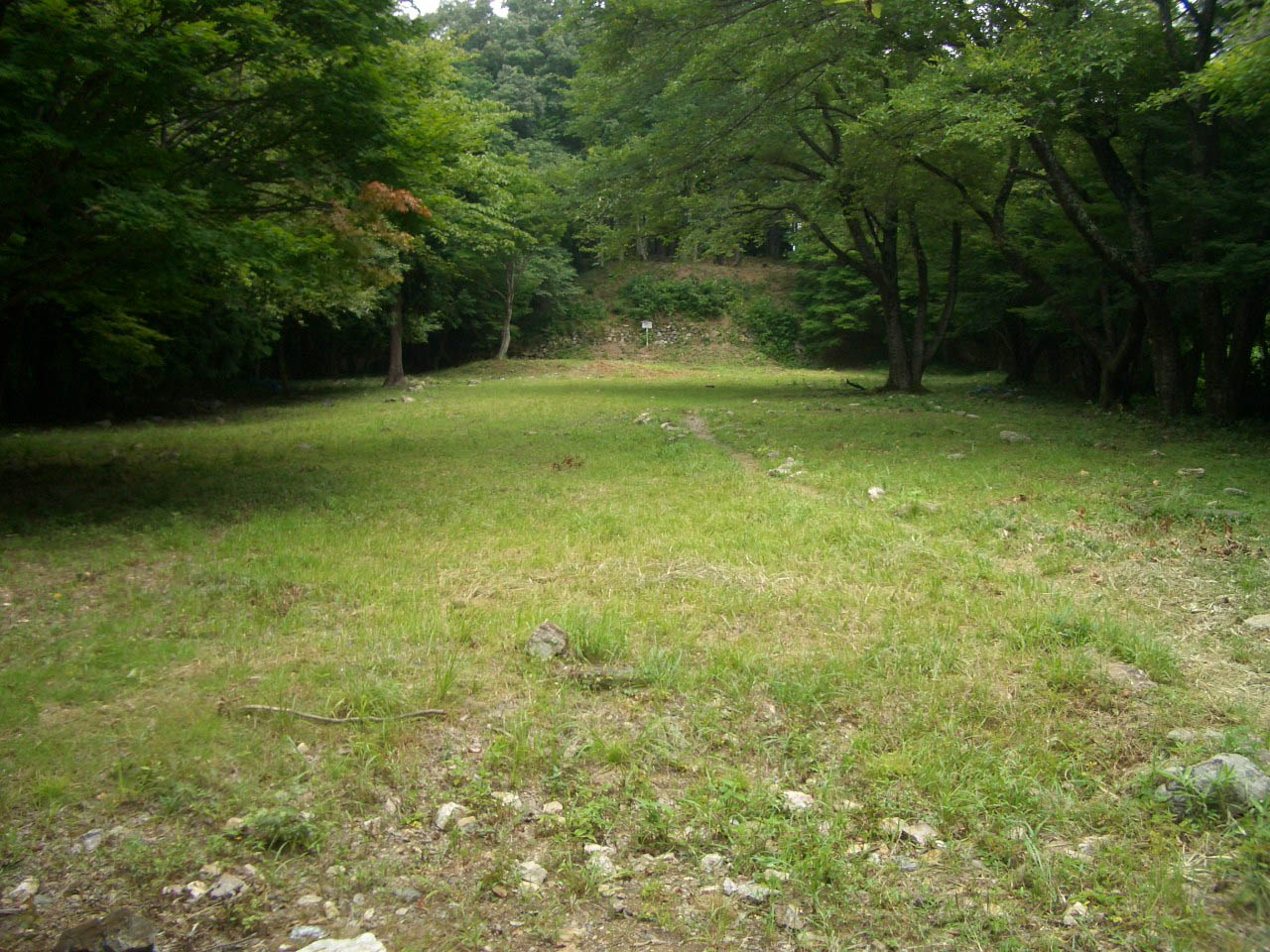
Photo by 投稿者が撮影 • Public domain
Current condition and visitor experience
Today, Odani Castle remains a ruined site, but it has been carefully preserved and made accessible to visitors. Recent efforts, notably for the NHK Taiga Drama "Go-himetachi no Sengoku," have enhanced the site's presentation. Trails are well maintained and clearly marked, with informative signage at key points throughout the castle ruins and baileys.
Visitors can explore the castle grounds via the main ascent through the Otemichi path, which passes through the primary structures before descending through a scenic valley. The site offers a rewarding experience, especially in autumn when the surrounding foliage displays vibrant colors, or in early spring when the ruins are clearly visible without heavy vegetation.
A small museum near the entrance provides historical context, and a gift shop offers detailed booklets featuring artist renderings and maps for a small fee. A shuttle bus service is available from the nearby station, facilitating access for tourists. For those interested in extended exploration, nearby ruins such as those on Mt. Toragozen and Nagahama Castle are recommended.
Cultural importance and heritage status
Odani Castle is recognized not only for its military and architectural significance but also as a symbol of the complex feudal relationships during Japan's Warring States period. Its association with prominent historical figures and events contributes to its status as a cultural heritage site. The castle's ruins offer valuable insights into Japanese mountain castle design and the strategic considerations of the era.
As a site that has undergone preservation and interpretation efforts, Odani Castle continues to attract historians, architecture enthusiasts, and tourists eager to experience a tangible connection to Japan's feudal past.
Frequently asked questions (FAQ)
- How do I get to Odani Castle from Nagahama Station?
- Odani Castle is accessible from Nagahama Station by a short shuttle bus ride or a scenic hike. The shuttle bus, when available, costs around 250 yen and drops visitors near the castle entrance. Walking up via the Otemichi trail offers a rewarding experience through the castle's main structures.
- What is the best time to visit Odani Castle?
- The best times to visit Odani Castle are in autumn for vibrant fall foliage and in early spring before vegetation obscures the ruins. These seasons provide clear views of the castle's layout and picturesque surroundings.
- Is Odani Castle suitable for all visitors?
- Odani Castle involves hiking on mountain trails with some steep and uneven sections. Visitors should wear appropriate footwear and be prepared for a moderate physical effort. The site is not fully accessible for those with mobility impairments.
- Can I learn about the history of Odani Castle on site?
- Yes, the castle ruins feature well-marked signs explaining the historical significance of various structures. A small museum near the entrance offers additional context and displays related to the Azai clan and the castle's history.
- Are there any other attractions near Odani Castle?
- Nearby attractions include the ruins on Mt. Toragozen and Nagahama Castle, both accessible for day trips. These sites complement a visit to Odani Castle by providing broader insights into the region's feudal history.
Photo gallery

Photo by 投稿者が撮影•Public domain
Information
Opening hours
the castle is free, but the museum is 300 yen; closed Tuesdays except on national holidays in which case they close on Wednesday. Also closed 12/28-1/4.
Website
Visit websiteSources & official resources
Verify the information above using these authoritative references.
Loading map...
Visitor reviews
No reviews yet. Been here? Write the first review and help other travelers!
Write the first reviewVisited this castle? Share your experience
Your review helps other travelers and adds first-hand knowledge to our encyclopedia.