Genbao Castle — Japan castle

Genbao Castle

Genbao Castle: Sengoku period yamashiro-style ruins in Hokuriku, Japan
Ruins

Genbao Castle (玄蕃尾城, Genbao-jō) represents a significant example of a Sengoku period yamashiro-style Japanese castle, strategically positioned on a mountain ridge straddling the border between modern-day Tsuruga city in Fukui Prefecture and Nagahama city in Shiga Prefecture, within the Hokuriku region of Honshu, Japan. The castle's ruins have been officially recognized and protected as a National Historic Site since 1999, highlighting its cultural and historical importance.

Historical context and strategic significance

Constructed during the turbulent Sengoku period (mid-15th to early 17th century), a time marked by continuous military conflict and power struggles among feudal lords, Genbao Castle served as a mountain fortress designed to control key land routes and provide defensive advantage in the border area between two provinces. The castle's location on elevated terrain allowed for surveillance over surrounding valleys and transport corridors, crucial for military and trade purposes.

Architectural features and yamashiro-style design

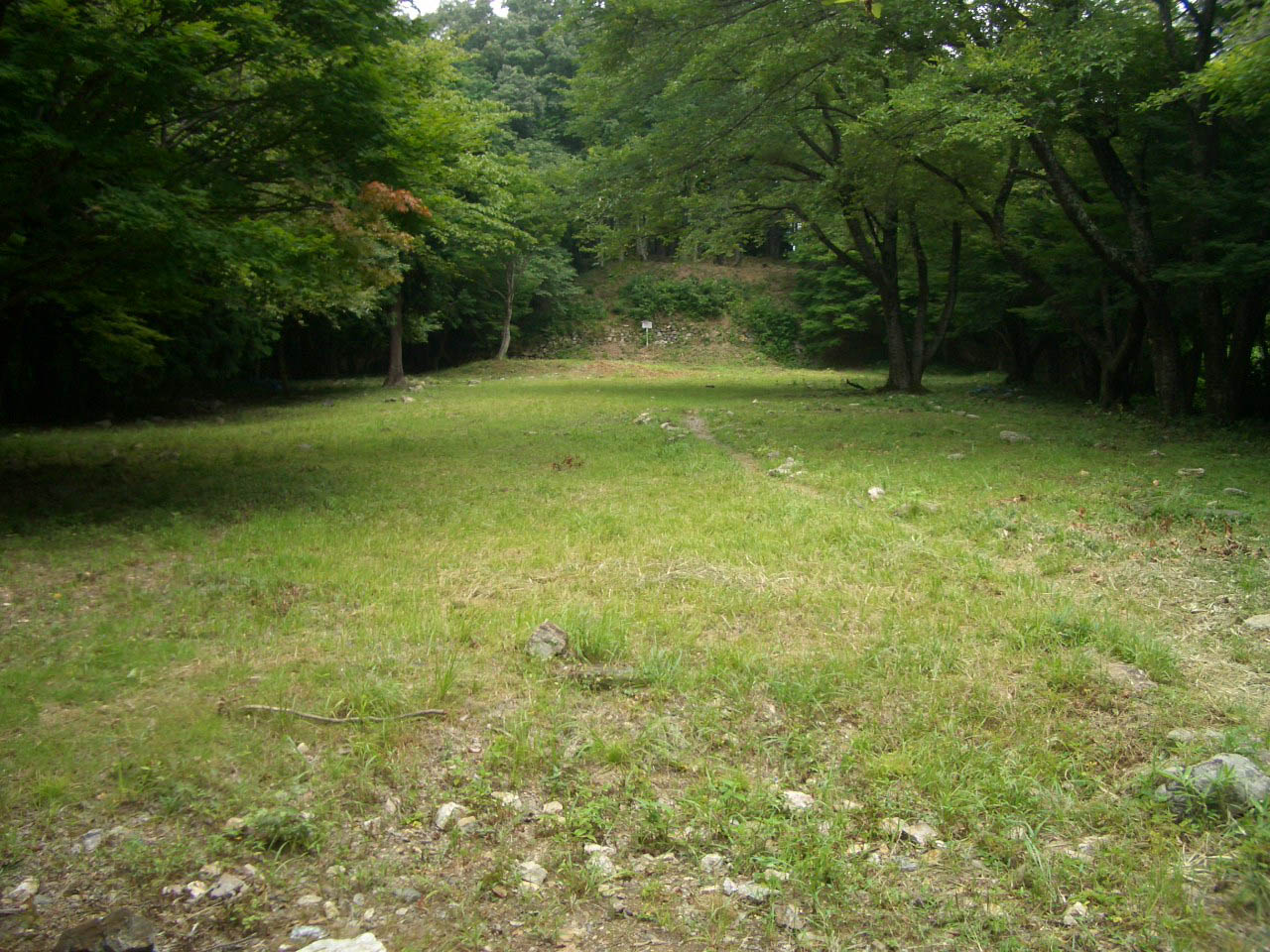
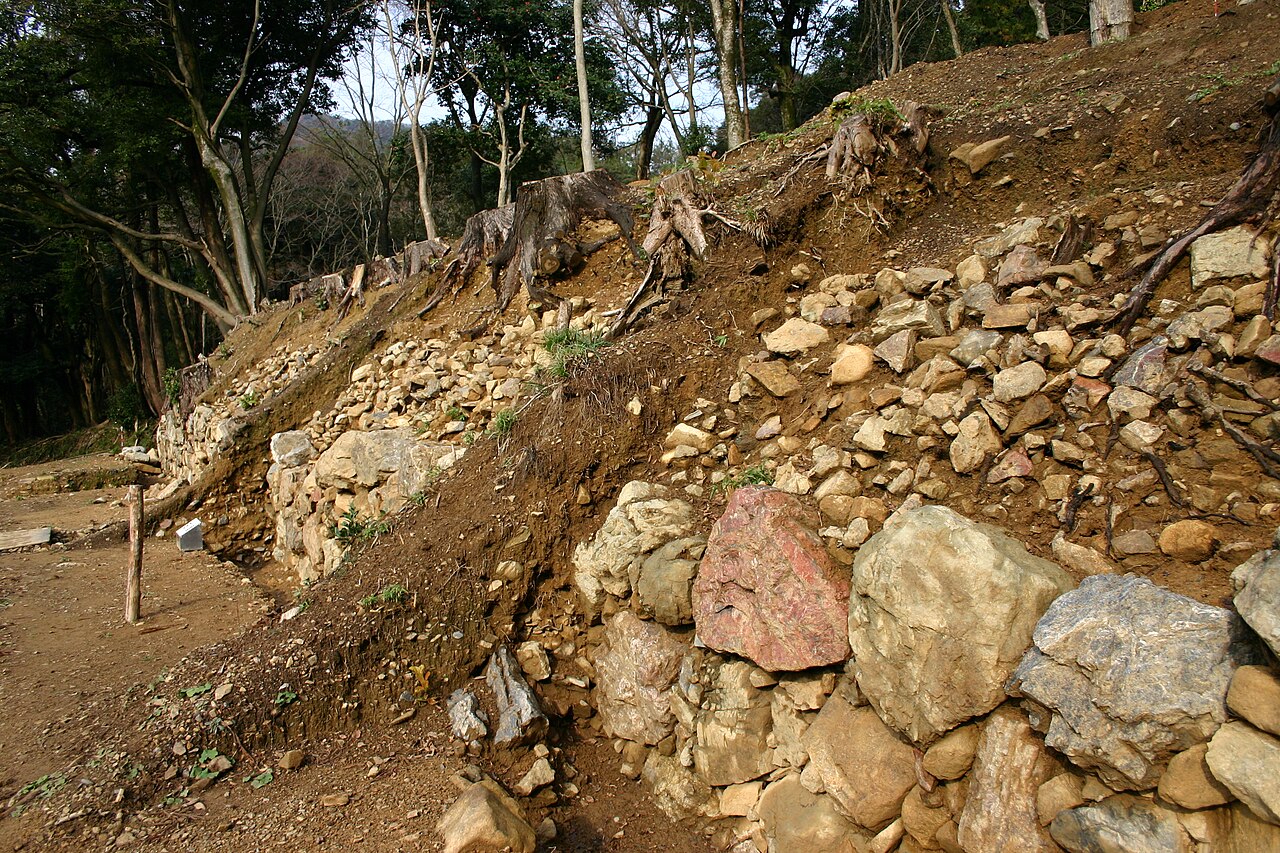
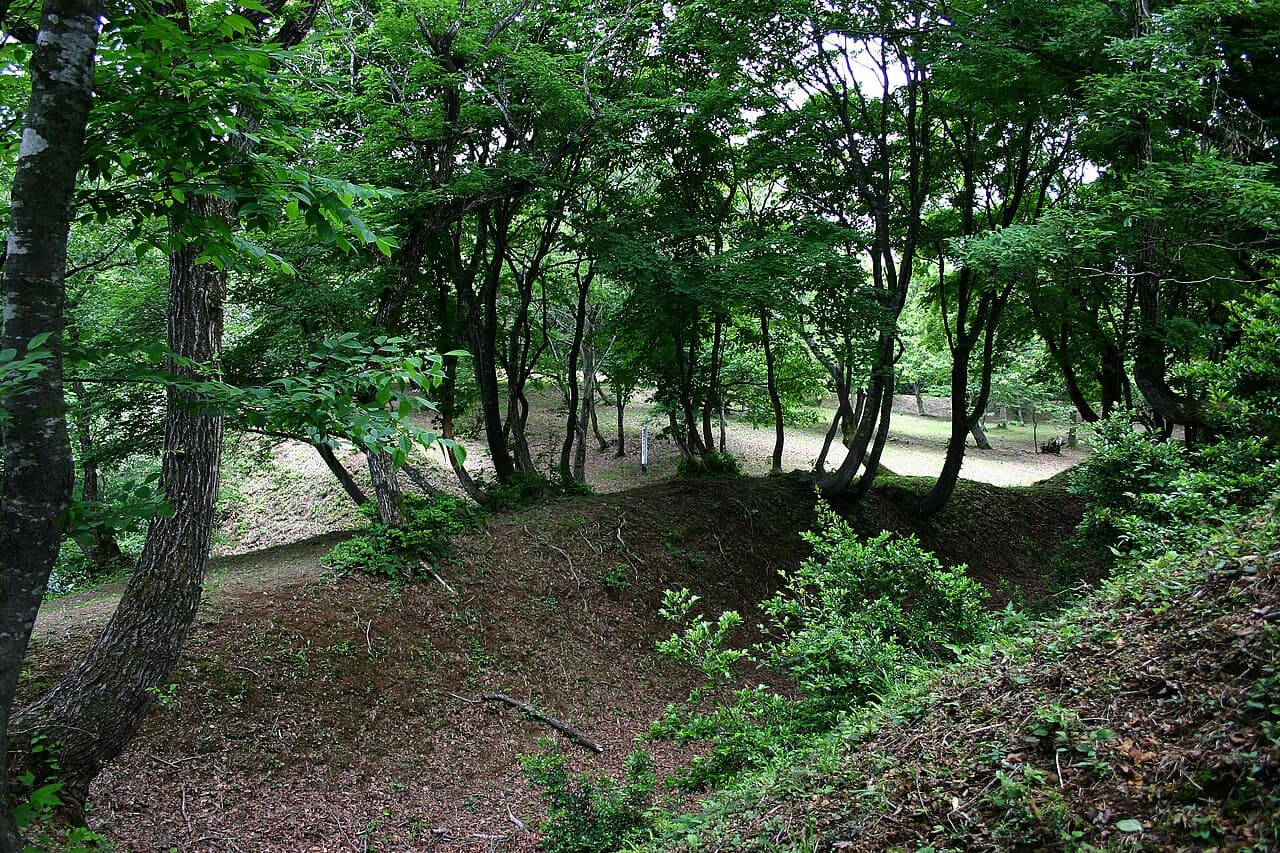
As a yamashiro-style or mountain castle, Genbao Castle was built primarily using the natural topography to enhance its defenses. This style typically involves a complex arrangement of terraced enclosures, earthen ramparts, dry moats, and stone walls adapted to steep slopes. Although much of the original structure has been lost to time, archaeological excavations have revealed remnants of stone foundations, earthworks, and traces of defensive walls that illustrate the castle's layout and fortification strategy.

The castle's design emphasized natural barriers such as cliffs and steep inclines, supplemented by man-made fortifications. The use of dry moats and earthen embankments was characteristic, as well as the probable presence of watchtowers and gates positioned to control access along narrow mountain paths.

Archaeological significance and preservation

The site of Genbao Castle has been subject to archaeological study, which has helped clarify the construction techniques and defensive measures typical of Sengoku period mountain castles. The ruins provide valuable insight into the military architecture of the time and the adaptation of fortifications to challenging terrain.

Its designation as a National Historic Site in 1999 reflects efforts to preserve this cultural heritage and promote understanding of Japan's feudal past. Visitors to the site can explore the remains of the castle's earthworks and stone foundations, although no standing structures remain.

Access and surrounding environment

Genbao Castle is located in a rural mountainous area, accessible by hiking trails that follow the contours of the original fortifications. The natural setting offers panoramic views of the surrounding landscape, including forests and valleys that once formed part of the castle's defensive perimeter.

The castle's location near the border of Fukui and Shiga Prefectures places it within a region rich in historical sites and cultural landmarks, providing opportunities for visitors interested in Japanese history and castle architecture to explore multiple destinations.

Frequently asked questions (FAQ)

What is the historical significance of Genbao Castle?
Genbao Castle, built in the late 16th century, played a crucial role in the unification of Japan during the Sengoku period. It served as a strategic military stronghold and a residence for powerful feudal lords, offering insights into the feudal system and military architecture of the time.
When was Genbao Castle constructed?
Genbao Castle was constructed in 1583 and has since been a significant landmark in Japanese history. Its design reflects the architectural styles of the period, making it an important example of Edo-period castle construction.
What are the opening hours for Genbao Castle?
Genbao Castle is open to visitors daily from 9:00 AM to 5:00 PM. However, it is advisable to check for any seasonal changes or special closures before planning your visit.
Can I access Genbao Castle with public transportation?
Yes, Genbao Castle is easily accessible via public transportation. Visitors can take a train to the nearest station and then use local buses or taxis to reach the castle.
Is it possible to take guided tours at Genbao Castle?
Yes, guided tours are available at Genbao Castle to enhance your experience. Knowledgeable guides provide valuable insights into the castle's history, architecture, and significance.
What is the best time to visit Genbao Castle?
The best time to visit Genbao Castle is during the spring and autumn months when the weather is mild and the surrounding scenery is particularly beautiful. Cherry blossoms in spring and colorful foliage in autumn offer stunning backdrops for your visit.
What are the ticket prices for Genbao Castle?
Admission to Genbao Castle typically costs around 500 yen for adults, with discounts available for students and children. It's a small fee considering the rich history and beautiful architecture you'll explore.
Are there any nearby attractions to visit?
Yes, there are several attractions near Genbao Castle, including beautiful gardens, local museums, and historical sites. These sites can enhance your visit and provide a deeper understanding of the region's culture and history.
How do I prepare for my visit to Genbao Castle?
To prepare for your visit, check the weather forecast and dress appropriately, as much of the exploration is outdoors. Additionally, consider downloading a map or app that highlights points of interest within the castle grounds.

Photo gallery

Genbao Castle
Click to view

Photo by TR15336300101•CC BY-SA 4.0

1 photo • Click any image to view in full screen

Information

Archaeological Site / Ruins

Loading map...

Visitor reviews

No reviews yet. Been here? Write the first review and help other travelers!

Write the first review

Visited this castle? Share your experience

Your review helps other travelers and adds first-hand knowledge to our encyclopedia.
Write a review

(5/5)

0/2000 characters

Your review will be visible after admin approval

Nearby castles

11.9 km
Kanegasaki Castle — Japan castle

Kanegasaki Castle

, Japan

Kanegasaki Castle (金ヶ崎城, Kanegasaki-jō) stands as a significant example of a yamashiro-style Japanese castle from the Kamakura to Nanboku-cho periods, located in the present-day city of Tsuruga, Fukui Prefecture, in the Hokuriku region of Honshu, Japan. This castle, also historically known as Tsuruga Castle, played a notable role during turbulent times in medieval Japan. The site has been protected as a National Historic Site since 1934, preserving its cultural and historical value despite its current state as ruins.Historical context and significanceKanegasaki Castle was constructed during the Kamakura period (1185–1333) and continued to be used into the Nanboku-cho period (1336–1392), a time marked by conflict between the Northern and Southern Courts of Japan. The castle's strategic location in the Hokuriku region made it important for controlling local territories and trade routes along the Sea of Japan coast. It was involved in military actions during the Nanboku-cho conflicts, which were characterized by shifting alliances and battles for control over the imperial throne.Architectural features and castle styleKanegasaki Castle exemplifies the yamashiro or mountain castle style, which utilized the natural topography for defense. Built on a hill, the castle's design incorporated steep slopes and wooded terrain to create natural barriers against attackers. The fortifications likely included earthen walls, wooden palisades, and dry moats shaped to follow the contours of the hill. The layout would have consisted of multiple baileys arranged in terraces, connected by narrow paths and gates, maximizing defensibility.Unlike later stone castles, Kanegasaki relied heavily on natural and earthworks defenses, typical of early medieval Japanese fortifications. The castle's structures were primarily made from wood, which has not survived, leaving only traces of foundations and earthworks visible today.Defensive advantages of the siteThe castle's position on elevated terrain allowed for extensive views over the surrounding plains and the Sea of Japan, providing early warning of approaching forces. The rugged landscape limited the directions from which attackers could approach, funneling them into narrow, easily defended paths. This use of geography was a hallmark of yamashiro castles, combining natural and man-made defenses.Historical events and military engagementsKanegasaki Castle was notably involved in the Siege of Kanegasaki in 1337 during the Nanboku-cho period. The castle was defended by loyalists of the Southern Court against forces of the Northern Court. The siege was a significant episode in the struggle between the rival imperial factions, illustrating the castle's military importance. Despite the defenders' valiant efforts, the castle eventually fell, marking a turning point in the regional power dynamics.The castle's history reflects the broader conflicts of medieval Japan, including the rise and fall of samurai clans and the shifting control of territories. Its ruins serve as a testament to the era's warfare and political instability.Preservation and archaeological significanceToday, Kanegasaki Castle exists as archaeological ruins with remnants of its earthworks and defensive structures. The site has been the focus of archaeological studies that have helped to reconstruct its layout and understand its role in Japanese castle development. The preservation as a National Historic Site ensures protection from modern development and promotes historical education.Visitors to the site can explore the remains of the castle's fortifications and enjoy panoramic views of the surrounding landscape. Interpretive signage and local museums provide context about the castle's history and significance in the Kamakura and Nanboku-cho periods.Kanegasaki castle in cultural memoryWhile not as architecturally grand as later Japanese castles built in stone, Kanegasaki Castle holds cultural importance as a symbol of medieval military architecture and the turbulent history of the Nanboku-cho period. Its ruins inspire interest in Japan's feudal past and the evolution of castle construction techniques from simple earthworks to complex stone fortresses.

Details
17.9 km
Odani Castle — Japan castle

Odani Castle

Nagahama, Japan

Odani Castle stands as a significant hill castle in Nagahama, Japan, renowned for its strategic location and pivotal role during the Sengoku period. Constructed beginning in 1524 by Azai Sukemasa, the castle exemplifies the military architecture of the era and reflects the complex political alliances and conflicts of 16th-century Japan. It is celebrated as one of Japan's Five Greatest Mountain Castles, alongside Kasugayama Castle, Nanao Castle, Kannonji Castle, and Gassan Toda Castle. Construction and architectural features Odani Castle was built over several years, from 1521 to 1528, on a steep mountain ridge, utilizing the natural terrain for defense. The castle complex was composed of multiple baileys (kuruwa) arranged along the ridge, connected by narrow paths and fortified gates. Its design incorporated extensive stone walls, wooden structures, and watchtowers, optimized for both defense and control of the surrounding region. The castle's layout took advantage of the mountainous topography, with terraced enclosures and steep slopes making direct assault difficult. Defensive features included dry moats carved into the rock and strategically placed gates that forced attackers into narrow, exposed approaches. The main enclosure housed the lord's residence and key administrative buildings. Historical significance and the azai clan Azai Nagamasa, the third-generation lord of Odani Castle, is a central figure in its history. In 1567, he solidified a political alliance by marrying O'Ichi-no-kata, the younger sister of the powerful warlord Oda Nobunaga. This marriage was intended to strengthen ties between the Azai and Oda clans during a turbulent period marked by shifting allegiances. Despite this alliance, Nagamasa later opposed Nobunaga during the campaign against the Asakura clan in 1570. The resulting conflict culminated in the Battle of Anegawa in 1570, where Nobunaga's forces defeated the combined armies of the Azai and Asakura clans. However, Nobunaga was unable to capture Odani Castle immediately, which resisted until 1573 when it finally fell, marking a decisive moment in Nobunaga's consolidation of power. Family ties and legacy O'Ichi-no-kata bore three daughters who forged significant alliances through marriage, influencing Japan's political landscape. Their daughters included O'Chacha, who became the concubine of Toyotomi Hideyoshi, O'Hatsu, who married Kyogoku Takatsugu, and O'Go, who married Tokugawa Hidetada, the second shogun of the Tokugawa shogunate. These marriages linked the Azai family to some of the most powerful figures of the era, extending Odani Castle's historical importance beyond its military role. Current condition and visitor experience Today, Odani Castle remains a ruined site, but it has been carefully preserved and made accessible to visitors. Recent efforts, notably for the NHK Taiga Drama "Go-himetachi no Sengoku," have enhanced the site's presentation. Trails are well maintained and clearly marked, with informative signage at key points throughout the castle ruins and baileys. Visitors can explore the castle grounds via the main ascent through the Otemichi path, which passes through the primary structures before descending through a scenic valley. The site offers a rewarding experience, especially in autumn when the surrounding foliage displays vibrant colors, or in early spring when the ruins are clearly visible without heavy vegetation. A small museum near the entrance provides historical context, and a gift shop offers detailed booklets featuring artist renderings and maps for a small fee. A shuttle bus service is available from the nearby station, facilitating access for tourists. For those interested in extended exploration, nearby ruins such as those on Mt. Toragozen and Nagahama Castle are recommended. Cultural importance and heritage status Odani Castle is recognized not only for its military and architectural significance but also as a symbol of the complex feudal relationships during Japan's Warring States period. Its association with prominent historical figures and events contributes to its status as a cultural heritage site. The castle's ruins offer valuable insights into Japanese mountain castle design and the strategic considerations of the era. As a site that has undergone preservation and interpretation efforts, Odani Castle continues to attract historians, architecture enthusiasts, and tourists eager to experience a tangible connection to Japan's feudal past.

Renaissance (15th–17th c.)
Details
19.1 km
Kuniyoshi Castle — Japan castle

Kuniyoshi Castle

, Japan

Kuniyoshi Castle (Kuniyoshi-jō) is a notable 16th-century Japanese castle located in Fukui Prefecture, Japan. Though now in ruins, the castle remains an important archaeological site that offers insight into the military architecture and feudal history of the region during Japan's turbulent Sengoku period. Historical context and significance Constructed in the 16th century, Kuniyoshi Castle was built during a time marked by intense military conflicts among regional warlords. This era, often referred to as the Sengoku period or "Warring States period," saw many castles erected across Japan to serve as strategic military bases and administrative centers. Kuniyoshi Castle played a role in the defense and control of the surrounding territory within Fukui Prefecture. The castle's location in Fukui Prefecture situates it in a region historically contested by powerful clans. Although specific historical records about the castle's builders and occupants are limited, its remains contribute valuable information about the feudal governance and military strategies employed in this part of Japan. Architectural features and layout As a Japanese castle of the 16th century, Kuniyoshi Castle would have incorporated typical defensive features of the period, such as stone walls, earthen ramparts, and possibly a moat to deter attackers. The castle's design likely included a main keep (tenshu) or central tower, baileys (courtyards), and various gates strategically positioned to control access. Although much of the original structure no longer stands, archaeological excavations have revealed foundation stones and remnants of fortifications that help reconstruct the castle's original layout. These findings are crucial for understanding the castle's defensive capabilities and architectural style. Current condition and archaeological importance Today, Kuniyoshi Castle is classified as archaeological ruins. The site preserves the remains of the castle's foundations and defensive earthworks, providing a tangible connection to Japan's feudal past. The ruins are protected and studied to uncover further details about the castle's construction techniques and historical usage. Visitors to the site can explore the grounds where the castle once stood, gaining an appreciation for traditional Japanese castle architecture and the strategic considerations of Sengoku-period fortifications. Interpretive signage and local museums may offer additional context about the castle's role in regional history. Visiting Kuniyoshi Castle While the castle is in ruins, the site is accessible to the public and offers a quiet setting for those interested in Japanese history and archaeology. The surrounding landscape provides scenic views typical of Fukui Prefecture, enhancing the visitor experience. Visitors should prepare for a modest hike or walk, as the castle ruins are often situated on elevated terrain to maximize defensive advantage. There are no extensive facilities on-site, so planning ahead for amenities is advisable. Preservation and cultural heritage Kuniyoshi Castle's ruins are an important cultural asset for Fukui Prefecture. Efforts to preserve the site focus on maintaining the integrity of the remaining earthworks and stone foundations. The castle is recognized as part of Japan's extensive network of historical castles that reflect the country's feudal era and architectural evolution. Continued archaeological research at Kuniyoshi Castle contributes to a broader understanding of regional differences in castle construction and the historical dynamics of the Sengoku period.

Renaissance (15th–17th c.)
Details