O'Brien's Castle
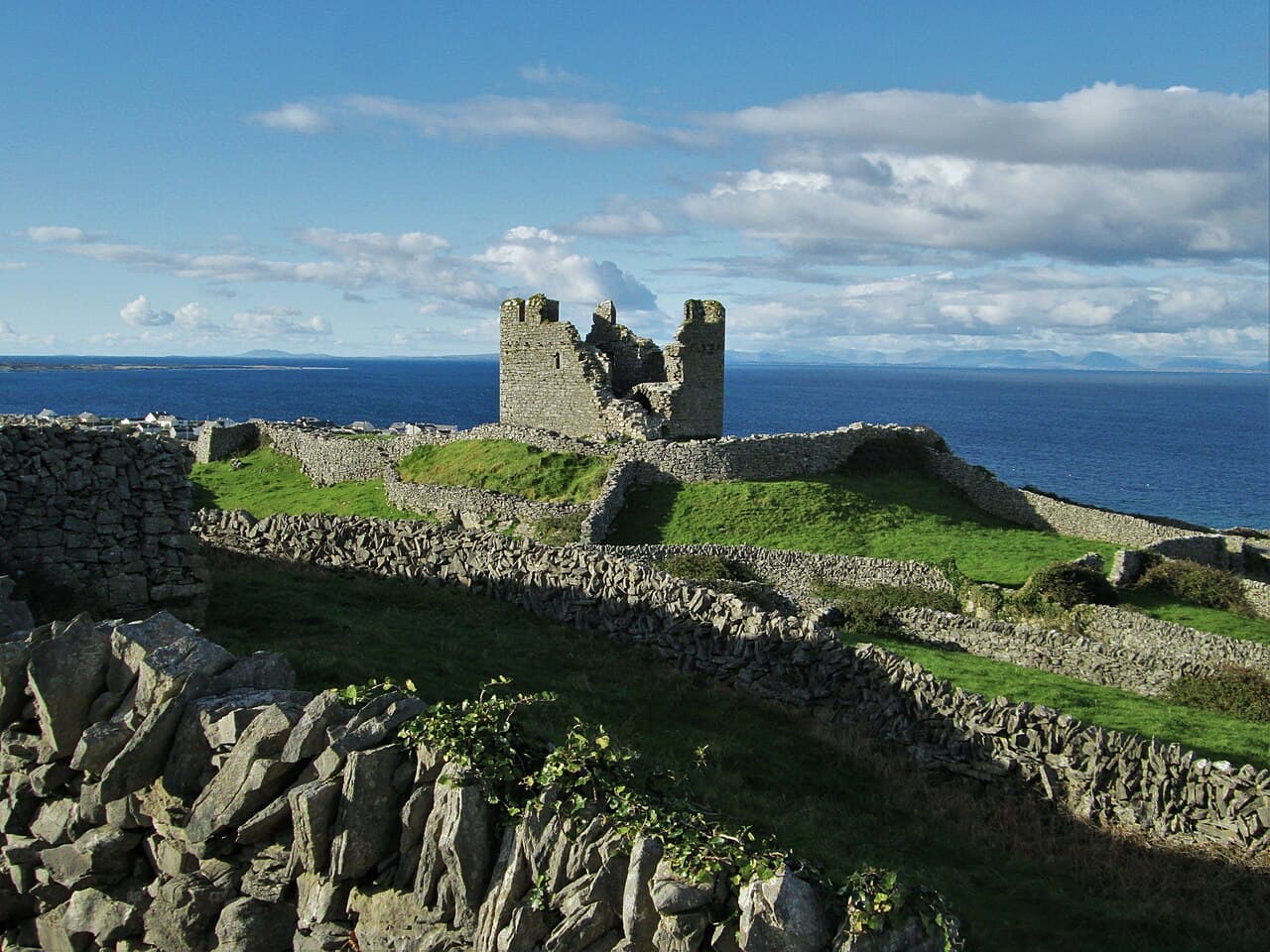
O'Brien's Castle stands as a remarkable example of a 15th-century Gaelic tower house perched atop the highest point of Inisheer, the smallest of the three Aran Islands off Ireland's west coast in Galway Bay. This fortress, known in Irish Gaelic as Caisleán Uí Bhriain, commands a strategic vantage point overlooking the surrounding Atlantic waters and the island's rugged landscape. Its imposing ruins offer a glimpse into the turbulent medieval history of the region and the architectural ingenuity of Gaelic Ireland.
Upon arriving at Inisheer, visitors encounter a quaint fishing village where Irish Gaelic remains the primary language among its roughly 250 residents. From the village, the castle's silhouette dominates the skyline, symbolizing centuries of local power and heritage. Despite its ruined state, the castle's design and historical context provide rich insights into the defensive strategies and social structures of its time.
Historical background and clan significance
The castle was constructed in the early 15th century, around the year 1400, by the Clann Teige, a branch of the influential O'Brien family, a prominent Gaelic Irish dynasty. This period was marked by frequent clan conflicts and shifting allegiances, making fortified residences essential for defense and control.
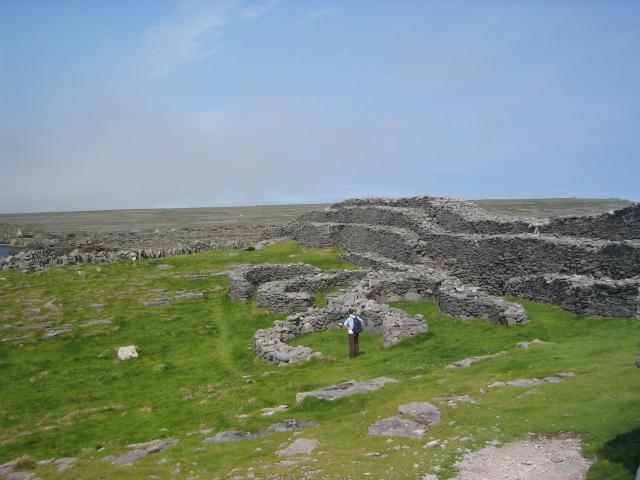
O'Brien's Castle was built on the site of an earlier ringfort known as Dún Formna, which dates back to roughly between the 5th century BCE and 1st century CE. This earlier fortification highlights the site's long-standing strategic importance, situated on a ridge or "shoulder" of land that provided natural defensive advantages.
In the late 16th century, circa 1582, the castle was seized by the Ó Flaithbheartaigh (O’Flaherty) family, another powerful Gaelic clan from western Ireland. This transition reflected the ongoing power struggles among Irish clans during the Elizabethan era. Later, the castle was involved in the wider conflicts of the 17th century, including the Cromwellian conquest of Ireland. In 1652, forces loyal to Oliver Cromwell captured the castle and deliberately damaged it through a process known as slighting, aimed at rendering it militarily ineffective.
Architectural features and defensive design
O'Brien's Castle is a classic example of a rectangular tower house, also referred to as a donjon or keep, a common form of fortified residence in medieval Ireland. The structure's design reflects a blend of residential comfort and military defense, characteristic of Gaelic noble houses of the period.
Entrance and layout
The original entrance was located on the first floor, accessible via an external wooden staircase. This elevated entry point was a deliberate defensive measure, limiting direct access from the ground and making forced entry more difficult for attackers. The first floor housed a large hall, which served as the main social and administrative space. Within its thick walls, mural staircases provided access to the parapet — a low protective wall along the roofline used by defenders to survey the surroundings and repel assailants.
Basement and vaulted chambers
The ground floor functioned as a basement or storage area, featuring three vaulted chambers with arched ceilings designed to enhance structural strength and durability. These chambers likely stored provisions and weapons, critical for sustaining a siege.
Unique masonry and artistic details
One of the castle's notable architectural features is a corbel carved with a human face, which supports an overhanging bartizan — a small turret positioned at a corner of the tower. This artistic detail exemplifies the craftsmanship and symbolic expression found in Gaelic castle masonry, adding both functional and decorative value.
The castle's role in regional history
Throughout its history, O'Brien's Castle played a significant role in the local power dynamics of the Aran Islands and the broader region of western Ireland. Its position on Inisheer allowed control over maritime routes and offered refuge during times of conflict. The castle's capture by the O’Flahertys and later by Cromwellian forces illustrates its strategic importance across centuries.
Despite its partial ruin, the castle remains a powerful symbol of Gaelic resilience and medieval fortification techniques. It provides valuable archaeological and architectural insights into the evolution of defensive structures in Ireland from the early medieval period through the late medieval era.
Visiting o'brien's castle today
Today, O'Brien's Castle is accessible to visitors who arrive on Inisheer by ferry from the mainland. The site is open for exploration, allowing visitors to walk among the ruins and appreciate the castle's commanding views over Galway Bay. While the castle is in a ruined state, many architectural elements remain discernible, offering a tangible connection to Ireland's medieval past.
Visitors are encouraged to respect the fragile ruins and the surrounding natural environment. The castle's location on a hill provides excellent photographic opportunities and a unique perspective on the island's historical landscape.
Nearby attractions
- The Aran Islands' unique cultural heritage, including traditional Irish language and crafts.
- Other historic sites on Inisheer, such as ancient churches and prehistoric forts.
- Natural features like the dramatic coastline, beaches, and limestone pavements.
O'Brien's Castle remains a poignant reminder of Ireland's rich medieval history and the enduring legacy of Gaelic clans in shaping the country's architectural and cultural heritage.
Frequently asked questions (FAQ)
- How do I get to O'Brien's Castle on Inisheer?
- You can reach Inisheer by ferry from Rossaveal or Doolin on the Irish mainland. The castle is a short walk from the village pier.
- What is the historical significance of O'Brien's Castle?
- O'Brien's Castle was a stronghold of the O'Brien clan and played a key role in regional conflicts during the 15th to 17th centuries, including the Cromwellian conquest.
- Can visitors explore inside the castle ruins?
- Yes, visitors can walk around the ruins and explore the visible architectural features, but some areas may be restricted for safety reasons due to the castle's ruined condition.
- When is the best time to visit O'Brien's Castle?
- The best time to visit is during the warmer months from late spring to early autumn when ferry services are more frequent and weather conditions are favorable.
- Are there other attractions near O'Brien's Castle?
- Nearby attractions include other historic sites on Inisheer, traditional Irish cultural experiences, and the natural beauty of the Aran Islands.
Photo gallery

Information
Sources & official resources
Verify the information above using these authoritative references.
Loading map...
Visitor reviews
No reviews yet. Been here? Write the first review and help other travelers!
Write the first reviewVisited this castle? Share your experience
Your review helps other travelers and adds first-hand knowledge to our encyclopedia.