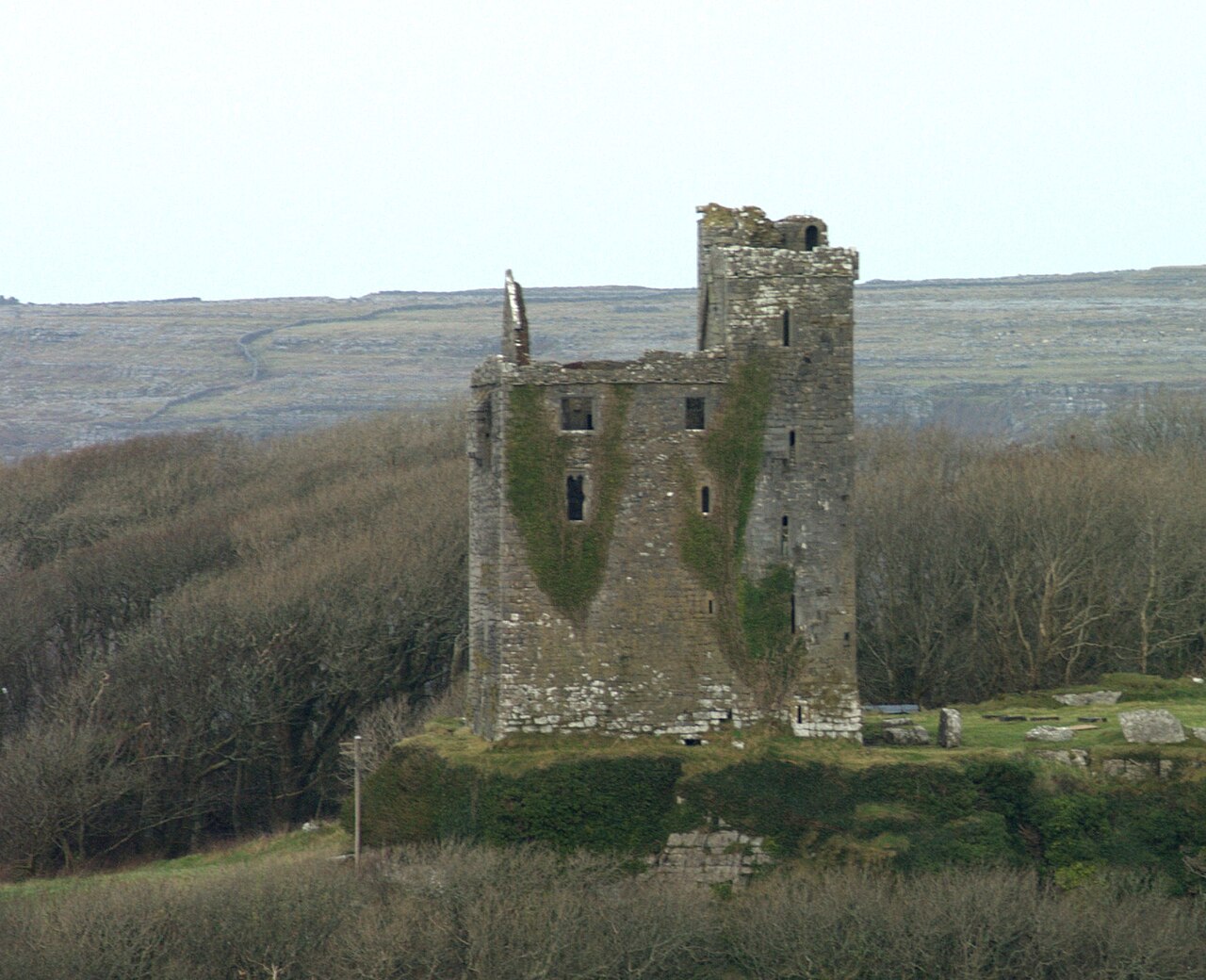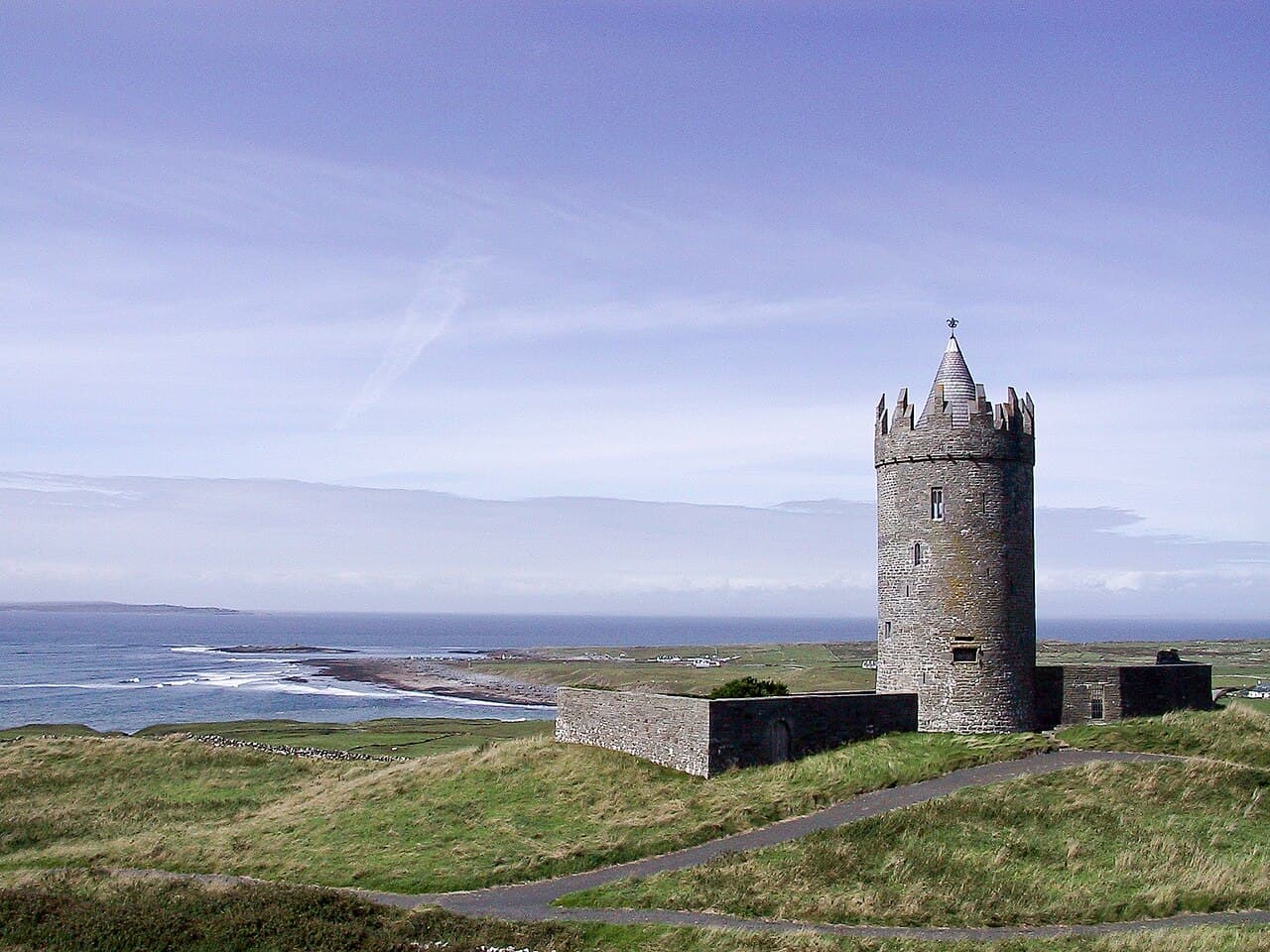
Doonagore Castle
Doonagore Castle is a distinctive 16th-century round tower house located approximately 1 km south of the coastal village of Doolin in County Clare, Ireland. This castle is notable for its unique circular design, which sets it apart from the more common rectangular tower houses found throughout Ireland. The name Doonagore is believed to derive from the Irish Dún na Gabhair, meaning "the fort of the rounded hills" or "the fort of the goats," reflecting its hilltop location and the surrounding landscape.
Architectural features and design
Doonagore Castle exemplifies the typical characteristics of a Renaissance period tower house, built primarily for both defense and residence. The castle's cylindrical shape is unusual among Irish tower houses, which are predominantly rectangular. Its walls are constructed of thick stone, designed to withstand attacks and the harsh coastal weather. The structure includes narrow slit windows for archers, a feature common in defensive castles of the era.
The castle is surrounded by a small walled enclosure or bawn, which would have provided an additional layer of defense and space for livestock or storage. The entrance to the tower is elevated, accessible originally by a removable ladder or wooden stairs, a defensive measure to prevent easy access by attackers.
Historical context and significance
Constructed in the 16th century, Doonagore Castle was built during a period of considerable social and political upheaval in Ireland. This era saw the rise of powerful Gaelic and Anglo-Norman families who constructed fortified residences to assert control over their territories. The castle likely served as a stronghold for a local chieftain or noble family, providing both protection and a symbol of status.
Its strategic location on a hill overlooking Doolin Point afforded commanding views of the surrounding landscape and the Atlantic coast, making it an important lookout point. The castle's proximity to the sea also meant it could monitor maritime activity, which was crucial during times of conflict and trade.
Use as a navigational landmark
Today, Doonagore Castle remains a prominent feature on the landscape, visible from the sea and land. Alongside a nearby higher radio mast, it serves as a navigational point for boats approaching Doolin Pier. This maritime role highlights the castle's enduring presence in the coastal environment.
Location and surroundings
The castle is situated in the townland of Doonagore, within the parish of Killilagh, County Clare. It lies near the region known as the Burren, a unique karst landscape famous for its limestone pavements and rich biodiversity. The castle's position on a hill provides panoramic views of the surrounding countryside and the Atlantic Ocean, enhancing its defensive and aesthetic qualities.
Current status and accessibility
Doonagore Castle is currently a private holiday home and is not open to the public. Its preservation as a residence has helped maintain the structure, although it is not accessible for tours or visits. The castle's condition is generally well preserved, retaining much of its original form and character.
Architectural and cultural importance
The castle stands as a significant example of Renaissance Irish tower house architecture, particularly due to its rare round form. It reflects the defensive needs and domestic arrangements of the Irish gentry during the 16th century. Its commanding location and distinctive design contribute to its cultural heritage value within County Clare and the broader Irish context.
While not open to the public, Doonagore Castle continues to attract interest from historians, architects, and visitors who appreciate Ireland's medieval and Renaissance heritage. Its presence enriches the historical landscape of the west coast and provides insight into the region's past social and military structures.
Frequently asked questions (FAQ)
- What is the historical significance of Doonagore Castle?
- Doonagore Castle is a 16th-century tower house located in County Clare, Ireland. It is a key example of the defensive architecture of the time and is associated with the O'Brien dynasty, who were significant rulers in the region.
- When was Doonagore Castle built?
- Doonagore Castle was constructed in the 16th century, specifically around 1500. It served as a stronghold for the local Gaelic lords and has been an important landmark in the area for centuries.
- Can I visit Doonagore Castle?
- Yes, visitors can explore the site of Doonagore Castle. While the castle itself is not fully restored, its picturesque ruins and stunning coastal views make it a popular spot for tourists and photographers.
- What are the opening hours for Doonagore Castle?
- Doonagore Castle is open to visitors year-round, but it is best to visit during daylight hours for safety and the best experience. There are no formal opening hours, so visitors are welcome to explore at their convenience.
- Is it possible to access Doonagore Castle by public transport?
- While there are no direct public transport services to Doonagore Castle, nearby towns such as Doolin are accessible by bus. From there, it's a short walk or taxi ride to the castle.
- What is the best time to visit Doonagore Castle?
- The best time to visit Doonagore Castle is during the spring and summer months, from April to September. During this time, the weather is generally milder, and the surrounding landscape is vibrant and lush.
- Are there any nearby attractions to Doonagore Castle?
- Yes, Doonagore Castle is located near several attractions, including the Cliffs of Moher and the charming village of Doolin. Visitors can also enjoy local music and dining experiences in Doolin after exploring the castle.
- What are the ticket prices for visiting Doonagore Castle?
- There are no admission fees to visit Doonagore Castle, making it a free attraction for all visitors. However, donations to help maintain the site are always appreciated.
- What architectural features can I expect to see at Doonagore Castle?
- Doonagore Castle features classic Irish tower house architecture, characterized by its round tower and thick stone walls. Visitors can admire its remaining structure, which provides insight into the defensive designs of the period.
Photo gallery

Information
Loading map...
Visitor reviews
No reviews yet. Been here? Write the first review and help other travelers!
Write the first reviewVisited this castle? Share your experience
Your review helps other travelers and adds first-hand knowledge to our encyclopedia.