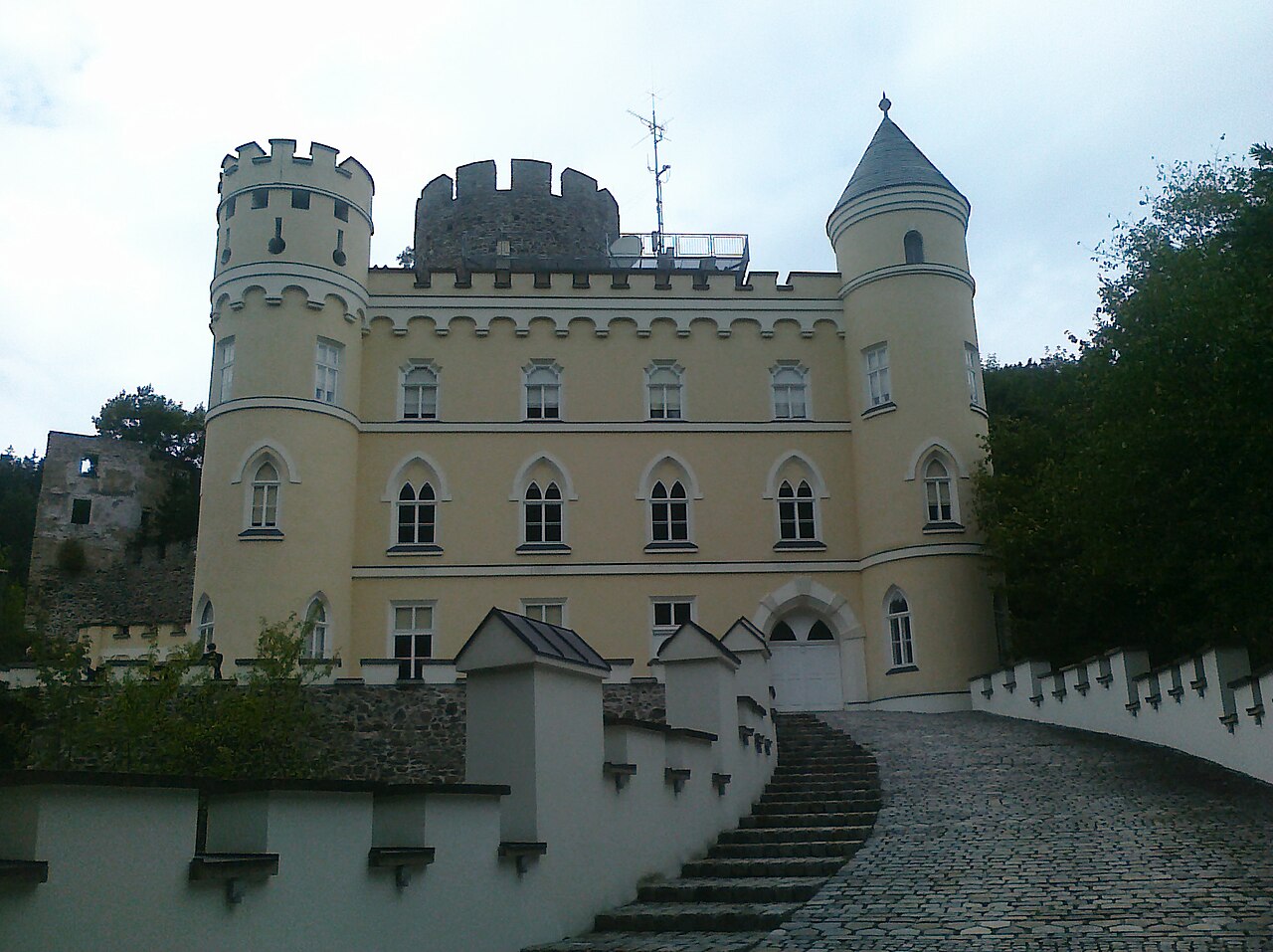
Oberranna Castle
Oberranna Castle is a notable medieval fortress located in Mühldorf, Austria, with origins tracing back to at least 1070. This castle stands as a remarkable example of a high medieval stronghold, having maintained its structural integrity through the centuries. Its early establishment in the 11th century situates it among the important fortifications of the region during the Middle Ages.
Early history and foundation
The exact origins of Oberranna Castle remain somewhat obscure, but historical records confirm its existence by the year 1070. During this period, the castle served as a strategic defensive site amid the fragmented political landscape of medieval Austria. The castle's proximity to an independent Romanesque fortified church constructed by Leopold III, Margrave of Austria, highlights the intertwined nature of military and religious architecture in the region. This fortified church, built adjacent to the castle, reflects the architectural trends of the time and the importance of ecclesiastical presence in castle complexes.
Architectural evolution and enlargement
Originally constructed in the high medieval period, Oberranna Castle underwent significant enlargement in 1560 under the direction of Georg von Neidegg. This expansion brought the castle to its present size and incorporated Renaissance influences typical of the mid-16th century, although the core medieval structures remain evident. The enlargement included strengthening the defensive walls and possibly adding new residential and service buildings within the castle precincts, adapting the fortress to the evolving needs of its occupants.
Structural features
The castle's layout is characteristic of high medieval fortifications with thick stone walls, battlements, and a prominent keep or main tower. The adjacent fortified church adds a unique element, combining religious and military functions within the castle grounds. The construction techniques and materials used reflect the regional styles of the time, with robust masonry designed to withstand sieges and attacks.
Historical significance and preservation
Oberranna Castle has the distinction of never having been conquered throughout its history, which contributes to its status as a well-preserved example of medieval architecture. Its continuous maintenance and careful stewardship, especially in recent centuries, have ensured that the castle remains largely intact. Today, the castle is privately owned, which has helped protect it from extensive public alteration or commercial development.
Cultural and heritage value
The castle represents an important cultural landmark within the region of Mühldorf and serves as a tangible link to Austria's medieval past. Its combination of military and ecclesiastical architecture offers insights into the socio-political dynamics of the high medieval period. Although not generally open to the public due to its private ownership, Oberranna Castle remains a subject of interest for historians and architectural scholars studying medieval fortifications in Austria.
Location and surroundings
Situated in the town of Mühldorf, Oberranna Castle occupies a strategic position that historically allowed control over local routes and territories. The castle's setting within the Austrian landscape provides a commanding view of the surrounding area, which would have been crucial for defense and surveillance during its active use in the Middle Ages.
Frequently asked questions (FAQ)
- When was Oberranna Castle originally built?
- Oberranna Castle dates back to the 11th century, with documented existence by the year 1070.
- What architectural style characterizes Oberranna Castle?
- The castle primarily features Romanesque architectural elements, especially evident in the adjacent fortified church built by Leopold III.
- Is Oberranna Castle open to the public?
- Oberranna Castle is privately owned and generally not open to the public, limiting visitor access.
- Has Oberranna Castle ever been conquered or destroyed?
- The castle has never been conquered, contributing to its well-preserved condition today.
- What significant changes occurred in 1560 at Oberranna Castle?
- In 1560, Georg von Neidegg enlarged the castle to its current size, incorporating Renaissance influences into the medieval structure.
Information
Current owner
Private owner
Loading map...
Visitor reviews
No reviews yet. Been here? Write the first review and help other travelers!
Write the first reviewVisited this castle? Share your experience
Your review helps other travelers and adds first-hand knowledge to our encyclopedia.