Oberhöflein Castle
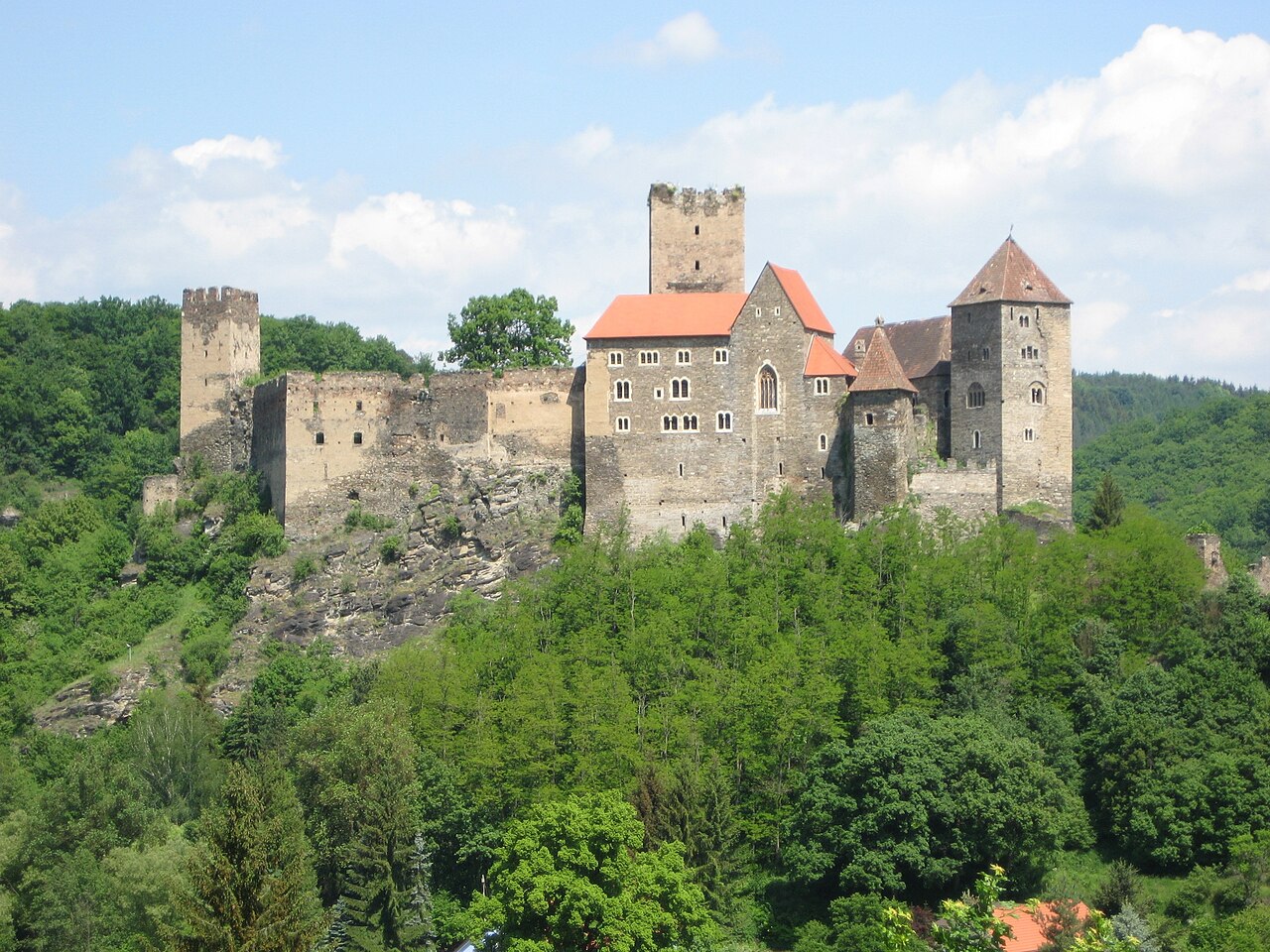
Oberhöflein Castle, known locally as Schloss Oberhöflein, is situated north of the town of Orth an der Donau in the province of Lower Austria. This castle stands as a notable example of medieval architecture that has undergone significant transformations over the centuries, reflecting the changing needs and tastes of its various owners.
The castle was first documented in the 13th century, placing its origins firmly in the High Medieval period. Initially constructed as a fortified stronghold, Oberhöflein Castle was strategically positioned to oversee the surrounding landscape and protect the local fief. Its original design included defensive features typical of the era, such as thick walls and a moat, which was essential for deterring attackers.
Historical evolution and ownership
Between 1481 and 1570, the castle was under the control of the Counts of Hardegg. During this time, the castle was transformed from a purely military fortification into a more comfortable residence. This renovation in the 16th century marked a shift in the castle's function, emphasizing residential and representational qualities alongside defense.
In 1578, ownership passed to Andreas Kielman von Kielmannsegg, a nobleman whose tenure contributed to the castle’s ongoing maintenance and status. Later, in 1658, the castle was acquired by Ernst Ferdinand, Baron von Breuner, who maintained its residential character.
The most enduring ownership began in 1724 when the Barons of Suttner took possession of Oberhöflein Castle. They undertook significant rebuilding efforts in the 18th century, giving the castle much of its present-day appearance. These renovations introduced stylistic elements that softened the fortress-like character of the medieval structure, aligning it with the architectural tastes of the Baroque period.
Unfortunately, the castle suffered a damaging fire in 1945, which affected parts of the structure. Despite this setback, Oberhöflein Castle remains a well-preserved example of Austria's layered architectural heritage.
Architectural features and layout
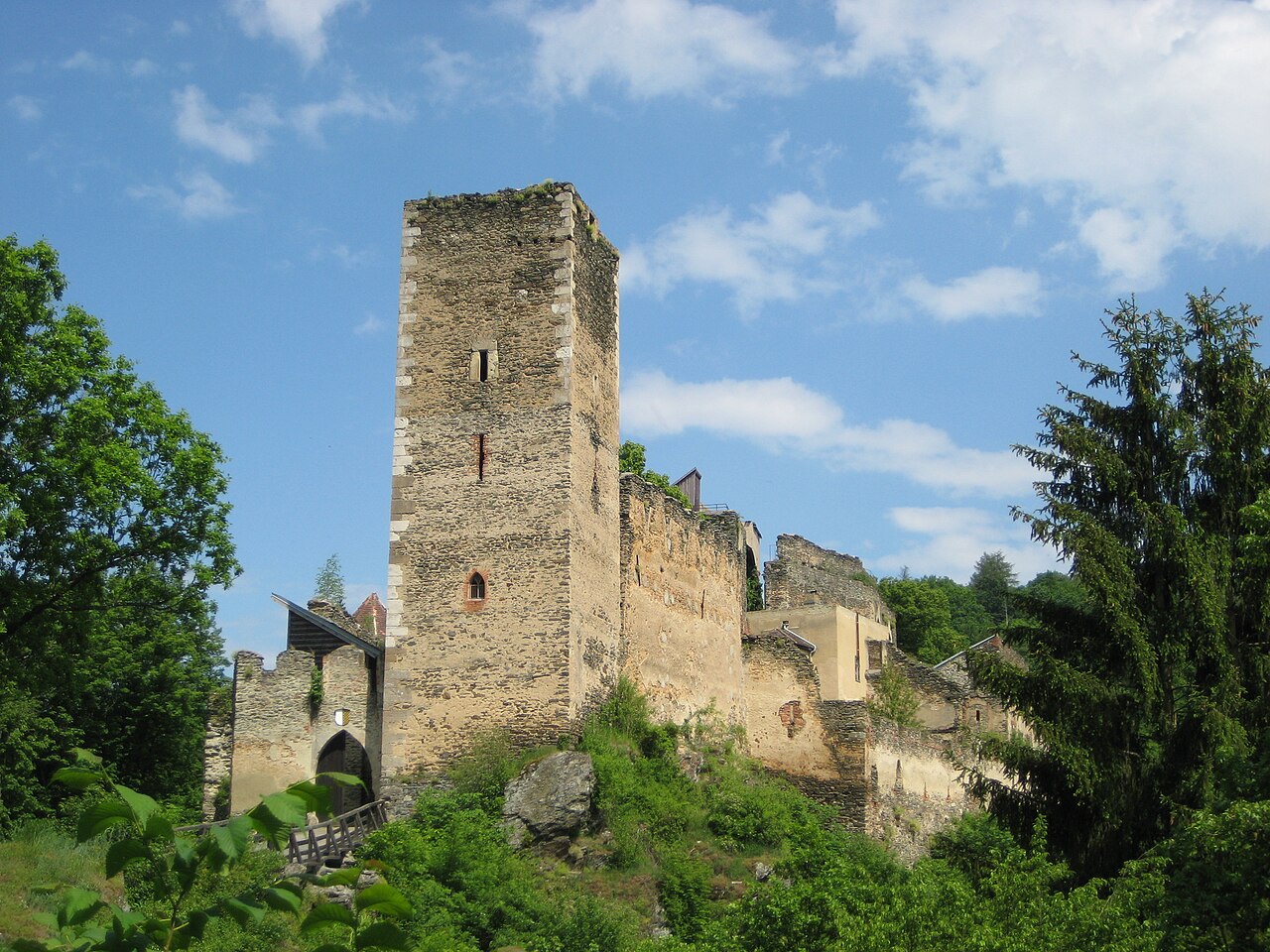
The castle has a distinctive square ground plan, a common design in medieval fortifications that allowed for efficient defense and surveillance. Central to the layout is a square keep, which served as the main stronghold and residence within the castle walls. Adjacent to the keep is another square tower located on the east facade, adding both defensive and aesthetic value.
A prominent gate tower marks the entrance to the castle, historically equipped to control access and protect against invaders. Surrounding the castle is a moat, which was originally filled with water to create a formidable barrier. Today, the moat is dry but still outlines the castle's defensive perimeter, preserving the sense of its medieval fortifications.
Structural adaptations over time
The transformation from a military fortress to a noble residence is evident in the castle's architectural evolution. The 16th-century renovations under the Counts of Hardegg likely introduced larger windows and more comfortable living quarters, adapting the austere medieval fortress for residential use. The 18th-century Baroque modifications by the Barons of Suttner introduced stylistic flourishes that enhanced the castle’s visual appeal without compromising its historic structure.
Current status and accessibility
Oberhöflein Castle remains a private residence and is not open to the public. Its secluded location north of Orth an der Donau and the privacy afforded by its moat and towers contribute to its romantic and somewhat mysterious atmosphere. Although visitors cannot explore the interior, the castle's exterior and setting offer a glimpse into Austria's medieval and early modern noble heritage.
The castle’s combination of medieval fortification elements and later residential adaptations make it a subject of interest for historians and castle enthusiasts. Its enduring presence reflects the historical shifts in castle architecture from purely defensive structures to stately homes.
Significance in Lower Austria's heritage
Oberhöflein Castle exemplifies the architectural and historical development typical of many Austrian castles that evolved over centuries. Its layered history from the High Medieval period through the Baroque era showcases the region’s changing political and social landscape. The castle's preservation, despite wartime damage, contributes to the cultural fabric of Lower Austria and offers insight into the lives of the noble families that shaped the area.
While Oberhöflein Castle may not be as widely known as other Austrian castles, its architectural features and historical narrative provide valuable context for understanding the evolution of castle design and noble residences in Central Europe.
Frequently asked questions (FAQ)
- Is Oberhöflein Castle open to the public for tours?
- Oberhöflein Castle is a private residence and is not open to the public for tours or visits.
- What is the historical significance of Oberhöflein Castle?
- Oberhöflein Castle reflects the architectural evolution from a 13th-century medieval fortress to a residential castle, illustrating changes in noble lifestyles in Lower Austria.
- What are the main architectural features of Oberhöflein Castle?
- The castle has a square ground plan with a square keep, an additional square tower on the east facade, a gate tower, and a surrounding dry moat.
- When was Oberhöflein Castle rebuilt or renovated?
- Significant rebuilding occurred in the 16th century under the Counts of Hardegg and again in the 18th century by the Barons of Suttner, shaping its current appearance.
- Did Oberhöflein Castle suffer any damage during wartime?
- Yes, the castle was damaged by a fire in 1945, which affected parts of the structure but it remains partially preserved.
Information
Current owner
Private owner
Address
Oberhöflein 1, Austria
Loading map...
Visitor reviews
No reviews yet. Been here? Write the first review and help other travelers!
Write the first reviewVisited this castle? Share your experience
Your review helps other travelers and adds first-hand knowledge to our encyclopedia.