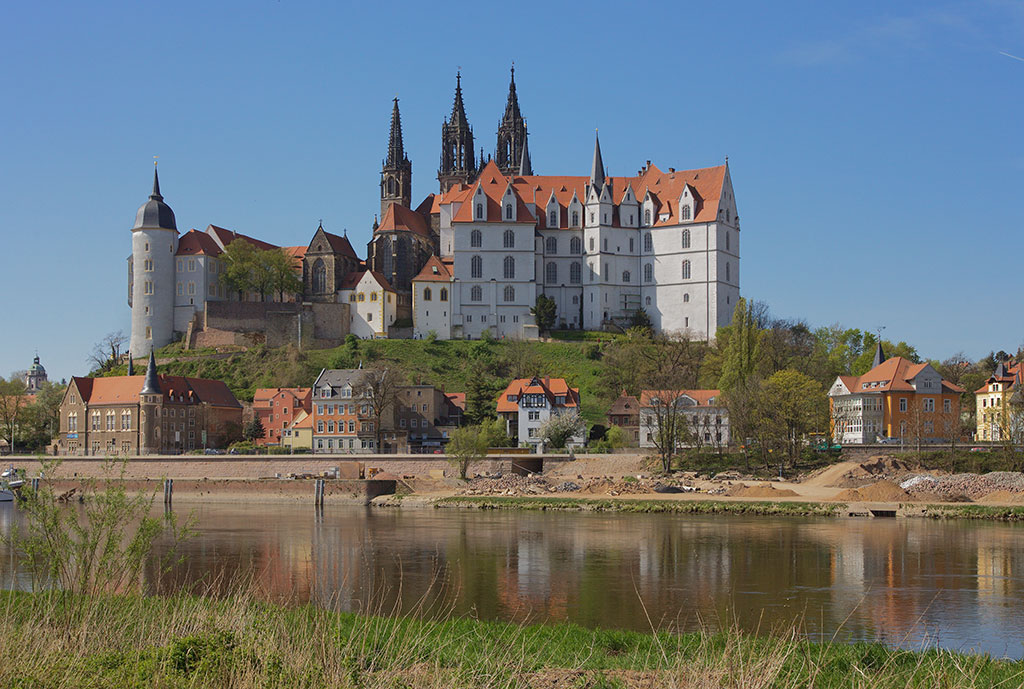
Oberau Castle
Oberau Castle in Niederau, Germany, is a historic moated castle with origins tracing back to the high medieval period. The site initially featured a moated defense tower constructed in 1274, which formed the core of what would evolve into the present castle complex. This original residential tower is notable for its internal staircases combined with external living rooms, a distinctive architectural feature uncommon for its time.
Medieval origins and architectural evolution
The castle's early structure was primarily defensive, designed to secure the surrounding region. In 1550, Ernst von Miltitz commissioned an elongated new building adjacent to the original tower, introducing renaissance architectural elements such as accentuated gable tops. This marked a significant transition from purely military architecture to a more residential and representational style.
By 1594, the building underwent a thorough redesign, transforming it into a renaissance castle with enhanced residential comforts and stylistic refinements. The castle's interiors were further embellished in the 17th century with painted wooden ceilings. These ceilings were preserved even when their boards were repurposed in 1807, demonstrating the value placed on artistic decoration within the castle.
18th and 19th-century modifications
The early 19th century saw significant restoration and alteration of Oberau Castle. In 1803, restoration efforts added valuable stucco work, enhancing the castle's interior decoration. Between 1807 and 1878, the manor acquired much of its current form. Notably, a drawbridge or single bridge led across the moat to the castle, as recorded in traditions from the late 1853.
In 1860, the northeast wing was constructed, harmonizing with the existing structures. This addition gave the castle an angular floor plan and introduced a neo-Gothic stair tower, blending Renaissance and Gothic revival styles. This eclectic architectural mix reflects the evolving tastes and functional needs of the castle's owners during the 19th century.
20th-century usage and preservation challenges
Following the Second World War, Oberau Castle was repurposed to house displaced persons. The entire building, from basement to roof, was occupied by multiple families, with up to ten displaced families residing simultaneously. This intensive use led to various internal modifications to accommodate residential needs.
Later, the castle served as a children's home, although space constraints eventually prompted plans for demolition. These plans were postponed due to the ongoing residence of displaced families. In 1946, further redesigns were undertaken to adapt the manor for alternative uses. Unfortunately, these changes significantly impacted the large palace gardens, altering the historic landscape surrounding the castle.
Architectural features and significance
Oberau Castle's architecture reflects a layered history, combining high medieval defensive elements with renaissance residential expansions and 19th-century neo-Gothic additions. The moat and original defense tower highlight its medieval military origins, while the elongated Renaissance wing and decorative gables illustrate the transition to a noble residence.
The painted wooden ceilings and stucco decorations contribute to the castle's artistic heritage. The neo-Gothic stair tower is a distinctive feature that adds vertical emphasis and stylistic contrast to the overall structure.
Current condition and cultural value
Today, Oberau Castle retains much of its architectural character despite the changes and challenges it faced in the 20th century. The castle is a valuable example of a moated Renaissance castle that evolved from a medieval defense tower. Its well-preserved elements provide insight into the architectural and social history of the region.
The castle's layered construction phases and adaptive reuses make it a site of interest for historians and visitors alike, illustrating the complex history of noble residences in Saxony and their transformations over centuries.
Information
Loading map...
Visitor reviews
No reviews yet. Been here? Write the first review and help other travelers!
Write the first reviewVisited this castle? Share your experience
Your review helps other travelers and adds first-hand knowledge to our encyclopedia.