Albrechtsburg Castle
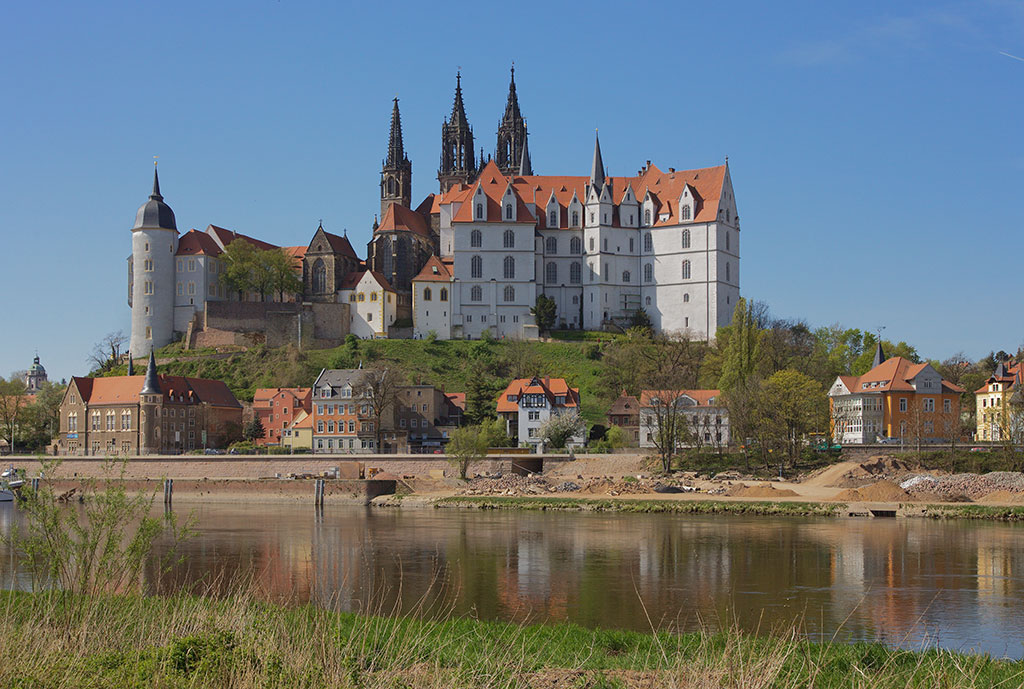
Albrechtsburg Castle stands as a monumental example of late Gothic architecture in Meissen, Saxony, Germany. Perched prominently on a hill above the Elbe River and adjacent to the Meissen Cathedral, it is one of the most historically significant castles in the region. The site has a rich history dating back to the early medieval period, evolving from a strategic fortress to a pioneering residential palace and later a landmark of European industrial heritage.
The early medieval origins and strategic significance
The origins of Albrechtsburg Castle trace back to the early 10th century when King Henry I of Germany subdued the Slavic Glomacze tribe in the area by 929. He established a wooden fortification on a rocky outcrop overlooking the Elbe, marking the border of the expanding Germanic territories against Slavic lands to the east. This early fortress, known as Misnia after a nearby creek, became the nucleus of the town of Meissen and the seat of the Margraves of Meissen from 965 onward. The castle's location on a steep hill provided a commanding view and strategic control over the river and surrounding lands, making it a critical border stronghold during the early medieval period.
The construction of the late Gothic palace: a pioneering residential castle
Between 1471 and 1524, the castle underwent a remarkable transformation under the direction of the Wettin brothers, Ernest and Albert the Bold, who ruled Saxony jointly. They commissioned the construction of a new palace on the site, designed by the master builder Arnold von Westfalen. This new building was conceived as a residential castle rather than a military fortress — a pioneering concept in German castle architecture. It was intended to serve as a representative administrative center and a luxurious residence, reflecting the growing power and prestige of the Wettin dynasty.
Architectural innovations and design features
The steep slope of the Elbe River posed significant architectural challenges, which were ingeniously addressed by designing a basement spanning two floors, followed by a ground floor and three upper levels. The castle's design featured curtained arched windows that allowed sophisticated natural lighting and extensive use of ribbed vaulting throughout the interiors, which was innovative for its time. The Great Wendelstein staircase is a masterpiece of engineering — a spiral staircase with curved steps winding around a delicate central spindle, exemplifying the artistic and technical skill of the builders.
Another notable innovation was the castle's walls, which were constructed to grow vertically without the typical medieval battlements, emphasizing its residential rather than defensive purpose. The inclusion of technical installations such as chimney-pulls integrated into the walls further highlights the advanced design approach.
The Wettin dynasty and the castle's changing role
Despite its grandeur, the castle was never fully utilized as a residence. The Wettin brothers' division of their territories in 1485 by the Treaty of Leipzig meant that Albrechtsburg came under Albert's control, but the castle remained largely underused. While it occasionally hosted receptions and hunting parties, it was mostly left empty. Later, Duke George the Bearded, Albert's son, resided there briefly, but the castle was soon overshadowed by Dresden Castle, which became the primary seat of the Wettin Albertinian line.
Albrechtsburg as the birthplace of European porcelain manufacturing
A new chapter in the castle's history began in 1710 when King Augustus II the Strong established the Königlich-Polnische und Kurfürstlich-Sächsische Porzellan-Manufaktur within its walls. This was the first European hard-paste porcelain manufactory, supervised by the alchemist Johann Friedrich Böttger. For 153 years, Albrechtsburg was synonymous with Meissen porcelain, a product that gained international acclaim for its quality and artistry.
The porcelain production utilized the castle's Gothic rooms, which were adapted for industrial use. However, this new function caused significant wear and damage to the historic interiors. In 1863, porcelain manufacturing was relocated to a new facility, allowing the castle to be restored to its original Gothic appearance through extensive conservation efforts.
Architectural and cultural significance today
Today, Albrechtsburg Castle is celebrated as a late Gothic architectural masterpiece and a symbol of Saxony's cultural heritage. Its innovative design marks a turning point in castle architecture, moving from fortified military strongholds to elegant residential palaces. The castle's association with the origins of European porcelain manufacturing adds an industrial heritage dimension that is rare among medieval castles.
The castle remains well preserved and is a major tourist attraction in Meissen. Visitors can explore its grand halls, admire the intricate vaulting and staircases, and learn about the Wettin dynasty's history and the porcelain manufactory's legacy. Its location overlooking the Elbe River and the town of Meissen provides stunning views and a tangible connection to the region's medieval and early modern past.
Visiting Albrechtsburg Castle
Visitors to Albrechtsburg can experience a unique blend of architectural innovation and historical significance. The castle's interiors showcase the late Gothic style with original features such as the Great Wendelstein staircase and ribbed vaults. Exhibitions often highlight the history of the Wettin family and the development of Meissen porcelain. The castle's proximity to the Meissen Cathedral enhances the cultural experience, making it a must-visit destination for those interested in medieval architecture and European history.
Frequently asked questions (FAQ)
- What is the historical significance of Albrechtsburg Castle?
- Albrechtsburg Castle, built in the 15th century, is considered one of the first Renaissance castles in Germany. It served as the residence of the Margraves of Meissen and played a crucial role in the development of the region’s political and cultural landscape.
- When was Albrechtsburg Castle constructed?
- Construction of Albrechtsburg Castle began in 1471 and was completed in 1525. The castle showcases a stunning blend of Gothic and Renaissance architectural styles, reflecting the artistic developments of its time.
- Can I visit Albrechtsburg Castle year-round?
- Yes, Albrechtsburg Castle is open to visitors throughout the year, though opening hours may vary by season. It is advisable to check the official website for the most current information on visiting hours and any special events.
- What are the ticket prices for Albrechtsburg Castle?
- Ticket prices for Albrechtsburg Castle are generally affordable, with discounts available for students and seniors. Children under a certain age may enter for free, making it a great family destination.
- Is it possible to explore the castle without a guided tour?
- While guided tours are available and highly recommended for a richer experience, visitors can also explore certain areas of Albrechtsburg Castle on their own. Informational displays throughout the castle provide historical context and insights into its architecture.
- What is the best time to visit Albrechtsburg Castle?
- The best time to visit Albrechtsburg Castle is during the spring and early autumn when the weather is mild and pleasant. Additionally, visiting during weekdays can help you avoid the larger crowds typically seen on weekends.
- How do I get to Albrechtsburg Castle from Meissen city center?
- Albrechtsburg Castle is conveniently located within walking distance from Meissen's city center. Visitors can enjoy a scenic walk that takes approximately 15 minutes, or they can opt for local public transportation if preferred.
- Are there any nearby attractions to Albrechtsburg Castle?
- Yes, nearby attractions include the Meissen Cathedral and the historic Old Town, which features charming streets and shops. You can also explore the famous Meissen Porcelain Museum located just a short distance away.
- Is Albrechtsburg Castle accessible for visitors with disabilities?
- Albrechtsburg Castle strives to be accessible to all visitors, with specific provisions in place for those with mobility challenges. It is advisable to contact the castle in advance to ensure a comfortable visit.
Information
Website
Visit websiteSources & official resources
Verify the information above using these authoritative references.
Loading map...
Visitor reviews
No reviews yet. Been here? Write the first review and help other travelers!
Write the first reviewVisited this castle? Share your experience
Your review helps other travelers and adds first-hand knowledge to our encyclopedia.