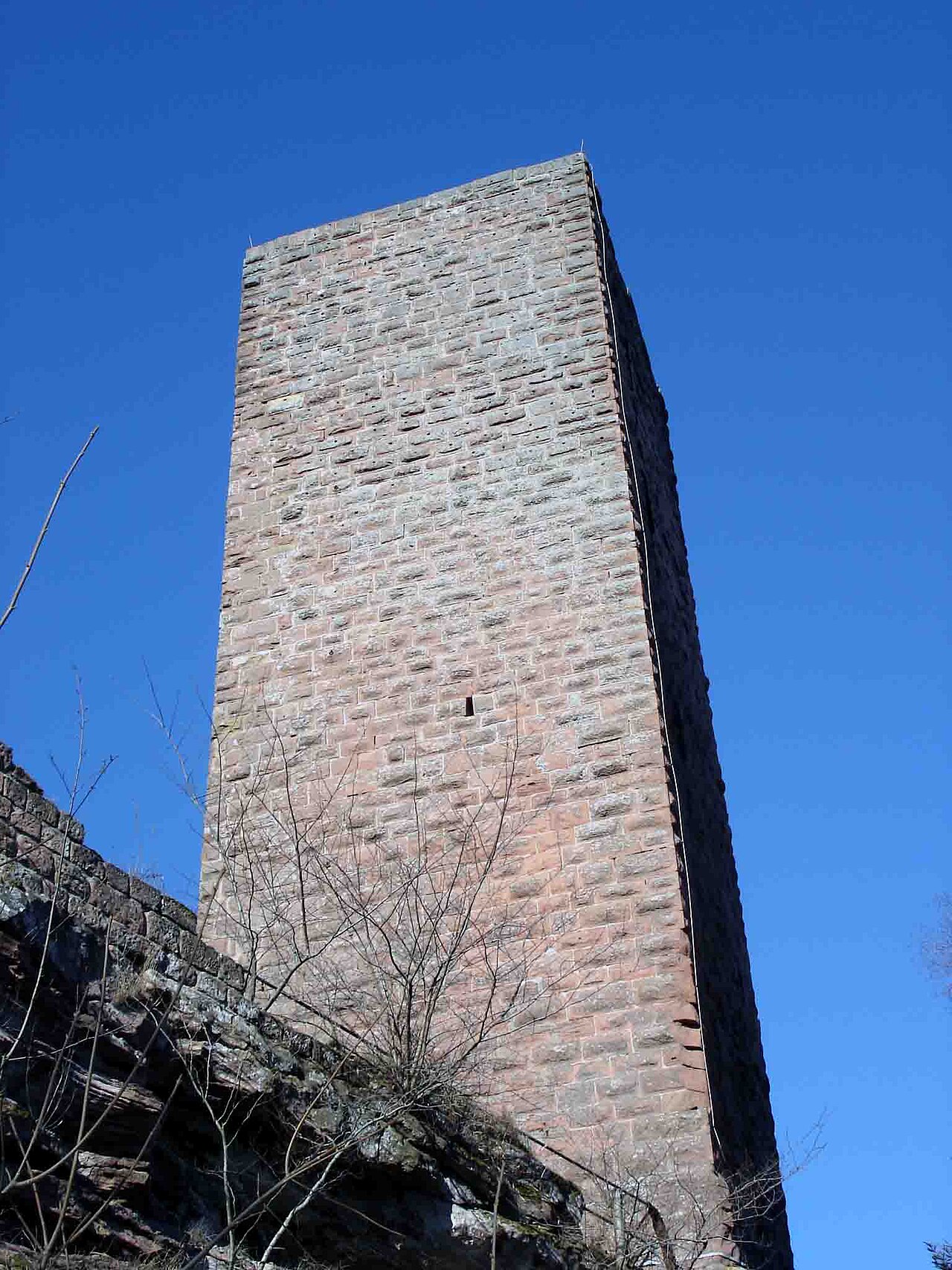
Friedensturm
The Friedensturm, located in the municipality of Weinböhla, Germany, is a notable historic hill castle observation tower originally constructed in the early 20th century. It stands as a monument reflecting the era of German unification and national pride, initially dedicated to Otto von Bismarck, the first Chancellor of the German Empire. The tower's history, architecture, and cultural significance provide insight into the patriotic sentiments and commemorative practices of the time.
Historical background and dedication
The tower's construction began in 1903 as a Bismarck Tower, a type of monument erected throughout Germany to honor Chancellor Otto von Bismarck for his pivotal role in founding the German Reich. The initiative was led by Carl Wilhelm Wießner, a local estate owner and patron who had previously built the Wartturm tower in 1900. Wießner personally financed the project with a sum of 7,500 Marks, demonstrating the local community's commitment to commemorating national unity.
The foundation stone was laid on April 1, 1903, and the tower was consecrated on August 30, 1903, originally named the Bismarckwarte. Above the entrance, a sandstone plaque praised Bismarck's achievements, reinforcing the tower's symbolic function. Surrounding the terrace were eight small battlemented turrets, each emblazoned with the coat of arms of one of the largest German states of the period, underscoring the tower's nationalist dedication.
Architectural features and design
The Friedensturm is constructed of stone and reaches approximately 20 meters in height. It stands on an elevated terrace about 2.5 meters above ground level, which itself is a protected architectural feature. The terrace is enclosed by a parapet wall punctuated with the eight small battlemented turrets, creating a distinctive silhouette that echoes medieval fortifications.
Access to the tower's observation platforms is via a stairway: 20 steps lead from the terrace to the first public platform, followed by an additional 49 steps ascending to the upper observation deck. These platforms offer expansive views of the surrounding landscape, emphasizing the tower's original purpose as a lookout and symbol of vigilance.
The tower's design combines functional observation elements with symbolic architectural details, such as the coats of arms and battlements, which evoke a sense of historical continuity and regional pride.
Damage, restoration, and renaming
During World War II, the tower sustained significant damage, reflecting the widespread destruction experienced across Germany. After the war, its name was changed from Bismarckwarte to Hoher Turm and briefly to Turm der Jugend (Tower of Youth), signaling a shift in its symbolic meaning.
In 1955, a restoration campaign was launched by the local Heimatfreunde association with support from gardener Erwin Schäfer. Renovations were completed in 1956, during which the original Bismarck plaque was removed and replaced with a new inscription dedicated to peace. The new plaque reads: "Frieden! Erbaut 1903 Wilh. Wiesner Erneuert 1956 Erwin Schäfer." The tower was re-consecrated on July 7, 1956, and officially renamed Friedensturm, meaning Peace Tower.
Subsequent decades saw vandalism during the 1970s and 1980s, leading to the tower's closure to the public. Renewed restoration efforts in 1987 and 1988 allowed the tower to reopen in August 1992. Further renovation in 2012 helped preserve its condition, ensuring the tower remains a cultural landmark.
Cultural significance and related monuments
The Friedensturm is one of three surviving historic towers in Weinböhla, alongside the Wartturm and König-Albert-Turm. These towers are remnants of an original group of six, reflecting the region's rich tradition of commemorative architecture.
Directly in front of the tower stands the Drais-Stein, a memorial stone erected in 1912 by Wießner to honor Karl von Drais, the inventor of the draisine, a precursor to the modern bicycle. This stone is recognized as a protected cultural monument, adding depth to the historical landscape surrounding the Friedensturm.
Preservation and visitor experience
The tower and its terrace are protected as listed monuments, reflecting their cultural and historical importance. The stone construction has endured through damage and restoration, maintaining the tower's historic character. Visitors can appreciate the architectural details such as the battlemented turrets and coats of arms, which connect the structure to its early 20th-century nationalist origins.
Although the tower has experienced periods of closure due to vandalism and repairs, it remains accessible to the public, offering panoramic views and a tangible link to Germany's imperial past and post-war peace efforts.
Frequently asked questions (FAQ)
- When was the Friedensturm built and for what purpose?
- The Friedensturm was built in 1903 as a Bismarck Tower to honor Otto von Bismarck, the first Chancellor of the German Empire, reflecting national pride after German unification.
- What architectural features distinguish the Friedensturm?
- The Friedensturm features a stone construction about 20 meters high, an elevated terrace with eight battlemented turrets bearing coats of arms, and two observation platforms accessed by stairways.
- How has the Friedensturm's name and purpose changed over time?
- Originally named Bismarckwarte, it was renamed Hoher Turm and later Friedensturm after post-WWII restorations, shifting its dedication from Bismarck to a symbol of peace.
- Is the Friedensturm open to visitors today?
- Yes, after restoration efforts completed in the late 20th and early 21st centuries, the Friedensturm is accessible to the public, offering panoramic views and historical insights.
- What is the Drais-Stein and its connection to the Friedensturm?
- The Drais-Stein is a memorial stone erected in 1912 near the Friedensturm to honor Karl von Drais, inventor of the draisine, adding cultural significance to the site.
Information
Loading map...
Visitor reviews
No reviews yet. Been here? Write the first review and help other travelers!
Write the first reviewVisited this castle? Share your experience
Your review helps other travelers and adds first-hand knowledge to our encyclopedia.