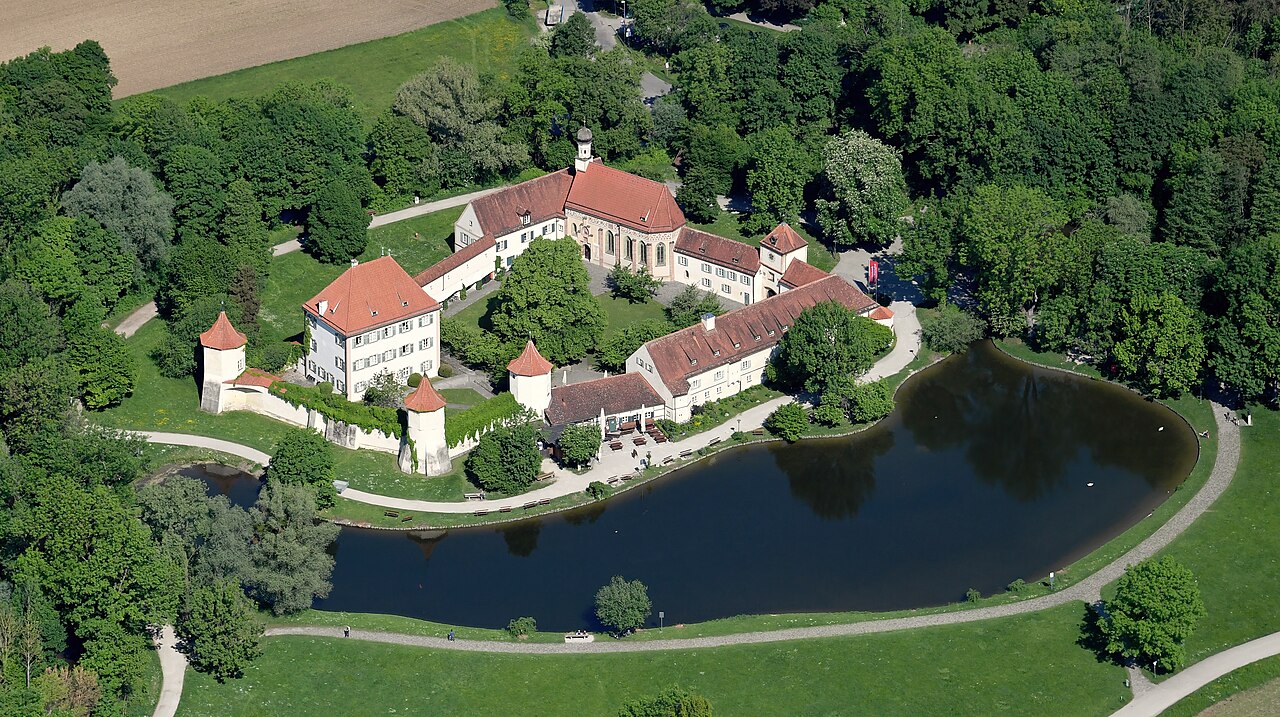
Nymphenburg Castle
Nymphenburg Palace, also known as the "castle of the Nymphs," is a magnificent Baroque palace located in Bavaria, Germany. It served as the summer residence of the kings of Bavaria and stands at the heart of an extensive park designed in the French style. The palace is renowned for its architectural grandeur, rich history, and cultural significance as a symbol of Bavarian royal power.
Origins and early construction
The palace's foundation was laid in 1664 following the birth of the long-awaited heir to the Bavarian throne, Max Emanuel, son of Elector Ferdinand Maria and his wife, Henriette Adelaide of Savoy. To celebrate this event, the couple commissioned the Italian architect Agostino Barelli, known for designing Munich's Theatine Church, to build a summer residence. The initial structure was a substantial cubic pavilion, completed by 1675, flanked by a court church, several outbuildings, and a small, geometrically laid out garden enclosed by walls.
Expansion under Max Emanuel
Upon the accession of Max Emanuel as Elector of Bavaria in 1680, the palace underwent significant expansion. Beginning in 1701, architects Enrico Zuccalli and Giovanni Antonio Viscardi added two off-set pavilions to the north and south wings of the original Barelli structure. These pavilions were connected to the central building by galleries, creating a more extensive and harmonious complex. However, construction was interrupted by the War of the Spanish Succession, which forced Max Emanuel to spend years in exile from 1704 to 1715.
French influence and artistic development
After returning to Munich in 1715, Max Emanuel brought with him a retinue of French and French-trained artists, marking a shift in the palace's artistic direction. The court architect Joseph Effner redesigned the central pavilion's facade in the French Baroque style in 1716, enhancing the palace's elegance and grandeur. The French landscape architect Dominique Girard contributed to the overall garden design, integrating the palace more closely with its extensive grounds.
Local artists also flourished during this period. The galleries were adorned with views of Bavarian palaces painted by Franz Joachim Beich, while the stucco work was masterfully executed by Johann Baptist Zimmermann. These contributions helped establish Munich as one of Europe's leading centers of Baroque art and architecture.
Later additions and architectural features
Max Emanuel's son, Charles VII, who became Holy Roman Emperor, continued to develop Nymphenburg Palace by adding a grand circular courtyard known as the Schlossrondell. This feature included several Baroque palaces called the Kavaliershäuschen or lodges for the riders, enhancing the palace's function and aesthetic appeal.
In 1726, architect Leo von Klenze made alterations to the central pavilion, removing the gables bearing the Electorate emblem and replacing them with a penthouse beneath the roof. The southern wing was extended to house the court stables, balanced by the construction of an Orangerie on the northern side, reflecting the palace's dual role as a residence and a working court complex.
The Amalienburg and Rococo splendor
One of the palace park's architectural jewels is the Amalienburg, a Rococo hunting lodge designed by the Paris-trained architect François Cuvillés the Elder. This exquisite structure exemplifies the height of Munich court art and Rococo elegance, with intricate decoration and a playful design that contrasts with the palace's grand Baroque style.
The palace in the 18th and 19th centuries
Under Elector Maximilian III Joseph (reigned 1745–1777), the palace's Great Hall was richly decorated in the Rococo style by artists including Zimmermann and Cuvilliés. The palace chapel's vaulted ceiling was also painted during this period, enhancing the interior's artistic significance.
The Nymphenburg Porcelain Manufactory was established within the palace grounds, becoming an important center for fine porcelain production. The palace gardens were transformed from formal French parterres into an English landscape garden by the royal gardener Friedrich Ludwig Sckell, reflecting changing tastes in landscape design.
Elector Karl Theodor (reigned 1777–1799) made modest changes, widening galleries to create new rooms furnished in contemporary styles. In 1792, he opened the palace park to the public, marking a shift from exclusive royal use to broader cultural accessibility.
Role in the Kingdom of Bavaria
With the establishment of the Kingdom of Bavaria in the early 19th century, King Maximilian I Joseph (reigned 1806–1825) continued to use Nymphenburg as a royal residence. He commissioned Neoclassical redesigns of several rooms and appointed elegant furniture reflecting the era's style. The palace remained a favored residence of the Wittelsbach dynasty, with King Maximilian I Joseph dying there in 1825 and King Ludwig II being born at Nymphenburg in 1845.
Architectural style and significance
Nymphenburg Palace is a prime example of Baroque architecture in Germany, distinguished by its grand scale, symmetrical layout, and elaborate decorative elements. The palace complex combines the work of Italian, French, and German architects and artists, creating a unique synthesis of European Baroque and Rococo styles. Its extensive gardens and parklands reflect evolving landscape design trends from formal French parterres to English landscape gardens.
The palace's role as a summer residence for the Bavarian royal family, particularly the House of Wittelsbach, adds historical depth to its architectural importance. It stands not only as a symbol of royal power and prestige but also as a cultural hub that fostered artistic innovation and craftsmanship during the 17th and 18th centuries.
Visiting Nymphenburg Palace today
Today, Nymphenburg Palace is a major tourist attraction and cultural monument. Visitors can explore the richly decorated state rooms, the palace chapel, the Amalienburg hunting lodge, and the extensive gardens. The palace also houses museums, including the Nymphenburg Porcelain Museum, showcasing the region's artistic heritage.
The palace grounds offer a serene environment for walking and enjoying the blend of architectural beauty and natural landscapes. Nymphenburg remains a testament to Bavaria's royal history and artistic achievements, drawing visitors interested in architecture, history, and culture.
Frequently asked questions (FAQ)
- What is the historical significance of Nymphenburg Castle?
- Nymphenburg Castle, built in the 17th century, served as the summer residence for the Bavarian kings. It showcases the opulence of the Baroque period and is an important symbol of Bavaria's royal heritage.
- When was Nymphenburg Castle built?
- Construction of Nymphenburg Castle began in 1664 and it was expanded over the following centuries. The castle's development reflects changing architectural styles, with significant additions made in the 18th and 19th centuries.
- Can I visit Nymphenburg Castle year-round?
- Yes, Nymphenburg Castle is open to visitors throughout the year, though certain areas may have restricted access during the winter months. It's advisable to check the official website for specific seasonal hours and any renovations.
- What are the opening hours for Nymphenburg Castle?
- Nymphenburg Castle typically opens at 9 AM and closes at 6 PM during the summer months, with shorter hours in the winter. Please verify the current opening hours on their official site before planning your visit, as they can vary.
- Is it possible to access Nymphenburg Castle with a wheelchair?
- Yes, Nymphenburg Castle is accessible for visitors with mobility challenges. The main areas of the castle, including the gardens, have been adapted to ensure that everyone can enjoy the beauty of this historic site.
- What are the ticket prices for Nymphenburg Castle?
- Ticket prices vary depending on age and the areas you wish to visit, with discounts available for students and seniors. It's best to purchase tickets online in advance to secure your entry and avoid long lines.
- When is the best time to visit Nymphenburg Castle?
- The best time to visit Nymphenburg Castle is during the spring and early fall when the gardens are in full bloom and the weather is pleasant. Summer can be crowded, while winter offers a quieter experience with a different charm.
- What nearby attractions can I visit after Nymphenburg Castle?
- After exploring Nymphenburg Castle, you can visit the nearby Botanical Garden of Munich and the Nymphenburg Porcelain Manufactory. Both attractions are within walking distance and provide a deeper insight into the region's cultural heritage.
Information
Website
Visit websiteSources & official resources
Verify the information above using these authoritative references.
Loading map...
Visitor reviews
No reviews yet. Been here? Write the first review and help other travelers!
Write the first reviewVisited this castle? Share your experience
Your review helps other travelers and adds first-hand knowledge to our encyclopedia.