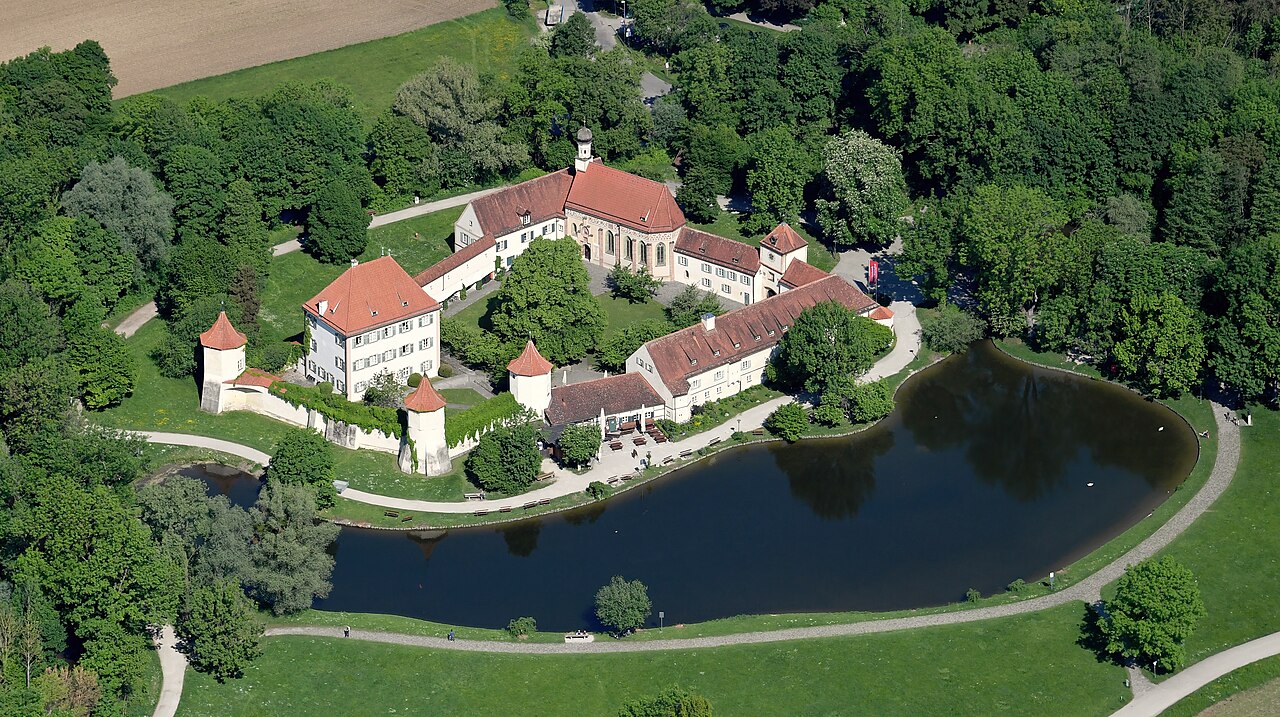
The Amalienburg is a distinguished hunting lodge situated within the grounds of Nymphenburg Palace in Munich, Germany. Constructed between 1734 and 1739, it was designed by the renowned architect François de Cuvilliés in the Rococo style for the future Holy Roman Emperor Charles VII and his wife, Maria Amalia of Austria. This pavilion exemplifies the elegance and ornamental richness characteristic of the post-Renaissance period, embodying the playful yet refined aesthetics of the early 18th century.
Architectural design and layout
The Amalienburg's architectural plan centers around the round Hall of Mirrors on the ground floor, a striking space that dominates the interior. The hall's mirrored walls reflect the surrounding natural landscape, creating an ethereal and immersive atmosphere. The hall was decorated by the artists Johann Baptist Zimmermann and Joachim Dietrich, whose work features prominently in the Bavarian national colors of silver and blue, enhancing the room's luminous quality.
Key interior rooms
To the south of the Hall of Mirrors lies the electoral Rest room and the Blue Cabinet, which served as the bedroom of the Electress. This area also provides access to the privy chamber and includes a kennel room for the hunting dogs, reflecting the lodge's function as a hunting retreat.
North of the hall are the Pheasant room and the Hunting room. The Pheasant room adjoins the kitchen, which is notable for its decoration with precious Delft tiles. These blue and white tiles, crafted in a Chinese style with floral and bird motifs, were accidentally laid in a mixed order, adding a unique charm to the kitchen's aesthetic.
Innovative kitchen features
The kitchen houses a remarkable Castrol stove dating from 1735, a masonry construction with multiple fireholes covered by perforated iron plates. This stove, also known as a stew stove, was innovative for its time as it was the first design to completely enclose the fire, improving efficiency and safety.
Exterior decoration and hunting symbolism
The eastern facade features a central niche with a stucco sculpture by Johann Baptist Zimmermann, depicting the hunting goddess Diana. This artwork introduces the hunting theme that permeates the entire building, reinforcing its purpose as a royal hunting lodge.
The attic, designed in 1737 by Zimmermann, originally included decorative vases adorning the roofline. Although these vases disappeared at an unknown date, they were faithfully recreated in 1992 by the artist Hans Geiger. Four vases decorate the entrance facade, while twelve adorn the garden side, restoring the building's original ornamental silhouette.
Unique roof features
At the center of the roof is a platform with an ornate lattice, which functioned as a raised hide for pheasant hunting. This elevated position allowed hunters to observe and shoot game birds driven towards the lodge from the nearby former pheasant house, now converted into a menagerie.
Context within Nymphenburg Palace grounds
Unlike other park pavilions in the Nymphenburg grounds, the Amalienburg lacks private farm buildings because it was supplied by the main kitchen of Nymphenburg Palace. This logistical arrangement reflects the lodge's role as a specialized retreat rather than a self-sufficient estate.
Artistic and cultural significance
The Amalienburg stands as a prime example of Rococo architecture applied to a hunting lodge, combining functionality with exquisite decorative arts. Its intricate interiors, innovative kitchen technology, and symbolic artworks illustrate the lifestyle and tastes of the Bavarian court in the early 18th century. The building's preservation allows visitors to experience a unique blend of royal leisure, hunting tradition, and artistic achievement.
Frequently asked questions (FAQ)
- What is Amalienburg known for?
- Amalienburg is renowned for its exquisite Rococo architecture and stunning interiors, making it a prime example of 18th-century German architecture. It was built as a hunting lodge for Elector Max Emanuel and is famous for its elaborate decoration, including the magnificent Hall of Mirrors.
- When was Amalienburg built?
- Amalienburg was constructed between 1734 and 1739, designed by the architect François de Cuvilliés. This period marked a significant era of artistic and architectural innovation in Bavaria.
- What are the opening hours for Amalienburg?
- Amalienburg is typically open from 9 AM to 6 PM during the summer months and from 10 AM to 4 PM in the winter. It's advisable to check the official website for any seasonal variations or holiday closures before planning your visit.
- Can I take photographs inside Amalienburg?
- Photography is generally permitted in the gardens of Amalienburg; however, taking pictures inside the building may be restricted to preserve the artwork and decor. Always look for signage and respect the guidelines provided during your visit.
- Is Amalienburg accessible for visitors with disabilities?
- Amalienburg strives to be accessible to all visitors, with ramps and designated pathways available. However, some areas may have limited access due to their historical nature, so it’s best to contact the site in advance for specific accessibility information.
- What are the ticket prices for Amalienburg?
- Ticket prices for Amalienburg vary; generally, adult tickets cost around €5, while reduced tickets are available for students and seniors. Children under a certain age may enter for free, and family tickets can offer additional savings.
- When is the best time to visit Amalienburg?
- The best time to visit Amalienburg is during the spring and summer months when the gardens are in full bloom and the weather is pleasant. Weekdays tend to be less crowded than weekends, allowing for a more enjoyable experience.
- What nearby attractions can I visit while in Munich?
- While visiting Amalienburg, you can explore nearby attractions such as Nymphenburg Palace, the Botanical Garden, and the Munich Zoo. Each site offers unique experiences and complements the historical significance of Amalienburg.
Loading map...
Visitor reviews
No reviews yet. Been here? Write the first review and help other travelers!
Write the first reviewVisited this castle? Share your experience
Your review helps other travelers and adds first-hand knowledge to our encyclopedia.