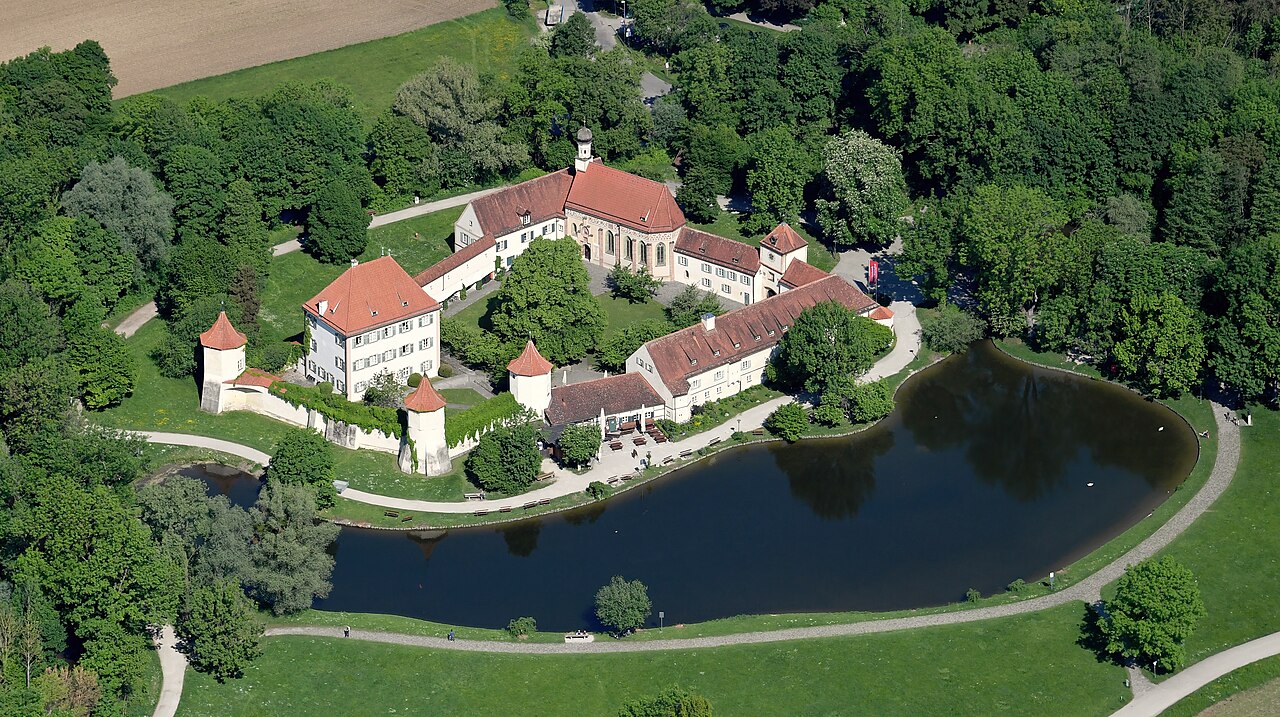
Menzing is a historic area within the modern city of Munich, Germany, with a history stretching back over 4,000 years. The site where Blutenburg Castle stands today has been a focal point of settlement and defense since the Early Bronze Age. Archaeological finds, including an ancient tomb discovered in 1910, confirm the long-standing human presence in this region. The castle itself, constructed in the 13th century atop the Plüdenberg hill, strategically exploits a sharp bend in the Würm River that encircles the hill, forming a natural moat that enhanced its defensive capabilities.
Early settlement and strategic location
The name "Menzing" derives from the personal name "Manzo," indicating its origins as a family or clan settlement. By the Late Bronze Age, the area known as "Siedlung Blutenburg" was established, taking advantage of the natural defenses provided by the river's curve. During the Roman period, a fort named "Villa Uuirma" was constructed on this same strategic site, underscoring its continued military and administrative importance.
The medieval castle and its evolution
The 13th-century castle on Plüdenberg was built as a hill castle, blending defensive features with residential functions. It was constructed to dominate the surrounding landscape and control the vital river corridor. By the early 15th century, the castle had suffered damage from conflict, including partial destruction and fire. Between 1431 and 1440, significant restoration was undertaken under the direction of Duke Albrecht III of Bavaria. During this period, the castle became a residence for the duke and his wife Agnes Bernauer until her tragic death in 1435.
Architectural features and fortifications
The castle's layout reflects typical medieval fortification principles, including thick defensive walls, towers for surveillance and defense, and a moat created naturally by the river. The positioning on the hill provided a commanding view of the surrounding forests and the river valley, essential for early warning and defense. The castle grounds also included residential quarters, halls, and service buildings necessary for a noble household.
Blutenburg castle and early health practices
Blutenburg Castle is notable not only for its military and residential functions but also for its association with pioneering health practices. Kaspar Bernauer, Agnes Bernauer's father, was a skilled surgeon and herbalist who established one of Europe's earliest known health complexes on the castle grounds. This complex combined the therapeutic use of thermal springs with herbal medicine, laying an early foundation for balneology and phytotherapy. These treatments were designed to serve the Wittelsbach ruling family, highlighting the castle's role in the advancement of medical care during the Late Medieval period.
Cultural and historical significance
The landscape around Menzing was historically rich in forests and wildlife, making it a favored hunting ground for Bavarian nobility. A carefully maintained visual corridor once linked Blutenburg Castle with the distant Nymphenburg Palace, creating a long sightline through the forested landscape. This axis served both aesthetic and strategic purposes, although natural tree growth has since obscured this feature.
Division of the settlement and legacy
By the early 14th century, the original settlement of Menzing had split into two parts: Obermenzing and Untermenzing. The historical importance of Blutenburg Castle is commemorated in Obermenzing's coat of arms, which features the castle's image. In 2017, Menzing celebrated its 1,200th anniversary with various events, including a musical theatrical production dedicated to the story of Agnes Bernauer, performed near the castle grounds.
Present-day remains and monuments
The remains of Blutenburg Castle are well preserved and remain a significant historical site in Munich. The castle's location on Plüdenberg hill, surrounded by the Würm River, still conveys its original defensive advantages. Visitors can observe parts of the medieval fortifications and layout, which reflect the castle's dual role as a fortress and noble residence.
Near the castle's main entrance stands the "Monument to Love," a modern sculpture created by Joseph Michael Neustifter in 2013. This monument commemorates the tragic love story of Agnes Bernauer and Duke Albrecht III, adding a poignant cultural layer to the site's history. The castle and its surroundings have inspired artists such as Jan Pollack and Wassily Kandinsky, emphasizing its continuing cultural significance.
Park and natural surroundings
The castle is surrounded by the park known as "Am Durchblick," which historically connected Blutenburg Castle with Nymphenburg Palace via a direct visual axis. Although this corridor is no longer visible due to tree growth, the park remains a peaceful green space reflecting the area's noble past and natural beauty.
Architectural style and preservation
Blutenburg Castle exemplifies medieval hill castle architecture, characterized by its strategic hilltop location, thick defensive walls, and integration with natural landscape features like the river moat. The castle's restoration in the 15th century under Duke Albrecht III introduced elements typical of Late Medieval fortifications, blending military and residential architecture.
The site is currently well preserved, allowing visitors and historians to appreciate its historical layers from the Bronze Age through the medieval period to early modern times. The castle remains under the care of local authorities and is accessible to the public for educational and cultural purposes.
Frequently asked questions (FAQ)
- What are the opening hours of Menzing Castle?
- Menzing Castle is open to visitors from 10 AM to 6 PM daily during the summer months. In the winter, the hours may vary, so it's best to check the official website for the most current information before planning your visit.
- How do I get to Menzing Castle?
- You can reach Menzing Castle by car, with ample parking available nearby. Public transportation options include local buses that stop within walking distance of the castle, making it accessible for visitors without a vehicle.
- What is the historical significance of Menzing Castle?
- Menzing Castle dates back to the 12th century and has played a pivotal role in the region's history. It served as a fortress and residence for local nobility, reflecting the architectural and cultural heritage of its time.
- Can I take guided tours of Menzing Castle?
- Yes, guided tours are available and provide in-depth insights into the castle's history and architecture. These tours are led by knowledgeable guides who can answer your questions and enhance your understanding of the site's significance.
- Is Menzing Castle accessible for visitors with disabilities?
- Menzing Castle has made efforts to improve accessibility for all visitors. While some areas may present challenges due to historical structures, there are designated pathways and facilities to accommodate those with mobility issues.
- When is the best time to visit Menzing Castle?
- The best time to visit Menzing Castle is during the spring and early autumn when the weather is mild and the gardens are in full bloom. This is also when the castle hosts various events and activities that enrich the visitor experience.
- What are the ticket prices for Menzing Castle?
- Ticket prices for Menzing Castle vary depending on age and group size, with discounts available for children and seniors. It's advisable to check the official website for the latest pricing and any special offers before your visit.
- Are there any nearby attractions to visit while at Menzing Castle?
- Yes, there are several nearby attractions including beautiful parks, local museums, and charming villages that showcase the region's culture and history. Exploring these sites can enhance your experience and provide a fuller picture of the area's heritage.
Information
Website
Visit websiteSources & official resources
Verify the information above using these authoritative references.
Loading map...
Visitor reviews
No reviews yet. Been here? Write the first review and help other travelers!
Write the first reviewVisited this castle? Share your experience
Your review helps other travelers and adds first-hand knowledge to our encyclopedia.