Nyköping Castle
Nyköping Castle stands as a significant medieval fortress in Nyköping, Sweden, renowned for its rich history and architectural evolution spanning several centuries. Originating in the late 12th century, the castle began as a fortified tower, or kastal, serving as a strategic defensive stronghold. Over time, it expanded into a larger complex, reflecting the changing needs and styles of Swedish nobility and rulers.
The castle's earliest construction phase is attributed to the era of Birger Jarl, a pivotal figure in Swedish medieval history, who likely expanded the initial fortification into a more substantial castle. This transformation marked the castle’s rise as a key power center in the region. The castle is most famously associated with the Nyköping Banquet of 1317, a grim event where the imprisoned Dukes Erik and Valdemar were held and subsequently died, sparking political turmoil and violent reprisals that shaped Sweden’s medieval landscape.
Early construction and medieval expansion
The origins of Nyköping Castle trace back to the late 12th century with the construction of a fortified tower designed for defense and control over the surrounding area. This initial structure was integrated into a larger, roughly rectangular castle complex by the late 13th century, completed in two main phases by the 1280s. The castle’s layout included two forecourts, enhancing its defensive capabilities and symbolizing its growing importance.
Throughout the late medieval period, the castle underwent several ownership changes and renovations. Notably, during the reign of Albert of Sweden, the castle was held by the German knight Raven von Barnekow, who made significant improvements to the structure. Later, the powerful noble Bo Jonsson Grip took control, further influencing the castle’s development. These phases of construction and enhancement reflect the castle’s strategic and political significance in the region.
The infamous nyköping banquet and its aftermath
The castle’s dark chapter is marked by the Nyköping Banquet in December 1317, where Dukes Erik and Valdemar were captured and imprisoned by their brother, King Birger Magnusson. Their deaths in captivity led to a violent backlash from their supporters, who seized the castle and caused widespread destruction. This event resulted in the castle being abandoned for several decades, highlighting its role as a focal point of medieval power struggles.
Renaissance transformation and later history
In the late 16th century, the castle underwent a significant transformation under Duke Charles, later King Charles IX of Sweden, who rebuilt it into a Renaissance palace. This renovation reflected the changing architectural tastes and the castle’s transition from a purely military fortress to a more residential and representational role. Unfortunately, the palace and much of the city were destroyed by fire in 1665, after which the castle was not rebuilt. Many of its bricks were repurposed for the construction of the Stockholm Palace.
Despite the destruction, parts of the castle remained usable and served as the county residence until the 1760s. The post-medieval period saw further damage during the Russian raids of 1719, but also the construction of the Old Residence (Gamla residenset) within the castle grounds, which symbolized the site's continued administrative importance.
Defensive features and architectural highlights
A key surviving element of the castle is the round cannon tower, or rondellen, added during King Gustav Vasa’s reign in the 16th century. This tower was specifically designed to mount artillery, marking an adaptation to evolving military technology. Its circular brick construction remains a prominent feature of the castle ruins.
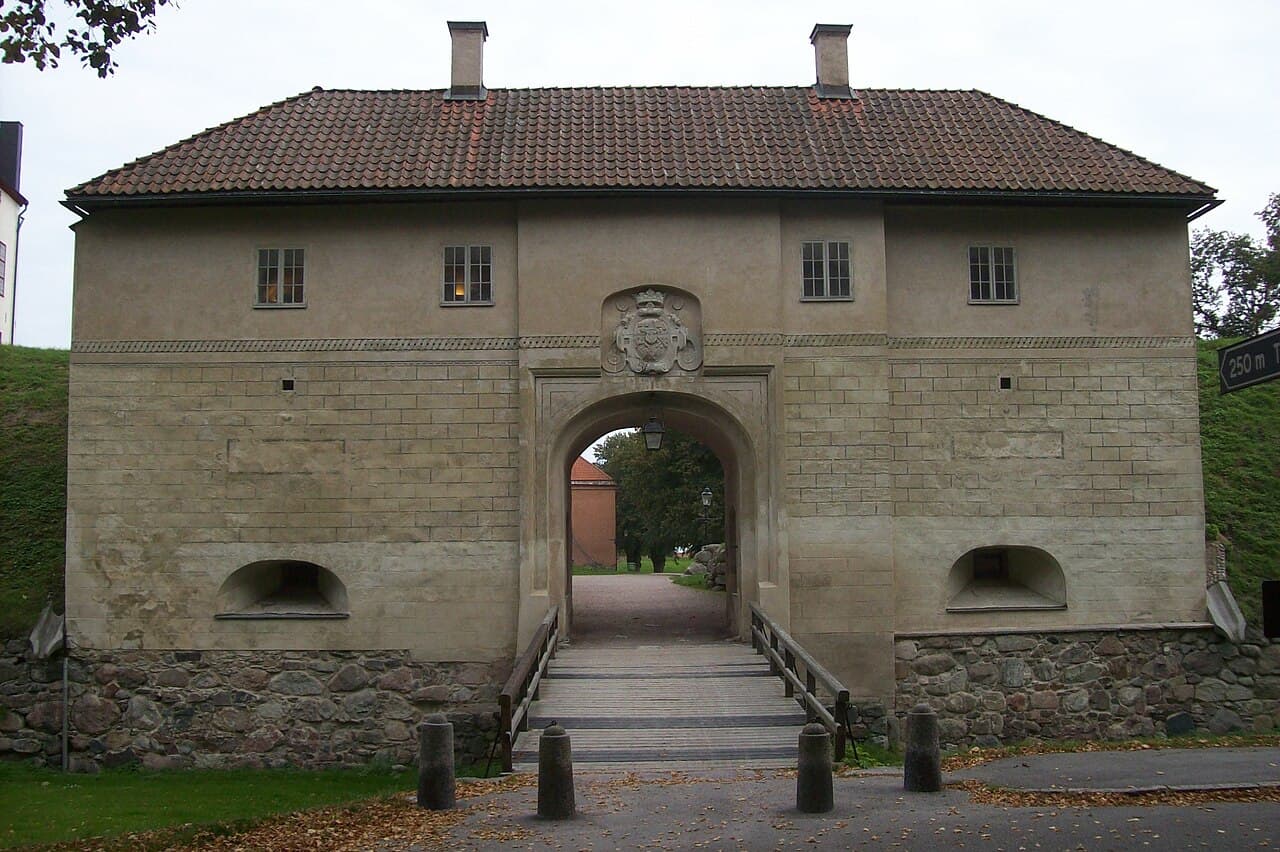
The castle’s gatehouse (porthus) offers insights into the layered architectural history, serving as a controlled entrance and a vantage point. The castle’s layout, with its forecourts and defensive walls, illustrates the strategic planning typical of late medieval fortifications.
Modern restoration and cultural significance
In the 20th century, restoration efforts focused on preserving surviving structures such as the King’s Tower (Kungstornet) and the Old Residence, which now house permanent exhibitions of the Sörmland Museum. These restorations have allowed visitors to engage with the castle's rich history and architectural evolution.
Recent archaeological discoveries, including the 2020 uncovering of a previously unknown casemate—a fortified defensive chamber—have added to the understanding of the castle’s military architecture. This finding highlights the castle’s role in adapting to changing defense needs over centuries.
The castle is also documented through various artistic works from the 19th and early 20th centuries, including oil paintings, wood engravings, and watercolors. These artworks provide valuable visual records of the castle’s appearance before modern restorations.
Visitor experience and current use
Today, Nyköping Castle serves as a cultural and historical site open to the public. The banquet hall has been repurposed into a restaurant, and the Queen's Cellar (Drottningkällaren) offers a unique dining experience within the historic walls. The castle’s museum exhibitions provide educational insights into its layered past, making it a significant attraction for visitors interested in medieval and Renaissance history.
Frequently asked questions (FAQ)
- What is the historical significance of Nyköping Castle?
- Nyköping Castle, built in the late 13th century, played a crucial role in Sweden's medieval history. It served as a royal residence and a stronghold during various conflicts, reflecting the power struggles of the time.
- When was Nyköping Castle constructed?
- Nyköping Castle was originally constructed around 1280, making it one of Sweden's oldest castles. Over the centuries, it has undergone several renovations and expansions, showcasing various architectural styles.
- Can I visit Nyköping Castle year-round?
- Yes, Nyköping Castle is open to visitors year-round, although the opening hours may vary by season. It's recommended to check the official website for the most up-to-date information on hours and any seasonal events.
- What are the opening hours for Nyköping Castle?
- The castle typically opens at 10 AM and closes at 5 PM during the summer months, while winter hours may differ. It's advisable to confirm the current opening hours before your visit to ensure you have ample time to explore.
- Is Nyköping Castle accessible for visitors with disabilities?
- Yes, Nyköping Castle strives to be accessible for all visitors. There are facilities and services in place to assist those with mobility challenges, including ramps and guided tours tailored to their needs.
- When is the best time to visit Nyköping Castle?
- The best time to visit Nyköping Castle is during the summer months when the weather is warm, and many outdoor events take place. Spring and early autumn are also lovely times to experience the castle with fewer crowds and beautiful scenery.
- What are the ticket prices for entering Nyköping Castle?
- Ticket prices for Nyköping Castle are generally affordable, with discounts available for students, seniors, and children. Family tickets and guided tour options may also be available, offering a more comprehensive experience.
- Are there any nearby attractions to visit when I go to Nyköping Castle?
- Yes, nearby attractions include the charming town of Nyköping with its picturesque harbor, the Nyköping River, and several parks. The area also offers opportunities for hiking and exploring nature, making it a great day trip destination.
Photo gallery

Information
Website
Visit websiteSources & official resources
Verify the information above using these authoritative references.
Loading map...
Visitor reviews
No reviews yet. Been here? Write the first review and help other travelers!
Write the first reviewVisited this castle? Share your experience
Your review helps other travelers and adds first-hand knowledge to our encyclopedia.