Björksund Castle
Björksund Castle, located on the shores of Sibbofjärden northeast of Nyköping in Södermanland County, Sweden, is a distinguished example of a castle-like manor house with a rich history stretching back to the late Middle Ages. The estate originally belonged to the noble Grip family before passing through marriage to the influential Privy Councilor Göran Eriksson Gyllenstierna (1498-1575) of Fågelvik. The estate remained in the Gyllenstierna family for several centuries, reflecting the enduring legacy of Swedish aristocracy in the region.
Architectural design and construction
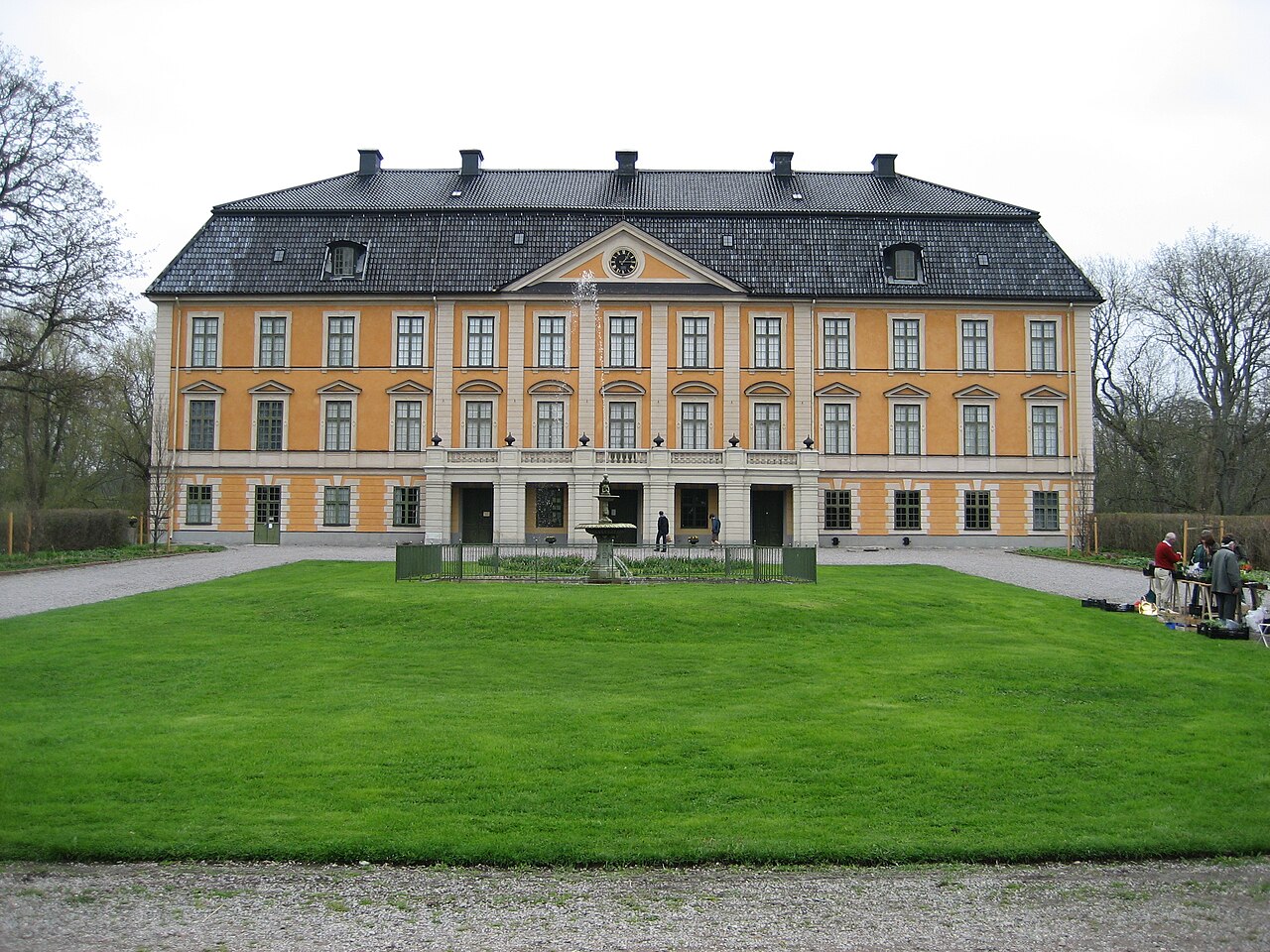
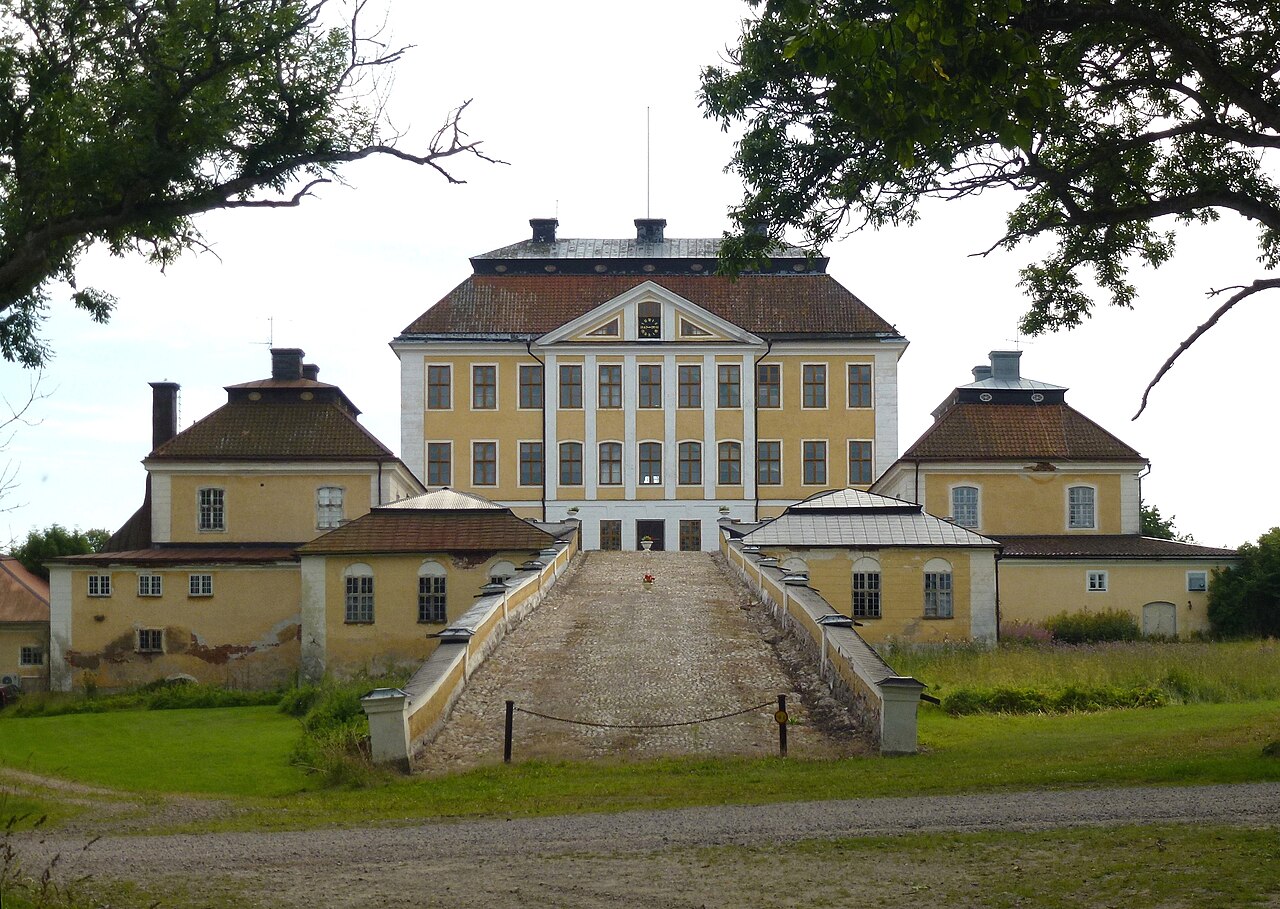
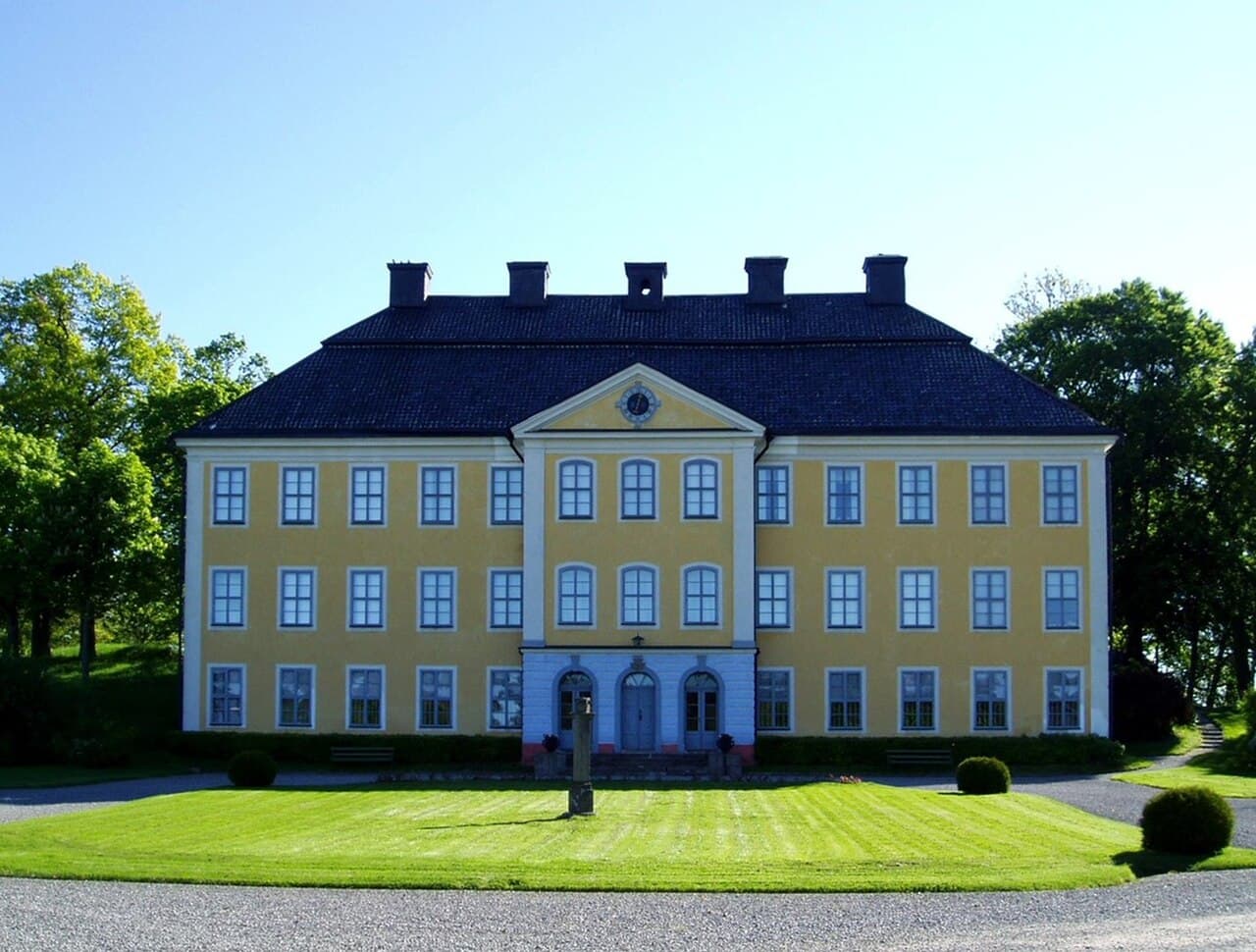
The current manor house was constructed in 1727, embodying the Baroque architectural style that was prevalent in Sweden during the post-Renaissance period. The design was crafted by the French-Swedish architect Joseph Gabriel Destain, whose work contributed significantly to the manor's elegant and stately appearance. The building features characteristic Baroque elements such as symmetry, grand facades, and decorative details that emphasize its status as a noble residence rather than a fortified castle.
In the 1740s, the manor underwent further enhancements under the direction of Baron Carl Hårleman (1700–1753), a prominent Swedish architect known for his role in introducing the Rococo style to Sweden. Hårleman's additions complemented Destain's original design, enriching the manor's aesthetic with refined interior decorations and architectural flourishes that aligned with contemporary tastes.
Historical significance and ownership
The estate's historical importance is closely tied to the Gyllenstierna family, who maintained ownership until 1776. It was then partially acquired by Count Carl Gabriel Mörner (1737-1828), heir to Privy Council member and Marshal of the Realm Göran Gyllenstierna (1724–1799). This transition reflects the interconnected nature of Swedish noble families and their estates during the 18th century.
Covering approximately 4,700 hectares (12,000 acres), the estate includes extensive lands and significant portions of the nearby archipelago, underscoring its economic and strategic value. Today, Björksund Förvaltnings AB manages the estate along with several other properties in the Nyköping area, preserving its heritage and maintaining its role in the region.
Estate layout and features
Björksund Castle is not a traditional medieval fortress but rather a manor house designed for residential and representational purposes. The estate's layout includes a central manor building surrounded by landscaped grounds and agricultural lands. Its location on a hill overlooking the water provides commanding views and a prestigious setting.
The manor's Baroque architecture emphasizes formality and grandeur, with carefully planned facades and interiors intended to reflect the status of its owners. Features likely include ornate windows, decorative cornices, and formal entrance halls, typical of Swedish manor houses of the period.
Cultural and heritage importance
As a preserved example of an 18th-century Swedish manor, Björksund Castle offers insights into the lifestyle and social structures of the Swedish nobility during the post-Renaissance era. Its architectural evolution, from the original Baroque design to later Rococo influences, illustrates broader European artistic trends as they were interpreted in Sweden.
The estate's long-standing association with prominent noble families such as the Grip and Gyllenstierna clans adds to its cultural significance, making it a valuable heritage site within Södermanland County. The management of the estate today ensures that its historical and architectural legacy continues to be preserved for future generations.
Visiting björksund castle
While primarily a private estate, Björksund Castle's impressive architecture and historical background attract interest from visitors and scholars alike. The surrounding landscape, including parts of the archipelago, offers scenic views and opportunities for exploration.
Visitors interested in Swedish manor houses and aristocratic history will find Björksund Castle a noteworthy example, although access to the interior may be limited due to its private ownership and management by Björksund Förvaltnings AB.
Frequently asked questions (FAQ)
- What is the historical significance of Björksund Castle?
- Björksund Castle has a rich history dating back to the late Middle Ages, originally owned by the Grip family and later by the Gyllenstierna family, important figures in Swedish nobility.
- When was Björksund Castle built and who designed it?
- The manor house was built in 1727 in the Baroque style, designed by French-Swedish architect Joseph Gabriel Destain, with later additions by Baron Carl Hårleman in the 1740s.
- Can visitors tour Björksund Castle?
- Björksund Castle is primarily a private estate managed by Björksund Förvaltnings AB, so public access to the interior is limited, but the grounds and surrounding landscapes can be appreciated from outside.
- What architectural styles are represented at Björksund Castle?
- The castle showcases Baroque architecture from its original construction and Rococo influences from later 18th-century additions by Carl Hårleman.
- Where is Björksund Castle located?
- Björksund Castle is located northeast of Nyköping on Sibbofjärden in Södermanland County, Sweden, overlooking the archipelago.
Photo gallery

Information
Current owner
Björksund Förvaltnings AB
Loading map...
Visitor reviews
No reviews yet. Been here? Write the first review and help other travelers!
Write the first reviewVisited this castle? Share your experience
Your review helps other travelers and adds first-hand knowledge to our encyclopedia.