Nünegg Castle
Nünegg Castle is a significant example of a High Medieval hill castle located in Lieli, Switzerland. Constructed in the 13th century by the influential counts of Kyburg, the castle served both defensive and residential purposes during a turbulent period in Swiss history. The castle's remains offer valuable insight into medieval fortification architecture and noble life in the region.
Historical background and builders
The counts of Kyburg were a prominent noble family in the High Middle Ages, holding extensive territories in what is now northeastern Switzerland. They constructed Nünegg Castle as part of their network of fortifications to assert control and protect their lands. The castle's strategic location in Lieli allowed oversight of important routes and local settlements, enhancing the counts' regional influence.
During the 13th century, the political landscape of the Swiss plateau was marked by frequent conflicts between noble families and emerging city-states, necessitating strong defensive structures like Nünegg Castle. The castle likely functioned as both a military stronghold and a noble residence, reflecting the dual nature of medieval castles.
Architectural features and layout
The keep and defensive structures
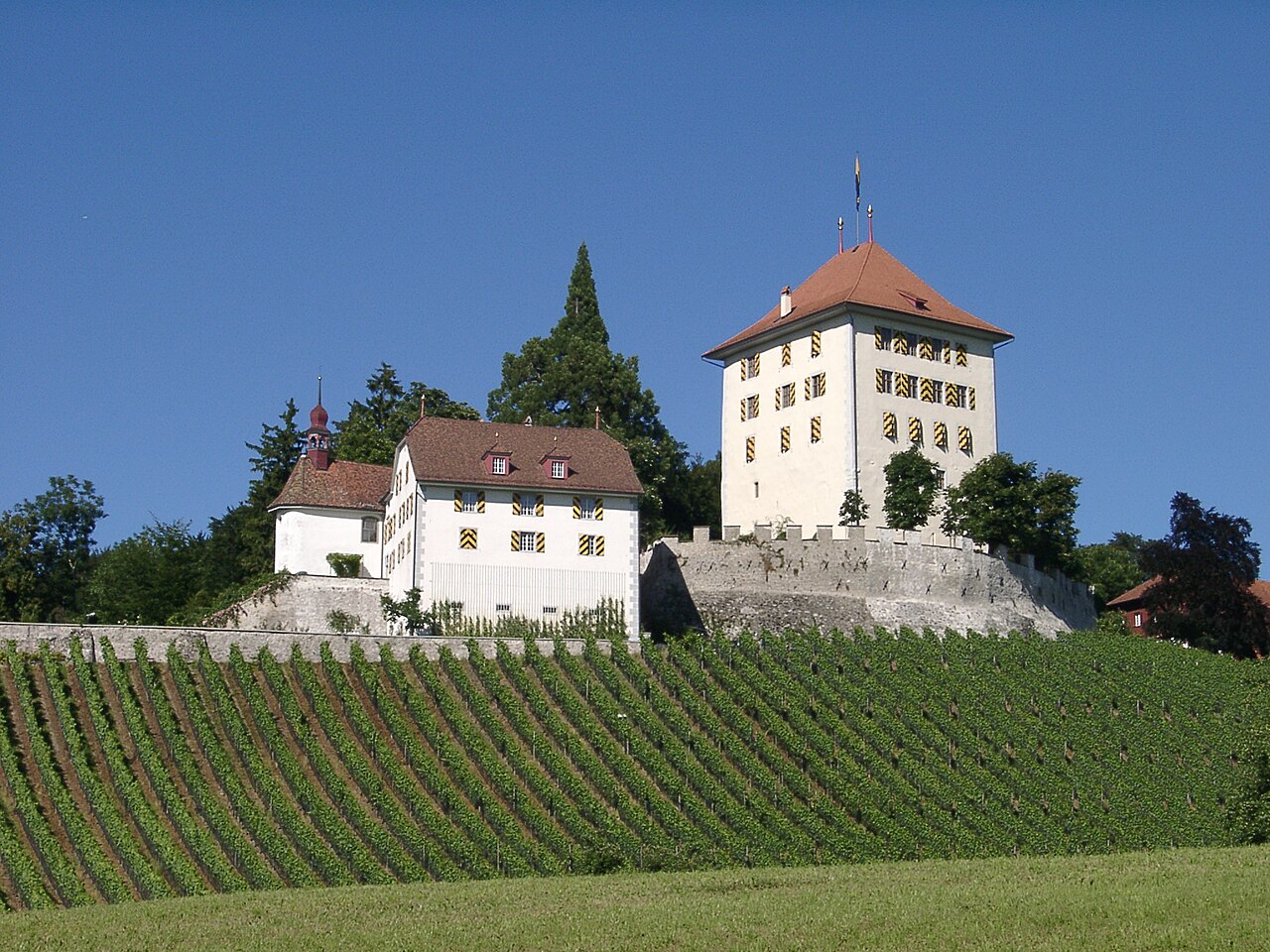
The most prominent surviving element of Nünegg Castle is its large keep, a tall fortified tower that served as the last line of defense and the lord's residence. This keep would have been constructed with thick stone walls to withstand sieges and attacks. Its elevated position allowed defenders to monitor the surrounding landscape and approach routes.
Palas and ancillary buildings
Adjacent to the keep are the remains of the palas, the main residential building where the noble family conducted daily life and official business. This structure typically included a great hall, private chambers, and service rooms. Additional ancillary buildings supported the castle's functions, including storage, stables, and workshops, arranged around a central courtyard.
Defensive elements
While much of the castle's curtain walls and outer defenses have not survived intact, the original design would have included fortified walls, battlements, and possibly a moat or ditches to deter attackers. The castle's elevated site itself provided natural defense advantages.
Current condition and preservation
Today, Nünegg Castle stands as partially preserved ruins. The large keep remains a dominant feature, offering visitors a tangible connection to the medieval past. The palas and ancillary buildings survive in fragmentary form, allowing archaeological study and interpretation of the castle's original layout.
The site is accessible to visitors interested in medieval architecture and Swiss history. Preservation efforts focus on stabilizing the ruins and providing informative displays to enhance understanding of the castle's historical context.
Significance and cultural heritage
Nünegg Castle is an important cultural landmark within the canton of Aargau, representing the medieval heritage of the region. It illustrates the architectural and social aspects of noble life during the High Middle Ages in Switzerland. The castle contributes to the broader understanding of feudal power structures and defensive strategies in medieval Europe.
As a historical monument, it attracts scholars, history enthusiasts, and tourists, enriching the cultural landscape of Lieli and surrounding areas. The castle's remains serve as a reminder of the region's complex history and the role of the counts of Kyburg in shaping local development.
Frequently asked questions (FAQ)
- When was Nünegg Castle built and by whom?
- Nünegg Castle was built in the 13th century by the counts of Kyburg, a prominent noble family in medieval Switzerland.
- What remains of Nünegg Castle can visitors see today?
- Visitors can see the large keep, remains of the palas, and ancillary buildings, which are partially preserved ruins.
- What type of castle is Nünegg Castle?
- Nünegg Castle is classified as a hill castle, built on elevated terrain for strategic defense.
- Is Nünegg Castle open to the public?
- The castle ruins are accessible to visitors, though specific opening hours and ticket information may vary and should be checked locally.
- Why was Nünegg Castle important historically?
- It was a strategic fortification for the counts of Kyburg, controlling important routes and asserting noble authority in the region during the High Middle Ages.
Information
Loading map...
Visitor reviews
No reviews yet. Been here? Write the first review and help other travelers!
Write the first reviewVisited this castle? Share your experience
Your review helps other travelers and adds first-hand knowledge to our encyclopedia.