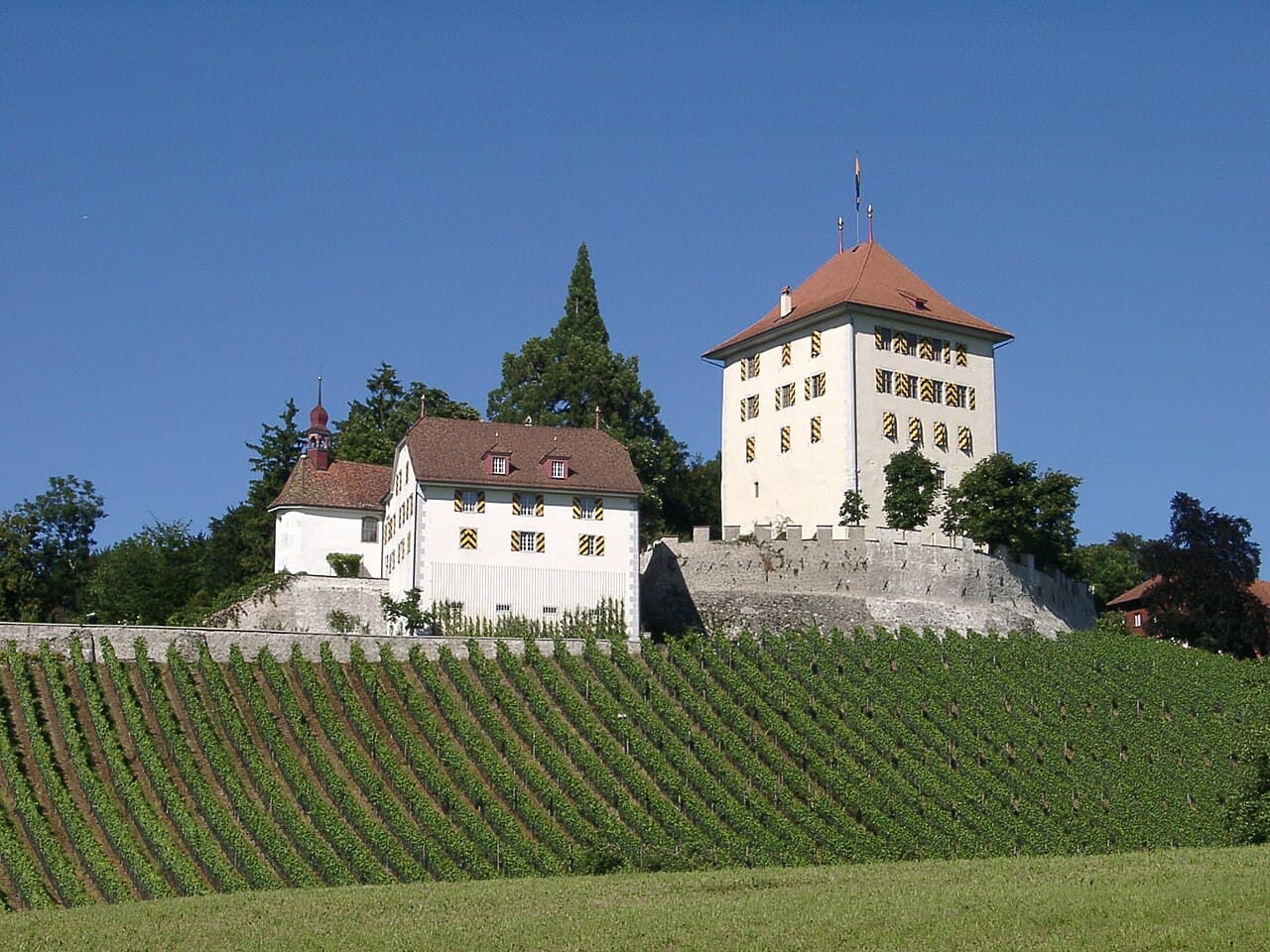
Heidegg Castle
Heidegg Castle stands as a prominent hill castle in the municipality of Hitzkirch, nestled within the Canton of Lucerne, Switzerland. Its origins trace back to the High Medieval period, with construction beginning in the 12th century and substantial development through the 13th century. The castle's earliest documented mention appears in 1185, referencing the noble Lords of Heidegg, who established the site as their feudal residence for several centuries.
Medieval origins and architectural evolution
The core of Heidegg Castle comprises the castle tower, which houses the oldest surviving living quarters in the Canton of Lucerne. Originally, the tower's foundations likely served as the castle's palas, the main residential building of the medieval fortress. By 1237, this structure had been fortified into a defensive tower by the Lords of Heidegg, reflecting the military and residential duality typical of castles from the high medieval era.
Throughout the Late Middle Ages, the castle underwent significant remodeling to enhance comfort and domestic functionality, transitioning from a purely defensive stronghold to a more habitable noble residence. The castle complex also includes a chapel and several residential buildings, all set amidst lush forests and idyllic vineyards, which contribute to the site's scenic and historic ambiance.
Baroque influences and patrician ownership
Following the decline of the original Heidegg and Büsiger noble families, ownership passed to wealthy Lucerne patricians who had accrued wealth through trade and military service abroad. Notably, the Pfyffer family took stewardship of the castle and undertook extensive renovations. Their work introduced Baroque architectural elements while maintaining a historicist style that respected the castle's medieval character. These renovations reflect a blend of Baroque style with medieval inspiration, creating a unique architectural fusion.
In the 18th century, the city of Lucerne acquired Heidegg Castle, later transferring it to the canton. The castle experienced a revival of aristocratic lifestyle when the Pfyffer von Heidegg family returned in 1875, reestablishing the castle as a noble residence.
Modern preservation and cultural significance
After the last member of the Pfyffer von Heidegg family left the castle to the canton in 1950, Heidegg Castle was transformed into a museum. The castle now functions as the history and culture center of the Seetal valley, offering visitors a living museum experience that showcases the stories, customs, and aristocratic heritage of the region.
The castle grounds feature a large park with the renowned rose garden, chestnut-lined boulevards, romantic walking paths, and the scenic Tobelweg. These outdoor spaces invite visitors to explore and reflect on the castle's historical environment. The castle tower itself holds exhibitions and interactive attractions designed to engage visitors of all ages, making the history accessible and immersive.
Between 1995 and 1998, significant renovations were undertaken to preserve the castle and its park. Since then, the Foundation Pro Heidegg has managed the site, ensuring its maintenance and public accessibility. Heidegg Castle is recognized as a Swiss heritage site of national significance, underscoring its importance in Swiss cultural and architectural history.
Architectural features and layout
The castle complex is characterized by its fortified tower, which dominates the site and served both defensive and residential purposes. The chapel within the castle grounds reflects the religious practices of its medieval inhabitants. Surrounding the main buildings are residential wings and service structures, all enclosed within a protective perimeter that historically included defensive walls and possibly a moat, typical of hill castles.
The castle's location atop a hill provided strategic advantages, offering commanding views of the surrounding Seetal valley and controlling access routes. The integration of natural landscape elements such as forests and vineyards enhances the castle's picturesque setting.
The rose garden and park
The rose garden is a distinctive feature of Heidegg Castle's grounds, attracting visitors with its vibrant floral displays. The park's design incorporates chestnut-lined boulevards and several rest areas, inviting leisurely exploration. The Tobelweg, a scenic path through the nearby ravine, adds a naturalistic element to the visitor experience, blending cultural heritage with the natural environment.
Museum exhibitions and visitor experience
Inside the castle, exhibitions focus on the aristocratic families who inhabited Heidegg over the centuries, their customs, and the broader history of the Seetal valley. Interactive displays and hands-on activities cater to families and school groups, making the castle a dynamic educational venue. The preservation of the oldest living quarters in the canton offers unique insight into medieval domestic life.
Frequently asked questions (FAQ)
- How do I get to Heidegg Castle?
- Heidegg Castle is located in Hitzkirch, Switzerland, and can be easily reached by car or public transport. The nearest train station is Hitzkirch, from where you can take a short bus ride or enjoy a scenic walk to the castle.
- What is the historical significance of Heidegg Castle?
- Heidegg Castle dates back to the 13th century and has played an essential role in the region's history. It served as a noble residence and military stronghold, showcasing the architectural styles and defensive strategies of its time.
- When was Heidegg Castle built?
- Construction of Heidegg Castle began in 1230, making it one of the oldest castles in the area. Over the centuries, it has undergone various renovations, reflecting changes in architectural styles and historical events.
- Can I visit Heidegg Castle?
- Yes, Heidegg Castle is open to the public, and visitors are welcome to explore its historic grounds. Guided tours are available, providing insights into the castle's rich history and architectural features.
- Why is Heidegg Castle a popular tourist destination?
- Heidegg Castle is a popular destination due to its stunning architecture, rich history, and picturesque views of the surrounding landscape. Its well-preserved structure and beautiful gardens make it an ideal spot for photography and leisurely walks.
- Is it possible to access Heidegg Castle with a wheelchair?
- Heidegg Castle has made efforts to improve accessibility for all visitors. While some areas may be challenging due to the castle's historic design, there are accessible paths and facilities available to accommodate wheelchair users.
- What are the opening hours of Heidegg Castle?
- Heidegg Castle is typically open to visitors from April to October, with varying hours depending on the day of the week. It is advisable to check the official website for the most current opening hours before planning your visit.
- What are the ticket prices for visiting Heidegg Castle?
- Ticket prices for Heidegg Castle are generally affordable, with discounts available for children, students, and seniors. Special family rates may also be offered, making it a great option for visitors of all ages.
- What are some nearby attractions to visit while at Heidegg Castle?
- While visiting Heidegg Castle, you can explore other nearby attractions such as the charming town of Hitzkirch, the scenic Lake Baldegg, and the beautiful nature trails in the surrounding area. These sites provide a perfect complement to your castle experience.
Photo gallery

Information
Loading map...
Visitor reviews
No reviews yet. Been here? Write the first review and help other travelers!
Write the first reviewVisited this castle? Share your experience
Your review helps other travelers and adds first-hand knowledge to our encyclopedia.



