Nowy Jasiniec Castle Ruins — Poland castle

Nowy Jasiniec Castle Ruins

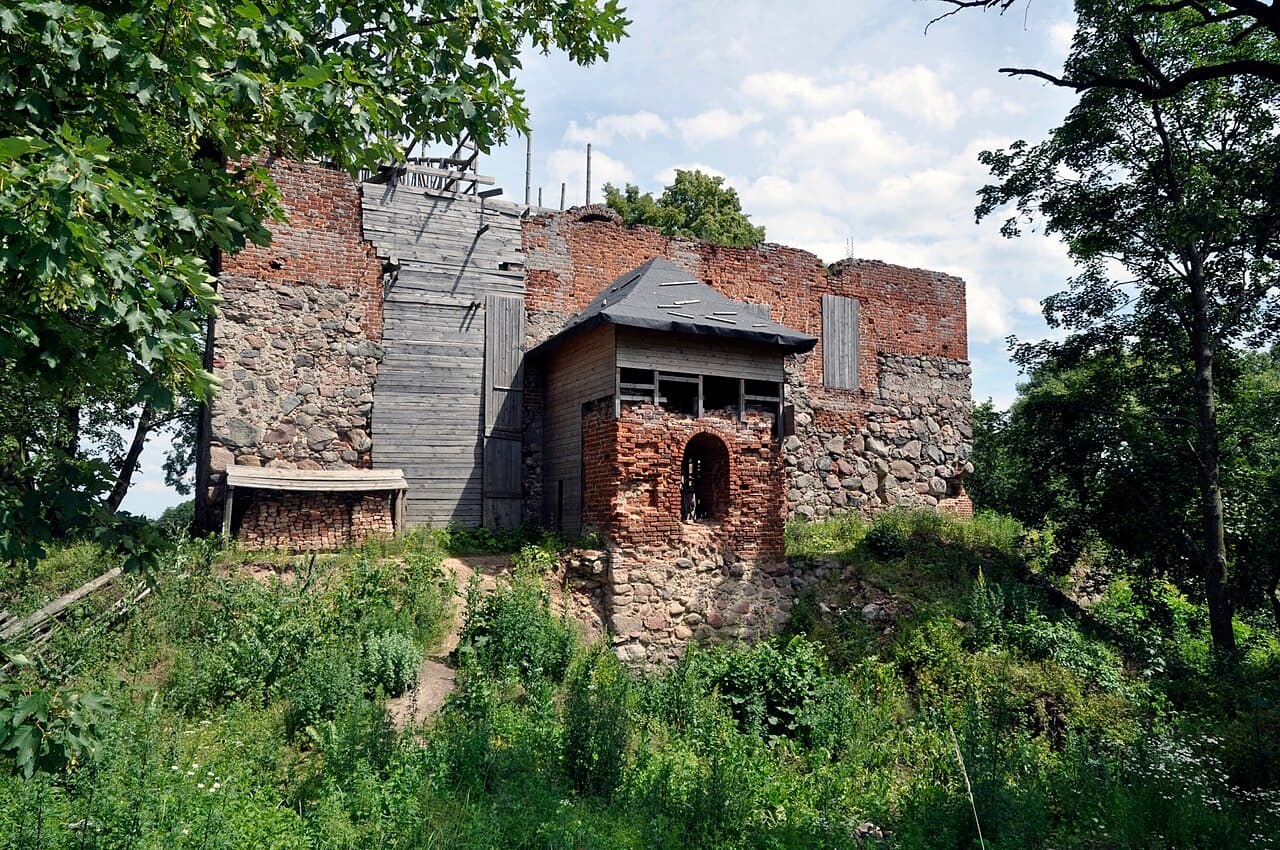
Nowy Jasiniec castle ruins in Poland
Nowy Jasiniec, Poland
Late Medieval (14th–15th c.)
Ruins

Nowy Jasiniec castle ruins stand as a testament to the turbulent history of the Polish-Teutonic borderlands in the Late Medieval period. Located in Nowy Jasiniec, Poland, the castle originally functioned as a strategic border stronghold guarding a vital trade route between Poland and Pomesania. Its position was crucial for controlling commerce and military movements in the region.

The origins and medieval significance

The castle was first constructed in the 14th century and quickly became a focal point in the conflicts between the Kingdom of Poland and the Teutonic Order. The Teutonic Knights, a powerful military and religious order, conquered and rebuilt the fortress during this century, enhancing its defensive capabilities. Its architecture reflected typical Late Medieval military design, with robust walls and fortifications suited for border defense.

Strategic location on the trade route

Nowy Jasiniec castle's location was chosen for its control over a key trade artery leading from Polish territories into Pomesania, an area then under the influence of the Teutonic Order. This made it a significant military and economic asset, often contested during the frequent wars between Poland and the Order.

Destruction and reconstruction phases

The castle endured multiple sieges and battles during the Polish-Teutonic wars. Notably, it was destroyed during these conflicts but was rebuilt in 1454, reflecting its continued importance. This reconstruction likely incorporated improvements in fortification techniques prevalent in the mid-15th century, although detailed records of the architectural changes are limited.

Role as a seat of local lords

Following the Second Peace of Toruń in 1466, which ended hostilities between Poland and the Teutonic Order, Nowy Jasiniec castle became the seat of local Polish lords. This period, extending until 1772, saw the castle transition from a purely military fortress to a noble residence, although it retained defensive features typical of castles of its era.

Transformation and decline

In the late 18th and early 19th centuries, the castle underwent a significant functional change when it was repurposed as an evangelical church between 1773 and 1846. This adaptation reflects the shifting religious and political landscape of the region during and after the partitions of Poland.

Decay and current condition

After its use as a church, the castle gradually fell into disrepair. Today, it exists as a site of archaeological ruins, with remnants of walls and foundations that reveal its medieval origins. The ruins offer valuable insight into the military architecture and regional history of the Late Medieval period in northern Poland.

Architectural features and layout

Though largely ruined, the castle's remains suggest a typical Late Medieval fortress layout with defensive walls and possibly a moat, designed to withstand sieges. The structure likely included a keep or central tower, curtain walls, and gatehouses, which were common in Teutonic castles of this era. Excavations have helped identify the castle's footprint and some construction techniques.

Archaeological significance

Nowy Jasiniec castle ruins are an important archaeological site for understanding the military and social history of the region. Ongoing studies contribute to knowledge about the Teutonic Order's fortifications and the evolution of border castles in medieval Poland.

Visiting Nowy Jasiniec castle ruins

The site is accessible to visitors interested in medieval history and archaeology. Although in ruins, the location offers a tangible connection to the complex history of Polish-Teutonic relations and the medieval borderlands. Visitors can explore the remains and enjoy the surrounding landscape that once formed the backdrop for this strategic fortress.

Frequently asked questions (FAQ)

How do I get to Nowy Jasiniec Castle Ruins?
Nowy Jasiniec Castle Ruins is located in the picturesque village of Nowy Jasiniec, Poland. You can reach the site by car or public transport, with several local bus services connecting nearby towns. Parking is available close to the ruins for visitors arriving by car.
What is the historical significance of Nowy Jasiniec Castle Ruins?
Nowy Jasiniec Castle Ruins date back to the late 14th century and were built to defend the region against invasions. The castle has significant historical value as it reflects the medieval architectural style and the strategic importance of the area during its time. Today, it stands as a testament to Poland's rich history and cultural heritage.
When was Nowy Jasiniec Castle built?
Construction of Nowy Jasiniec Castle began in the late 14th century, with various modifications made over the centuries. It was primarily used until the 17th century when it fell into disrepair. The ruins today provide a glimpse into the architectural styles of the medieval period.
Can I explore the castle ruins on my own?
Yes, visitors are welcome to explore Nowy Jasiniec Castle Ruins independently. There are no guided tours, allowing you to enjoy the site at your own pace while taking in the stunning views and unique architecture. Be sure to wear appropriate footwear, as the terrain can be uneven.
Why is Nowy Jasiniec Castle a popular destination for tourists?
Nowy Jasiniec Castle Ruins attract tourists for their historical significance and breathtaking scenery. The ruins offer a unique opportunity to explore medieval architecture while enjoying panoramic views of the surrounding landscape. Additionally, it is a great spot for photography and experiencing Poland's rich cultural heritage.
Is it possible to visit the castle year-round?
Yes, Nowy Jasiniec Castle Ruins are open to visitors year-round, although accessibility may vary based on weather conditions. The best time to visit is during the spring and summer months when the weather is mild and the surrounding nature is in full bloom. Always check local conditions before planning your visit.
What are the opening hours for Nowy Jasiniec Castle Ruins?
The castle ruins are accessible to the public at all times, allowing for flexible visiting hours. However, it is advisable to visit during daylight hours for safety and to fully appreciate the site's beauty. Always check local resources for any updates or changes to accessibility.
Are there any ticket prices to visit Nowy Jasiniec Castle Ruins?
There are no entry fees to visit Nowy Jasiniec Castle Ruins, making it an excellent destination for budget travelers. Donations are appreciated to help maintain the site, but they are not mandatory. Enjoy exploring this historical gem without any financial burden.
What nearby attractions can I visit while in Nowy Jasiniec?
While visiting Nowy Jasiniec Castle Ruins, you can explore the charming village of Nowy Jasiniec and its surrounding natural beauty. Nearby attractions include local parks and hiking trails that showcase the region's stunning landscapes. Additionally, consider visiting other historical sites in the area to enrich your experience.

Photo gallery

Nowy Jasiniec Castle Ruins
Click to view

Photo by Wolskaola•CC BY-SA 3.0 pl

1 photo • Click any image to view in full screen

Information

Archaeological Site / Ruins

Loading map...

Visitor reviews

No reviews yet. Been here? Write the first review and help other travelers!

Write the first review

Visited this castle? Share your experience

Your review helps other travelers and adds first-hand knowledge to our encyclopedia.

Write a review

(5/5)

0/2000 characters

Your review will be visible after admin approval

Nearby castles

21.7 km

Pień

Pień, Poland

Pień Castle stands as a significant example of a high medieval bastioned fortress located in the village of Pień, Poland. Its origins trace back to the early medieval period, with written records from 1222 confirming the existence of an earlier fortified settlement or grodzisko on the site. This early stronghold was strategically positioned on a conical hill overlooking Lake Reptówka, a body of water formed from an old branch of the Vistula River. The location provided natural defensive advantages, combining elevated terrain with water barriers. Early history and medieval origins The initial fortified settlement was likely destroyed before the mid-13th century. Subsequently, the site came under the control of Świętopełk II, Duke of Pomerania, who is believed to have rebuilt the fortifications. Following his death in 1248, the territory was taken over by the Teutonic Knights, a powerful military order that played a crucial role in the region's medieval history. At the beginning of the 15th century, the Teutonic Knights constructed a small stone castle on the site. This castle served as the seat of a prokuratoria (administrative district) within the Komturship of Bierzgłowo and later the Komturship of Toruń. However, historical sources do not conclusively determine whether this castle was built directly on the remains of the earlier fortification or at a nearby new location. Architectural features and layout Pień Castle was built atop the summit of a steep conical hill, which was naturally defensible. The castle's defensive system included a dry moat cutting off the hill's eastern side, the main approach route. This moat would have hindered attackers and provided an additional layer of protection. Based on limited archaeological evidence and historical descriptions, the castle was probably a small, single-winged structure surrounded by a curtain wall. The exact configuration of the castle's buildings and defensive works remains unclear due to the fragmentary nature of the surviving data. There is no confirmed information about the presence of a bailey or outer ward, which might have housed auxiliary buildings or served as an additional defensive zone. Strategic location The castle's placement on a hill overlooking Lake Reptówka was a deliberate choice to maximize control over the surrounding landscape and waterways. The lake, formed from an ancient branch of the Vistula River, added a natural defensive barrier on several sides, complementing the man-made fortifications. Historical significance and later developments Pień Castle played a role in the political and military struggles of the region, especially during the conflicts between the Kingdom of Poland and the Teutonic Order. The castle's administrative function as a prokuratoria seat highlights its importance in the local governance and defense system of the Teutonic state. Following the Second Peace of Toruń in 1466, which ended the Thirteen Years' War, the entire Chełmno Land, including Pień, was incorporated into the Kingdom of Poland. After this political shift, the castle's fate becomes obscure. There are no detailed historical records explaining its subsequent use, decline, or destruction. Archaeological findings and current condition Despite its historical significance, Pień Castle has not been the subject of extensive archaeological excavations. Surface surveys have failed to reveal visible remains of walls or other structural elements, making it difficult to reconstruct the castle's full layout and architectural details. Today, the castle hill remains a prominent landmark, though the fortress itself survives only as a restored site rather than a fully preserved structure. The lack of above-ground ruins means that much of the castle's history and architecture must be inferred from historical documents and limited archaeological data. Preservation and heritage value Pień Castle's site holds cultural and historical importance as a testament to medieval military architecture and the turbulent history of the Chełmno Land. Efforts to preserve and study the site contribute to understanding the region's medieval past and the legacy of the Teutonic Order in Poland. Visiting Pień Castle The castle is situated in a picturesque setting near Lake Reptówka, offering visitors a glimpse into medieval fortification strategies and the natural landscape that shaped them. Although the physical remains are minimal, the site provides valuable context for enthusiasts of medieval history and architecture. Visitors interested in the history of the Teutonic Knights and medieval Poland will find Pień Castle a noteworthy destination, especially when combined with visits to other nearby historic sites in the Chełmno Land region.

High Medieval (11th–13th c.)
Details
22.4 km

Starogród

Starogród, Poland

Starogród Castle stands as a significant historical monument reflecting the military and administrative strategies of the Teutonic Order in medieval Poland. Established around 1232, this hill castle was among the earliest fortifications erected by the Order following their invitation by Prince Konrad of Masovia in 1226. Its primary purpose was to serve as a base for campaigns against the pagan Prussian tribes, marking an important phase in the Christianization and territorial expansion of the region.The initial structure was a modest wooden and earth fortification, typical of early Teutonic military architecture constrained by limited manpower and resources. This rudimentary fortress was strategically located on the right bank of the Vistula River, making it the second stronghold after Toruń in that area. Its placement on a high riverbank provided natural defensive advantages and facilitated control over river traffic and surrounding lands.Development from wooden fort to stone castleBy the mid-13th century, the original wooden fortification was replaced with a more durable stone castle. This transition marked the Order's growing consolidation of power and resources in the region. The castle was constructed on the edge of a high Vistula River escarpment, enhancing its defensive capabilities. Unlike the later standardized conventual castles built by the Teutonic Order, Starogród featured an irregular pentagonal plan enclosing a small inner courtyard. The irregular shape likely adapted to the topography and existing defensive needs.The castle was surrounded by a stone curtain wall and probably a bailey to the north, enclosed by its own defensive wall. Beyond this, a moat separated the main castle from an outer bailey. In later periods, a second, larger outer bailey was established, separated by an additional moat, reflecting the castle's evolving defensive complexity. Unfortunately, the castle suffered extensive destruction in subsequent centuries, leaving only traces such as the moat visible today, which complicates precise reconstruction of its original layout.Historical significance and military roleStarogród served as the seat of the Teutonic Order's provincial masters until 1253, after which it became the center of a komturia (commander's district) lasting until 1454. This highlights its importance as both a military stronghold and administrative hub during the Order's rule. The castle witnessed significant military action, notably during the Battle of Grunwald in 1410, when it was temporarily captured by the forces of King Władysław Jagiełło.During the Thirteen Years' War (1454–1466), Starogród changed hands multiple times. Initially reclaimed by the Polish crown in 1454, it was retaken by Teutonic mercenaries under Bernard Szumborski in 1457. Szumborski's refusal to pay his troops led to a temporary seizure of several castles and towns as collateral, including Starogród. Negotiations by the Grand Master Marcin Truchsess von Wetzhausen in 1478 eventually resulted in the return of these properties to the Order, but Polish pressure forced the Order to relinquish the Chełmno Land castles, including Starogród.Transition to Polish royal control and later historyIn 1479, the castle was incorporated into the Kingdom of Poland, becoming the seat of royal starosts. Under the reign of King Jan Olbracht in the late 15th century, Starogród underwent reconstruction to repair wartime damages. In 1505, King Aleksander Jagiellończyk granted the castle to the Bishops of Chełmno, who transformed it into a richly appointed summer residence. This period marked a shift from pure military use to a more residential and administrative function.The castle suffered significant damage during the Swedish invasions of the 17th century, known as the Deluge, but was partially rebuilt between 1682 and 1693. However, by the 18th century, the castle was in decline, as noted in a 1759 inspection describing cracked and deteriorating walls. Following the First Partition of Poland, Starogród fell under Prussian control and was sold into private hands in 1777. Extensive removal of building materials led to the castle's near-total dismantling by 1795.Archaeological research and present conditionToday, Starogród Castle exists only as ruins, with no visible above-ground structures apart from traces of its moats. Archaeological excavations have been limited and have not significantly clarified the castle's original layout or developmental phases. Despite this, the site remains an important cultural and historical landmark, reflecting the turbulent history of the Teutonic Order's presence in Poland and the region's medieval military architecture.Visitors to the site can appreciate the strategic location on the Vistula escarpment and imagine the castle's former prominence as a military and administrative center. The ruins symbolize the complex history of territorial conflict, religious crusades, and political change in northern Poland from the 13th to the 18th centuries.

High Medieval (11th–13th c.)
Details
24.9 km

Chełmno Castle

Chełmno, Poland

Chełmno Castle stands as a significant medieval monument located in Chełmno, Poland. Established in the early 13th century, this hill castle was originally built by the Teutonic Order after they took control of the region in 1230. The castle’s strategic position on the steep right bank of the Vistula River allowed it to serve as a critical defensive and administrative center during the High Medieval period. Its proximity to the town’s walls and moat integrated it closely with the urban fortifications, highlighting its importance in regional defense and governance.The earliest mentions of Chełmno date back to 1132, when it was a fortified settlement and the seat of a castellan. In 1222, it became the property of Bishop Christian, who was engaged in missionary work among the pagan Prussian tribes. Following the bishop’s departure in 1230, the Teutonic Knights seized Chełmno and immediately began constructing a stone castle. This castle comprised a convent house and two residential towers flanking it, situated at the town’s northwest corner, separated from the town by walls and a moat.The architectural composition of Chełmno CastleLayout and defensive structuresThe castle’s design reflected typical Teutonic military architecture of the period, emphasizing robust fortifications and functional residential spaces. The two prominent residential towers, including the notable "Baszta Mestwina" (Mestwin’s Tower), served both defensive and administrative purposes. According to local legend, the tower was used to imprison Mestwin, son of Duke Świętopełk. The castle’s location on a steep riverside escarpment provided natural defense, supplemented by the constructed moat and walls that linked it with the town’s fortifications.Religious and monastic buildingsIn 1265, Master Ludwik von Baldersheim invited the Cistercian nuns from Czyste in Silesia to Chełmno. They established a convent and constructed a single-nave brick church, a fine example of Gothic ecclesiastical architecture. After the dissolution of the Teutonic provincial master’s office, the Cistercian nuns adapted the castle for their monastic needs. In 1349, the order relocated to Königsberg, and the Benedictine nuns took over the monastery, maintaining it until the early 19th century.Historical significance and transformationsTeutonic Order eraFrom 1233, Chełmno Castle served as the seat of the Teutonic provincial masters, effectively making it the northern capital of the Order’s territories until the grand master moved to Malbork. The castle was a center of military and administrative command, overseeing the northern lands during a period of intense crusading activity against the pagan Prussians.Monastic adaptationsFollowing the decline of the Teutonic administrative presence, the castle’s function shifted to religious and charitable uses. The Cistercian and later Benedictine nuns adapted the fortress into a monastery, preserving much of the medieval structure while modifying interiors for monastic life. In the 19th century, the Sisters of Mercy of St. Vincent expanded the complex by building a hospital in 1878, further transforming the site into a center for social care.Preservation and current statusToday, Chełmno Castle is well-preserved and forms part of a monastery complex in the western corner of the Old Town. The original convent house has undergone 19th-century renovations, and the castle church built by the Cistercian nuns remains a prominent Gothic landmark. The "Baszta Mestwina" is one of the most interesting surviving elements of the medieval castle, attracting visitors intrigued by its history and legends.The site also features sections of the Gothic town walls and one of the original gates, the Merseburg Gate, now sealed. The city walls, extending over 2 kilometers, are among the best-preserved medieval fortifications in Poland, contributing to Chełmno’s reputation as a valuable urban heritage site and a popular tourist destination.Chełmno’s medieval urban landscapeThe castle’s integration with the town’s fortifications exemplifies the medieval urban planning characteristic of the Teutonic Order’s settlements. The preservation of the town’s medieval street layout alongside the defensive walls offers a rare glimpse into the spatial organization and defensive strategies of a High Medieval fortified town. Visitors can explore the harmonious blend of military, religious, and civic architecture that defines Chełmno’s historic core.Visitor experienceToday, the former castle grounds house a social care home operated by the Sisters of Mercy, continuing the site’s long tradition of service and care. While some areas are private, the surrounding town walls and notable architectural features remain accessible to tourists. Chełmno’s rich history, architectural heritage, and well-preserved medieval fabric make it a compelling destination for those interested in castle architecture, medieval history, and monastic culture.

High Medieval (11th–13th c.)
Details

