Nossa Senhora da Graça Fort
The Nossa Senhora da Graça Fort, also officially known as Conde de Lippe Fort and historically referred to as La Lippe, is a significant military bastioned fortress located near the town of Elvas in the Portalegre District of Portugal. The fort is situated on the strategic Monte da Graça (Hill of Grace), about one kilometre north of Elvas, commanding a dominant position over the surrounding landscape. This location was carefully chosen to provide extensive visibility and control over the border region with Spain, reflecting the fort's primary role in the defense system of the area.
Historical context and military significance
Constructed in the 18th century, the Nossa Senhora da Graça Fort was built during the post-Renaissance period, a time when military architecture was evolving to respond to advances in artillery and siege warfare. The fort was part of a broader effort to strengthen the defensive capabilities of the Portuguese border towns, particularly Elvas, which was a key military stronghold near the Spanish border. This fortification played a crucial role in the defense strategy during various conflicts, including the War of Spanish Succession and later military engagements between Portugal and Spain.
Architectural features and design
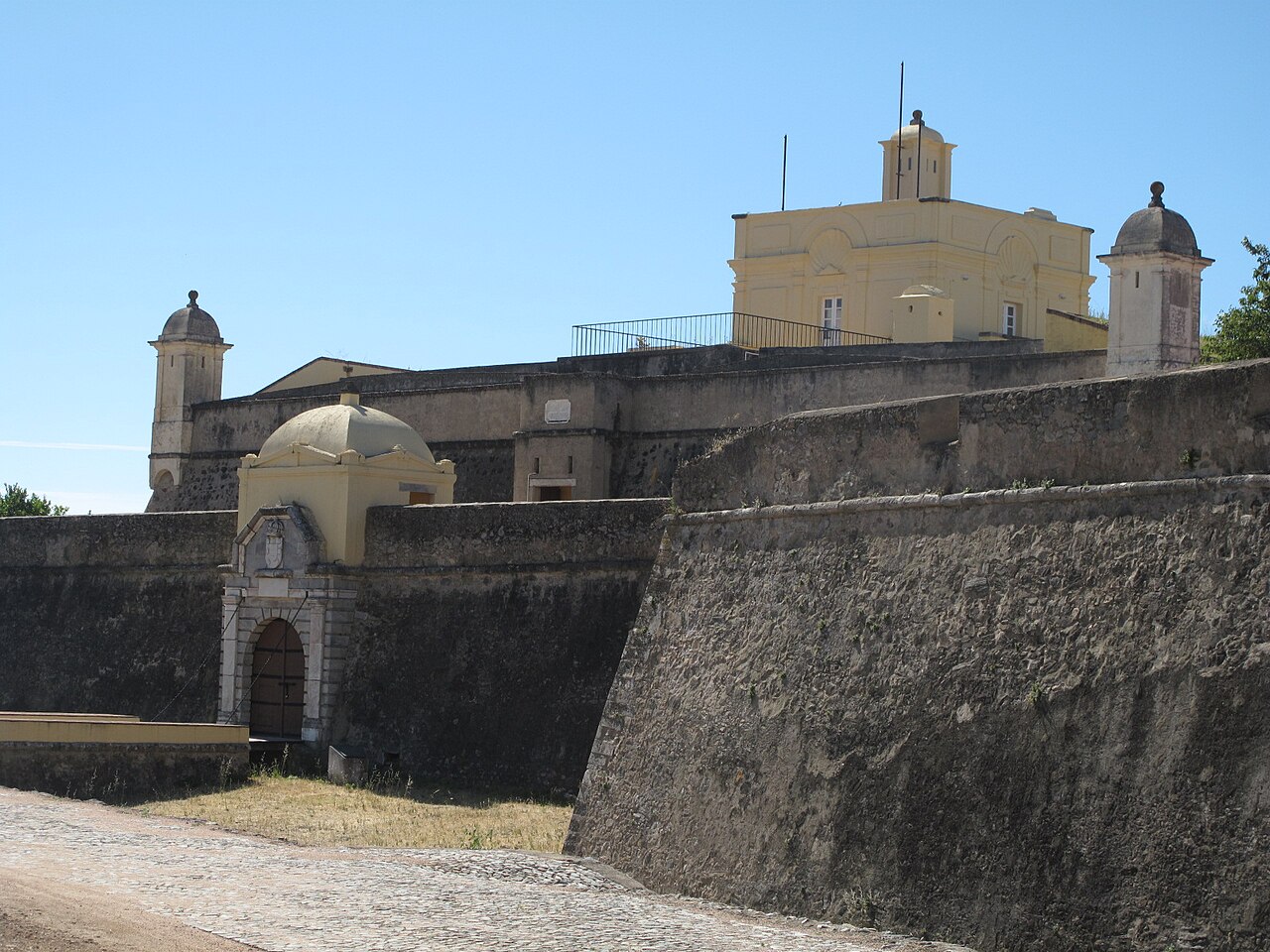
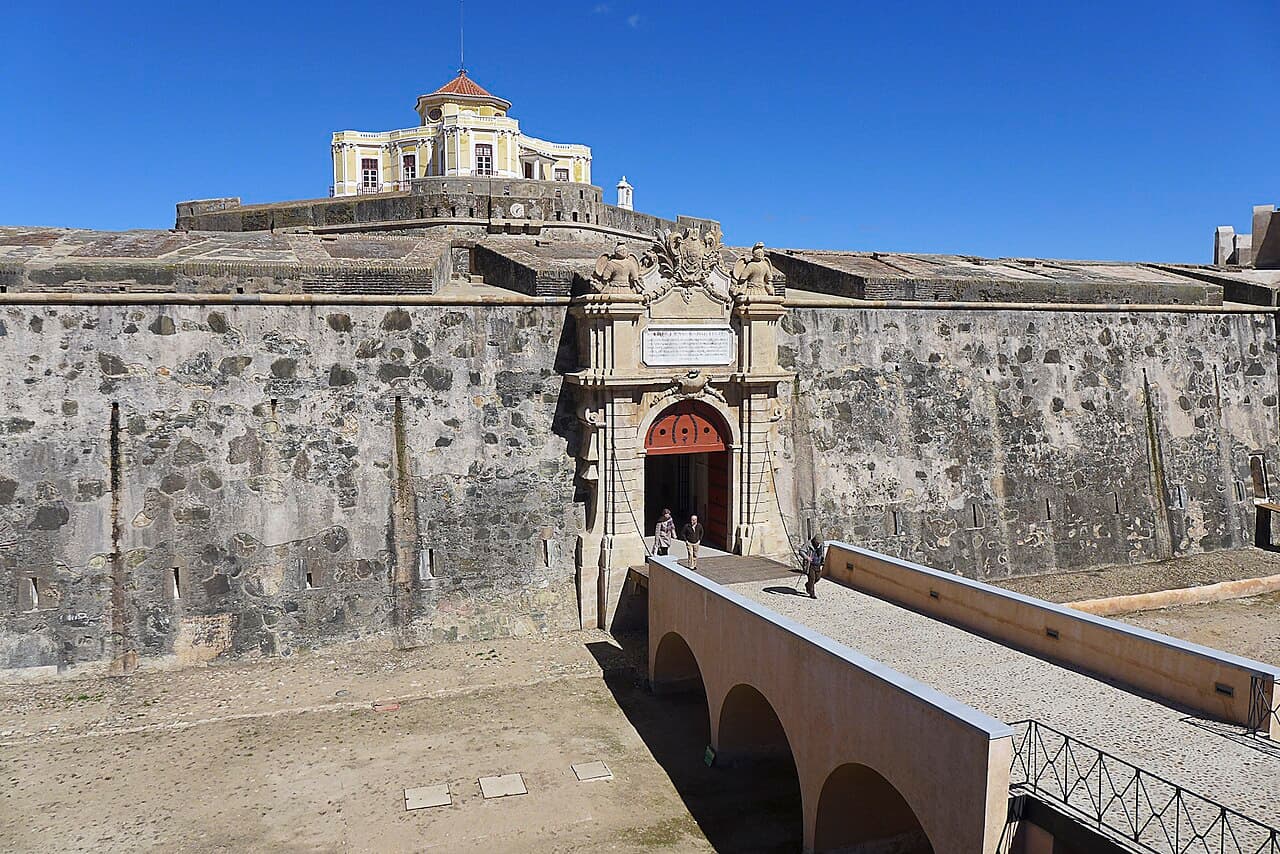
The fort is an exemplary model of a bastioned fortress, a style characterized by angular bastions projecting outward from the curtain walls, designed to eliminate blind spots and provide overlapping fields of fire. This design was influenced by the developments in military engineering during the 17th and 18th centuries, particularly the trace italienne style, which emphasized low, thick walls and bastions to resist cannon fire effectively.
Nossa Senhora da Graça Fort features a complex system of defensive structures including bastions, ravelins, moats, and curtain walls. The fort's layout is polygonal, maximizing defensive coverage and allowing defenders to repel attackers from multiple angles. The bastions were equipped with artillery placements designed to cover the approaches to the fort and support the defense of the nearby town of Elvas.
The fort also includes internal barracks, storage facilities, and command posts, all integrated within the fortified walls to sustain prolonged sieges. The robust construction materials and strategic placement of defensive elements highlight the advanced military engineering knowledge of the time.
Role in the garrison border town of Elvas
Elvas is renowned for its extensive system of fortifications, which includes the Nossa Senhora da Graça Fort as a key component. Together with other forts and walls, it forms part of the Garrison Border Town of Elvas and its Fortifications, which was inscribed as a UNESCO World Heritage Site in 2012. This designation recognizes the exceptional military architecture and the strategic importance of Elvas in the defense of Portugal's eastern border.
The fort contributed to the town's reputation as one of the best-preserved examples of a fortified border town in Europe, showcasing the evolution of military fortifications from the Renaissance through the post-Renaissance period. Its presence ensured the security of the region and played a deterrent role against invasions.
Modern use and cultural significance
In recent years, the Nossa Senhora da Graça Fort has been integrated into cultural and historical tourism initiatives. Since 2014, it has been part of a project supported by the Portuguese Ministry of National Defence and Turismo de Portugal, which promotes historical itineraries highlighting Portuguese heroes and military history.
This project aims to preserve the fort's heritage while making it accessible to visitors interested in Portugal's military past. The fort's well-preserved structures and commanding location offer an immersive experience into 18th-century military architecture and the historical conflicts that shaped the region.
Visitors can explore the fort's bastions, walls, and internal facilities, gaining insight into the defensive strategies employed during its operational period. The fort's inclusion in the UNESCO World Heritage listing further emphasizes its cultural and historical value, attracting scholars, history enthusiasts, and tourists alike.
Frequently asked questions (FAQ)
- What is the historical significance of Nossa Senhora da Graça Fort?
- Nossa Senhora da Graça Fort, built in the 17th century, is a vital part of the defensive network of Elvas, which is a UNESCO World Heritage site. The fort played a crucial role in the defense against invasions and reflects the military architecture of its time, showcasing the strategic importance of Elvas in Portugal's history.
- When was Nossa Senhora da Graça Fort constructed?
- The construction of Nossa Senhora da Graça Fort began in 1680 and was completed in 1685. It was designed to improve the defense of Elvas, particularly during the Portuguese Restoration War against Spain.
- Can I visit Nossa Senhora da Graça Fort?
- Yes, visitors are welcome to explore Nossa Senhora da Graça Fort. The fort offers a unique opportunity to learn about its history and enjoy panoramic views of the surrounding landscape.
- What are the opening hours for Nossa Senhora da Graça Fort?
- Nossa Senhora da Graça Fort is typically open to visitors from 9 AM to 6 PM, but it's advisable to check the official website for any seasonal changes in hours. Guided tours may be available, enhancing your visit experience.
- Is there an entrance fee to visit the fort?
- Yes, there is a modest entrance fee to access Nossa Senhora da Graça Fort, which helps maintain the site. Ticket prices may vary, so it's a good idea to check in advance for the most current information.
- What is the best time to visit Nossa Senhora da Graça Fort?
- The best time to visit Nossa Senhora da Graça Fort is during the spring and autumn months when the weather is mild and pleasant. Additionally, visiting during these seasons allows you to avoid the summer crowds and fully enjoy the fort's beautiful surroundings.
- Is the fort accessible for visitors with mobility challenges?
- Yes, Nossa Senhora da Graça Fort is designed to be accessible to visitors with mobility challenges, although some areas may have limited access due to the fort's historical architecture. It's recommended to contact the site in advance to inquire about specific accessibility options.
- What nearby attractions can I explore after visiting the fort?
- After exploring Nossa Senhora da Graça Fort, visitors can check out the historic town of Elvas, known for its well-preserved fortifications and charming streets. Other nearby attractions include the Amoreira Aqueduct and the beautiful Igreja de Nossa Senhora da Assunção.
Photo gallery

Information
Loading map...
Visitor reviews
No reviews yet. Been here? Write the first review and help other travelers!
Write the first reviewVisited this castle? Share your experience
Your review helps other travelers and adds first-hand knowledge to our encyclopedia.