Barbacena Castle
Barbacena Castle, locally known as Castelo de Barbacena, is a remarkable example of a Renaissance hill castle situated in the Alto Alentejo region of Portugal. Positioned strategically next to the N243-1 road, the castle occupies a commanding location that reflects its historical military significance. Founded in the 13th century during the reign of Afonso III of Portugal (1248-1279), the castle was part of the Christian reconquest efforts following the expulsion of the Moors from the region. Over the centuries, it evolved architecturally and militarily, adapting to the changing nature of warfare and noble residence needs.
The origins of Barbacena Castle likely trace back to a pre-Roman fortified settlement or castro, which underscores the site's long-standing strategic importance. The definitive establishment of the castle as a medieval fortress dates to the 13th century, when King Sancho II reclaimed the area from Moorish control. The land was granted to Estêvão Anes, chancellor to King Afonso III, who formalized the settlement with its first charter (foral) in 1273, laying the groundwork for its municipal and defensive development.
Medieval foundations and early history
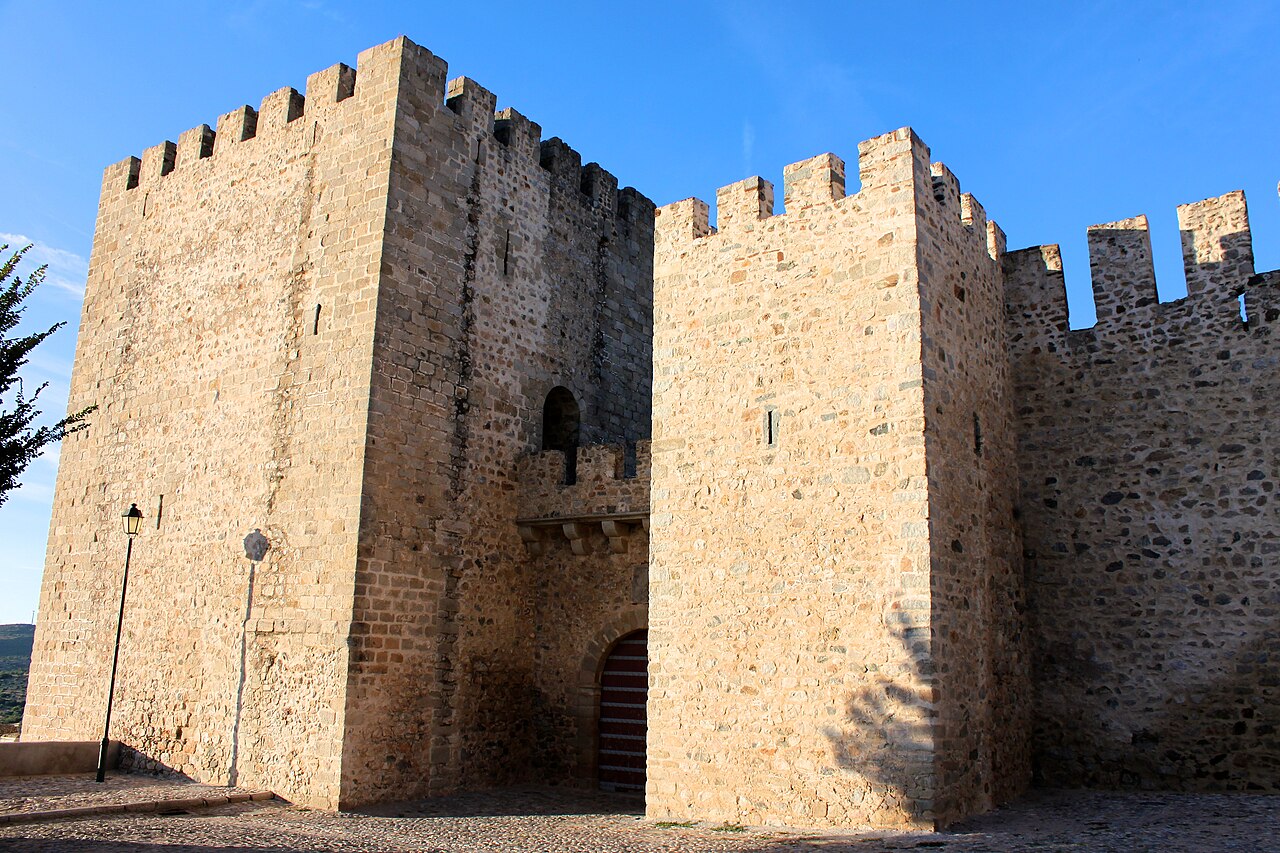
The initial structure of Barbacena Castle was a rectangular medieval fortress characterized by battlemented walls and a central keep, typical of 13th-century military architecture. The castle served as a local stronghold within the borderlands of Portugal, which were frequently contested. During the reign of King John I, the castle's lordship changed hands due to political intrigue, reflecting the turbulent nature of Portuguese nobility and royal favor.
By the early 16th century, the castle had fallen into a state of disrepair. In 1519, King Manuel I issued a new foral and ordered a reconstruction to restore its defensive capabilities. This work was undertaken starting in 1536 under the direction of D. Jorge Henriques, a huntsman and court official during the reign of John III. The project enhanced the medieval structure, though it was interrupted by the death of Henriques in 1572. Shortly thereafter, the castle was acquired by Diogo de Castro do Rio, a knight of the Military Order of Christ, who became the first Master of Barbacena.
Renaissance transformation and bastioned fortifications
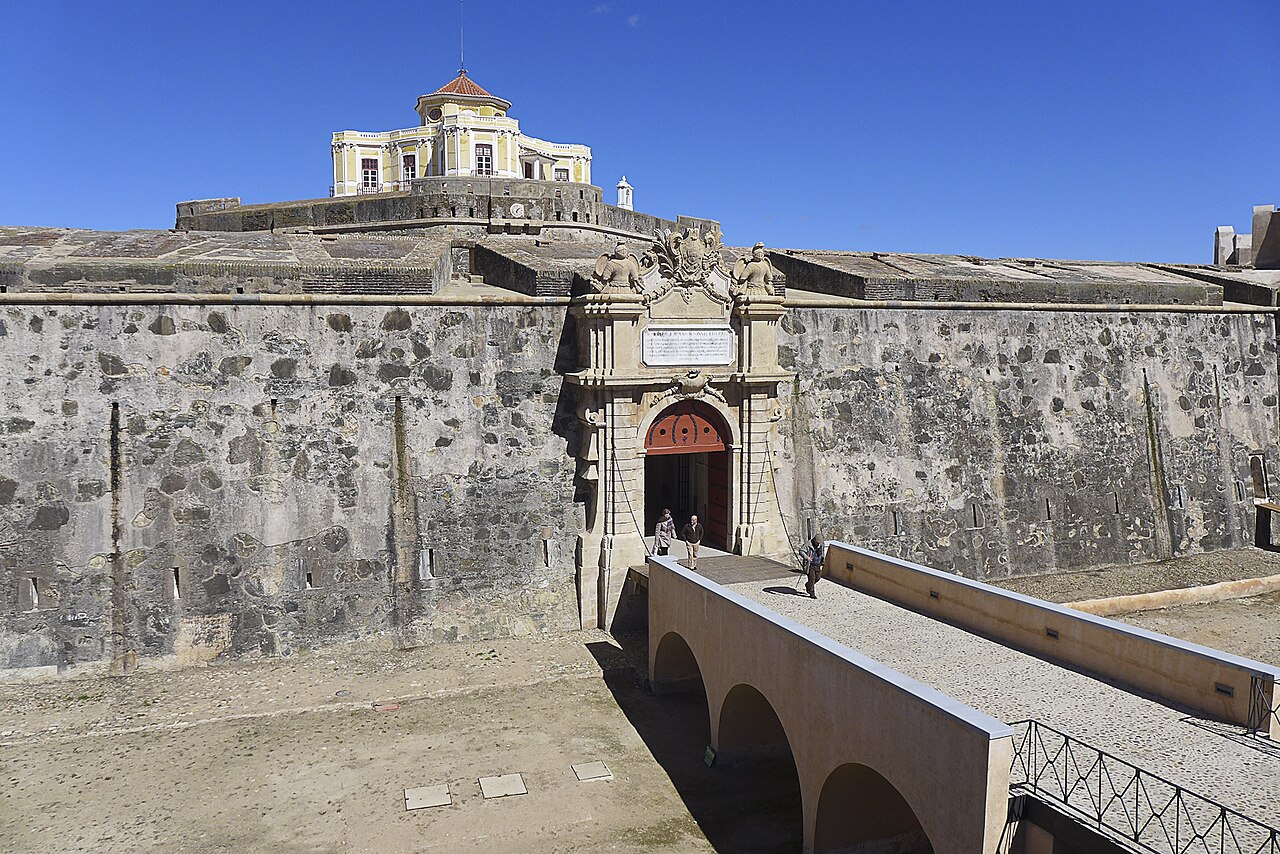
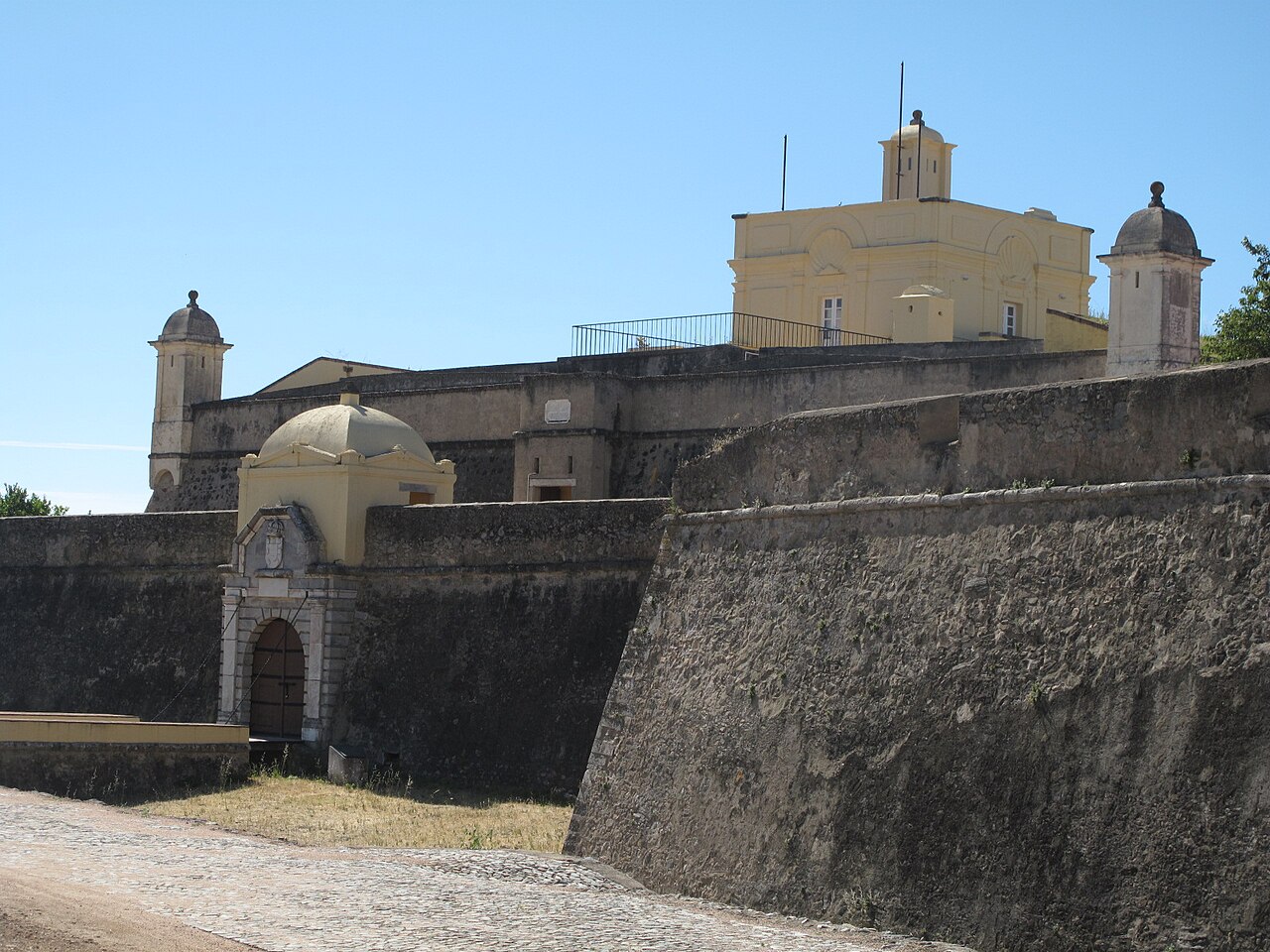
The 17th century marked a significant transformation for Barbacena Castle. Reflecting the evolution of military architecture in response to the introduction of gunpowder artillery, the castle was modernized with the addition of a star-shaped bastion fortress surrounding the original medieval core. This new defensive system included arrow-shaped revelins, half bastions, recessed curtain walls, and multiple bastions connected for overlapping fields of fire.
The main entrance was notably enhanced with a stone portico adorned with decorative pinnacles, combining functionality with Renaissance aesthetic elements. The medieval keep, a central defensive tower, was dismantled early in the 17th century as part of ownership conditions, signaling a shift from traditional vertical fortifications to the more modern bastioned style.
Defensive features and layout
- The original castle retains its rectangular floor plan with battlements along the rooftops, later simplified to parapets.
- Rectangular bastions reinforce the eastern curtain wall, while large circular towers with vaulted interiors and narrow defensive slits stand on the western side.
- The courtyard contains a central cistern for water storage, essential during sieges, alongside abandoned cannons and auxiliary buildings that supported garrison life.
- The outer fortress includes a revelim housing the main gate, a guardhouse, and multiple bastions designed to maximize defensive coverage.
Historical military significance
Barbacena Castle played a critical role during several military conflicts, particularly the Portuguese Restoration War in the mid-17th century. The fortress was attacked in 1645 and again in 1658, when it ultimately surrendered to the forces of the Duke of Ossuna. Its robust bastioned defenses, however, allowed it to withstand sieges and assaults for extended periods.
During the early 18th century, the castle's defenses were maintained and further tested during the War of the Spanish Succession. Spanish forces launched multiple attacks, underscoring the castle's ongoing strategic importance near the Portuguese-Spanish border. The 19th century saw the castle transition from a military fortress to a noble residence, reflecting broader changes in the region's political and social landscape.
Ownership and noble residence
The castle remained in the possession of noble families for centuries. In 1816, King John VI granted the title Count of Barbacena to Luís António Furtado de Castro do Rio de Mendonça e Faro, cementing the family's status. Ownership passed through various hands, including a 2005 acquisition by Mico da Câmara Pereira. The castle was recognized as a Property of Public Interest in the mid-20th century, reflecting its cultural and historical value.
Architectural details of the governor's house and chapel
Adjacent to the fortress lies the House of the Governor, a two-story noble residence attached to the outer wall. This building features a central staircase leading to a circular tower, which is integrated into the defensive structure. Notably, the upper floor contains vestiges of a chapel, demonstrating the integration of religious space within the castle complex. The chapel's remains are visible along the battlement, highlighting the dual military and domestic functions of the site.
Current condition and accessibility
Today, Barbacena Castle is partially preserved but largely inaccessible to the public. The site appears abandoned and is difficult to view from the public road. However, aerial perspectives reveal the impressive star-shaped bastioned layout that exemplifies early modern military architecture. Efforts to preserve and promote the castle have included its inclusion in military tourism initiatives by the Portuguese Ministry of National Defense.
Despite its current state, the castle remains a significant cultural landmark, offering insights into Portugal's medieval and Renaissance military architecture, noble residences, and border conflicts. Its layered history, from a medieval fortress to a bastioned Renaissance stronghold, makes it a unique site for scholars and enthusiasts of castle architecture and Portuguese history.
Frequently asked questions (FAQ)
- How do I get to Barbacena Castle?
- Barbacena Castle is conveniently located next to the N243-1 road in Portugal, making it easily accessible by car. If you are traveling from nearby towns, local public transport options may also be available, but checking the schedules in advance is recommended.
- What is the historical significance of Barbacena Castle?
- Barbacena Castle dates back to the medieval period and played a crucial role in the defense of the region against invasions. Its history reflects the architectural styles and strategic importance of castles in Portugal during the time.
- When was Barbacena Castle built?
- Construction of Barbacena Castle began in the late 12th century, with significant alterations occurring in the following centuries. The castle has stood the test of time and remains a prominent historical landmark in the area.
- Can I visit Barbacena Castle year-round?
- Yes, Barbacena Castle is open to visitors throughout the year. However, it is advisable to check for any seasonal hours or maintenance closures before planning your visit.
- Why is Barbacena Castle an important architectural site?
- Barbacena Castle showcases a blend of medieval and early Renaissance architectural styles, representing the evolution of castle design in Portugal. Its well-preserved structure offers insights into the building techniques and defensive strategies of the time.
- Is it possible to take guided tours of Barbacena Castle?
- Yes, guided tours are available at Barbacena Castle, providing visitors with an in-depth understanding of its history and architecture. These tours are often led by knowledgeable guides who can answer questions and share fascinating stories about the castle.
- What are the opening hours for Barbacena Castle?
- Barbacena Castle typically opens at 9 AM and closes at 6 PM, but hours may vary by season or special events. It's best to verify the specific hours on the official website or by contacting the castle directly before your visit.
- Are there any nearby attractions to visit along with Barbacena Castle?
- Yes, the surrounding area features several attractions, including local museums and scenic parks. Visitors can enjoy the beautiful landscapes of Portugal while exploring other historical sites nearby.
- What are the ticket prices for Barbacena Castle?
- Ticket prices for Barbacena Castle are generally affordable, with discounts available for students and seniors. For the most accurate pricing, it is recommended to check the official website or inquire at the castle's entrance.
Information
Website
Visit websiteSources & official resources
Verify the information above using these authoritative references.
Loading map...
Visitor reviews
No reviews yet. Been here? Write the first review and help other travelers!
Write the first reviewVisited this castle? Share your experience
Your review helps other travelers and adds first-hand knowledge to our encyclopedia.