Norviliskes Castle
Norviliškės Castle, also known as Norviliškės Manor, is a remarkable example of Renaissance architecture located in the village of Norviliškės, Lithuania. First mentioned in 1586, the castle began as a noble residence built by the Szorcz family, wealthy East Prussian merchants. Over time, it transformed into a significant religious and military site, reflecting the complex history of the region.
The origins and early history of Norviliškės Castle
The castle's origins trace back to the late 16th century when it was constructed as a residential manor for the Szorcz family. The earliest written record dates to 1586, marking its presence in Lithuanian history. In 1617, Darata Zienovičiūtė Šorcienė, widow of Vaitiekus Šorcas, donated the estate to the Franciscan Minorites from Vilnius. This donation included the manor house, surrounding lands, and other properties, initiating the estate's transformation into a religious complex.
The Franciscans established a monastery and a church dedicated to St. Francis around 1745, embodying Renaissance architectural features. This marked a shift from a noble residence to an ecclesiastical center, serving the spiritual needs of the community and the religious order.
Architectural features and layout
Structural design and defensive elements
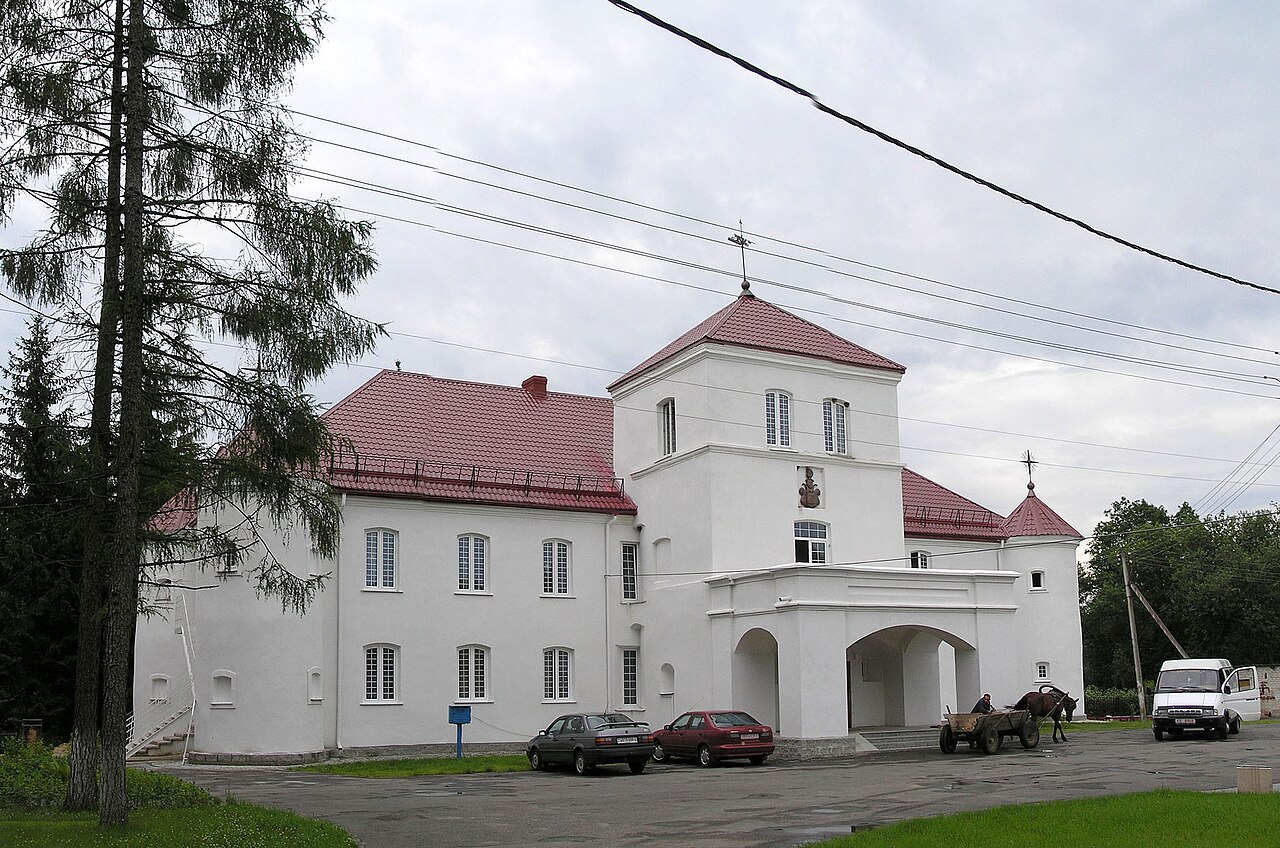
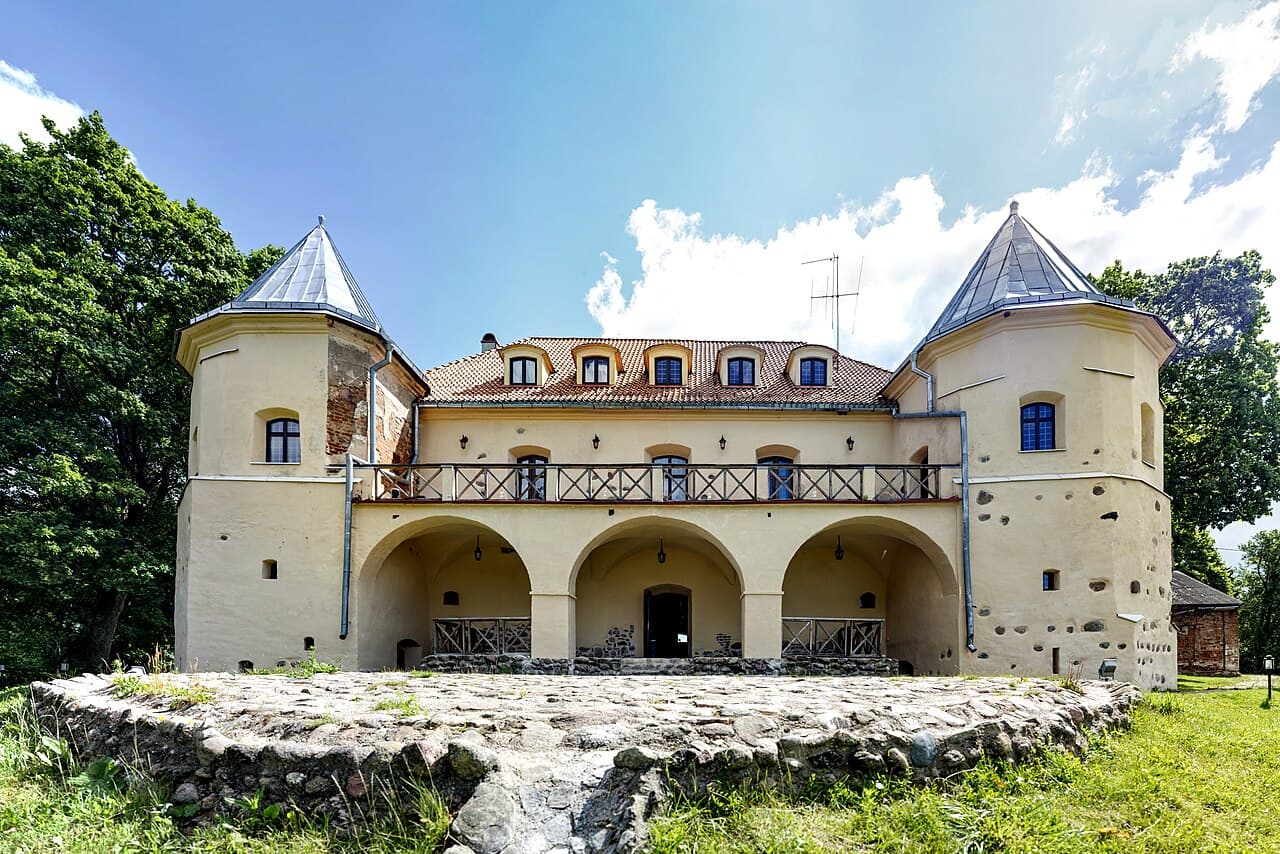
Norviliškės Castle is a three-story rectangular building with prominent towers on its eastern and western ends. These towers, which contain cellars beneath, reflect practical Renaissance design principles emphasizing both residential comfort and defense. The castle's facades are adorned with arcades—rows of arches supported by columns—that add elegance and rhythm to the structure.
A key feature is the four-story gate tower, a rectangular structure flanked by two smaller single-story annexes. Together with a defensive tower, these elements form a closed defensive courtyard, a rare surviving example of Renaissance military architecture in Lithuania and Europe. The castle's brick construction is notable, especially in later military additions, highlighting the region's building traditions.
Supporting buildings and complex layout
Surrounding the main residential building are restored three-story palace wings, guest houses, and a bathhouse, which historically supported the castle's varied functions. Archaeological investigations revealed the location of former barracks built in 1834 using bricks intended for an uncompleted church, illustrating resourcefulness in material reuse.
The castle is situated within the Dieveniškės historical regional park, maintaining a close spatial and historical relationship with the nearby church and former monastery buildings. This setting enhances its cultural significance and preserves the integrity of the ensemble.
Historical transformations and uses
From the early 17th century until 1832, Norviliškės Castle functioned as a monastery complex. However, following the November Uprising of 1831 against Russian rule, the Russian imperial authorities closed the monastery and church. The castle was repurposed as military barracks and later as an agricultural school for girls before World War I.
After 1919, the local parish reclaimed the site and rebuilt the church, completing reconstruction in 1928. The castle then served as the parish rectory, continuing its ecclesiastical role in a new capacity. The original church was destroyed by fires in 1698 and likely again in the early 18th century, necessitating reconstruction efforts, including those led by Kazimierz Kamiński in the late 18th century.
Legends and archaeological discoveries
Local legend, documented in 1933, tells of a hidden treasure of eighteen thousand gold coins buried by the friars near the church and monastery buildings before their forced departure. Despite numerous searches, this treasure remains undiscovered, adding an aura of mystery to the site.
Archaeological excavations uncovered a tunnel connecting the castle to the church bell tower, a feature that would have allowed discreet movement between the two buildings. Oral tradition suggests a secret underground passage linking Norviliškės to the nearby settlement of Alšėnai, although this has not been archaeologically confirmed.
Modern restoration and current use
After a period of abandonment, restoration efforts began in 1999 with partial renovations, followed by extensive work from 2004 to 2007. These restorations aimed to preserve the castle's historical character while adapting it for contemporary use.
Today, Norviliškės Castle serves as a venue for business conferences, weddings, hunting and shooting activities, and cultural events such as music festivals. The restoration project, supported by the PHARE program and led by entrepreneur Giedrius Klimkevičius, has revitalized the castle as a tourist attraction and cultural landmark.
Frequently asked questions (FAQ)
- When was Norviliškės Castle originally built?
- Norviliškės Castle was first mentioned in 1586, with construction dating back to the late 16th century as a noble manor.
- What architectural style characterizes Norviliškės Castle?
- The castle is primarily built in the Renaissance style, featuring arcades, towers, and a rectangular layout typical of the period.
- Can visitors explore underground tunnels at Norviliškės Castle?
- Archaeological excavations revealed a tunnel connecting the castle to the church bell tower, which visitors may learn about during guided tours, though access may be limited for safety.
- What events led to the closure of the monastery at Norviliškės Castle?
- Following the November Uprising of 1831 against Russian rule, the Russian authorities closed the monastery and church, repurposing the castle for military and educational uses.
- Is Norviliškės Castle open for tourism and events today?
- Yes, after restoration, the castle hosts business conferences, weddings, music festivals, and offers activities like hunting and shooting, attracting tourists and locals alike.
Photo gallery

Information
Loading map...
Visitor reviews
No reviews yet. Been here? Write the first review and help other travelers!
Write the first reviewVisited this castle? Share your experience
Your review helps other travelers and adds first-hand knowledge to our encyclopedia.