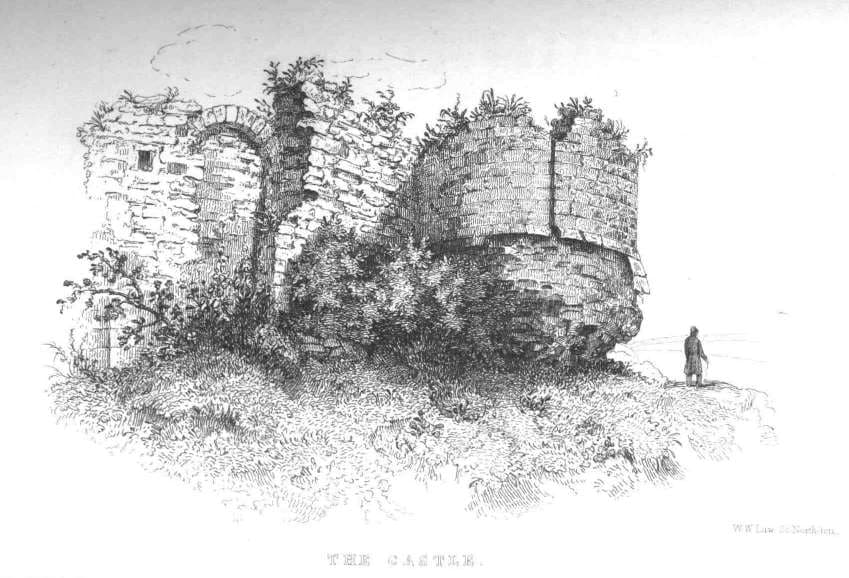
Northampton Castle
Northampton Castle was a significant Norman fortress established in the 11th century in the town of Northampton, England. It played a crucial role in medieval English history as one of the prominent hill castles constructed during the High Medieval period. The castle's strategic location just outside the western city gate allowed it to dominate the surrounding landscape and control access to Northampton.
Location and defensive features
The castle was situated on a raised site, naturally fortified on three sides by deep trenches, enhancing its defensive capabilities. On its western flank, a branch of the River Nene provided a natural moat-like barrier, further protecting the castle from attack. These water defenses, combined with the man-made ditches, made Northampton Castle a formidable stronghold.
Architectural layout and structures
Northampton Castle featured extensive grounds that housed a large stone keep, the central fortified tower typical of Norman military architecture. The keep served both as a residence and a last line of defense. Surrounding the gates were bulwarks made of earth, which were adapted over time to mount artillery pieces, reflecting the castle's evolution in response to changing military technology.
The keep and fortifications
The large keep was the dominant feature of Northampton Castle, designed to impress and intimidate as well as defend. The castle's walls and earthworks were robust, incorporating both natural and artificial defenses. The deep trenches and river branch effectively created a moat system, which was a common defensive tactic in Norman castles.
Historical significance and events
Northampton Castle witnessed numerous historical events during its existence, including its role in various conflicts and as a royal residence. It was an important administrative center for the region, symbolizing Norman authority in the Midlands. The castle's prominence declined over the centuries, especially as military technology and political circumstances changed.
Demise and current remains
In the 19th century, the castle was largely destroyed to make way for the expansion of the railway network. The construction of a branch of the West Coast Main Line led to the obliteration of most of the castle's structures. The original Northampton Castle railway station was built on the site, erasing much of the medieval fabric.
Today, only the Postern Gate survives near Northampton Railway Station, serving as a tangible link to the castle's past. This small remnant is a rare architectural survivor and a reminder of the castle's former importance.
Legacy and heritage
Despite its destruction, Northampton Castle remains a subject of historical interest and archaeological study. The site reflects the Norman impact on English castle-building and medieval urban development. Efforts to preserve and interpret the Postern Gate help maintain public awareness of the castle's historical and architectural significance.
Frequently asked questions (FAQ)
- What is the historical significance of Northampton Castle?
- Northampton Castle, originally built in the 11th century, served as an important royal fortress and a center for local governance. It played a crucial role in medieval politics, hosting significant events such as the trial of King Charles I in 1647.
- When was Northampton Castle built?
- Construction of Northampton Castle began shortly after the Norman Conquest in 1065. The castle was expanded and modified over the centuries, reflecting the changing architectural styles and political needs of the time.
- Can I visit Northampton Castle?
- Yes, Northampton Castle is open to the public. Visitors can explore the castle grounds and enjoy guided tours that delve into its rich history.
- What are the opening hours of Northampton Castle?
- Northampton Castle is typically open to visitors from 10 AM to 5 PM, but it's advisable to check the official website for any seasonal changes or special events that may affect opening hours.
- Is it possible to access Northampton Castle with limited mobility?
- While Northampton Castle has made efforts to be accessible, some areas may pose challenges for visitors with limited mobility due to the historic nature of the structure. It's recommended to contact the castle administration in advance for information on specific accessibility options.
- When is the best time to visit Northampton Castle?
- The best time to visit Northampton Castle is during the spring and summer months when the weather is pleasant and outdoor activities can be enjoyed. Additionally, this period often features special events and guided tours that enhance the visitor experience.
- What are the ticket prices for Northampton Castle?
- Ticket prices for Northampton Castle vary, with discounts available for children, students, and seniors. It's best to check the official website for current pricing and any available special offers.
- What nearby attractions can I visit after Northampton Castle?
- After visiting Northampton Castle, you can explore the nearby Northampton Museum and Art Gallery, which showcases local history and art collections. Additionally, the beautiful Abington Park is a short distance away and offers lovely walking paths and gardens.
Photo gallery

Photo by C. H. Hartshorne•Public domain
Information
Loading map...
Visitor reviews
No reviews yet. Been here? Write the first review and help other travelers!
Write the first reviewVisited this castle? Share your experience
Your review helps other travelers and adds first-hand knowledge to our encyclopedia.



