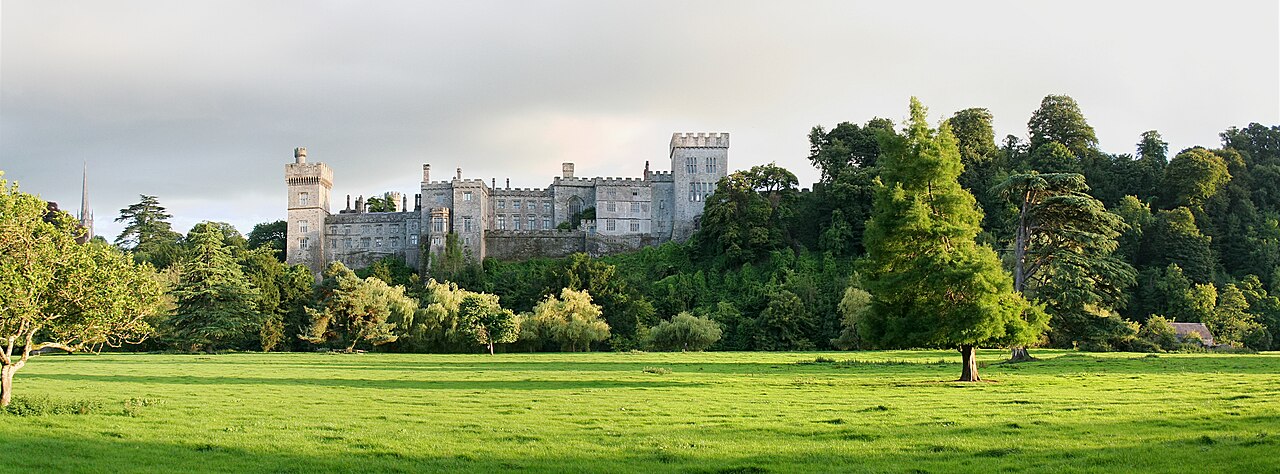
Norrisland Castle
Norrisland Castle is located east of the town of Lismore in County Waterford, Ireland, situated on the right bank of the River Blackwater. Though commonly referred to as a castle, it is more accurately described as a fortified house constructed shortly before 1600 by William Greatrakes, an English planter. The building's establishment followed Greatrakes' marriage to Anne Croker, marking the beginning of its historical significance in the region.
Historical context and significance
The construction of Norrisland Castle took place during a period of English plantation and colonization in Ireland, a time when fortified houses were often built by settlers to assert control and provide defense. The Greatrakes family played a notable role locally, with the castle serving as their residence. In 1628, the castle became the birthplace of Valentine Greatrakes, an Irish faith healer known for his reputed miraculous cures during the 17th century.
Architectural features and construction
Norrisland Castle was built as a fortified house, a style typical of the late 16th and early 17th centuries in Ireland, combining domestic living quarters with defensive elements. The structure likely included thick stone walls, narrow windows suitable for defense, and possibly a bawn or enclosed courtyard. Its position on the riverbank would have provided strategic advantages for defense and access to water.
Unfortunately, much of the detailed architectural information is obscured today due to the ruin's overgrown state. The castle lies in a field and is freely accessible, but dense vegetation covers many features, making it difficult to discern specific construction details or layout.
Decline and current condition
Precise records concerning the castle's decline and the circumstances under which it became a ruin are scarce. Like many fortified houses from this era, it may have fallen into disuse as military threats diminished and more modern residences were favored. Over time, natural decay and lack of maintenance led to its current ruined state.
Today, Norrisland Castle is a ruin surrounded by overgrowth, which hinders a clear view of its architectural elements. Despite this, it remains an accessible historical site for visitors interested in Ireland's plantation-era architecture and local history.
Visiting Norrisland Castle
The castle is located in a rural field east of Lismore and can be visited freely at any time. Visitors should be prepared for uneven ground and overgrown vegetation, which may obscure parts of the structure. Its riverside setting offers a scenic backdrop, though amenities and interpretive materials on-site are limited.
Nearby attractions
While visiting Norrisland Castle, tourists can also explore the town of Lismore, known for its Lismore Castle, a well-preserved medieval castle with extensive gardens and a rich history. The surrounding County Waterford area offers a variety of historical sites, natural landscapes, and cultural experiences.
Frequently asked questions
- When was Norrisland Castle built? Norrisland Castle was constructed shortly before 1600 by William Greatrakes.
- What type of castle is Norrisland? It is a fortified house typical of the late 16th and early 17th centuries in Ireland.
- Is Norrisland Castle open to the public? Yes, the ruin lies in a field and can be visited freely at any time.
- What is the current condition of Norrisland Castle? The castle is in a ruined state and heavily overgrown, which obscures many architectural details.
- Who was Valentine Greatrakes? He was an Irish faith healer born at Norrisland Castle in 1628, known for his reputed healing abilities.
- How do I get to Norrisland Castle? The castle is located east of Lismore in County Waterford, accessible by local roads; visitors should use a map or GPS for precise directions.
Frequently asked questions (FAQ)
- When was Norrisland Castle built?
- Norrisland Castle was constructed shortly before 1600 by William Greatrakes.
- What type of castle is Norrisland?
- It is a fortified house typical of the late 16th and early 17th centuries in Ireland.
- Is Norrisland Castle open to the public?
- Yes, the ruin lies in a field and can be visited freely at any time.
- What is the current condition of Norrisland Castle?
- The castle is in a ruined state and heavily overgrown, which obscures many architectural details.
- Who was Valentine Greatrakes?
- He was an Irish faith healer born at Norrisland Castle in 1628, known for his reputed healing abilities.
- How do I get to Norrisland Castle?
- The castle is located east of Lismore in County Waterford, accessible by local roads; visitors should use a map or GPS for precise directions.
Loading map...
Visitor reviews
No reviews yet. Been here? Write the first review and help other travelers!
Write the first reviewVisited this castle? Share your experience
Your review helps other travelers and adds first-hand knowledge to our encyclopedia.