Niddry Castle — United Kingdom castle

Niddry Castle

Niddry Castle: a 16th-century Scottish tower house near Winchburgh
Winchburgh, United Kingdom
Renaissance (15th–17th c.)
Restored

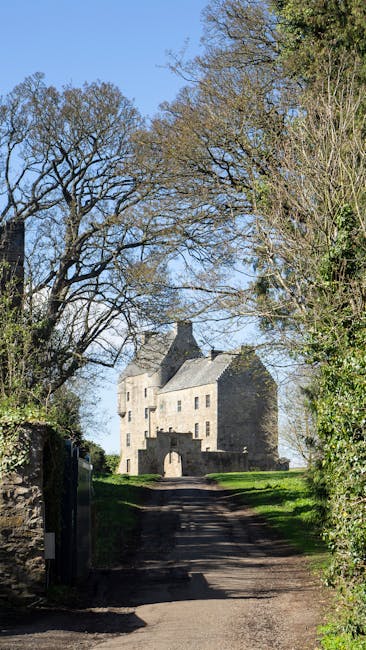
Niddry Castle is a notable sixteenth-century Renaissance tower house located near Winchburgh in West Lothian, Scotland. Built around 1500 by the Lord Seton, it stands as a significant example of Scottish tower house architecture from the period. The castle is positioned near the Union Canal and is flanked by two large oil shale bings, remnants of the region's industrial past. Historically, it was known as Niddry Seton or West Niddry to distinguish it from other similarly named sites such as Niddry Marischal in Midlothian and Longniddry in East Lothian.

Architectural features and layout

The castle is designed in an L-plan typical of many Scottish tower houses of the period. It rises to four storeys and features a corbelled parapet which projects from the walls, providing defensive battlements. A distinctive turret occupies the angle of the 'L', a feature added during the 17th century, enhancing both the defensive capability and the aesthetic profile of the building. The basement is vaulted, a common architectural element that provided structural strength and security for storage. The hall was situated on the first floor, above the basement, serving as the main living and reception area.

Historical significance and notable events

Niddry Castle played a role in the turbulent history of Scotland during the 16th century. Most famously, it was a refuge for Mary, Queen of Scots on 2 May 1568, shortly after her dramatic escape from captivity at Loch Leven Castle. This event ties the castle directly to the complex political struggles of the time.

During the Scottish civil war in 1572, George, Lord Seton garrisoned the castle in support of Queen Mary. The castle endured two attacks in April and June of that year. In April, under the command of Captain Scougall, the defenders successfully repelled a night assault by suspending heavy timber beams around the tower and dropping them on attackers attempting to scale the walls with ladders. This defense was supported by a diversionary attack on Merchiston Castle by the garrison of Edinburgh Castle, which was held for James VI.

The castle was also the site of significant social events, such as the marriage of Margaret Seton, daughter of Lord Seton, to Claud Hamilton on 1 August 1574, celebrated with "great triumphs."

Later history and restoration

In 1590, Peder Munk, the Great Admiral of Denmark, along with Danish commissioners, stayed at Niddry Castle while on a mission to take possession of lands granted to Anne of Denmark. The following morning, they proceeded to Linlithgow Palace. Around the same time, Patrick Gordon of Auchindoun was a guest at the castle, seeking to regain royal favor.

By approximately 1680, the castle passed into the ownership of the Hope family, becoming part of the Hopetoun estate. The family later received the title Baron Niddry in 1814, with the Hope family eventually becoming the Marquises of Linlithgow.

In the 1990s, Niddry Castle underwent significant restoration under the care of Peter Wright, transforming it into a private residence. This restoration was preceded by an extensive archaeological excavation of the castle and its surrounding barmkin area, which provided valuable insights into its historical context and construction. Originally a Scheduled Monument, the castle was de-scheduled in 1996 to facilitate restoration work and was upgraded to an A Listing, recognizing its architectural and historical importance.

Location and surrounding context

Niddry Castle's location near the Union Canal places it within a landscape shaped by both medieval and industrial histories. The proximity to the oil shale bings, large waste heaps from the shale oil industry, contrasts with the castle's Renaissance architecture, highlighting the layering of Scotland's historical development in this region.

The castle's position on a slight rise justifies its classification as a hill castle, providing strategic views over the surrounding terrain, which would have been important for defense and control during its active use in the 16th and 17th centuries.

Frequently asked questions (FAQ)

How do I get to Niddry Castle?
Niddry Castle is located in Winchburgh, just a short drive from Edinburgh. You can reach it by taking the M8 motorway and following the signs for Winchburgh. Public transport options are limited, so driving is the most convenient way to visit.
What is the historical significance of Niddry Castle?
Niddry Castle dates back to the 15th century and has a rich history associated with the noble families of Scotland. It has witnessed various historical events and changes in ownership, reflecting the tumultuous history of the region. The castle is a testament to Scotland's medieval architecture and heritage.
When was Niddry Castle built?
Niddry Castle was originally constructed in the late 15th century, with significant alterations made in the following centuries. The castle showcases elements of Scottish baronial architecture, illustrating the styles prevalent during its time of construction. Its enduring structure highlights the craftsmanship of that era.
Can I visit Niddry Castle?
Niddry Castle is a private property, and access to the interior may be limited. However, visitors can admire the castle's exterior and surrounding grounds, which are open to the public. Always check for any special events or open days that might allow for guided tours.
Why is Niddry Castle an architectural landmark?
Niddry Castle is considered an architectural landmark due to its impressive Scottish baronial style, characterized by its distinctive towers and intricate stonework. The castle's design reflects the aesthetics and defensive needs of its time, making it a valuable study for architecture enthusiasts. Its historical significance adds to its architectural allure.
Is it possible to hold events at Niddry Castle?
Yes, Niddry Castle can be a stunning venue for private events and weddings, offering a unique historical backdrop. Interested parties should contact the castle management for specific details regarding availability, capacity, and facilities. Early booking is recommended due to the castle's popularity.
What are the opening hours for Niddry Castle?
As Niddry Castle is a private residence, there are no regular opening hours for public visits. However, certain times of the year may feature special open days or events. Always check the official website or contact the castle for the latest information on visiting opportunities.
What are the best times to visit Niddry Castle?
The best times to visit Niddry Castle are during the spring and summer months when the weather is more pleasant. These seasons often coincide with special events and open days, providing visitors with the best experience. Autumn can also be beautiful, but it's advisable to check for specific access during this time.
Are there any nearby attractions to Niddry Castle?
Yes, there are several attractions near Niddry Castle, including the historic town of Linlithgow and the beautiful Union Canal. Visitors can also explore the scenic countryside, which offers various walking and cycling paths. This makes Niddry Castle a great starting point for a day of exploration in the area.
What are the ticket prices for visiting Niddry Castle?
Since Niddry Castle is a private property, there are typically no set ticket prices for general visits. However, during special events or guided tours, fees may apply. It's best to check the castle's official website for any upcoming events and associated costs.

Photo gallery

Niddry Castle
Click to view

Photo by Donald MacDonald•CC BY-SA 2.0

1 photo • Click any image to view in full screen

Information

Hill Castle

Current owner

Private owner

Loading map...

Visitor reviews

No reviews yet. Been here? Write the first review and help other travelers!

Write the first review

Visited this castle? Share your experience

Your review helps other travelers and adds first-hand knowledge to our encyclopedia.

Write a review

(5/5)

0/2000 characters

Your review will be visible after admin approval

Nearby castles

2.2 km

Duntarvie Castle

Winchburgh, United Kingdom

Duntarvie Castle is a significant example of a Scots Renaissance house located near Winchburgh in West Lothian, Scotland. The castle stands today as a ruin, reflecting centuries of history and architectural evolution tied to prominent Scottish families. Its origins trace back to the early 13th century, with the lands first recorded in possession of the Lindsay family from 1527. A 1605 charter transferred ownership to the Hamiltons of Abercorn, but this document also suggests the castle's existence as early as 1212. Historical ownership and significance The castle was notably associated with the Durham family, who held the estate as tenants of the Hamiltons. Historic Environment Scotland records that James Durham was granted Duntarvie in 1588 and was responsible for constructing the present building shortly thereafter. The Durham family played important roles in the Scottish royal administration. Alexander Durham (died 1584) served as a clerk in the Exchequer, administrator to John Stewart of Coldingham, and Master of the Prince's Wardrobe to King James VI. His son, James Durham, succeeded him in royal offices in 1580 and served as Chamberlain for Linlithgowshire from 1595 to 1600. James Durham also witnessed several royal charters issued by King James at Holyroodhouse, highlighting the family's close ties to the crown. The Durham family maintained residence at Duntarvie until the 1770s. By 1826, the estate had passed to the Earl of Hopetoun, but the castle was already in urgent need of repair. It became uninhabited in the 1840s and fell into ruin by the 20th century, losing its roof and much of its structural integrity. Architectural features and layout The castle is characterized by a long, rectangular three-storey main block flanked by square four-storey towers projecting northwards at each end. These towers originally featured flat roofs with stone balustrades, a distinctive element of the Renaissance style. Each tower is complemented by a turnpike stair turret located in the internal angle, providing access to the upper floors. One of the unusual architectural features of Duntarvie Castle is its straight stair linking the ground and first floors, which is atypical for buildings of this period, where spiral or curved staircases were more common. The castle's design reflects Renaissance influences combined with traditional Scottish fortification elements. Later history and conservation efforts In the late 20th century, the castle's shell was purchased by Geoffrey Nicholsby, a kiltmaker, who intended to restore the building as the headquarters of his business, Highland Crafts Ltd. Preparatory restoration work began in 1994, but a significant setback occurred in January 1995 when part of the east tower collapsed. Despite this, efforts continued, particularly focused on the castle's Great Hall, with plans to make it available for weddings and special events. Today, Duntarvie Castle remains a ruined Scots Renaissance house of considerable historical and architectural interest. Its preservation offers insights into the domestic architecture of the Scottish Renaissance and the lives of the noble families who shaped its history. Architectural style and period context Duntarvie Castle is a representative example of the Renaissance architectural style as adapted in Scotland during the 16th century. This style is characterized by symmetrical layouts, classical proportions, and ornamental details such as stone balustrades and turrets. The castle's construction during the late 1500s places it firmly within the Scottish Renaissance period, a time when noble residences began to emphasize comfort and style alongside defensive features. Scots Renaissance characteristics The castle's rectangular main block and prominent towers reflect the period's architectural trends, blending functionality with aesthetics. The presence of turnpike stairs housed in turrets demonstrates the integration of defensive considerations with Renaissance elegance. The flat roofs with stone balustrades would have provided both a vantage point and a decorative element, uncommon in earlier medieval Scottish castles. Defensive and domestic features While primarily a residence, Duntarvie Castle retains some defensive features typical of the era, such as thick stone walls and elevated towers. However, the emphasis on large windows and the layout indicates a shift towards more comfortable living spaces, characteristic of Renaissance influence on castle architecture.

Renaissance (15th–17th c.)
Details
3.2 km
Dundas Castle — United Kingdom castle

Dundas Castle

West Lothian, United Kingdom

Dundas Castle stands as a remarkable example of Scottish heritage, combining a fortified medieval keep with elegant 19th-century architecture. Located in West Lothian, Scotland, just eight miles from Edinburgh, this hill castle has a rich history dating back to the 15th century and remains a significant cultural landmark. Its unique blend of defensive and residential architecture reflects centuries of adaptation to changing needs and tastes. Early origins and medieval fortification The lands of Dundas were originally granted in the 11th century by King Malcolm Canmore to Gospatrick, Earl of Northumbria, who fled north to escape the Norman conquest. By around 1180, the estate passed to Helias, who adopted the surname Dundas, establishing the family lineage that would dominate the region for centuries. The family's influence grew to encompass much of Mid and West Lothian. The castle itself began as a defensive stronghold in the early 15th century. In 1416, James Dundas received a licence from the Duke of Albany, then the effective ruler of Scotland, to construct a keep. This initial structure was designed to serve both as a residence and a fortress, embodying the dual purpose of many Scottish tower houses of the period. The keep was expanded in 1436 into an L-plan design, enhancing its defensive capabilities and living space. The 15th-century keep is built from robust stone, featuring thick walls and a parapet that has been carefully restored to preserve its medieval character. This tower house was typical of late medieval Scottish noble residences, combining security with domestic comfort. The castle's strategic location on a hill provided commanding views over the surrounding countryside, crucial for defense and control. Notable historical associations Dundas Castle played a role in 17th-century military history when Oliver Cromwell stayed there around the time of the Battle of Dunbar in 1650. Cromwell's presence is commemorated by a statue outside the original keep, marking the castle's connection to this turbulent period in British history. During the Second World War, the castle served as the headquarters for protecting the nearby Forth Bridge, underscoring its ongoing strategic importance even in modern times. 19th-century transformation by william burn In the early 19th century, the castle underwent significant changes under the direction of the prominent Scottish architect William Burn. Around 1818, the 17th-century portions of the castle were demolished to make way for a new Tudor-Gothic mansion. Burn's design introduced large windows and ecclesiastical architectural elements, inspired by his extensive work on churches. These features allowed for bright, spacious state rooms overlooking the castle's extensive lawns and parkland. This Tudor-Gothic addition contrasts with the medieval keep, blending historical styles while enhancing the castle's residential comfort. The mansion's stone construction harmonizes with the original tower, creating a cohesive yet architecturally diverse estate. The extensive renovations were costly, leading to the sale of the castle and its lands in 1875. The estate passed through several owners, including industrialist William Russell and later Stewart Clark, a textile magnate and philanthropist who acquired it in 1899 along with surrounding farmland. Modern ownership and use Since 1995, Sir Jack Stewart-Clark, a descendant of Stewart Clark and former Member of the European Parliament, has owned Dundas Castle. Under his stewardship, the castle has been carefully restored and adapted for contemporary use while preserving its historic fabric. Today, Dundas Castle operates as a 5 Star Exclusive Use venue, offering luxurious accommodations and facilities for weddings, conferences, private events, and corporate functions. The castle's seclusion within its 1000-acre estate provides privacy and exclusivity, making it a sought-after destination for special occasions. The estate also includes a separate holiday cottage known as the Boathouse, situated on the shore of Dundas Loch, providing additional accommodation within the scenic landscape. Architectural features and heritage significance The castle's core, the medieval L-plan keep, retains much of its original defensive character, including thick stone walls and a restored parapet. The juxtaposition of this tower house with the 19th-century Tudor-Gothic mansion designed by William Burn creates a visually striking and historically layered estate. Both the tower and the mansion are individually designated as Category A listed buildings, highlighting their national architectural and historical importance. The surrounding gardens are listed in the Inventory of Gardens and Designed Landscapes in Scotland, recognizing their designed landscape and heritage value. The castle combines historic preservation with modern amenities such as electricity, heating, and updated kitchen and sanitation facilities, installed during late 20th-century refurbishments. This careful balance allows visitors and residents to experience the grandeur of the past alongside contemporary comfort. Visitor experience and cultural importance Dundas Castle offers an exclusive and private experience, with the entire property available for booking, ensuring no distractions from other guests. Its proximity to Edinburgh and location within tranquil countryside make it an ideal retreat for those seeking both historical ambiance and modern luxury. The castle's rich history, architectural evolution, and connection to notable historical figures contribute to its cultural significance. It stands as a testament to Scotland's noble heritage and architectural innovation from the late medieval period through the 19th century.

Late Medieval (14th–15th c.)
Details
4.8 km
Midhope Castle — United Kingdom castle

Midhope Castle

West Lothian, United Kingdom

Midhope Castle stands as a remarkable example of a 16th-century Scottish tower house located near Abercorn in West Lothian, Scotland. Famously known as "Lallybroch" in the popular American television series Outlander, this historic castle has drawn increasing attention from visitors and fans alike. The castle is situated within a private estate owned by the Hopetoun family, who permit public access to the castle's exterior under regulated conditions, reflecting its location in an active agricultural area. Architectural evolution and features The castle's core structure is a five-storey oblong tower house, characteristic of Scottish noble residences from the Renaissance period. The original tower likely dates back to the 15th century, with significant modifications occurring in the late 16th and 17th centuries. In 1678, the castle underwent a notable transformation when the original entrance tower was removed, and the eastern wing was heightened and extended. This alteration included the addition of a new doorway and the construction of a small courtyard measuring approximately 114 by 61 feet (35 by 19 meters) on the southern side. The castle's stonework includes a commemorative inscribed stone dated 1582 bearing the initials "AD MB," marking the ownership of Alexander Drummond and his wife Marjory Bruce. This stone is a key historical artifact linking the castle to prominent figures of the time. The painted ceiling originally from the tower is now preserved by Historic Scotland and features intricate cinquefoil motifs and gold stars on a blue background. These decorations celebrate the marriage of Sir Robert Drummond, laird of Midhope in 1619, to a Hamilton heiress, symbolizing the union of two influential Scottish families. The family motto, "ad astra per ardua," meaning "to the stars through difficulties," is reflected in the ceiling's star motifs and the Drummond coat of arms. Historical context and ownership The earliest records of the Midhope estate trace back to the 14th century, initially associated with Henry Graham of Mannerstoun. After his death without a male heir, the estate passed through his daughters, one of whom married John Martin of Midhope. It is believed that John Martin constructed the original tower house around 1438. The Martins maintained control of the estate through the 15th century, with Lady Christian Martin retaining occupancy rights after her husband's death. In the 16th century, ownership shifted among various noble families. Elizabeth Martin, Lady of Falscastell, transferred half of the Midhope lands to Sir James Hamilton of Finnart in 1537. The estate was held under feudal overlordship by the Livingstones of Drumry and later by John Lindsay, 5th Lord Lindsay of the Byres. Alexander Drummond acquired the castle later in the century and was closely connected to the Crown, serving the Earl of Huntly and acting in official capacities such as returning jewels of Mary, Queen of Scots, to Regent Morton in 1573. The Drummond family's influence continued into the 17th century, with Sir Robert Drummond's marriage to a Hamilton heiress marking a significant alliance. The Drummonds' stewardship saw the castle adapt architecturally and socially, reflecting their status and the evolving needs of a noble household. Estate features and ancillary structures Beyond the main tower house, the estate includes a notable late 17th-century dovecot located approximately 140 meters southeast of the castle. This large, two-chambered oblong structure was designed to house pigeons or doves, which were valuable resources for food and fertilizer during the period. The dovecot exemplifies the practical aspects of estate management in the post-medieval Scottish countryside. Cultural significance and modern interest The castle's role as "Lallybroch" in Outlander has significantly increased public interest, bringing attention to its rich history and architectural heritage. While the castle itself remains a ruin, its evocative presence and connection to Scottish history and popular culture make it a compelling destination for visitors. Public access is carefully managed by the Hopetoun estate to balance preservation with visitor experience, requiring vehicle passes and adherence to guidelines due to the castle's location in an active farming area. Preservation efforts have focused on safeguarding key historical elements such as the painted ceiling, which is housed at the Palace of Holyroodhouse for public display, ensuring that Midhope Castle's artistic and cultural legacies endure. Visiting midhope castle Visitors to Midhope Castle can explore the exterior of this evocative tower house, appreciating its imposing ruins and imagining its storied past. Due to its private estate location, access requires prior arrangement and compliance with estate rules, including obtaining a vehicle pass. The surrounding landscape offers a glimpse into the agricultural heritage of West Lothian, complementing the castle's historic ambiance. Midhope Castle remains a poignant symbol of Scottish Renaissance architecture and noble life, enriched by its layered history and ongoing cultural relevance.

Renaissance (15th–17th c.)
Details