Duntarvie Castle
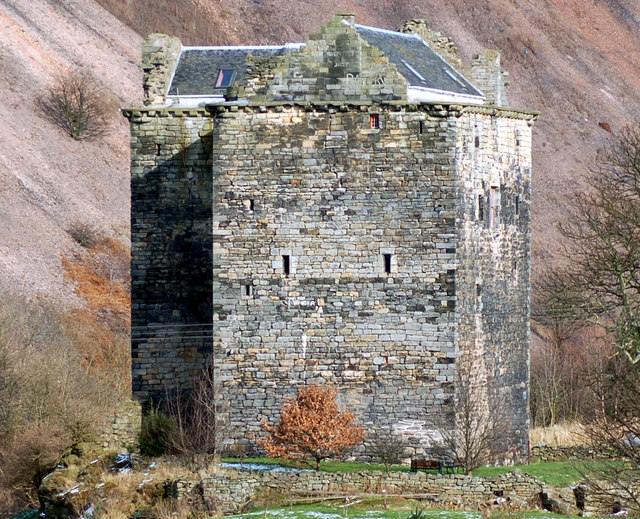
Duntarvie Castle is a significant example of a Scots Renaissance house located near Winchburgh in West Lothian, Scotland. The castle stands today as a ruin, reflecting centuries of history and architectural evolution tied to prominent Scottish families. Its origins trace back to the early 13th century, with the lands first recorded in possession of the Lindsay family from 1527. A 1605 charter transferred ownership to the Hamiltons of Abercorn, but this document also suggests the castle's existence as early as 1212.
Historical ownership and significance
The castle was notably associated with the Durham family, who held the estate as tenants of the Hamiltons. Historic Environment Scotland records that James Durham was granted Duntarvie in 1588 and was responsible for constructing the present building shortly thereafter. The Durham family played important roles in the Scottish royal administration. Alexander Durham (died 1584) served as a clerk in the Exchequer, administrator to John Stewart of Coldingham, and Master of the Prince's Wardrobe to King James VI. His son, James Durham, succeeded him in royal offices in 1580 and served as Chamberlain for Linlithgowshire from 1595 to 1600. James Durham also witnessed several royal charters issued by King James at Holyroodhouse, highlighting the family's close ties to the crown.
The Durham family maintained residence at Duntarvie until the 1770s. By 1826, the estate had passed to the Earl of Hopetoun, but the castle was already in urgent need of repair. It became uninhabited in the 1840s and fell into ruin by the 20th century, losing its roof and much of its structural integrity.
Architectural features and layout
The castle is characterized by a long, rectangular three-storey main block flanked by square four-storey towers projecting northwards at each end. These towers originally featured flat roofs with stone balustrades, a distinctive element of the Renaissance style. Each tower is complemented by a turnpike stair turret located in the internal angle, providing access to the upper floors.
One of the unusual architectural features of Duntarvie Castle is its straight stair linking the ground and first floors, which is atypical for buildings of this period, where spiral or curved staircases were more common. The castle's design reflects Renaissance influences combined with traditional Scottish fortification elements.
Later history and conservation efforts
In the late 20th century, the castle's shell was purchased by Geoffrey Nicholsby, a kiltmaker, who intended to restore the building as the headquarters of his business, Highland Crafts Ltd. Preparatory restoration work began in 1994, but a significant setback occurred in January 1995 when part of the east tower collapsed. Despite this, efforts continued, particularly focused on the castle's Great Hall, with plans to make it available for weddings and special events.
Today, Duntarvie Castle remains a ruined Scots Renaissance house of considerable historical and architectural interest. Its preservation offers insights into the domestic architecture of the Scottish Renaissance and the lives of the noble families who shaped its history.
Architectural style and period context
Duntarvie Castle is a representative example of the Renaissance architectural style as adapted in Scotland during the 16th century. This style is characterized by symmetrical layouts, classical proportions, and ornamental details such as stone balustrades and turrets. The castle's construction during the late 1500s places it firmly within the Scottish Renaissance period, a time when noble residences began to emphasize comfort and style alongside defensive features.
Scots Renaissance characteristics
The castle's rectangular main block and prominent towers reflect the period's architectural trends, blending functionality with aesthetics. The presence of turnpike stairs housed in turrets demonstrates the integration of defensive considerations with Renaissance elegance. The flat roofs with stone balustrades would have provided both a vantage point and a decorative element, uncommon in earlier medieval Scottish castles.
Defensive and domestic features
While primarily a residence, Duntarvie Castle retains some defensive features typical of the era, such as thick stone walls and elevated towers. However, the emphasis on large windows and the layout indicates a shift towards more comfortable living spaces, characteristic of Renaissance influence on castle architecture.
Loading map...
Visitor reviews
No reviews yet. Been here? Write the first review and help other travelers!
Write the first reviewVisited this castle? Share your experience
Your review helps other travelers and adds first-hand knowledge to our encyclopedia.