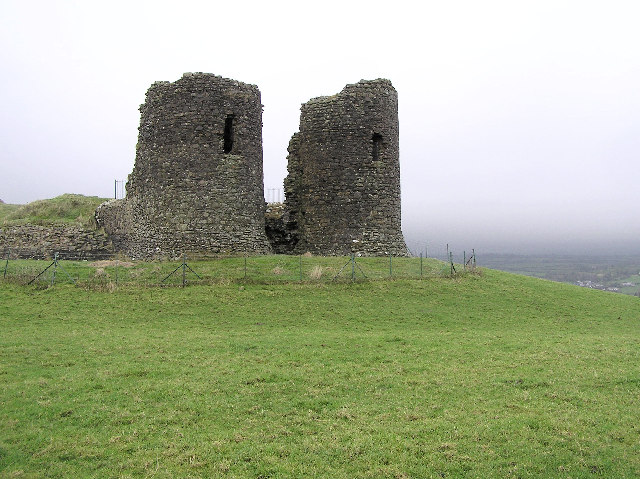
Newtownstewart Castle
Newtownstewart Castle, also known locally as Stewart Castle, is a significant example of a Renaissance plantation castle located in the town of Newtownstewart, County Tyrone, Northern Ireland. Constructed in 1615, the castle was part of the English crown's efforts to consolidate control over Ulster following the Flight of the Earls in 1607, when the native Irish aristocracy fled, leading to the forfeiture of their lands. These lands were then granted to English and Scottish settlers, who were mandated to build fortified residences to establish and secure their estates. Newtownstewart Castle was built by Sir Robert Newcomen, an English settler, marking a key phase in the Plantation of Ulster.
Historical context and construction
The castle was constructed during the early 17th century amid a period of intense political and social change in Ireland. The Plantation of Ulster was a strategic colonization initiative by the English crown to pacify and Anglicize the region. The castle's construction in 1615 followed the defeat and exile of the Irish earls, reflecting the new power dynamics imposed by English rule.
By 1622, the castle was described as a substantial structure built of lime and stone, rising four stories high. It was surrounded by a bawn—a defensive walled enclosure—equipped with two flanker towers for enhanced protection. This design was typical of plantation castles, combining residential comfort with military functionality.
Ownership and name change
In 1629, the castle and estate were sold to Sir William Stewart from Newtown Stewart in Galloway, Scotland. Stewart's acquisition led to the renaming of both the castle and the town, embedding Scottish influence into the local heritage. The castle thus became known as Newtownstewart Castle, reflecting the Stewart family's origins and their role in the area's development.
Architectural features and design
The castle's architecture exhibits a blend of Scottish and English influences, characteristic of plantation-era fortifications. Its most distinctive elements are the triple stepped gables, with a tall chimney rising above the smaller central gable. The stepped gables are a hallmark of Scottish architectural style, while the eight-pointed star-shaped brick chimney draws from English design traditions.
Additional notable features include mullioned windows, which allowed for both light and defense, and several fireplaces indicative of the castle's residential use. A circular projecting stair tower provides access to the upper floors, while a rectangular tower at the northeast corner likely served as a flanker tower on the bawn wall, enhancing the castle's defensive capabilities.
Destruction and later use
The castle suffered significant damage during several conflicts. It was burned in 1641 by Sir Phelim O’Neill during the Irish Rebellion, reflecting the turbulent period of resistance against English rule. Later, in 1689, it was again set ablaze by forces loyal to King James II during his retreat from Londonderry amid the Williamite War in Ireland.
Despite this, the castle remained a central feature of the town. In the 19th century, its ruins were repurposed as the town marketplace, demonstrating adaptive reuse of the historic structure within the community.
Current condition and archaeological significance
Today, only fragments of the castle survive, including parts of the southwest and northwest walls and a section of the southeast return. These ruins still showcase the castle's distinctive architectural features, such as the triple gables and the prominent chimney.
In 1999, an archaeological excavation at the site uncovered an undisturbed Bronze Age cist grave, highlighting the area's long history of human occupation predating the castle by millennia. This discovery adds an important layer of cultural heritage to the castle grounds.
Visiting Newtownstewart Castle
The castle ruins are a prominent landmark in the center of Newtownstewart and can be visited by the public, although access may sometimes be restricted. The site offers insight into plantation-era architecture and the complex history of Ulster. Visitors often combine a trip to Newtownstewart Castle with nearby historic sites such as Harry Avery's Castle to gain a broader understanding of the region's past.
Frequently asked questions (FAQ)
- What is the historical significance of Newtownstewart Castle?
- Newtownstewart Castle, built in the early 17th century, is a fascinating example of the architecture of its time and represents the power and influence of the Stewart family in Northern Ireland. It played a vital role in the region's history, particularly during the conflicts of the 17th century, and serves as a reminder of the turbulent past of the area.
- When was Newtownstewart Castle built?
- The construction of Newtownstewart Castle began in 1619 and was completed in 1621. It was originally built as a defensive stronghold and has since undergone various changes over the centuries, reflecting the evolving architectural styles of its time.
- What are the opening hours for visiting Newtownstewart Castle?
- Newtownstewart Castle is generally open to visitors from 10 AM to 5 PM, Tuesday through Sunday. It is advisable to check the official website for any seasonal changes in hours or special closures before planning your visit.
- Can I visit Newtownstewart Castle year-round?
- Yes, Newtownstewart Castle is open to visitors year-round, but specific opening hours may vary depending on the season. It is best to visit during the spring and summer months when the weather is pleasant and the surrounding gardens are in full bloom.
- Is it possible to access Newtownstewart Castle with mobility aids?
- While Newtownstewart Castle is a historical site, some areas may have limited accessibility due to its age and terrain. It is recommended to contact the visitor center in advance to inquire about accessibility options and any assistance that may be available.
- What are the ticket prices for visiting Newtownstewart Castle?
- Tickets to visit Newtownstewart Castle are generally priced at £5 for adults and £3 for children, with family discounts available. There may also be special rates for seniors and students, so it’s worth checking for any current promotions before your visit.
- When is the best time to visit Newtownstewart Castle?
- The best time to visit Newtownstewart Castle is during the late spring or early summer months, from May to July, when the weather is typically mild and the gardens are at their most vibrant. Additionally, visiting during this period allows you to enjoy various local festivals and events that may be happening nearby.
- What nearby attractions can I explore after visiting Newtownstewart Castle?
- After visiting Newtownstewart Castle, you can explore the beautiful grounds of the surrounding area, including the scenic River Strule. Additionally, the nearby town of Newtownstewart offers charming shops and cafes, making it a great place to relax and enjoy local cuisine.
Information
Address
Strabane Road, Newtownstewart, County Tyrone, Northern Ireland
Loading map...
Visitor reviews
No reviews yet. Been here? Write the first review and help other travelers!
Write the first reviewVisited this castle? Share your experience
Your review helps other travelers and adds first-hand knowledge to our encyclopedia.