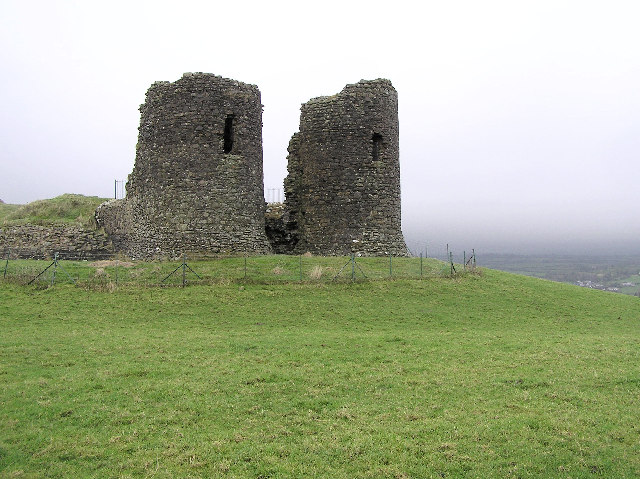
Kirlish Castle
Kirlish Castle, also known as Castle Curlews, is a historic Renaissance-era structure located north of the village of Drumquin in County Tyrone, Northern Ireland. This small castle dates back to 1617 and is attributed to Sir John Davies, an important legal figure who served as Attorney General for Ireland under King James I. The castle is situated on private farmland, limiting public access, but it remains a site of architectural and historical interest due to its surviving features and connections to early 17th-century Irish history.
Historical background and construction
The castle is believed to have been constructed by Sir John Davies in the early 17th century, likely incorporating an earlier tower house into its design. Sir John Davies was a prominent statesman and legal authority who played a significant role in the English administration of Ireland during the Renaissance period. His tenure coincided with the reign of King James I, a time marked by efforts to consolidate English control over Ireland through plantation schemes and fortifications.
In addition to Kirlish Castle, Davies is known to have built Derg Castle, located nearby. Notably, the two castles were connected by a straight causeway approximately 7 miles in length, an unusual and ambitious engineering feature for the period. This causeway likely facilitated communication and movement between the two strongholds, reflecting the strategic importance of these sites in controlling the surrounding territory.
Architectural features and layout
Kirlish Castle was constructed as a fortified dwelling with typical elements of early 17th-century Irish castles. Although today it survives only as a small ruin, key features such as chimneys remain visible, indicating the presence of substantial living quarters. The castle is thought to have included a bawn, a defensive walled enclosure common in Irish castles of this era, although the exact date of its construction remains uncertain.
The castle's design likely combined defensive and residential functions, with thick stone walls, narrow windows for defense, and internal chambers suitable for habitation. The incorporation of an earlier tower house suggests that the site had strategic importance prior to Davies' construction, possibly serving as a local stronghold before being expanded into a Renaissance-style fortified residence.
Later history and decline
After Sir John Davies' death in 1626, ownership passed to his daughter, who resided in England and apparently did not take possession of the Irish estates. Following this period, Kirlish Castle fades from historical records, and its fate becomes uncertain. It may have suffered damage during the Irish Rebellion of 1641, a widespread uprising against English rule, but definitive evidence is lacking.
Archaeological investigations have revealed that the castle later served agricultural purposes before falling into ruin. The structure experienced multiple collapses, and much of its stone was likely repurposed for local building projects, a common fate for many abandoned castles in Ireland.
Present condition and access
Today, Kirlish Castle remains as a ruined structure on private farmland, limiting public access. The surviving ruins, including the distinctive chimneys, offer a glimpse into the castle's original form and function. Visitors seeking to view the site typically must obtain permission from the landowner, who has been known to allow access on request.
Despite its modest remains, Kirlish Castle holds cultural significance as a representation of early 17th-century castle architecture in Northern Ireland and the historical legacy of Sir John Davies' efforts to fortify and administer the region.
Archaeological insights and heritage value
Small-scale archaeological excavations at Kirlish Castle have provided valuable information about its construction phases and usage over time. The evidence suggests a transition from a fortified residence to agricultural use, reflecting broader social and economic changes in post-medieval Ireland. The presence of a bawn indicates the castle's defensive role, while the surviving architectural fragments contribute to understanding the regional castle-building traditions of the Renaissance period.
Kirlish Castle is part of Northern Ireland's rich tapestry of historic sites, offering insights into the complex interactions between English governance and Irish localities during a turbulent era. Its preservation, even as a ruin, supports heritage tourism and educational efforts focused on the Renaissance period and early modern Irish history.
Frequently asked questions (FAQ)
- How do I visit Kirlish Castle?
- Kirlish Castle is located on private farmland near Drumquin, County Tyrone. Visitors must obtain permission from the landowner to access the ruins, as there is no public entrance.
- What is the historical significance of Kirlish Castle?
- Kirlish Castle was built in 1617 by Sir John Davies, Attorney General for Ireland under King James I. It represents early 17th-century Renaissance castle architecture and the English administration's efforts in Ireland.
- Can I see architectural features at Kirlish Castle?
- Although Kirlish Castle is largely in ruins, some features like the chimneys remain visible, offering a glimpse into its original fortified residential design.
- Was Kirlish Castle involved in any historical conflicts?
- The castle may have been damaged during the Irish Rebellion of 1641, but there is no definitive evidence confirming its involvement or the extent of damage.
- Is Kirlish Castle accessible year-round?
- Access depends on the landowner's permission, and there are no official visiting hours. Visitors should contact the owner in advance to arrange a visit.
Information
Current owner
Private owner
Address
Near 10 Kirlish Road, Drumquin, County Tyrone
Loading map...
Visitor reviews
No reviews yet. Been here? Write the first review and help other travelers!
Write the first reviewVisited this castle? Share your experience
Your review helps other travelers and adds first-hand knowledge to our encyclopedia.